
Flat access and fixing approval
For these addresses, include floor level and the owner or association's fixing requirements where applicable.
Plan around the pet you live with
A curious kitten, a climbing cat and a small dog do not explore a balcony in the same way. Start with your animal's size and habits, then review the mesh, lower gaps, side returns and access panels as one enclosure.
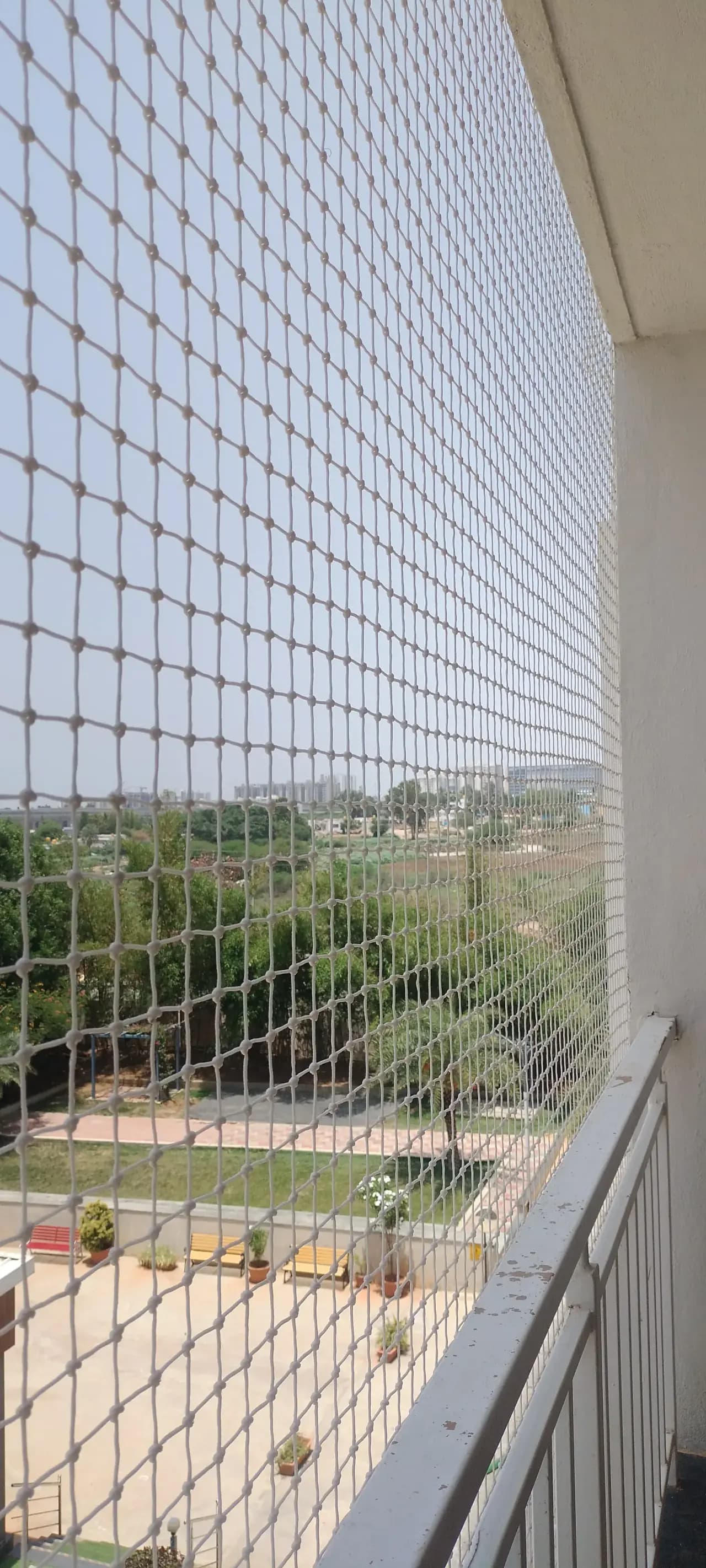
Give your pet a better-planned balcony or window space, with the small gaps considered as carefully as the main opening. EverSafe installs pet safety nets in Eluru from ₹16/sq ft, including the agreed net, fittings and installation.
01 / Animal first
Mention climbing, clawing, chewing and interest in birds outside. Include furniture or a windowsill used as a step. A small kitten and a confident adult cat can challenge an enclosure differently; the design should follow the pet rather than a standard photograph.
For a dog, explain whether it noses under edges, pushes at the railing or chews flexible materials. Rabbits, pet birds and other animals need their own assessment. If several pets share the home, describe them all before a product is proposed.
02 / Coverage
A large front panel is only one part of the route your pet can reach.
Photograph spaces below the rail, between the railing and wall, around drainpipes and beside fixed furniture. A small opening at a corner may matter more than the broad centre panel. The finished perimeter should be reviewed for gaps as well as neat appearance.
For a climbing animal, consider the open top, a neighbouring balcony connection and ledges beside an AC unit. A partial railing-height panel may leave the route above it untouched. Plan the enclosure boundary on a sketch so every panel has a clear purpose.
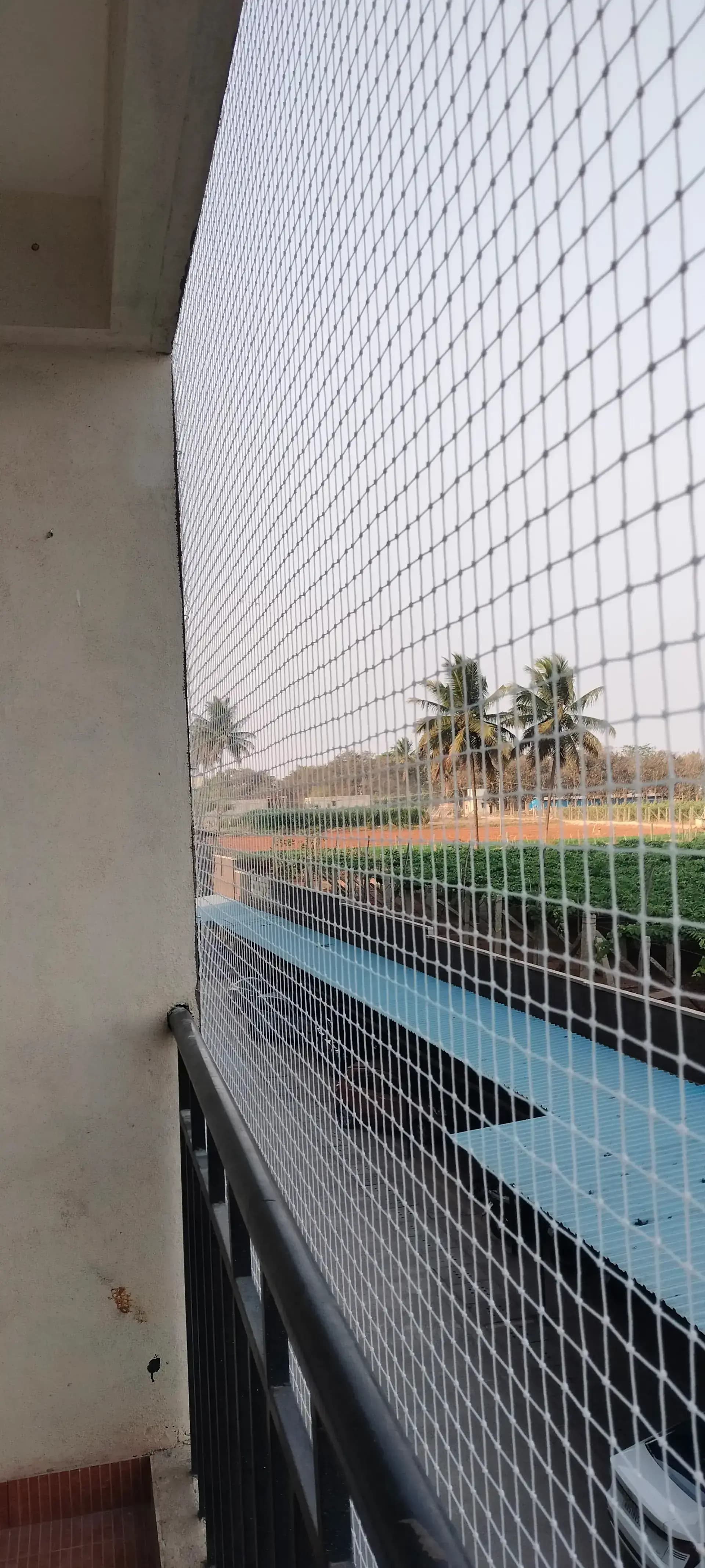
Price, product and complete scope
From ₹16/sq ft including the agreed net, fittings and installation, with mesh and edges reviewed for your pet.
Work out a starting budget
Use the width and height of one net or grill face, rather than the balcony floor area. Add other faces to the final enquiry.
Installation is included in the starting scope. The selected product, complete coverage, access and any agreed additional work determine the final quote.
The final proposal follows measurement and suitability checks. Repair, patching and earlier-net refitting are quoted by scope.
03 / Net choices
Ask for mesh size in millimetres and the available material, twine and border details. The finished panel dimensions fit the balcony; mesh size describes the smaller openings within it. Confirm how gaps behave when the installed material is moved or pressed.
Discuss available nylon, HDPE or other products through their specifications and suitability for the animal. Outdoor-use information helps with exposed openings. Where persistent chewing or forceful pushing is known, compare a suitable rigid solution instead of assuming thicker flexible netting solves the behaviour.
04 / Daily surroundings
The arrangement inside the balcony can change what your pet can reach after fitting.
Position plant stands, storage boxes and chairs so they do not hide the lower edge or press against the mesh. Report a pet using them to reach an upper gap. A clear inspection path makes it easier to spot wear and keeps enclosure maintenance practical.
Provide a comfortable retreat indoors and review shade, airflow and the pet's access to water with normal care routines. Netting does not cool a hot balcony or turn it into a room for prolonged confinement. Introduce the changed space gradually under supervision.
05 / Openings that work
Show shutters in their full open position, including handles and projections. Identify outdoor AC covers, pipework and drains that need routine attention. An access panel or removable section can be assessed where a fixed panel would block required maintenance.
Choose a closure that the responsible adult can inspect and secure reliably. Keep the pet in another room during work on an opening, then check the perimeter before reopening the space. A useful access hatch loses its purpose if it is routinely left unsecured.
06 / Pricing
A front face 10 ft wide by 10 ft high is 100 sq ft, with a starting-rate example of ₹1,600. Add side returns or other openings separately. Measuring only the balcony floor can omit much of the area that the enclosure needs.
The quotation should identify the selected mesh, material, panel dimensions and closure arrangement. List any frame work, removal or special access where required. Material-only listings are useful for comparison only when you also allow for borders, suitable attachments and professional fitting.
07 / Alternatives
A bird problem, a pet enclosure and a human fall-protection requirement should each be stated clearly.
| Situation | Discuss | Why it matters |
|---|---|---|
| Cat reaching an open balcony | A complete pet-appropriate enclosure | Include side, top and lower routes alongside mesh selection. |
| Repeated chewing or pushing | A suitable rigid barrier or enclosure alternative | Flexible netting may not suit the known behaviour. |
| Pigeons entering the opening | Bird exclusion as an additional requirement | Bird suitability alone does not verify pet containment. |
| Children using the balcony | A separate child and building-barrier assessment | Pet netting does not establish tested human fall protection. |
| View is a priority | Discreet net or an appropriate grill arrangement | Check animal-sized gaps, fittings and closures before appearance. |
08 / Fitting
We review dimensions, substrate, railing, surrounding gaps and required access. Agree the material and closure, then confirm fixing permission in a rented or shared property. If support repairs are necessary, identify them before the net is fitted.
Keep the pet securely away from the work area during installation. At handover, review panel edges and access operation with the installer. Retain the supplied product information and actual written terms, and learn which changes need a follow-up assessment.
09 / Eluru homes
For Powerpet, RR Peta or Ameenapet, mention the floor, lift or stair access and who approves drilling. If an association manages the exterior, confirm its fixing requirements. Photos from indoors can show the edges without leaning out to obtain a view.
For Sanivarapupeta, Satrampadu, Tangellamudi, Vatluru or Ashok Nagar, include the actual opening and its service needs. Tell us about rain exposure or planned painting at your property. Those details help sequence fitting without assuming every home has the same conditions.
10 / Care and repairs
A cut strand, opened edge or damaged closure can be assessed for patching, reattachment or replacement fittings. Send a close photo and a wider view. Previous-installer work can be reviewed; repair cost depends on the actual condition and access.
Widespread brittle mesh, repeated chewing damage or failing supports can make another patch unsuitable. Keep the pet indoors while the affected route is unsecured. Avoid improvised loops or sharp wire repairs that create new catching or injury hazards.
Eluru and nearby coverage
Tell us your nearest locality, the animal's size and habits, and whether the opening is a balcony or window.
For these addresses, include floor level and the owner or association's fixing requirements where applicable.
Send open-window photos and identify AC or cleaning access so enclosure planning follows the actual home.
List each opening and every pet using it; mention planned painting or repairs before arranging fitting.
Make an informed choice
The starting rate is ₹16/sq ft including the agreed net, fittings and installation. The selected pet-appropriate product and measured faces establish the amount. Any frame, special access arrangement or preparatory work is identified in the proposal.
That rectangular face measures 100 sq ft, giving a starting-rate example of ₹1,600. Side returns and other openings are measured separately. The final quote confirms the actual mesh, attachments and any additional work needed for your pet's enclosure.
Bird exclusion alone does not establish suitability for cats. A cat may push, climb, claw or chew at mesh and edges. Have the whole installation assessed for the animal, including the opening size, perimeter and closures.
Do not select solely from an adult-cat label or a catalogue photo. Share the kitten's size, age and behaviour and ask for the actual mesh opening. Mesh, stretched gaps and openings around the frame all need assessment for that animal.
We plan the enclosure around the pet and observed routes, but do not promise that one net prevents every possible escape. Material suitability, complete edges, working closures, household use and ongoing inspection all contribute to keeping the enclosure secure.
No universal chew-proof claim should be assumed. Tell us about chewing or forceful pushing before product selection. A dog that repeatedly works at flexible netting may need a suitable rigid barrier or a different arrangement.
For a climbing cat, an open top can leave an escape route even when the railing is covered. Review floor-to-top coverage, side returns and any upper gaps. The right enclosure depends on the balcony and the particular pet.
We plan around the actual shutter travel, handles and cleaning needs. Share photos with the window open and closed. An outward-opening shutter or sliding frame may need a different net position or a dedicated access arrangement.
A secure service panel can be assessed where equipment must remain reachable. Specify its location and closure before installation. Keep the pet indoors during servicing and check that the panel is fully secured before restoring access.
Discuss fixing permission with the owner or association before drilling is agreed. A removable or alternative support arrangement may be assessed, but suitability depends on the building. Do not assume adhesive hooks provide an equivalent enclosure.
Yes, describe each animal and any differences in size or behaviour. The smallest pet affects escape-gap decisions, while a larger or more determined animal can affect material and attachment requirements. A single generic pet description may miss these differences.
We can assess previous installations for a patch, perimeter reattachment, replacement fittings or a new panel. Keep the pet away from the affected opening until it is secure. Repairs are quoted for the condition and scope found.
No. Retain the building's suitable railing or other required barrier. Pet containment netting is not a verified human fall-arrest system. If children use the same space, explain that separate requirement before choosing the installation.
Send your Eluru locality, floor level, opening dimensions, the pet's type and size, and photos of the front, sides and lower edge. Mention chewing, climbing, previous escapes and any window or equipment access that must remain available.
Let’s plan your installation
Send the Eluru locality, opening photos and your pet's type, size and behaviour. We will help identify the coverage, product choices and access needs for a measured estimate.