
Homes and shared premises
Powerpet, RR Peta and Ameenapet enquiries can start with boundary photos, neighbour-facing openings and the person authorising permanent fittings.
A measured lane for focused practice
A good practice enclosure starts with a clear brief: what ball will be used, where shots may travel and how players enter. Compare the netting and its supports together before setting a budget for your Eluru home, school or training facility.
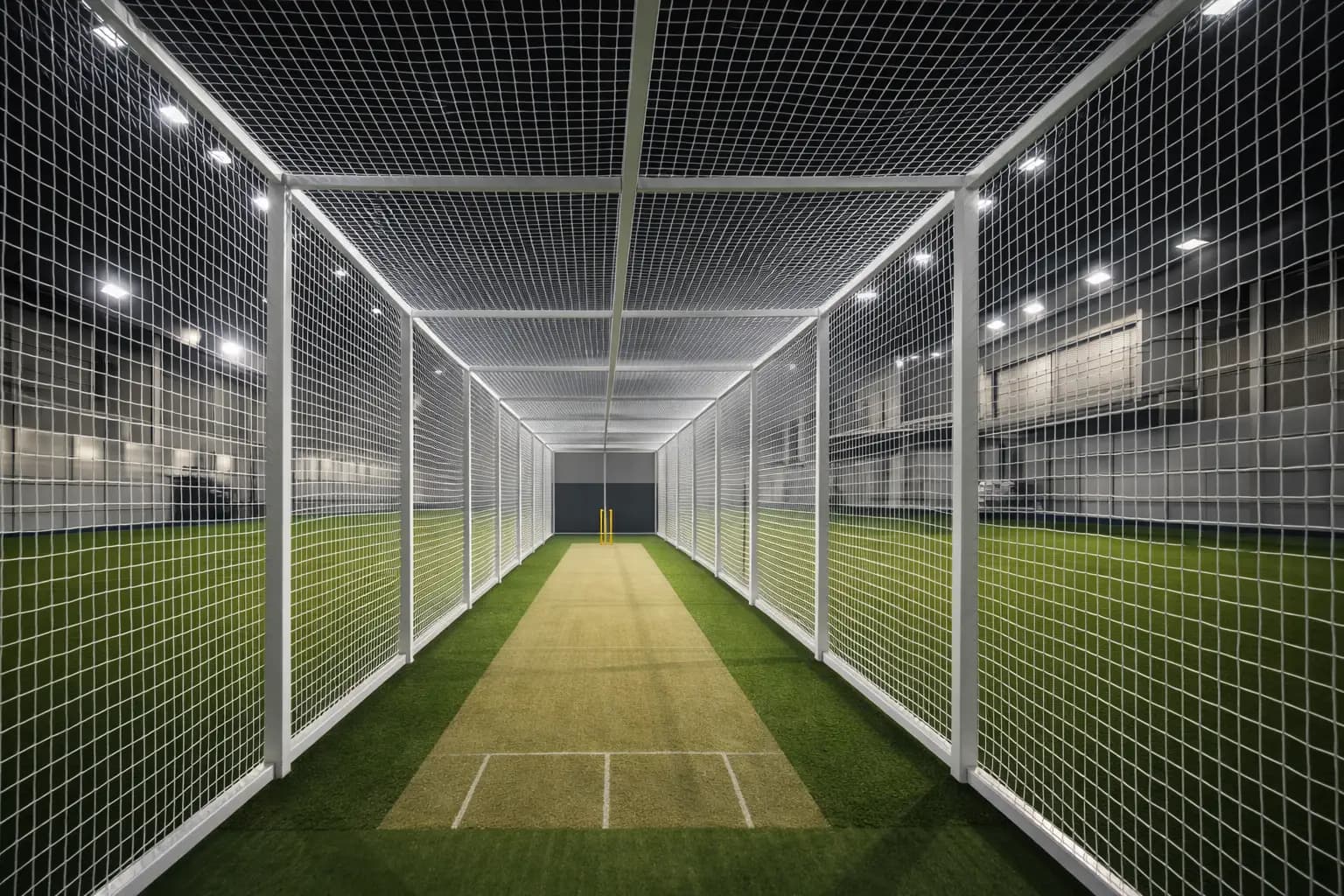
Make room for regular cricket practice with a lane planned around the ball, the available space and the people nearby. EverSafe installs cricket practice nets in Eluru from ₹14/sq ft, including the agreed net, fittings and installation.
01 / Your practice
Tell us whether the lane is for bowling, throwdowns or batting-machine use, and whether juniors and adults share it. Mark the approach, batting position and waiting area together so access stays out of the intended ball path.
For a home in Powerpet or RR Peta, include nearby windows, vehicles and property boundaries in your photos. For a school or club, explain whether adjacent play areas remain occupied during practice.
02 / Space
The playing footprint and the amount of netting are different quantities. A floor measurement helps plan the lane; it does not tell us the full panel area.
Send usable length, clear width and available height, marking columns, branches, beams and steps. Add the intended run-up. Do not omit approach, follow-through or ball-retrieval space to fit a full lane into a compact bay.
Establish whether you need a recreational bay or a formal training facility, then work to the relevant design brief. Multiple lanes need separation and circulation; a spare strip between panels is not automatically a suitable waiting zone.
Price, product and complete scope
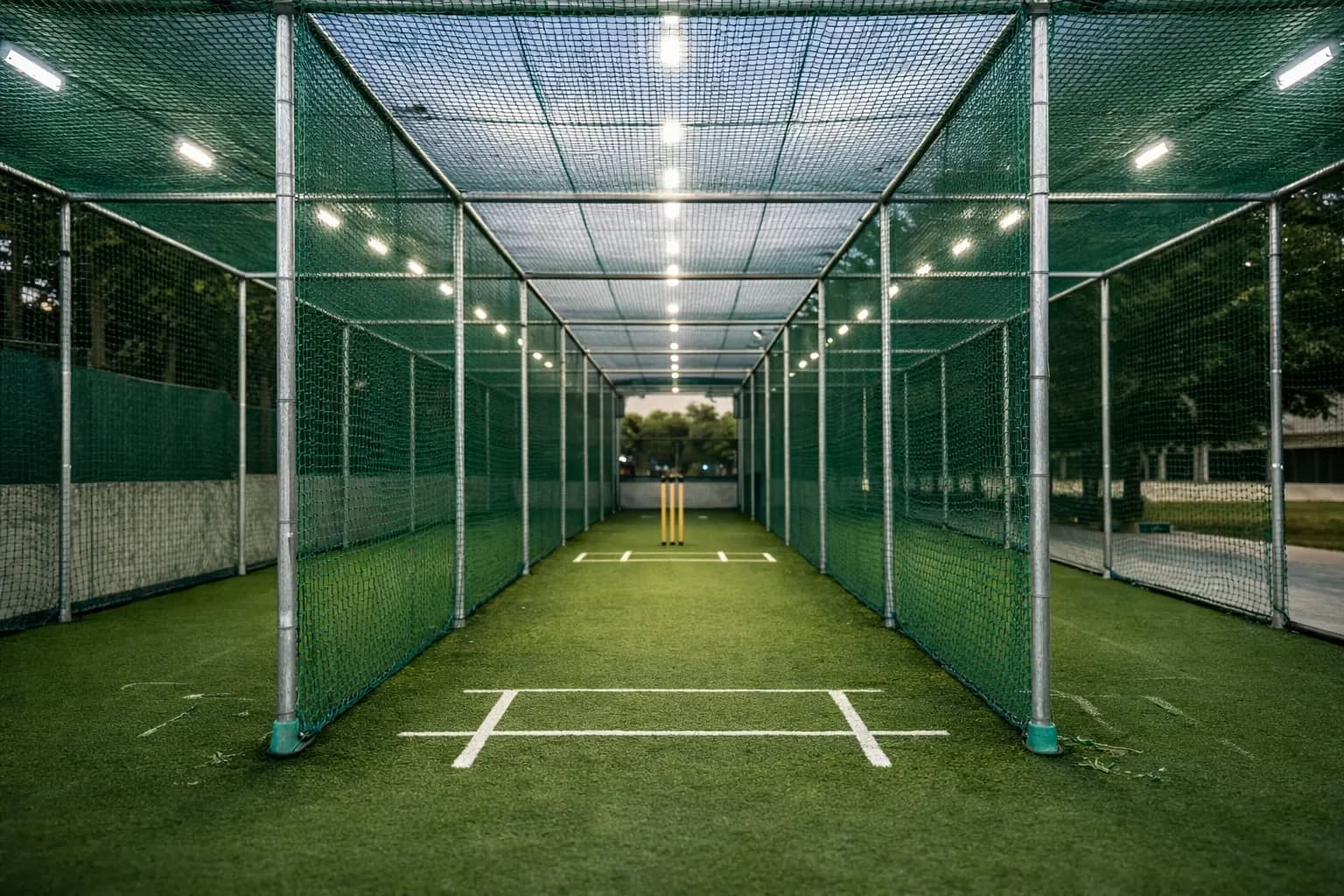
From ₹14/sq ft for the agreed net, fittings and installation. Confirm the ball, panel schedule and frame condition together.
Work out a starting budget
Use the width and height of one net or grill face, rather than the balcony floor area. Add other faces to the final enquiry.
Installation is included in the starting scope. The selected product, complete coverage, access and any agreed additional work determine the final quote.
The final estimate follows measurement and confirmed scope. Repair or refitting is priced for the work required, with no universal repair minimum.
03 / Net selection
Compare mesh opening in millimetres, twine, construction, border finish and panel dimensions. Ask how the opening is measured, as supplier conventions can differ. Both the mesh and installed perimeter gaps must suit the ball.
Compare available HDPE, nylon or other sports products by actual specification and application. Request outdoor-use information for an exposed lane. A brand or colour alone does not establish repeated hard-ball suitability or the strength of the support system.
04 / Ball routes
Side panels separate adjacent space; the rear panel receives balls behind the batter; a top panel can address lofted shots. Check lower edges across uneven ground. A ball-sized gate gap can undo extensive coverage.
Agree entry control, cleaning access and equipment movement. Assess net deflection and clearance from hard objects. Pulling every panel rigidly against a wall is not a substitute for a planned installation.
05 / Fixing structure
Existing posts can make a project simpler when they are suitable. Their presence alone does not confirm they can support the new arrangement.
Show post bases, bracing, joins and top members. Corrosion, leaning posts and sharp edges can damage new netting or indicate frame work is needed. Agree preparation before cutting panels, particularly when adding overhead coverage.
A new frame needs its own support design and scope. For an Ameenapet terrace or Vatluru property, identify access and suitable fixings. Protect waterproofing and retain routes to tanks, stairs and maintenance equipment.
06 / Price calculation
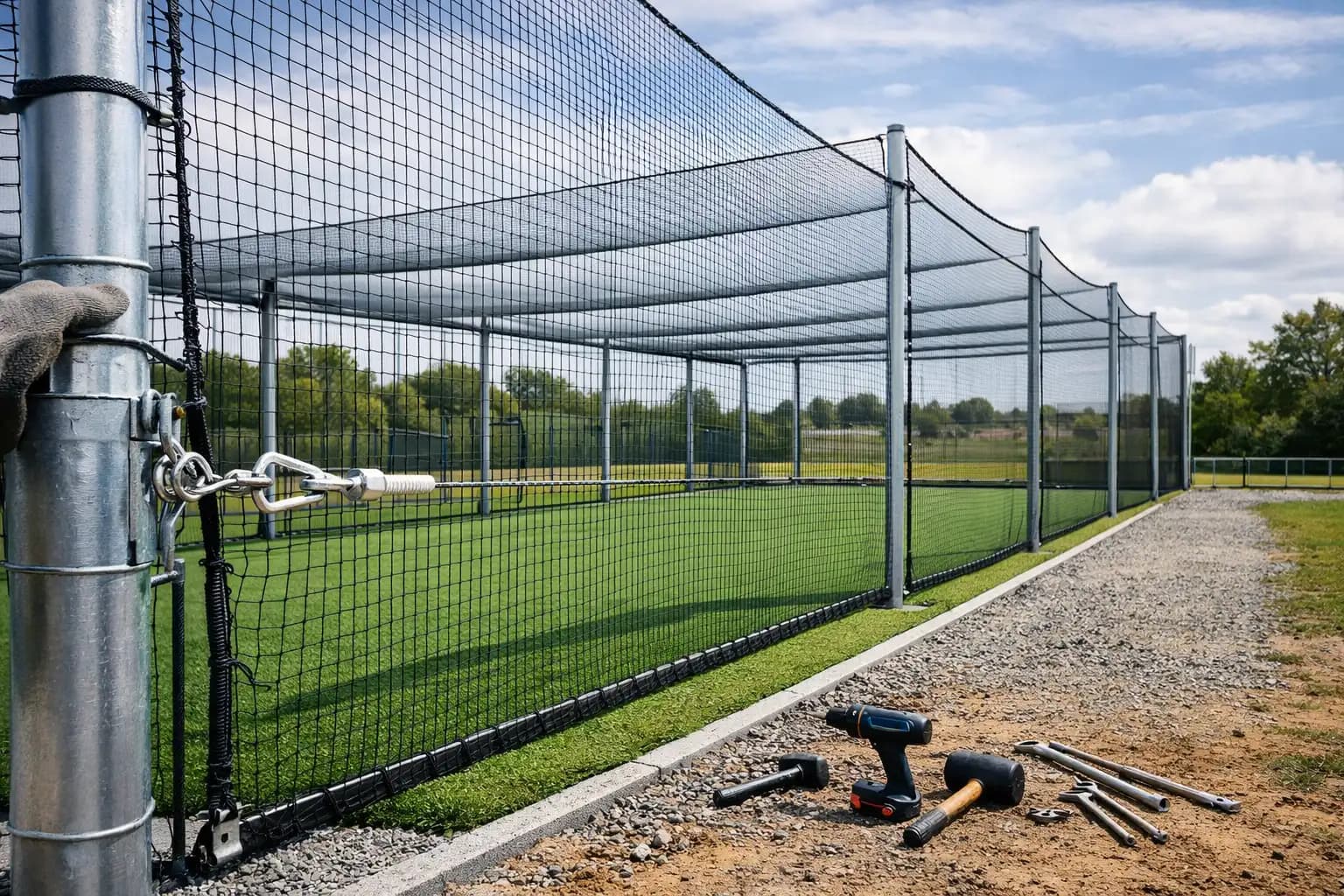
One 10 ft by 10 ft panel is 100 sq ft, with a starting-rate example of ₹1,400. A lane has several faces: calculate sides and ends by length or width multiplied by height, and measure top coverage separately.
Where needed, separate netting from frames, foundations, frame repairs, tracks, removal and access work. Confirm borders and closures. Compare the complete measured scope rather than an advertised net rate against a finished facility proposal.
07 / Compare layouts
The right format depends on regular practice, shared use and the amount of work needed each time the lane opens.
| Arrangement | Useful when | Confirm before choosing |
|---|---|---|
| Fixed lane | The area stays dedicated to cricket practice. | Full panel coverage, entry control, cleaning access and suitable supports. |
| Retractable lane | A hall or covered space needs another use between sessions. | Track compatibility, storage position and how the net returns to its closed configuration. |
| Removable panels | Occasional access or planned seasonal removal is important. | Who removes and refits panels, labelled edges and the reopening check. |
| Box-cricket enclosure | Play uses a wider area and several shot directions. | The whole playing format, perimeter and overhead design; a practice-lane quote does not describe a complete venue. |
Netting is one part of a facility. Pitch construction, surface, drainage and lighting need their own agreed specification.
08 / Installation
Confirm dimensions, supports, lanes, access and product choices. Identify work another contractor must finish first. A written scope lets a school administrator, owner or association approve the same panel and installation proposal.
After fitting, review closures, lower edges and user access with the responsible person. Agree an appropriate functional check for the intended activity, then retain product details, care guidance and the actual supplied terms.
09 / Eluru coordination
For a shared property in Sanivarapupeta, Satrampadu or Ashok Nagar, identify who approves drilling or common-space use. Confirm delivery access for frame sections and agree a work zone clear of residents and parked vehicles.
For Tangellamudi or Mini Bypass Road enquiries, show open-ground or rooftop access. Rain and wind can change the work sequence. Schools and clubs should share operating hours so installation and play do not overlap.
10 / Keep it ready
Report split mesh, failed borders, sagging or opened joins with a wide photo and close view. Patching, reattachment and earlier-installer work can be assessed when the remaining net and support are suitable.
Recurring damage at the batting end, brittle twine or unsuitable supports may need replacement or redesign. Pause a lane when containment fails. Store spare panels away from sharp tools, heat and unplanned public access.
Eluru and nearby coverage
Share the nearest locality and whether your proposal is a ground-level lane, covered hall or terrace. These enquiry groups help identify the right access and approval questions.
Powerpet, RR Peta and Ameenapet enquiries can start with boundary photos, neighbour-facing openings and the person authorising permanent fittings.
For a school, club or common area in these localities, include opening hours, equipment access and whether adjacent space stays occupied during work.
For Vatluru, Ashok Nagar or a Mini Bypass Road address, specify the actual support structure and a route for delivering any frame sections.
Make an informed choice
The starting rate is ₹14/sq ft for the agreed net, fittings and installation. Your measured panel area and selected product determine the netting amount. New frames, foundations, tracks or other facility work are identified separately where required.
A single 10 ft by 10 ft panel measures 100 sq ft, giving an example of ₹1,400 at the starting rate. That is one face, not a complete practice lane. A cage quotation adds its other sides, end and overhead coverage.
This service supplies and installs practice netting at your property. It is not an hourly lane-rental or coaching booking. Tell us whether you represent a home, school, club or academy so the installation enquiry reaches the right scope.
We need the usable length, width and height, plus the intended bowling run-up and circulation space. Player age, training format and ball type affect the layout. A compact throwdown bay should not be described as a full bowling practice lane.
Only if the selected product and installation are suitable for both uses. Specify leather, tennis, rubber or training balls before the quote. A net previously used for light tennis-ball sessions should be reassessed before hard-ball practice begins.
Ask for the actual mesh opening in millimetres, twine specification and recommended cricket application. The opening must contain the intended ball in the installed configuration. A product described only as strong, thick or sports-grade leaves important selection details unanswered.
The stated starting scope includes net, fittings and installation. If the site needs a new support frame, foundation work, frame repairs or a track system, that work is assessed and listed separately so you can compare complete quotations.
Yes, the existing frame can be assessed for reuse before panel replacement. Share full-frame photos and close views of rust, joints and anchor positions. A sound net does not correct loose posts, sharp metal edges or unsuitable frame connections.
A top panel is assessed where lofted shots could escape the intended enclosure. Height, surrounding properties and actual practice use matter. A top net is ball containment; it does not turn the lane into a rainproof covered facility.
A terrace enquiry needs the owner's approval, roof-use information and a suitable structural support plan. Netting alone does not establish roof suitability for cricket. Parapets, waterproofing, escape routes, neighbours and the proposed play surface must be considered before installation is agreed.
Ask about an available track, curtain or removable-panel arrangement when the space has another use. We assess where the net will be stored, how panels close and whether the supports suit that system. The mechanism and its installation scope need written confirmation.
This page describes net installation. If your enquiry includes a pitch surface, turf, lights or other facility work, identify those items at the start and confirm what can be included in the written proposal. Do not infer them from a reference image.
A local tear or failed attachment may be repairable if the surrounding mesh and frame remain suitable. Widespread wear, brittle twine or repeated ball escape can favour a replacement panel. Repair and previous-installer refitting are quoted for the actual work.
Have the responsible adult or facility manager review panel closures, ground edges, the bowling and batting space, and the absence of loose tools or fittings. Agree an appropriate commissioning check for the intended ball and use, then retain the supplied product and care details.
Let’s plan your installation
Send the locality, available dimensions, intended ball and photos of the ground or frame. We can help turn them into a measured net-installation proposal.