
Central Chennai properties
For a sign, sill or building beam, mention the exact surface and any restrictions on public access below it.
Chennai, Tamil Nadu
Ledges, sills and selected perch surfaces
Treat the landing surface with a clear, measured plan.
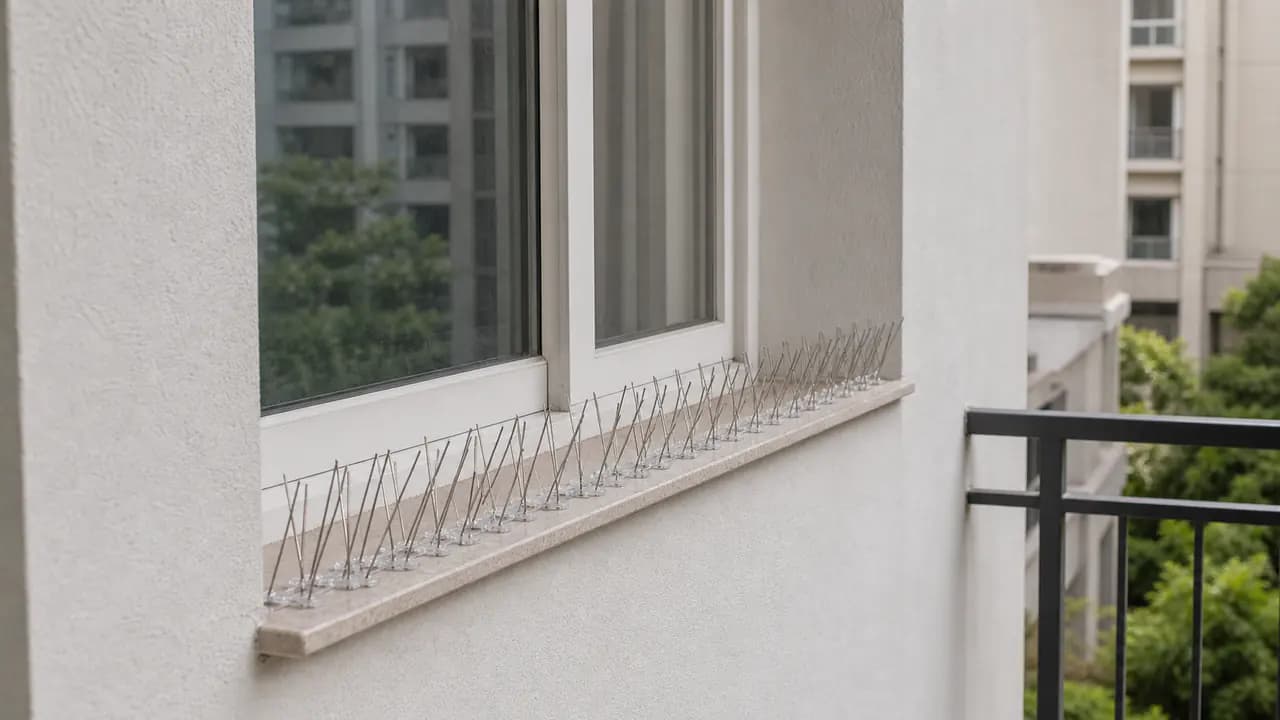
When birds repeatedly land on a narrow ledge, a fitted spike strip may be more suitable than enclosing the whole space. EverSafe installs bird spikes in Chennai from ₹120 per running foot including installation. We check the surface width, number of rows and safe fixing method before measuring the final scope.
Is this the right treatment?
Spikes are a landing deterrent for suitable narrow surfaces. First establish whether the birds are using that ledge or entering a deeper opening behind it. The place where droppings collect is not always the place that needs the treatment.
Check the full usable width, side approaches and any space behind the proposed strip. A narrow strip on a wide sill can leave another landing area.
Confirm that the base can be fixed securely and that the treatment will not interfere with signage, moving equipment or routine access.
Only suitable surfaces should be treated. Keep fans, drainage, ventilation and access to panels clear, and consult the AC service requirements before fixing anything to equipment.
A clear boundary to the service
A row on a ledge leaves the surrounding opening open. For birds nesting inside a recess or moving into a utility shaft, discuss a complete netting boundary instead. The result depends on selecting the appropriate treatment and maintaining it.
| What you observe | Option to discuss | Key distinction |
|---|---|---|
| Repeated perching on an isolated narrow ledge | Bird spikes | Discourages landing on the treated surface |
| Birds entering a balcony or window recess | Pigeon netting | Closes the entry boundary |
| Several connected openings or smaller bird species | Anti-bird net assessment | Needs species-appropriate mesh and coverage |
| Nesting material packed behind old strips | Assessment and preparation first | Adding another strip without addressing the situation may not solve it |
A clear starting point
From ₹120 per running foot including installation. The price is based on the total installed strip length across all agreed rows.
Your space, your starting budget
Measure the total installed strip length across all required rows. A wide ledge may need more than one row.
Installation is included in the starting scope. The selected product, complete coverage, access and any agreed additional work determine the final quote.
A single 10-foot row starts at ₹1,200. Multiple rows or additional ledges increase total strip length. Confirm the full measured amount and any preparation or repair work before installation.
Compare the supplied product
Metal spikes with a polymer base and other available strip designs can differ in their intended use and fixing requirements. Compare the actual product, including outdoor suitability and manufacturer instructions, rather than assuming every stainless or plastic strip performs the same way.
Ask what the spikes and base are made from. If a specific metal grade is required for an exposed site, have that grade documented in the quotation.
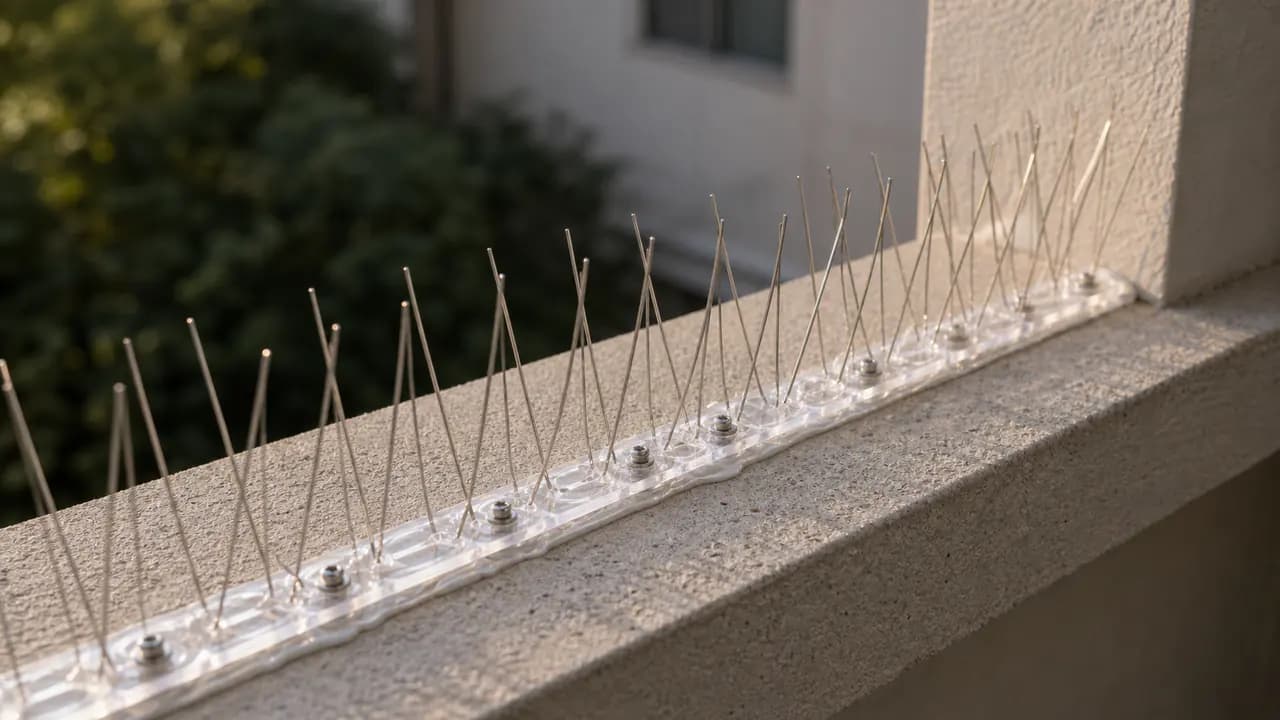
The strip width and spike pattern help determine row layout. The base length is not the same as the width of ledge it can effectively treat.
Discuss visibility from street level or the room, particularly on a window or sign. Appearance should not result in an incomplete treatment of the perch.
Price calculation
Our starting price is ₹120 per running foot including installation. A 10-foot installation comprising one agreed row starts at ₹1,200. If a ledge needs more than one row, the billable installed row length increases; it is not simply the building’s frontage.
Record the length of the row and the width of the surface it is intended to treat. Both belong in the estimate.
List each row length and the total. Two full rows along a 10-foot ledge mean 20 running feet of strips, before any additional returns.
Add the agreed row lengths across each sill, beam or sign section. Ask the installer to explain any gaps, returns or cut pieces included in the measurement.
Before fixing
Dust, loose paint, damaged plaster, moisture and incompatible coatings can affect a fixing. We assess preparation and the suitable attachment method before installation. A weak ledge should be repaired rather than hidden under a new strip.
Concrete, painted metal, stone and equipment housings may need different approaches. Confirm drilling restrictions and concealed services.
Cleaning and removal of old loose material must be planned safely. Substantial contamination or an active nest needs separate attention before work.
Where an adhesive is suitable, surface condition and curing requirements affect timing. An arbitrary same-day promise should not override the selected product’s instructions.
Coordinate the visit
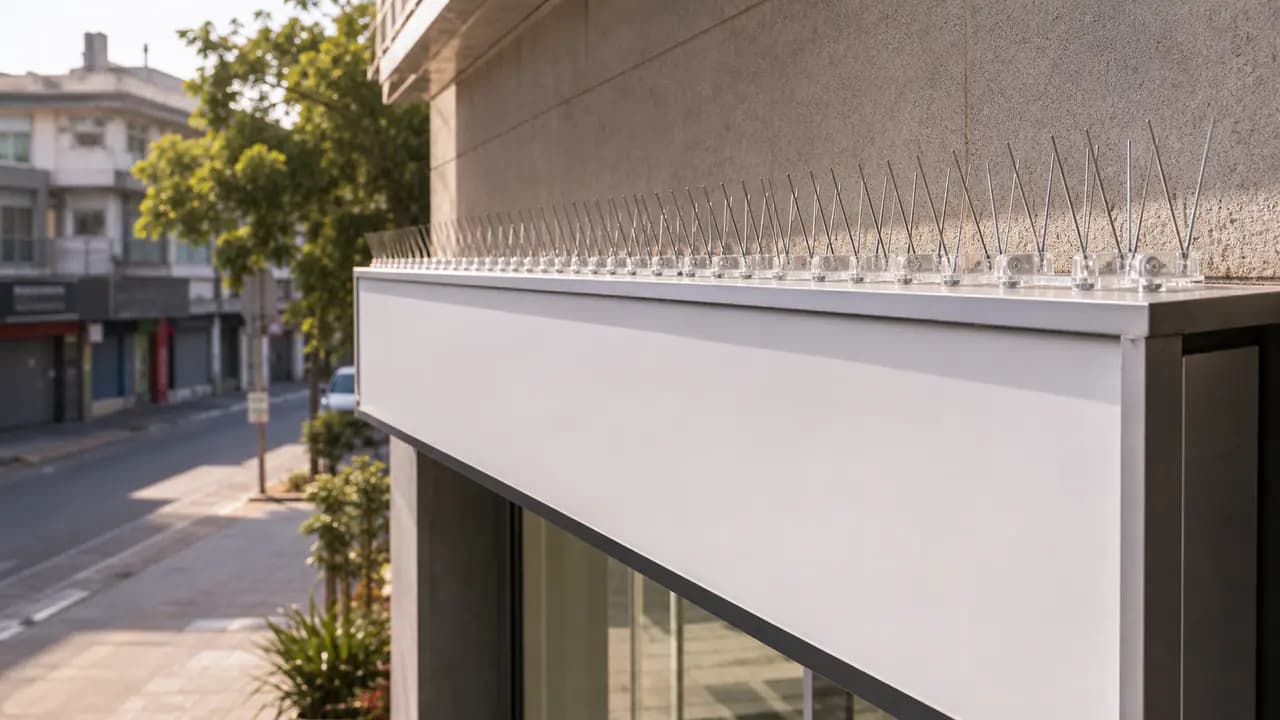
A sign ledge at a working shop and a window sill at a residence have different access arrangements. Share opening hours, public movement below, rental conditions and building permissions when you enquire. These practical details help set a workable installation window.
Agree on safe access and temporary control of the space below. Keep signage maintenance and lighting access available after fitting.
Check who is authorised to approve external fixings and whether the sill is safely accessible from inside. A higher floor does not make an outside reach acceptable.
Flag polished stone, waterproofing and recently painted surfaces. Agree on a compatible fixing method before materials arrive.
Installation and handover
The installation duration depends on preparation, access, number of rows and the selected fixing method. A small accessible ledge is different from a multi-level elevation. We confirm the sequence after assessing the work.
Identify the birds, the treated surface and any nearby alternative landing positions. Confirm spikes are suitable for the situation.
Agree on the product, total running feet, preparation, access and installed amount before fitting.
Use an attachment method suitable for the product and substrate. Keep people and animals away from the work area.
Review the planned coverage and how the strips can be inspected without leaning over an edge. Keep the estimate and supplied product details for future maintenance.
Maintain a clear deterrent surface
A deterrent can become less useful if debris or nesting material accumulates, a base lifts or a nearby ledge remains untreated. Inspect from a safe position and arrange maintenance rather than pressing strips back down from outside a window.
Check for displaced sections, visible corrosion and loose ends after weather that affects the site. No permanently rustproof or stormproof performance is promised.
Tell painters and sign or AC technicians about the treatment. Removed sections need assessment and correct refitting after their work.
A photograph showing where the birds now land is more useful than automatically ordering additional strips. Another treatment or a different row arrangement may be appropriate.
Repair and replacement
We inspect existing bird spikes for reattachment, local replacement and revised row coverage, including previous work by another installer. The decision depends on the base, spike condition, attachment and the surface underneath.
A sound strip may be reusable after the surface and old fixing have been assessed. A failed attachment should not simply be concealed with another layer.
Broken bases, displaced spikes or unsuitable old products may need replacement. Agree which sections will be changed.
If the original coverage left a usable perch, discuss the total new row length and price. Repairs and alterations are quoted separately from the advertised new-installation rate.
Responsible deterrence
Bird spikes should be selected and placed as a deterrent. They are not a trapping system, and they should not be positioned where people or pets can contact them during normal use. An occupied nest or trapped animal is a separate situation that needs suitable professional guidance.
Keep spikes away from handholds, play areas and places someone must regularly reach across.
Resolve active nesting or wildlife concerns before altering an occupied area. Do not put strips around a bird to confine it.
If the species, surface or access makes spikes unsuitable, ask for a different exclusion plan rather than forcing the same product onto every ledge.
Chennai and nearby coverage
The groups below help arrange an enquiry near your property. The actual ledge and access determine the solution; these links do not assert a particular bird problem in every neighbourhood.
For a sign, sill or building beam, mention the exact surface and any restrictions on public access below it.
Send the sill width as well as length, and explain whether the surface is reachable from a safe interior position.
OMR covers a long road corridor. Give the locality, building or business name and a nearby landmark when requesting a visit.
Make an informed choice
The starting rate is ₹120 per running foot including installation. The final amount depends on the selected strips, total row length, surface preparation and access confirmed in your estimate.
Running foot. Add the length of every installed row. A wider ledge may need more than one row, so its total strip length can exceed the frontage length.
One 10-foot row starts at ₹1,200 at the advertised starting rate. Multiple rows, separate ledges or additional preparation change the measured scope and final quote.
Possibly, but the usable width and bird behaviour need assessment. The plan may require several rows or a different treatment. A single narrow strip does not automatically protect a wide surface.
Compare the actual product and its intended application rather than only the material label. Spike pattern, base construction, coverage width, outdoor suitability and fixing instructions all matter.
Only where a suitable surface and fixing method are confirmed without affecting the unit’s ventilation, drainage or service access. The AC requirements should guide the decision; drilling into equipment is not assumed acceptable.
They deter landing on treated surfaces. They do not close the balcony opening or a duct behind the ledge. Pigeon or anti-bird netting may be more appropriate for entry into an enclosed space.
Some products and substrates may allow a suitable adhesive method, but this must follow product instructions and surface assessment. It is not a universal option for every stone, painted or weather-exposed ledge.
Exposure and substrate condition affect the fixing choice and upkeep. We do not promise permanent rust-free or weatherproof performance. Arrange a check if bases lift, sections move or corrosion appears.
The purpose is to discourage landing on a suitable treated surface, not to trap or injure birds. Correct product selection, position and maintenance are essential. Active nests and wildlife issues need separate professional guidance.
Yes. We assess reattachment, replacement of damaged strips and changes to incomplete coverage, including other installers’ work. Repair prices depend on the condition and scope and are confirmed separately.
The surface must be suitable for the chosen fixing, so preparation needs assessment. Substantial contamination or an occupied nest is a separate matter; do not disturb wildlife or attempt unsafe cleaning at height.
The number of rows, access, cleaning or surface preparation and any curing requirements determine the schedule. We confirm likely timing after reviewing the ledges and installation method.
Share photographs of the new landing position. The original treatment may cover only one surface, and the neighbouring ledge may need assessment. More strips are not always the right answer if the birds are actually entering a recess.
From your first photo to the final fitting
Include photographs of the full surface and surrounding opening, approximate row length, your Chennai locality and any building access restrictions.