
OMR and Sholinganallur
For an apartment or campus proposal, include the approving contact, access for materials and the surroundings beyond the intended lane.
Chennai, Tamil Nadu
Your site. Your lane. A considered net layout.
A useful practice lane gives batting and bowling room while controlling where the ball can go. Settle that layout before choosing a mesh price.
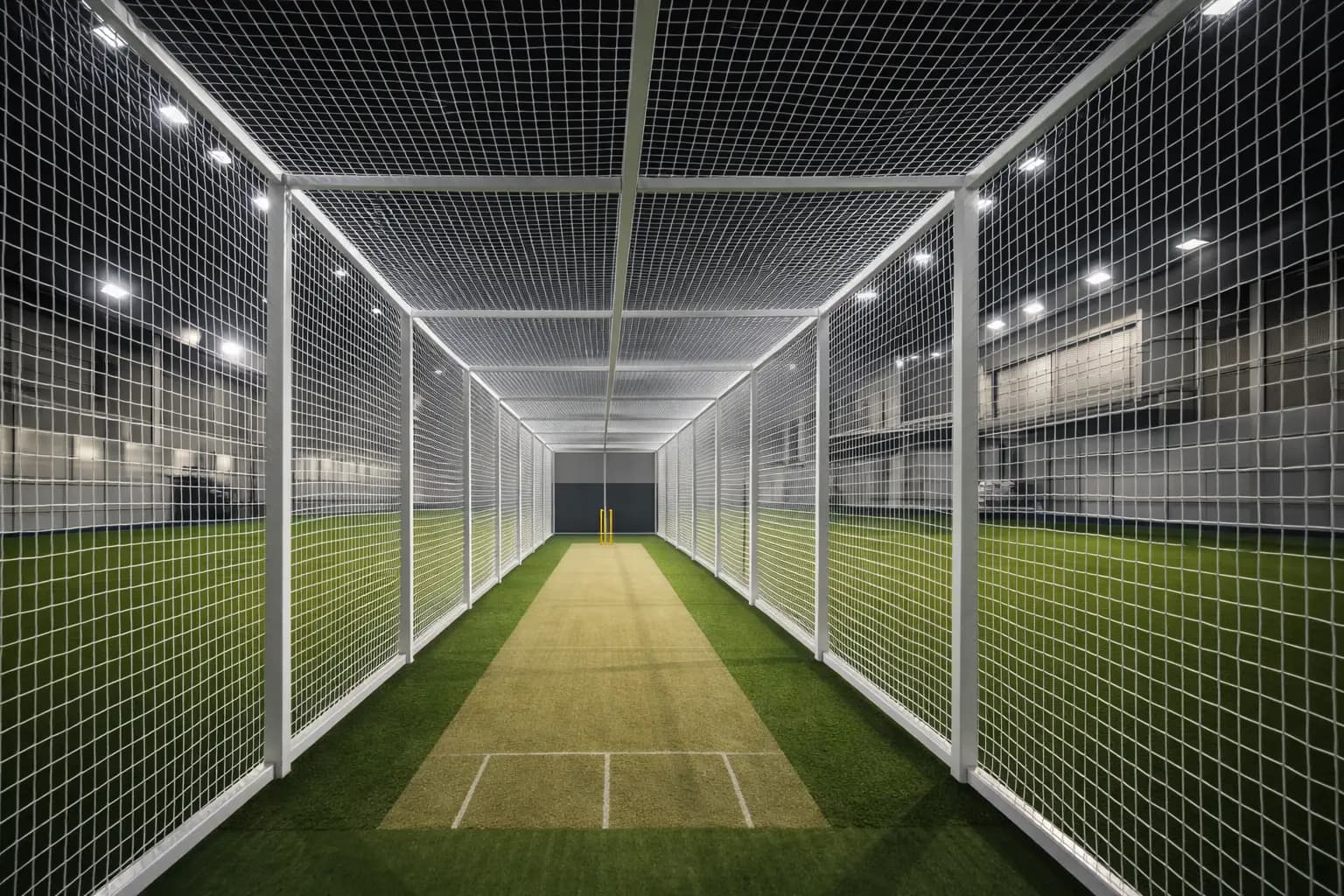
Build a Chennai practice space around the delivery, the shot and the people nearby. EverSafe supplies and installs cricket practice netting for suitable home spaces, schools, clubs and coaching facilities. We plan the sides, roof, entry and supports for your intended ball type, with installation starting at ₹30 per sq ft.
Define the practice
Start with the ball and the session, not just the available wall length. A school bowling lane, a club's repeated hardball practice and a small home tennis-ball setup place different demands on their enclosure.
State the ball type, expected users and frequency of practice. Mention bowling machines, throwdowns and side-arm use so the lane is not specified for a lighter activity than the one intended.
Provide the clear length and width, including space beyond the delivery area. Show columns, walls, steps and anything a bat, player or deflecting net could reach.
Mark windows, parking, neighbouring land and public or school walkways. People should not have to stand against a working practice net to pass through the site.
Follow the escape routes
A tidy-looking lane can still have a ball-sized opening at the bottom, a gap beside a pole or an uncovered way out above. Each junction belongs in the original plan.
Outdoor practice lanes need a roof-net assessment for lofted shots. Its height and support arrangement should suit the activity and the surrounding risk, rather than simply following the nearest parapet.
Consider the bowler's end, rebound, adjoining practice and people behind the batter. Keep a suitable separation from the net's movement; an adjacent wall is not a substitute for that review.
Plan closure at the ground and an entrance that can be secured during play. Avoid loose rope loops, exposed sharp fittings and a gate opening directly into an active ball path.
A clear starting point
Start from ₹30 per sq ft including installation of the agreed netting. The total follows the measured sides, roof, ends and any other accepted panels.
Your space, your starting budget
Use the width and height of one net or grill face, rather than the balcony floor area. Add other faces to the final enquiry.
Installation is included in the starting scope. The selected product, complete coverage, access and any agreed additional work determine the final quote.
100 sq ft of netting gives a starting example of ₹3,000. Pitch surfaces, lights, equipment and new structural work require separate written confirmation.
Specify the product
Nylon, HDPE and branded products are available in different twines and mesh openings. The quotation should identify the actual net supplied and the activity it is suitable for, rather than treating every green net as equivalent.
Choose an opening compatible with the ball, allowing for how the mesh behaves in use. Ask for the manufacturer's specification; colour or a seller's informal thickness description does not prove suitability.
Compare construction, outdoor suitability and the method of joining the panel to its border. Seams, reinforced impact areas and fixing details matter as much as the middle of the mesh.
For a requested Garware or other branded option, ask for the actual product identity and supply details. Keep those details with the installation quote so future repairs use a compatible specification.
The supporting structure
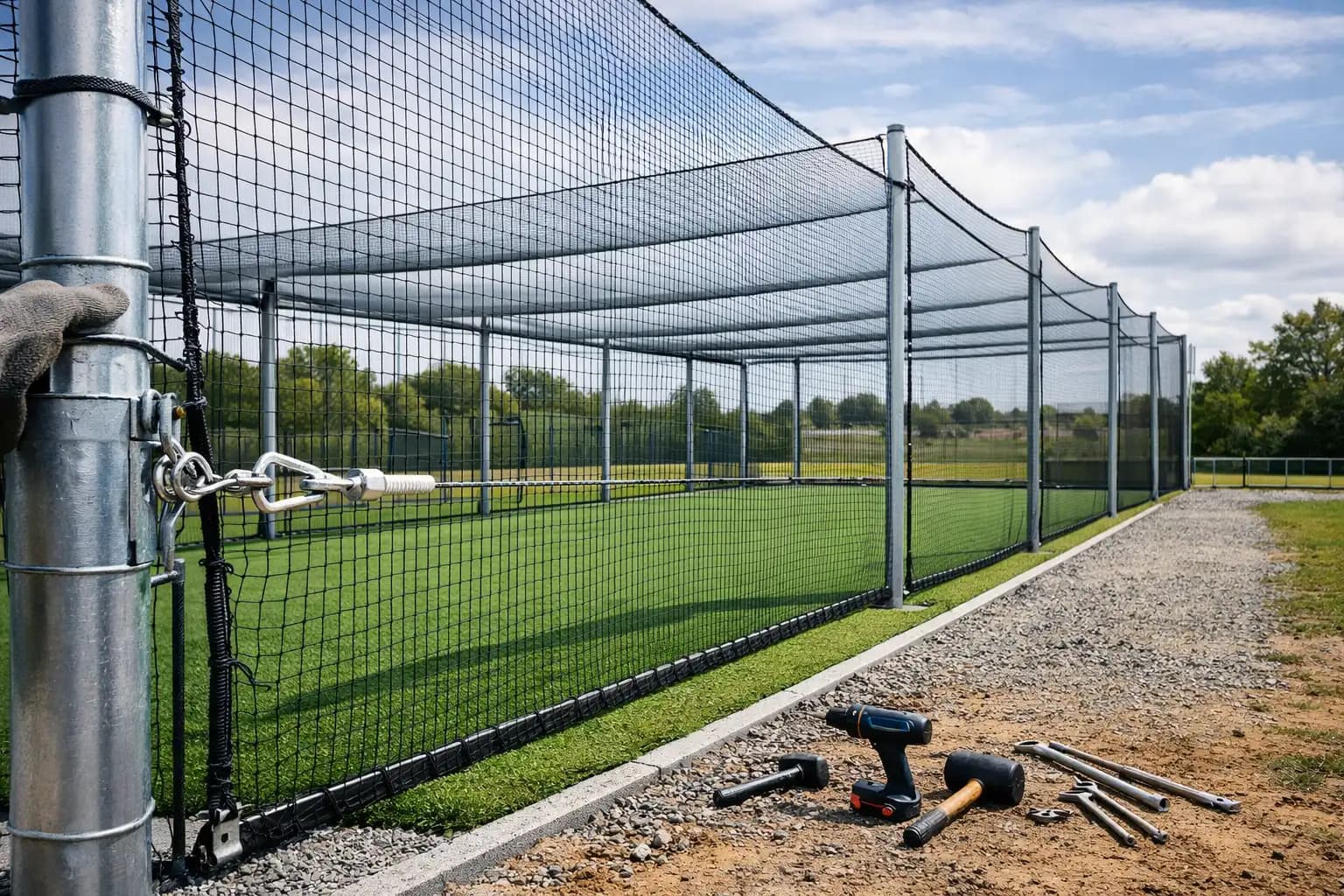
The frame establishes the lane's outline and carries the netting system. Before fitting new panels, check that its height, condition and placement match the proposed practice rather than assuming that an existing frame is suitable.
Photograph joints, bases, corrosion and previous repairs. A frame survey should consider the complete support arrangement; adding ties to worn metal is not a substitute for repairing it.
Separate pole or frame fabrication, foundations and other civil work from the net-area rate. Agree responsibilities for underground services, waterproofing and building approval where they apply.
Ground, hall or rooftop
Chennai's northeast monsoon makes drainage and wet-weather access useful planning topics. On a roof, there are additional building and edge-protection questions before the first net panel is considered.
| Site | Plan first | Scope to confirm |
|---|---|---|
| School or club ground | Run-up, public access, ball paths and drainage | Net enclosure versus pitch and civil work |
| Indoor practice space | Clear height, lights, walls and shared circulation | Support system, storage and suitability for the intended ball |
| Terrace or podium | Building approval, structural suitability, edge protection and waterproofing | Roof permission and structure separately from the mesh quote |
| Small home practice corner | Available room, ball choice and neighbours | Limited practice purpose rather than a full bowling-lane claim |
Comfort and control
A net should retain the intended ball without becoming an avoidable rebound surface or a hazard in the batting space. The amount of movement, the clearances and the supporting system need to be considered together.
Do not pull every panel drum-tight or leave it hanging into the lane. The installer should follow the selected system's arrangement and explain which ropes or fixings must not be adjusted casually.
A net installation does not correct a slippery, uneven or unsuitable practice surface. Keep equipment cables and stored kit out of the player route and address surface problems before use.
Make quotations comparable
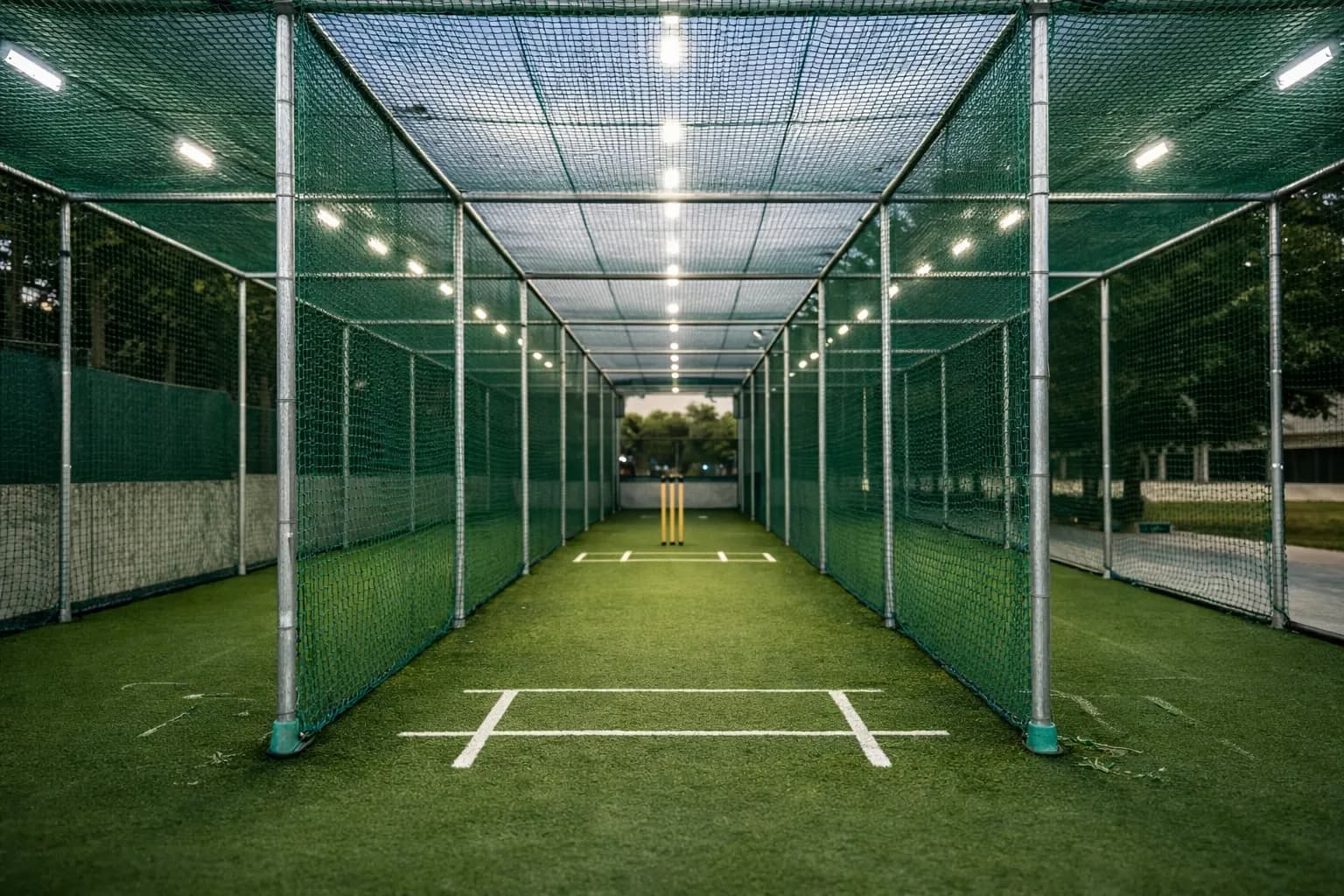
Cricket netting starts at ₹30 per sq ft with installation included. Compare the product, coverage and supporting structure on the same basis; a net-only figure and a new complete practice facility are different scopes.
Record the two sides, top and agreed end or divider panels. A 100 sq ft panel gives a starting illustration of ₹3,000; the lane floor area does not represent all those faces.
New steelwork, foundations, pitch turf, lighting, electrical work and specialist access need their own confirmation. The quotation should also identify old-net removal and any repair to reused supports.
Keep the ball type, enclosure layout and material details with the accepted quote. This makes it easier to resolve a later change from casual tennis-ball practice to a more demanding activity.
A practical project sequence
Whether the enquiry comes from an OMR apartment committee or a school in Anna Nagar, the useful starting information is the same: measured space, intended practice and the people or property outside the lane.
Provide wide photos, dimensions, the ball type and whether a frame already exists. Include the approach route for materials and the person authorised to approve the work.
Agree the net product, roof and end coverage, support changes, access arrangements and price. Set the programme around site availability, preparatory work and suitable weather.
Check joins, boundaries and access with the installer, then review the facility's operating arrangements. Keep installation records and arrange a defect check before opening practice to users.
Repair the worn section
Repeated ball contact often makes repair enquiries very specific. Show the damaged area and the whole lane so the team can assess whether local work will restore a suitable boundary.
A limited tear may be repaired when the surrounding net remains sound. Larger impact damage may suit a replacement panel. Stop practice where a hole or separation could let a ball through.
Previously fitted nets removed for painting or surface renovation can be assessed for reattachment. Their original dimensions, remaining strength and frame compatibility determine what can be reused.
Look beyond the visible hole to a rubbing bracket, raised lower edge or damaged frame. Repair costs follow the mesh, support and access work needed, with no universal minimum promised.
Keep the lane ready
The playing surface and enclosure should be inspected before practice, with a fuller review after damage or severe weather. Do not wait for a lost ball to reveal an open join.
Look at the bottom, corners, joins, roof and entrance for openings or loose fittings. Any defect that compromises ball retention should be fixed before that lane is used.
Keep the gate arrangement usable and make sure a passer-by does not have to enter the lane. Store loose equipment and cables where players cannot trip over them.
Ask for reassessment when the ball type, practice intensity or neighbouring use changes. General sports-perimeter netting is a separate option for mixed games rather than a dedicated cricket lane.
Chennai and nearby coverage
We discuss new lanes, replacement panels and existing-frame work across these service areas. Share the specific site and intended practice; a locality name alone cannot establish whether a roof or ground is suitable.
For an apartment or campus proposal, include the approving contact, access for materials and the surroundings beyond the intended lane.
School, home and club enquiries are easier to scope with the clear run-up, ball type and existing-frame photos.
Show the surface, drainage and neighbouring windows or walkways together with the planned sides and roof coverage.
Make an informed choice
This service is for supplying, fitting and repairing cricket net installations at your site. It does not book a turf, reserve a net session or provide coaching. Tell us whether you need one practice lane, several lanes, a replacement net or a ball-stop boundary.
Netting installation starts at ₹30 per sq ft for the agreed standard scope. The written quote separates covered net area from any new frame, poles, civil work, pitch surface, lighting or specialist access. These are not automatically included in a mesh-area calculation.
At the starting rate, 100 sq ft of netting is ₹3,000, including the agreed standard installation. A complete lane normally has multiple measured faces. Its floor area does not equal the total net area across both sides, the roof and end panels.
Do not assume that it can. State whether practice uses a tennis ball, taped ball or hard cricket ball, and how the lane will be used. The net product and complete support system should be specified for that activity; light recreational mesh is not evidence of hardball suitability.
Overhead ball containment is part of a proper outdoor practice-lane assessment. Side nets alone leave a route for lofted shots to escape. The roof, ends, side returns and entry all need to work together, particularly near roads, windows or neighbouring property.
The answer depends on the form of practice, run-up, player clearance, lane arrangement and site surroundings. A short home hitting enclosure is different from a full bowling lane. Send the available dimensions; the layout should be agreed before selecting poles or ordering net panels.
Possibly, after the building owner confirms the roof is suitable for the proposed activity and supporting structure. Check structural capacity, edge protection, waterproofing, access, neighbour exposure and drainage. A net quote by itself is not approval to create a rooftop sports facility.
An existing frame can be assessed for corrosion, stability, dimensions, attachment points and compatibility with the new netting. We need clear photos and access to inspect it. New mesh does not correct a weak pole or unsuitable support arrangement.
No. A practice net needs its specified hanging and support arrangement, with controlled movement and appropriate separation from players and neighbouring lanes. Excessive tension can create unwanted rebound; too much loose netting can intrude into the playing area.
A replacement impact panel or local repair may be possible after the remaining mesh and joins are checked. Holes that could let a ball escape need attention before practice resumes. If deterioration extends across the lane, replacing one small patch may not be sufficient.
The starting rate is for the accepted netting installation scope. Pitch surfacing, civil work, bowling equipment, electrical work and lighting need separate confirmation and pricing. List those requirements at the enquiry stage so the proposal does not leave gaps between contractors.
Yes, we can assess refitting previous work when the panels remain suitable and the frame or opening has not changed beyond reuse. Label and store removed panels carefully. Reattachment, replacement ropes, repairs and any new supports are quoted against their actual condition.
Look for holes, lifted bottom edges, loose fittings and an unsecured entrance before each session. Keep the surface usable and the surrounding exclusion area clear. Pause play if a defect could allow ball escape or if damaged supports, slippery surfaces or unsuitable weather make the facility unsafe.
From your first photo to the final fitting
Send your Chennai address, available length and width, intended ball type and wide photographs. Tell us whether you need new supports or are replacing netting on an existing frame.