
Utility and building enquiries on the southern side
For a shared shaft, identify the building representative and which services must remain accessible.
Chennai, Tamil Nadu
Plan the whole bird-entry boundary
A practical netting layout for buildings that need to keep working.
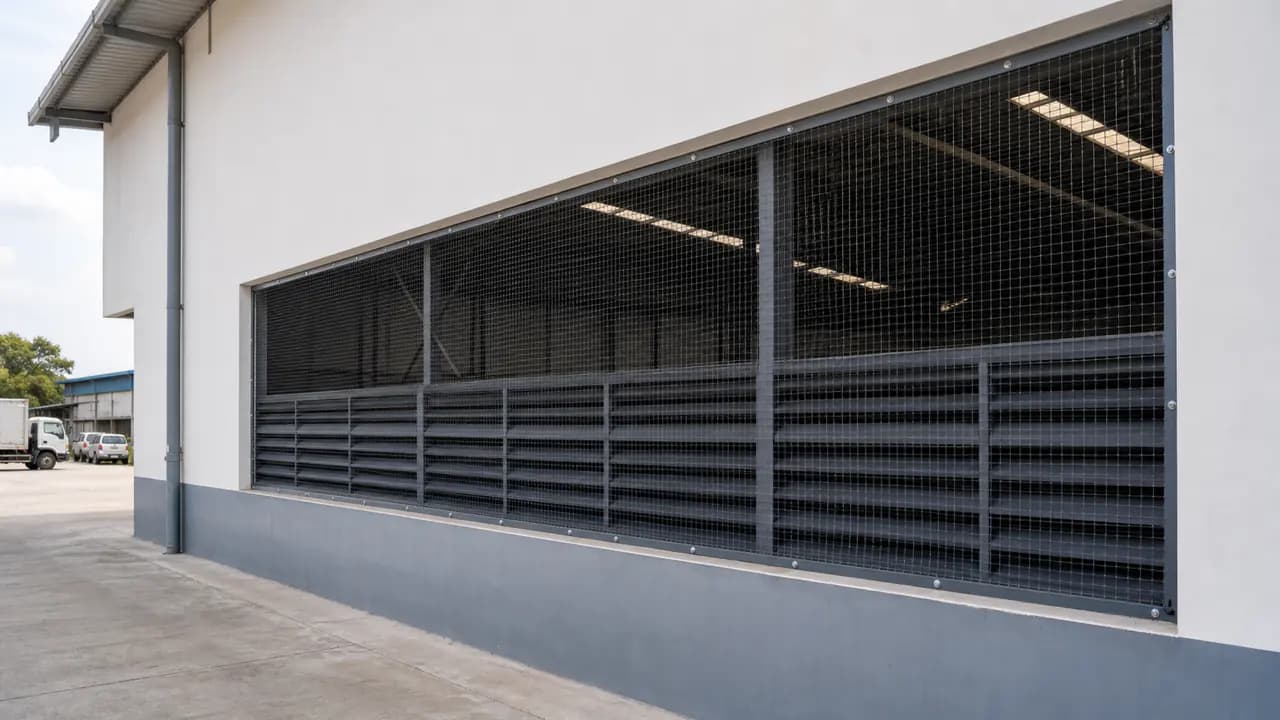
Several openings can need one coordinated bird-exclusion plan. EverSafe supplies and installs anti-bird nets in Chennai for utility shafts, building recesses, vents and other accessible openings, from ₹30/sq ft including installation. We identify the birds, map the boundary and keep equipment access part of the design.
Map the building
Anti-bird netting is useful when the problem extends across several faces, openings or types of bird. A shaft, vent and adjoining recess may be connected even when each looks like a separate job. The first decision is where the exclusion boundary can be continuous.
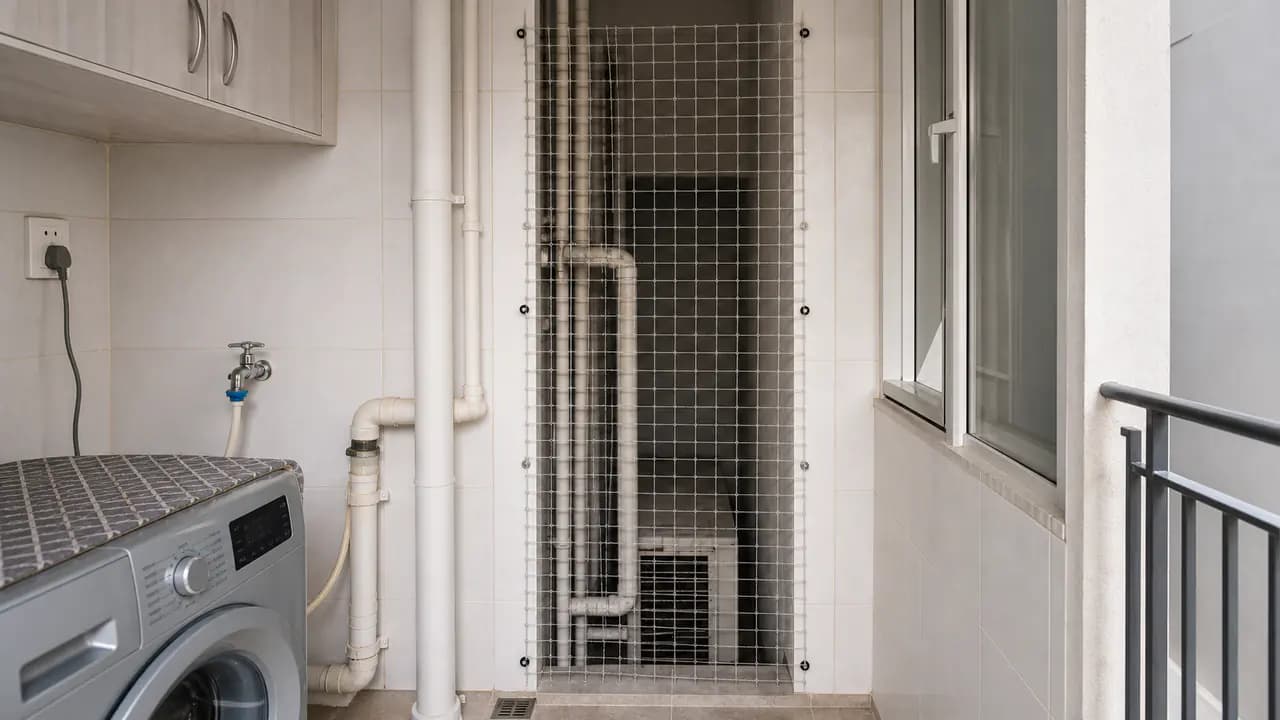
List which flats and services use the shaft. Plan an agreed closure plane and access points with the responsible building contact.
Record doors, vents, lights and maintenance routes. Netting must fit around how the premises operate; it cannot be allowed to obstruct required access or equipment.
Show the upper surface and the side approaches. A treatment on the most visible face may leave another opening untreated.
Match the target
“Anti-bird” describes the purpose of the installation, not one universal mesh. A specification chosen for pigeons may leave openings for smaller birds. The selection should be based on the species and the full closure detail.
Send a clear photograph of the birds or describe their size and activity. A supplier should be able to explain which birds the proposed mesh is intended to exclude.
Ask for the clear aperture, material and twine details on the estimate. Product thickness, colour and brand are separate characteristics; none replaces an aperture specification.
A suitable mesh cannot compensate for a large unfinished edge or an access flap left open. Connections between panels need as much attention as the centre of the net.
A clear starting point
From ₹30/sq ft, including installation within the agreed scope. A 100 sq ft starting-rate example is ₹3,000.
Your space, your starting budget
Use the width and height of one net or grill face, rather than the balcony floor area. Add other faces to the final enquiry.
Installation is included in the starting scope. The selected product, complete coverage, access and any agreed additional work determine the final quote.
A single area measurement does not establish the price for every shaft or facade. Confirm the complete estimate in advance; repairs and later alterations are priced separately.
A specification you can compare
We offer material and size choices, including nylon and HDPE options and branded products where available. On larger work, recording each panel and its fixing arrangement makes estimates easier to compare and later repairs easier to identify.
| Record in the estimate | Why it matters | Useful question |
|---|---|---|
| Material and product identification | Different nets have different construction and intended uses | Which exact net will be supplied? |
| Mesh opening and panel dimensions | The aperture and covered area answer different questions | Does each panel match the target bird and opening? |
| Border and attachment arrangement | The complete boundary must remain attached | Where will the panel connect to a suitable surface? |
| Access sections | Equipment may need repeated maintenance | How is each section opened, secured and checked afterwards? |
Working around the building
Before netting a shaft or utility space, identify everything a technician needs to inspect, clean or replace. Discuss the door or removable section first, rather than leaving future maintenance crews to improvise with a cut in the mesh.
Keep routine access to valves, drains and service joints. Existing leakage or blocked drainage must be addressed separately; a net is not a moisture remedy.
Allow the clearances specified for fans, AC equipment and electrical installations. Have the building’s service contractor review the proposed boundary when equipment is involved.
Tell the caretaker or maintenance team how to secure an access section after use. An open flap defeats an otherwise complete system.
Site conditions
Open mesh lets air pass through, but the selected product, accumulated debris and the position of the net can affect the opening. Keep required ventilation and emergency access intact. Do not use a bird-netting quote as evidence of fire performance or compliance.
Inspect the actual surface, existing corrosion and exposure. A sheltered utility shaft should not receive a specification based only on a coastal Chennai address.
Keep rainwater paths, gutters and cleaning routes clear. Do not use ordinary netting as a weather cover over equipment or stored goods.
If a premises requires tested flame resistance or a particular material specification, obtain the relevant product documents and the building professional’s approval before selection.
Work planning
Shared-area work needs permission, an installation boundary and a safe access arrangement. Timing depends on the number of panels, the premises’ operating hours, preparation and weather. We confirm a practical schedule after inspection.
Confirm which openings are private and which are common. Ask the authorised contact to provide access rules, equipment constraints and working-hour limits.
List fronts, returns and overhead sections separately. Agree on material, access points, preparation and the installed cost.
Do not leave birds or occupied nests inside the enclosed area. If a wildlife issue is present, resolve it with appropriate professional guidance before closing the net.
Walk through panel edges and access points. Keep a simple record of locations, agreed specifications and how to arrange a repair.
Measured netting
Anti-bird nets start at ₹30/sq ft including installation. A 100 sq ft qualifying netting area starts at ₹3,000. For shared shafts or a commercial facade, the required net area can differ substantially from the floor area of the room or building.
Measure the closure planes being fitted. Extra side returns, roof panels or irregular recesses must be included transparently.
A high or difficult opening may require additional access arrangements. Cleaning, old-net removal and repairs to a weak substrate should be set out as separate requirements.
Compare the same mesh, hardware, access sections and measured coverage. A low material-only rate does not describe the labour or service access included in an installed system.
Keep the boundary intact
A working exclusion boundary can be disturbed during painting, equipment replacement or plumbing work. Review it after those jobs and after weather that visibly affects the installation. Report defects from a safe position instead of climbing out to repair them.
Detached fittings, loose joins and open access points can create new entry routes. A photograph of the entire affected panel helps explain the issue.
Nets should not become shelves for cables, tools or discarded packaging. Debris can conceal damage and make service openings harder to use.
Record where entry is occurring. The cause may be an opened panel or an untreated neighbouring gap, rather than a need to replace every net.
Repair and alteration
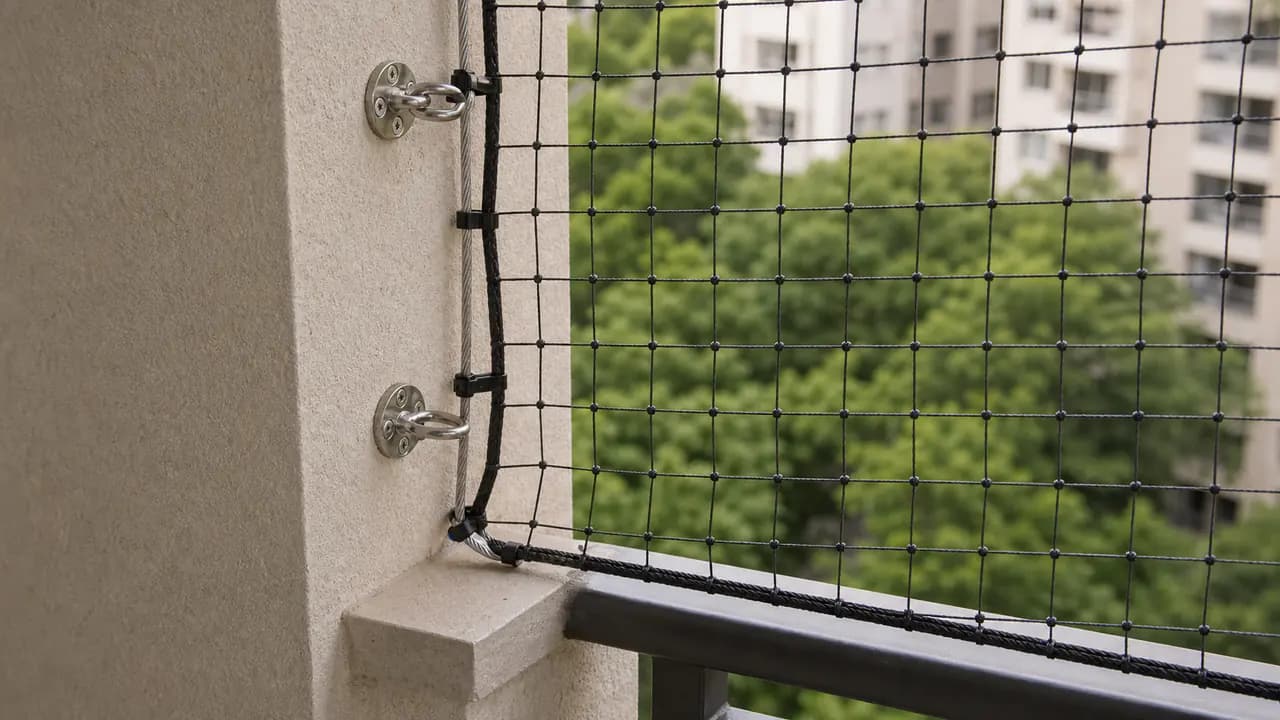
We assess patches, border repairs and reattachment of previous netting, including another installer’s work. A new pipe or replacement unit can change the original layout, so restoring it may require an altered panel rather than simply tying the old cut together.
Suitable only where the surrounding material and attachment remain serviceable. Widespread brittleness or numerous tears call for a different recommendation.
Assess old fixings and the current surface before reuse. Reinstate the whole boundary, including access closures.
A new access requirement may need a revised division of panels. Ask for the proposed change and its separate price before work begins.
Focus the scope
You do not need building-wide netting for every bird issue. Select the service around the actual entry or landing pattern, then assess whether adjacent openings also matter.
| Situation | Useful starting point | What it does not establish |
|---|---|---|
| A pigeon-entry problem at one household balcony | Pigeon net assessment | The scope for the whole building |
| Mixed birds entering several connected openings | Anti-bird net layout | A universal mesh size for all species |
| Birds resting on an isolated ledge | Bird-spike assessment | A closure for the open space behind it |
| Need for child, pet or worker fall protection | Separate safety design | Bird exclusion alone is not that safety system |
Chennai and nearby coverage
Coverage is grouped to make local enquiries easier. It does not imply the same building type or bird problem across every neighbourhood. Share the building name and the opening that needs attention.
For a shared shaft, identify the building representative and which services must remain accessible.
Send the number of openings and any restrictions on when the premises can be accessed.
Confirm the exact property and whether the proposal concerns a single unit or communal building space.
Make an informed choice
The starting rate is ₹30/sq ft including installation. Panel area, chosen mesh, fixings and access determine the agreed estimate. The 100 sq ft starting-rate example is ₹3,000.
Pigeon netting focuses on the entry problem at a particular pigeon-affected opening. Anti-bird work can involve other species, several openings or a coordinated building layout. The actual mesh and boundary must be chosen for the birds present.
Possibly, if its clear openings and the complete installation are suitable for all the target birds. Do not assume a pigeon-only net specification will exclude smaller species. Identify the birds before choosing the mesh.
Yes. We discuss nylon, HDPE and other suitable options, available branded products and custom panel dimensions. The estimate should identify the product, mesh opening and fittings rather than simply say “heavy-duty”.
We can assess it with the authorised building contact. Shared pipes, ventilation, servicing routes and permission must be addressed before agreeing on a closure plane.
We can assess accessible bird-entry openings at commercial premises. Equipment clearances, ventilation, operating hours and any required product specifications must be reviewed with the building team.
A net has open mesh, but ventilation must still be checked for the chosen product and placement. Netting does not fix leakage, poor drainage or dampness, and it should not obstruct required airflow.
An access arrangement can be discussed before fitting. It needs suitable fastening and clear instructions for closing it again after equipment servicing. Cutting an unplanned hole leaves an entry route.
No such rating should be assumed. If your premises requires a specific tested property, obtain documentation for the actual supplied product and approval from the responsible building professional.
The space must not be sealed around them. Inform us before the visit so appropriate professional guidance can be arranged before exclusion work proceeds.
We measure the plane or planes that the net will cover, including any returns and additional panels. The floor area of a room or the depth of a shaft alone is not the installed net area.
Yes, subject to the condition of the surrounding net and fittings. We assess patches, reattachment and layout changes; extensive deterioration may make a replacement panel more suitable. Repair work is quoted separately.
The schedule depends on panel count, preparation, safe access, permissions, operating hours and weather. We confirm the installation sequence after the site assessment rather than promise one duration for every building.
Ask for written terms for the specific net and fitting scope. Inspect visible edges and access closures after servicing or damage, and arrange a repair promptly. No fixed lifespan or maintenance-free performance is promised.
From your first photo to the final fitting
Include wide photographs of the shaft or facade, close-ups of the entry gaps, the birds present and any equipment behind the proposed net. Add your Chennai locality and building contact.