
OMR, Velachery and Madipakkam
For compact utility spaces, include the washer lid, door and window movement in the photographs rather than only the empty ceiling.
Chennai, Tamil Nadu
Make room for everyday laundry
Choose a drying system for the person, the laundry and the available ceiling. A comfortable rod drop matters just as much as the number of rods.
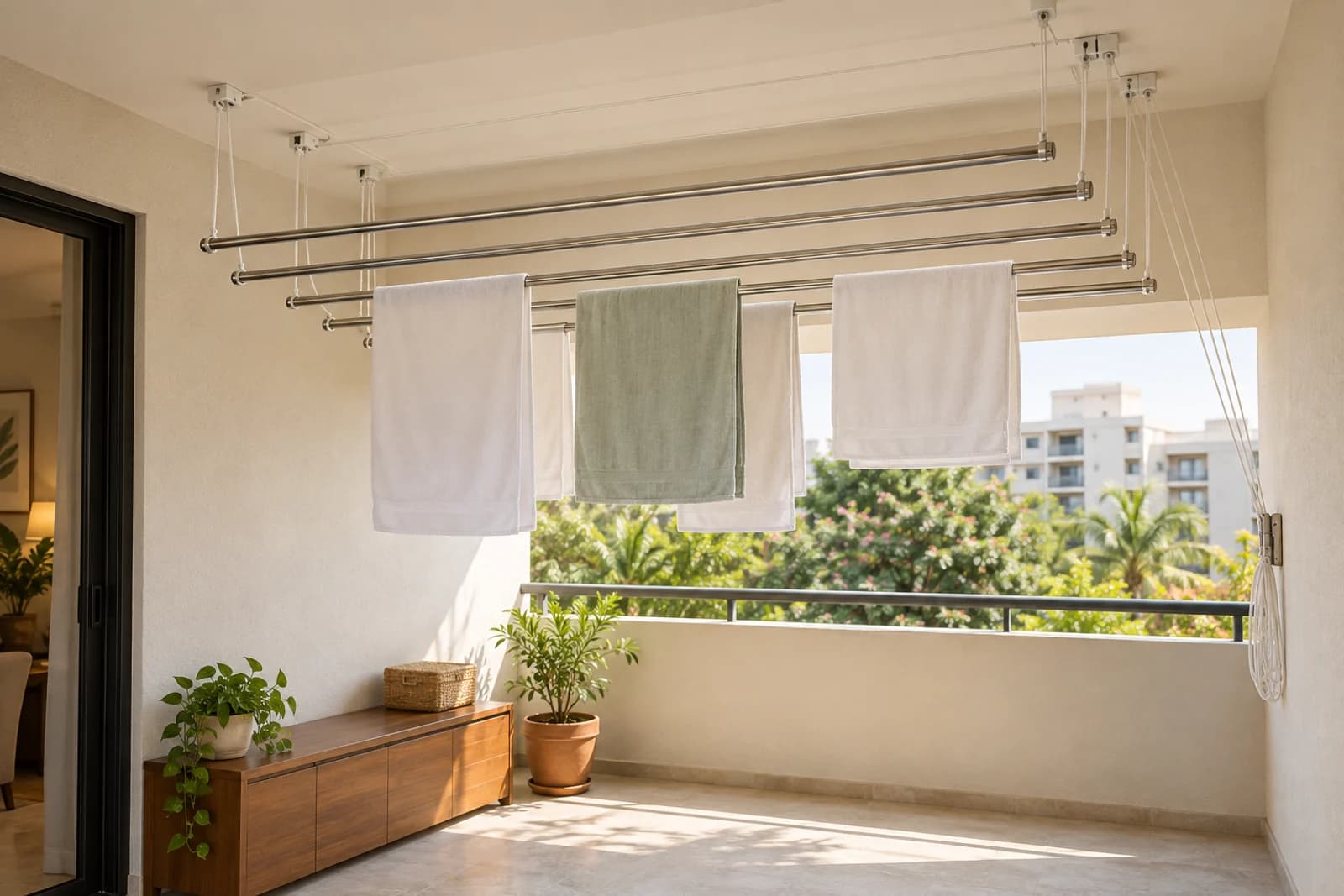
Give laundry a defined place above your Chennai balcony floor. EverSafe installs ceiling cloth hangers and pulley drying systems sized around the washer, window and person using them. Choose the rod layout and operating height after checking the ceiling, with standard installed systems starting at ₹2,600 each.
Begin with wash day
A pulley hanger should improve the laundry routine rather than merely move a floor rack overhead. Picture the space while a full load is hanging, not only when the rods are raised and empty.
Identify the comfortable loading position and the route to the control. The person using the system should be able to reach and operate it without leaning toward the balcony edge.
Check the washing-machine lid, utility door and window swing. Allow for the garments below the rods as well as the rods themselves when checking those movements.
Long sarees, sheets, shirts and towels occupy the space differently. Describe a normal wash rather than choosing a system only by its advertised rod count.
Compare the mechanism
Ceiling hanger, pull-and-dry system and pulley dryer are common search terms for related products. Ask which actual model is being offered and how its rods move before comparing the price.
| Option | Useful when | Check before choosing |
|---|---|---|
| Individually controlled rods | You want to lower one drying position at a time | Cord arrangement, reach and the model's per-rod limit |
| Linked ceiling rack | You prefer a drying frame that moves as one unit | Effort and balance with the expected wet load |
| Wall-mounted folding rack | The wall arrangement suits the space better than a ceiling system | Model availability, wall support and projection into the walkway |
| Freestanding floor rack | Laundry volume is modest and floor space is available | Stability, storage and whether it obstructs normal movement |
A clear starting point
Systems start at ₹2,600 each. We confirm the model, rod dimensions, mechanism and accepted fitting scope before you choose.
Your space, your starting budget
Enter the number of complete drying systems you need. Rod length, model and support requirements are confirmed separately.
Installation is included in the starting scope. The selected product, complete coverage, access and any agreed additional work determine the final quote.
Two standard systems give a starting example of ₹5,200. This is per system, not per sq ft; additional ceiling work and repairs require a separate assessment.
Fit the working space
The available ceiling length does not tell the whole story. A well-placed system has enough room while being loaded, while drying a full load and while parked overhead.
Measure the clear ceiling and note where beams narrow it. Confirm the usable loading height and the hanging length below the rods, particularly for sheets and sarees.
Leave space between garments and keep the walkway practical. A larger system is not automatically better if laundry blocks the window, brushes the washer or makes the balcony difficult to pass through.
The fixing base matters
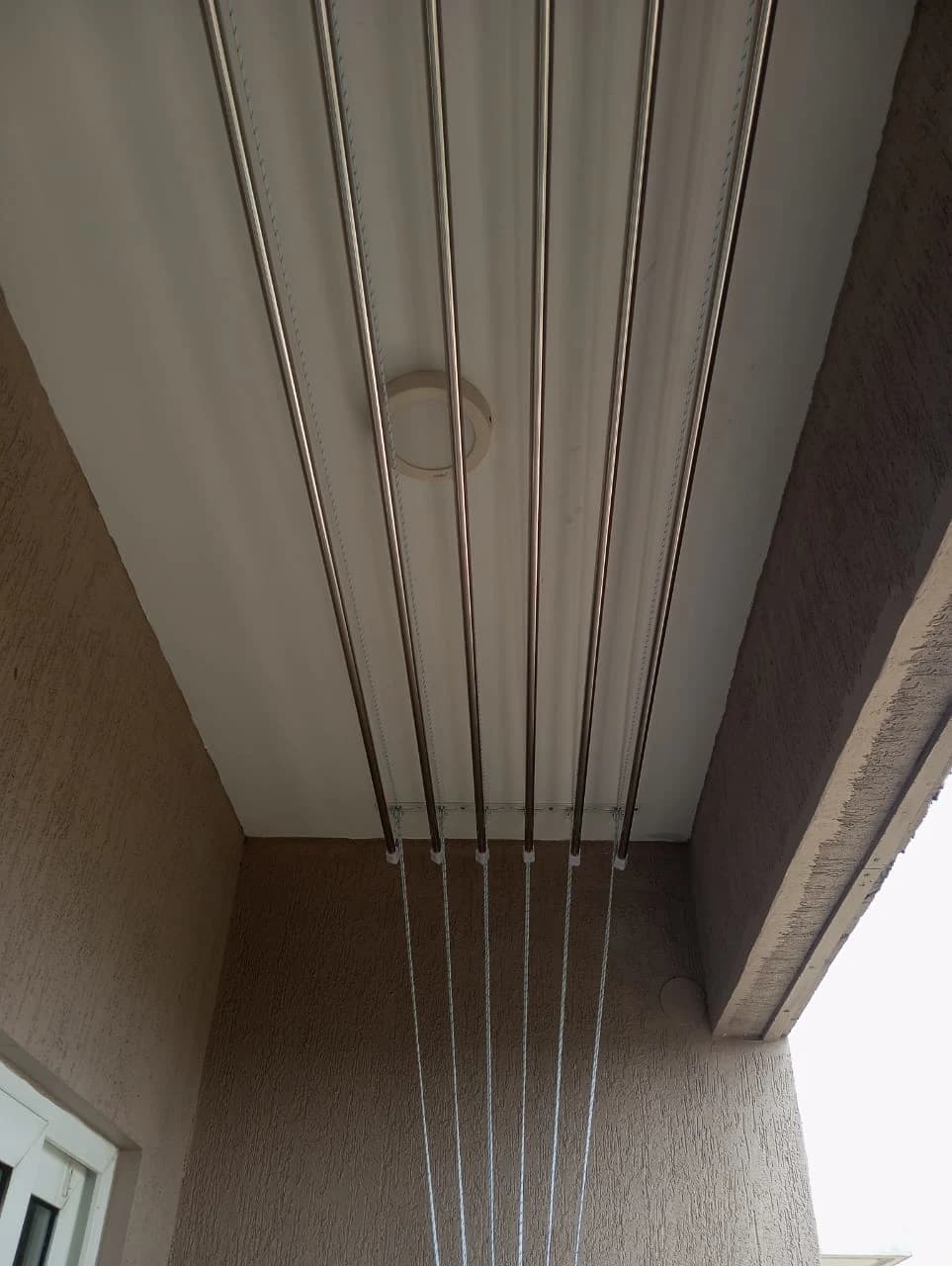
Ceilings can contain wiring, pipes, decorative panels and waterproofing details that are not apparent in a photo. The installation needs the actual fixing base checked before a model and position are confirmed.
The installer checks the selected fixing locations and suitable hardware. Mention cracks, loose finishes and any known concealed services before work starts.
Do not treat gypsum, PVC or another decorative board as proof of structural support. Any fixing through or around the finish needs a suitable arrangement and an agreed reinstatement scope.
In a rented apartment, agree drilling and restoration with the owner. If painting or renovation is planned, discuss its sequence to avoid paying for an immediate removal and refit.
Look at the whole system
Stainless steel or aluminium rods are only one part of a clothes-drying system. The mechanism, rope path, brackets and the quality of the installation shape how practical it feels in daily use.
Record the rod material, finish, length, count and mechanism in the quotation. Compare actual product details rather than assuming every stainless steel or aluminium system is identical.
For a Chennai balcony exposed to coastal air, ask about the care of brackets, fixings and pulleys as well as the rods. Avoid treating an attractive finish as a lifetime rust-proof guarantee.
Comfort under a wet load
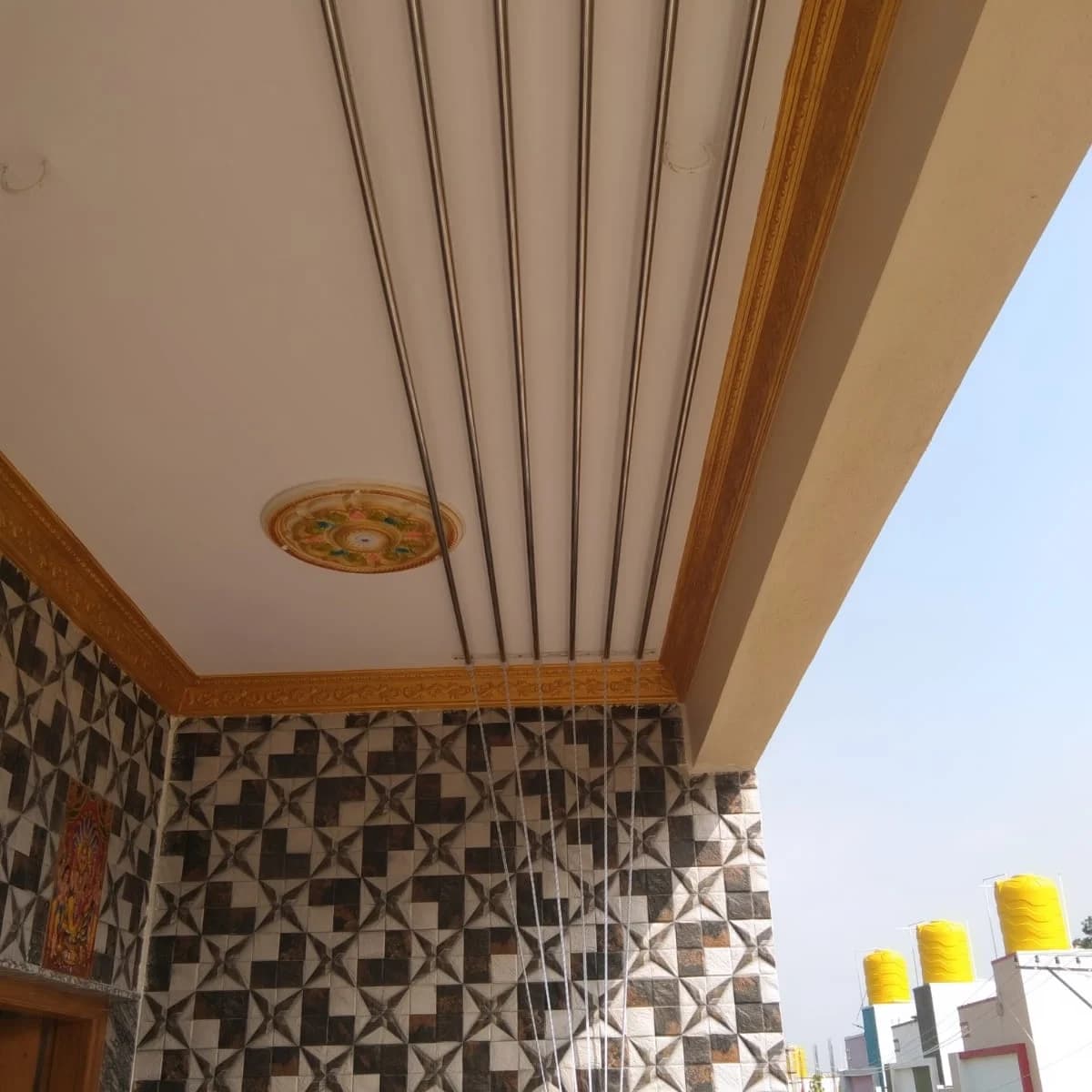
Laundry weighs more when wet, and an uneven load can make operation awkward. The selected model's instructions should explain the total limit, any individual-rod limits and how to distribute garments.
Ask for the manufacturer's guidance for the actual system supplied. Do not rely on a universal kilogram claim or use the hanger for stored goods, plants or other suspended loads.
Position the rope or control where it is accessible without crossing a doorway or walkway. Secure loose cord as the model requires and keep loops away from children and pets.
At handover, practise raising, lowering and securing the rods using the agreed instructions. Stop using the system if a bracket moves, a rope frays or the mechanism starts to jam.
Drying in a coastal city
Chennai's humid periods and northeast monsoon can make air drying less predictable. A ceiling system can free floor space and organise garments, but the surrounding airflow and weather still decide how drying progresses.
Avoid packing wet clothes so closely that they touch along the whole rod. Use the available rod length and spacing within the model's load limits instead of overloading one convenient section.
Allow for long garments and movement in the breeze. Clothes should not hang into a fan, AC equipment, a neighbour's space or beyond the protected balcony boundary.
Bird netting and invisible grills can be considered alongside the hanger, but clothes rods and control ropes must not use their mesh or cables as load supports.
One system, a clear specification
A standard ceiling cloth hanger starts at ₹2,600 per system including installation. The useful comparison is the supplied model and its full fitting scope, not a per-square-foot calculation for the balcony.
The quote should state the selected rods, mechanism, controls and standard fittings, along with the agreed installation. Rod length and count should be written down rather than inferred from a photograph.
An unusual support arrangement, false-ceiling access, old-system removal or repairs may need a separate allowance. Confirm these items before the installation appointment.
Two standard systems start at ₹5,200 for their agreed installed scope. Different model choices or extra building work can change the total; a repair is quoted against its actual parts and labour.
From measurements to a useful demonstration
Small position changes can make a large difference to daily comfort. Agree the working layout with the household before fitting, then use the handover to check that it performs as expected.
Send your Chennai location, ceiling measurements and wide photos. Include the washer, window, lights, fan and any existing bird net so the team can discuss a realistic model.
Confirm structural fixing, rod layout, loading height and the control route. Agree the installed price, access arrangements and any owner permission or ceiling work.
The installer fits the accepted system and demonstrates its operation and load instructions. Check the washer and window again and retain the model details and written support terms.
Keep a working system useful
You can enquire about an existing hanger even when the job is not a new installation. Send photographs of the mechanism and problem so the team can assess compatible parts and the condition of the supports.
Frayed rope, stiff pulley movement and a control that does not hold need attention before further use. Replacement depends on the selected system and suitable parts; avoid improvised rope substitutions.
A loose ceiling fitting requires the fixing base to be checked, not just the visible screw tightened. Rod damage and corrosion may call for part replacement or a different system.
Previous systems removed for painting or relocation may be reusable after assessment. New room dimensions, worn parts and changed ceiling construction determine the refit scope and price.
Chennai and nearby coverage
Share the utility-space measurements and preferred operating height when contacting us from these areas. We choose the hanger for the room and household rather than allocating one standard model to every neighbourhood.
For compact utility spaces, include the washer lid, door and window movement in the photographs rather than only the empty ceiling.
Tell us about the usual laundry and the person operating the rods so length, loading height and controls can be discussed together.
New installations and existing-system repair enquiries both need ceiling and mechanism photos, with any model label that is still available.
Make an informed choice
A standard system starts at ₹2,600 including installation. The selected rod length, rod count, material and mechanism determine the model and final quote. Any special ceiling support, removal of an old unit or alteration is identified separately.
No. Our starting price is per system, not per square foot of balcony area or per individual rod. Two standard systems give a starting example of ₹5,200, including their agreed standard installation. Different models or additional work change that total.
Send the clear ceiling length and width, the approximate ceiling height and photos showing the washer, windows, fans, lights and pipes. Tell us who uses the hanger and whether laundry includes long sarees, sheets or heavier towels. Available space must be checked with rods raised and lowered.
Often, if a suitable structural fixing base and usable operating space are available. We check the lowered rods, hanging garments, washer lid and the path through the balcony. A shorter or different model may be more practical than filling the ceiling with the maximum number of rods.
A decorative ceiling board is not assumed to be a load-bearing fixing base. The installation needs suitable structural support behind or beyond the finish, with services and waterproofing considered. The support arrangement and any opening or reinstatement work need confirmation before fitting.
Use the documented limit for the selected model and its individual rods, together with the installation requirements. There is no universal load figure for every system. Wet towels and bedding can be much heavier than dry items, so distribute them as instructed and avoid overloading.
Both can be available in suitable hanger models. Compare the actual material specification, finish, rod design, pulley quality and load instructions rather than the material name alone. In an exposed Chennai utility area, ask about care of both the rods and the metal fittings.
That depends on the selected mechanism. Independent rods let you lower one drying position at a time, while a linked rack moves as a unit. Ask for a demonstration and check that the person using it is comfortable with its controls before finalising the model.
They can help organise spacing and keep the floor clear, but they do not guarantee a drying time. Drying depends on airflow, humidity, how wet the clothes are and how closely they are packed. The system is not an electric dryer or a rainproof roof.
Usually the two layouts can be assessed together. Keep rods, garments and operating cords clear of the net or cable barrier and preserve the required cleaning and service space. Neither system should be used as an improvised support for the other.
We assess rope wear, pulley problems, damaged rods and loose fittings on existing systems, including previous work. Repair depends on the model, compatible parts and the condition of the ceiling fixings. Share photos and the model details; repair work is priced separately.
We can assess removal and reinstallation where the old system remains serviceable and suits the new location. Changed dimensions, ceiling construction or worn components may require new parts or a different unit. Refit and reinstatement work need their own agreed scope.
Follow the selected model's cord-management instructions and secure controls in the intended holder. Keep loose loops and hanging cords out of children's and pets' reach, including where furniture provides access. Do not improvise knots or let anyone play with the rods or ropes.
From your first photo to the final fitting
Send your Chennai address and photos of the ceiling, washer, windows and available walkway. Add the kind of laundry you dry and any existing system that needs repair or refitting.