
Northern residential and training-space enquiries
Share the lane ends, available run-up and whether the site is a terrace or ground-level space.
Batting lanes, bowling practice and academy netting
Build a practice lane around the way you train: the run-up, the ball, the shot direction and the space around the net.
EverSafe installs cricket practice nets in Visakhapatnam for batting lanes, bowling practice and training areas beside homes, schools or shared grounds. We plan the enclosure around the ball used, the available run-up and the people or property beyond the practice line. Standard net installation starts from ₹14 per sq ft, including installation; new poles, frames, foundations, pitch and turf work are separate items to agree in the quote.
Start with the session
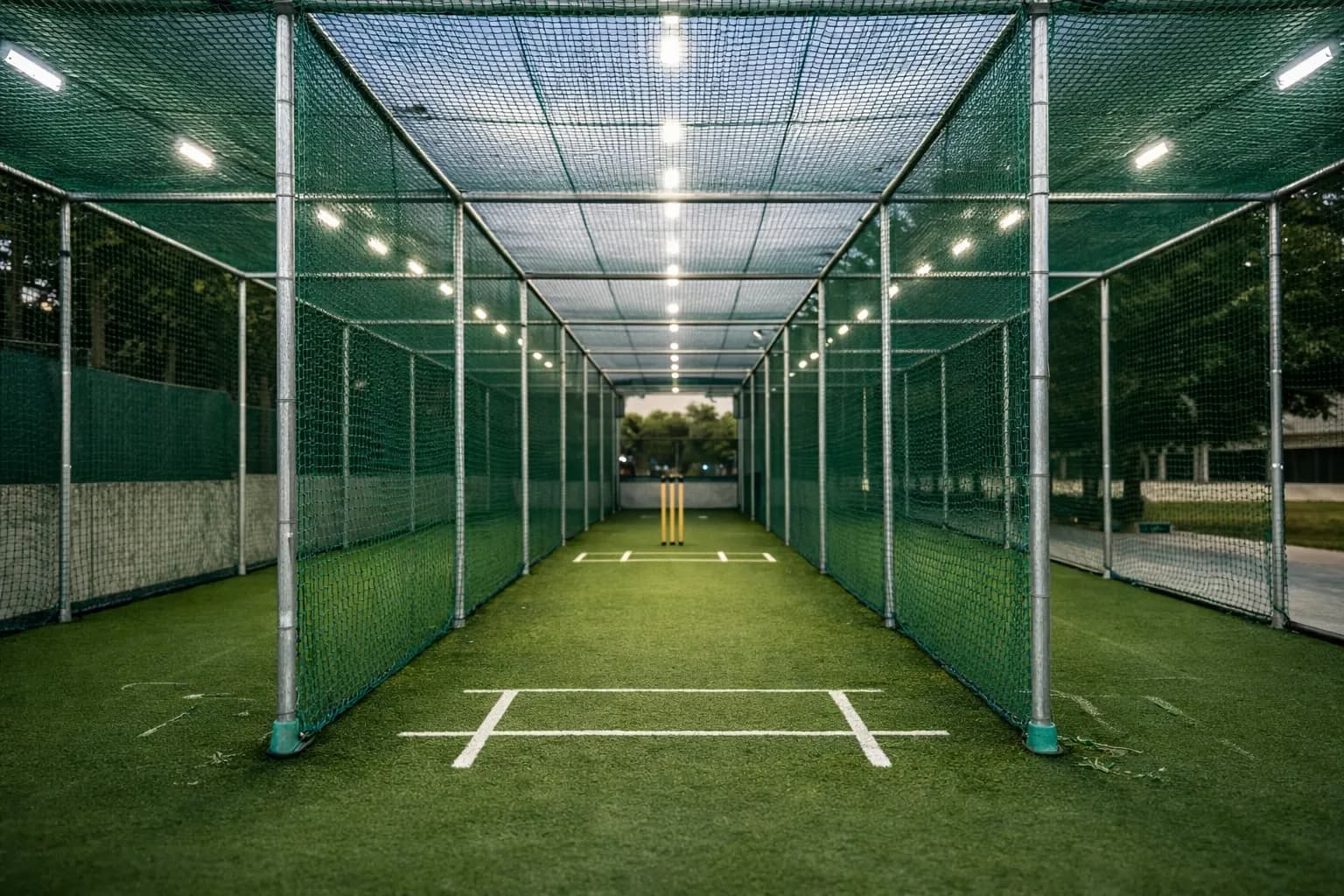
The first question is how the lane will be used. A short batting drill, a full bowling run-up and coached sessions with several players create different requirements. Good planning keeps the active practice line distinct from waiting, coaching and walking space.
Describe the drills you want to do before choosing a cage size. The batter needs room to move, and the bowler needs a suitable approach and follow-through. Check where spectators, water tanks, solar equipment and adjoining homes sit relative to the practice line. An available rectangle on a roof is only the start of the assessment.
Plan how players enter, leave and collect balls without crossing another active lane. A waiting area should not sit where a back panel is expected to absorb repeated shots. Include the coach's viewing position, storage access and any shared school or community walkway in the layout.
Identify the sides facing roads, glass, parked vehicles or neighbouring play. The net arrangement should follow those actual ball paths. Where the wider space also hosts football or other games, discuss the outer boundary separately from the dedicated cricket lane.
Compare sports boundary nettingUnderstand the measured area
A quotation is easier to understand when each net panel has a clear purpose and measurement. Side walls, the far end, the entrance return, internal dividers and any top cover can all add to the installed area.
The length and width of the practice strip describe the floor. They do not include the height of the side panels or an overhead net. Ask for a simple sketch showing the net faces and their measured area, with the intended entrance left clear in the plan.
The panel behind the batter and areas hit repeatedly may need a different wear plan from a divider or a quieter side. Discuss compatible protection or a replaceable section where appropriate. A smaller amount of cheaper net should not be substituted for the agreed coverage after the quote.
Understand your quote
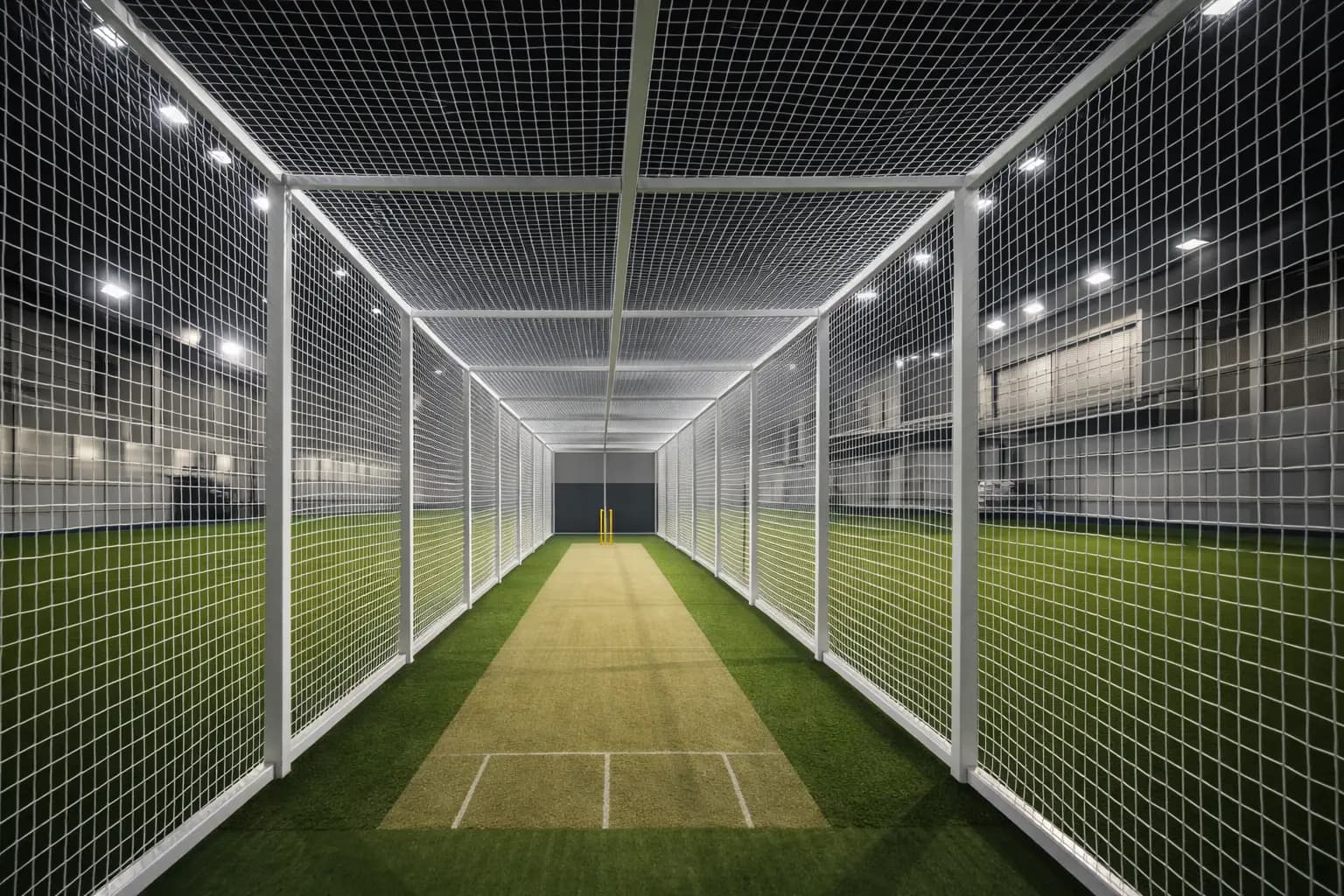
The starting guide includes the agreed standard net, compatible perimeter fittings and installation labour on a suitable assessed support. The quote measures the net faces being installed, rather than treating the practice-strip floor as the complete enclosure.
Plan your budget
Measure one covered face in feet. Discuss side returns and other openings separately.
New poles, fabricated frames, foundations, structural or civil work, pitch preparation, turf, drainage, lighting and bowling equipment are separate items. Confirm delivery, taxes, any minimum billing and exclusions in the written quote. Repairs and refitting are priced by their own scope.
Choose for the actual ball
We can discuss nylon, HDPE, different mesh openings and panel sizes. Selection follows the intended cricket ball and frequency of use. No single colour, thickness label or generic safety-net description establishes that a product suits a practice lane.
The mesh must suit the smallest ball that will be used, including its behaviour against the net. Share whether the practice is with tennis balls, leather balls or both. Ask for the chosen opening and mesh construction in the quote, and do not judge containment from a photograph alone.
Twine construction, knots or knotless joints, border rope and how the panel is supported all affect serviceability. A sound net can still fail at a worn edge or sharp contact point. The selection should cover the whole panel and perimeter, rather than comparing only nominal twine diameter.
If you want a UV-treated or named branded net, request the exact supplied product and relevant specification. A brand should be confirmed by the material documentation. We will explain the selected option and its care requirements without turning a product name into an unsupported life or warranty promise.
Structure before netting
On an exposed rooftop in Vizag, the net, its supports and the existing building need to be considered together. Coastal exposure is assessed where it applies; it is not a reason to prescribe the same frame to every locality.
Identify the structural support, waterproofed areas, parapet condition and building rules before work is agreed. Existing railings, pipes or decorative masonry should not be assumed to accept a practice enclosure. Where new structural supports are needed, obtain the appropriate design and approval from the responsible building professional.
A high terrace, an open plot and a sheltered ground have different exposure. The assessment covers the proposed net height, roof panel, support condition and access for later repairs. Hardware material and protective finish should be stated for the selected system, especially where salt-bearing air reaches exposed components.
Tell us about stairs, lift restrictions, roof access, nearby power lines and occupied areas below the work. Materials need a suitable delivery route and the work zone needs to be managed. Installation dates and duration follow that plan and the agreed scope.
Contain the likely escape paths
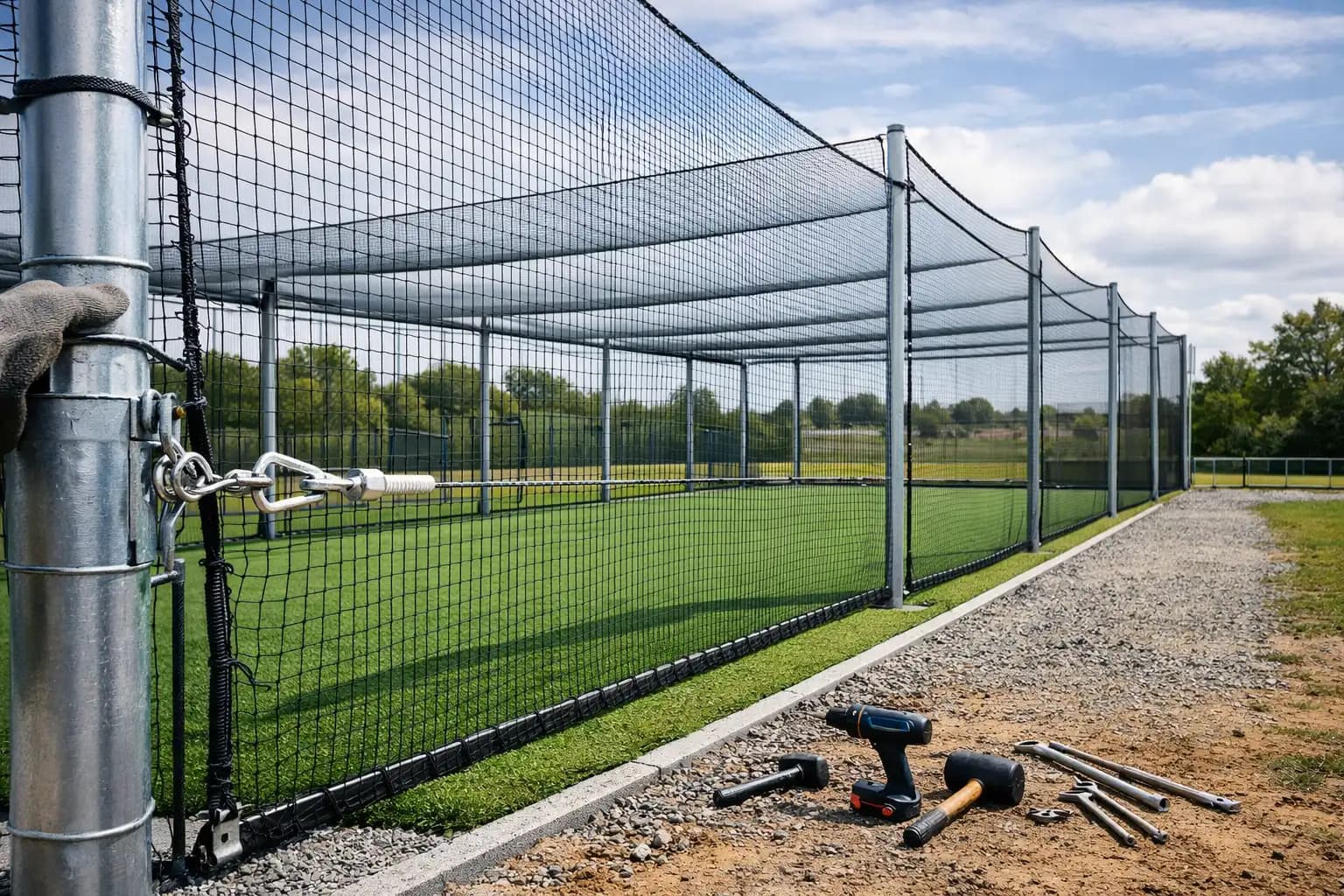
A net can appear complete from the front while leaving a ball path open at the roof, a corner or the entrance. We consider the intended shots and the use of adjacent space before agreeing the enclosure.
If a lifted ball could travel toward homes, a road or another active area, discuss an appropriate overhead or alternative containment arrangement. The support implications must be assessed at the same time. Net height alone should not be presented as a guarantee that every shot will stay inside.
The lower edge should be planned so balls are not routinely escaping beneath it. Uneven ground, drains and access to pitch maintenance can affect the detail. Corners and panel joins need a continuous, compatible attachment arrangement rather than improvised loose ties.
Agree the entrance position and how it is secured during a session. A coach or player should not need to walk through a likely shot path to reach it. Removable or opening panels, where suitable, need an operating method that does not leave a gap during practice.
Choose the right scope
These requests can look similar in a search result but describe different work. Compare the training purpose first, then the complete specification and installation quote.
| Your requirement | Useful scope | What needs a separate decision |
|---|---|---|
| Batting and bowling in one defined line | A dedicated cricket practice lane with assessed sides and back coverage. | Run-up, active-lane separation, top cover and any pitch work. |
| Balls leaving a larger multi-use ground | Sports boundary or ball-stop netting around the relevant sides. | Sport mix, boundary height, support line and public access. |
| A box-cricket playing space | An enclosure planned around the full playing area and its access. | Frame, foundations, turf, lighting and game-specific layout. |
| An existing lane with isolated damage | Inspection for a compatible patch, border repair or reattachment. | Whether surrounding mesh and support remain suitable for use. |
| A generic balcony or bird barrier | A separately specified household or bird-exclusion service. | It should not be substituted for impact-rated sports use without assessment. |
From enquiry to handover
The installation process begins with the intended practice, not a generic package name. Each stage should leave the owner clear about what is included and what needs separate work.
Send your Visakhapatnam location, photographs from both ends of the space, approximate length and width, available height and the ball type. Mention the users, planned run-up, nearby property and any existing frame. A simple sketch is useful where the enclosure changes direction.
Confirm the net faces, openings, mesh specification, support condition and access. New structural work is priced separately and coordinated before net fitting. The written estimate should identify the net and standard installation, plus any removal, high-access or custom work.
Panels and borders are fitted to the approved arrangement. The review covers joins, lower edges, access openings and contact points where rubbing could occur. Checking the finished enclosure does not replace the structural assessment or permit an improvised load test.
Keep the agreed panel specification and quote for later repairs. Handover should identify areas to inspect, the method for using an access opening and how to report damage. Coaching supervision, protective equipment and responsible training remain part of using the practice space.
Repair the fault and its cause
EverSafe also assesses cricket net repair work at affordable, scope-based prices. A small hole, a detached border and a deteriorated panel are different jobs; the repair quote follows the actual fault.
A compatible patch or border repair may be appropriate when the surrounding net remains serviceable. Show the damaged area and the full panel in your photos. If the material breaks easily, damage is widespread or the frame has moved, replacement or support work may be more sensible than repeated patches.
We can assess old work from another installer as well as existing EverSafe installations. The cause of the detachment matters: worn fittings, abrasion, frame movement or damaged masonry require different responses. Refastening the same failed point without addressing it would leave the original problem unresolved.
Painting, roof work or changes to the practice layout may require panels to be removed and refitted. Review their condition and label reusable pieces before work begins. Refitting to a different opening, disposal and making good old fixing points are separate items to confirm.
Keep the lane ready for practice
Look over accessible mesh, borders and openings before play. After severe weather, an impact to the frame or nearby maintenance work, pause use until affected parts have been reviewed.
Look for broken strands, opening knots, rubbing at posts and gaps along the ground. Remove snagging objects from the practice area without pulling at the net. Do not use the mesh as a climbing surface or hang equipment from it.
Cleaning products and pressure washing can damage some materials or fittings. Use the supplier's instructions and arrange access where cleaning cannot be done safely from the ground. Where coastal exposure is present, include visible corrosion and deposits on hardware in the maintenance review.
Retain the net specification, date of work and photographs of completed panels. A clear damage photo and an explanation of when it appeared help the team distinguish wear from a fixing problem. Stop the affected lane from being used while a ball-containment fault remains open.
Around Visakhapatnam
Locality helps arrange the enquiry; the ball type, available space and support condition decide the installation. These groups keep nearby enquiries together without claiming that one area requires a particular product.
Share the lane ends, available run-up and whether the site is a terrace or ground-level space.
Include adjacent homes, windows and paths in the photographs so containment can be planned around them.
Mention school or community access, existing poles and any pitch or frame work being arranged separately.
Questions before booking
The starting price is ₹14 per sq ft, including the agreed standard net installation. The measured net faces, selected specification and fixing conditions determine the quote. Poles, fabricated frames, foundations, pitch preparation and turf are separate scope items, so a net-only figure should not be treated as the full cost of building a practice facility.
No. The net area is the combined area of the faces being fitted: side panels, back panel, dividers and any overhead cover. The practice strip or turf floor is measured separately. Ask for a face-by-face measurement so two installation quotes can be compared on the same coverage.
We can assess a terrace for a practice-net arrangement. The decision depends on the structure, permitted fixings, waterproofing, player clearance, wind exposure and where a missed ball could travel. A building professional may need to approve additional supports. A terrace with enough floor length does not automatically have a suitable structure for the enclosure.
Do not assume that it can. Tell us which balls will be used and whether the practice includes regular hard hitting or a bowling machine. Mesh opening, twine construction, net condition and the complete support arrangement need to suit that use. A net selected for light tennis-ball drills should not be reused for leather-ball practice without assessment.
Nylon and HDPE options, different mesh openings, twine constructions and made-to-measure panels can be discussed. The selected combination must contain the intended ball and suit repeated impact. Ask the quote to identify the material, mesh opening and twine specification; a colour or a brand name by itself is not a complete specification.
Overhead coverage is useful where lifted shots could leave the lane toward buildings, roads, parking or another play area. Some training layouts need a different containment plan. We review the ball path and the support implications before confirming the top cover; leaving the top open is not a shortcut when it would allow unsafe ball escape.
The usable length depends on the age and purpose of the training, the bowler's run-up, batting position, follow-through and separation from people behind the lane. Share a sketch and explain the drills you want to run. We will assess the net layout around that use instead of promising that one standard lane length fits every terrace or ground.
Possibly, after their condition and suitability are checked. Loose bases, corrosion, sharp contact points, damaged joints or an unsuitable span can make reuse impractical. The quotation should separate net replacement from any required frame repair or replacement. Covering an unstable frame with a new net does not resolve the support problem.
Those items are not included in the ₹14 per sq ft starting net-installation guide. Pitch preparation, turf, lighting, drainage, electrical work and bowling equipment need separate suppliers or separately agreed work. If you are planning a complete facility, describe each requirement so the net scope can be coordinated with the other work.
We can assess side panels and divider nets for a multi-lane layout. Player entry, coach movement, the back of each lane and the spaces between active lanes need to be considered together. Dividers must not be assumed to provide the same impact protection as a properly specified outer containment system.
Yes, we assess patch repairs, border repairs, reattachment and refitting of existing work, including installations by another provider. Send clear photos and identify where balls strike the net. Repair depends on the strength of the surrounding material and the support condition; widespread brittle or broken mesh may need replacement. Repairs are quoted by the fault and scope.
Removal and refitting can be assessed, but reuse is not guaranteed. The next opening, frame spacing, mesh condition and remaining panel dimensions may differ. Arrange a review before dismantling or cutting the net, and agree how panels will be identified, stored and reattached. Making good old fixing points is a separate item.
Where a site is exposed to salt-bearing air or strong weather, check accessible hardware, borders and contact points for corrosion, abrasion and loosening. Inspect the impact zone and lower edges before practice, and follow the material supplier's cleaning instructions. Stop using a damaged lane until it is assessed; do not climb the net or tighten a support system yourself.
Enquiries can be made from Madhurawada, PM Palem, Seethammadhara, MVP Colony, Gajuwaka, NAD Junction, Marripalem and Pendurthi. Send your exact location, available lane dimensions, ball type, site photos and access details. Scheduling and the installation approach are confirmed after reviewing the work, rather than promised from the postcode alone.
Your Visakhapatnam team
Send photos from both ends of the space, your ball type, approximate lane dimensions and Vizag locality. We will explain the net coverage, support checks and installed quotation.