
Madhurawada and the northern side
Include the utility ceiling, washer and open side in one set of photographs.
Pulley drying rods for balconies and utility rooms
Keep laundry off the floor without making the room harder to use. Choose the hanger around your ceiling, reach, airflow and regular wash.
Ceiling cloth hangers give a Vizag balcony or utility room a dedicated drying space above the floor. EverSafe installs measured manual pulley systems so rods can be lowered for loading and raised when the room needs to stay usable. Standard installed systems start from ₹2,800. We check the ceiling, rod layout, controls and everyday laundry clearance before agreeing the system.
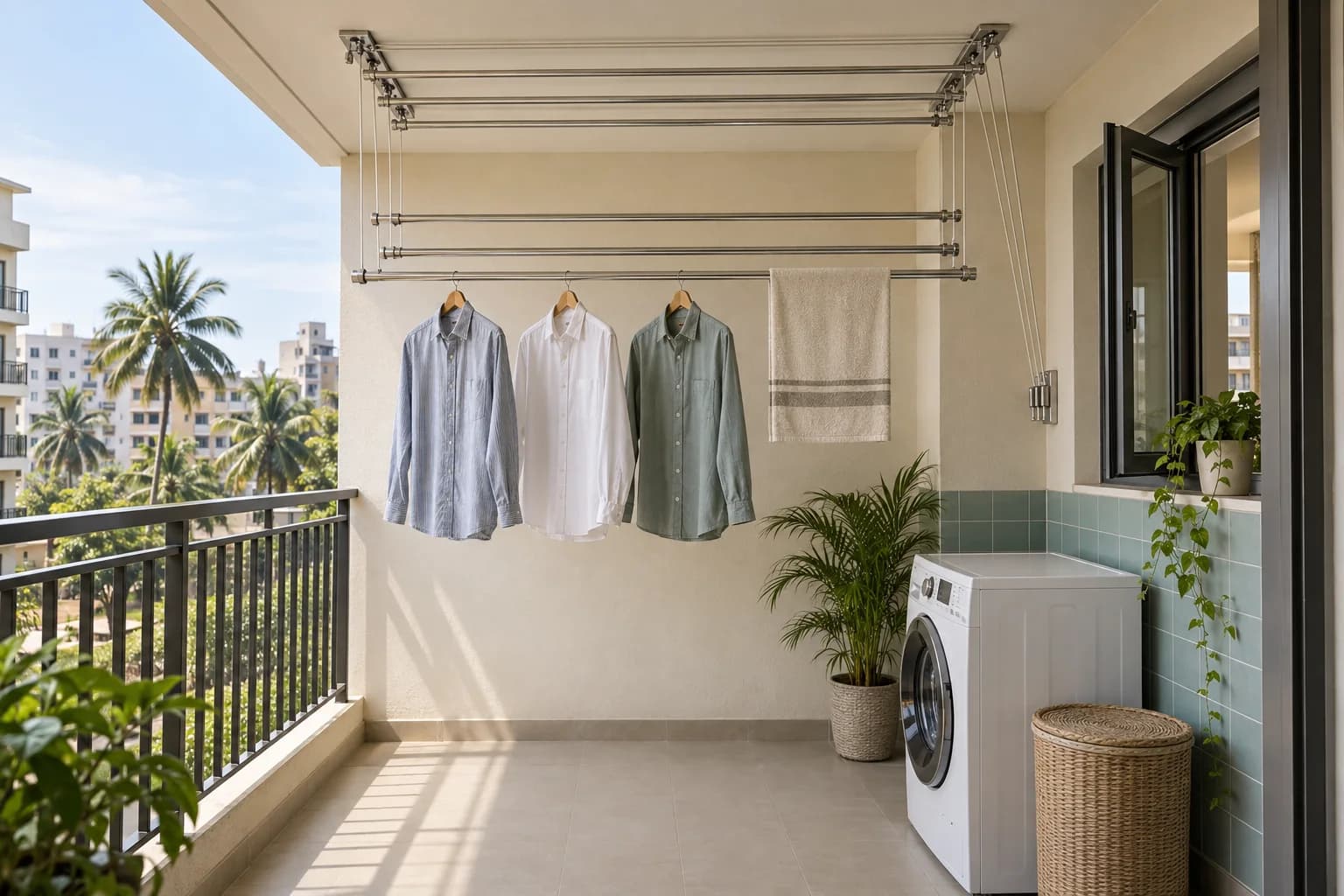
Make the room work every day
An overhead system can keep a utility or balcony easier to walk through and clean. Its usefulness comes from where the rods sit, how they lower and what the hanging clothes occupy—not simply from fitting more metal to the ceiling.
Map the route between the balcony door, washing machine, sink and drain. Include the space needed to lift a laundry basket and open cupboards. The drying area should work with those activities in its loaded position, not only look tidy when the rods are empty and raised.
The loading height, lock position and effort needed to raise laundry should suit the intended user. Someone who cannot comfortably manage the chosen manual system may need a different format. Explain who normally does the laundry before choosing rod length or a lifting mechanism.
This service covers installed cloth drying hangers, pulley rods and suitable drying alternatives. Wardrobe organisers and garment-display hangers solve a different problem. Tell us about towels, everyday clothes, sarees and bedsheets so the layout reflects the actual wash.
Choose usable hanging length
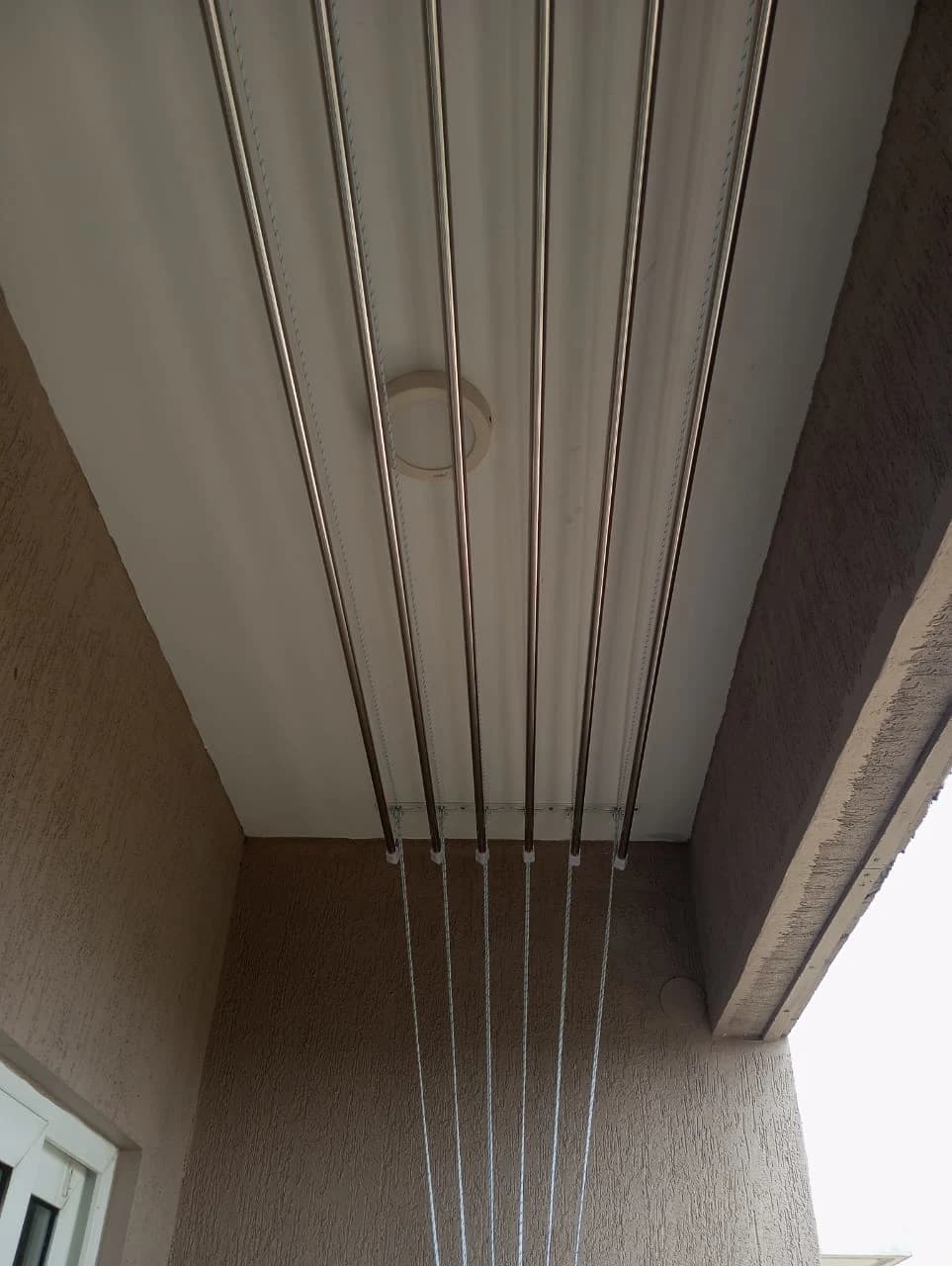
Common requests include 4, 5, 6, 7 and 8 ft rods. These are useful size references, with exact availability and overall system dimensions confirmed in the quote. The longest advertised size is not necessarily the most useful fit for the room.
Brackets, channels, cords and the operating movement need clearance as well as the usable hanging length. Measure the room between obstructions and show window or door travel. A rod that technically fits wall to wall may still make loading awkward.
More rods can reduce practical capacity if wet fabrics press together. Think about the width and drop of regular items and the space between lines. A smaller number of well-spaced rods can be easier to use than a crowded arrangement selected only for its line count.
Sarees, sheets and bath towels affect the required hanging drop and how the load is spread. The selected system's instructions should guide loading. Do not extend rods or add improvised lines to gain length without a review of the complete arrangement.
Understand your quote
The guide includes the selected standard manual hanger kit and installation on a suitable assessed structural support. The written quote confirms its usable drying length, rod arrangement, components and operating method.
Plan your budget
Choose the number of systems. Model, size and fixing requirements affect the final quote.
Custom frame and civil work, making good finishes, unusual access and powered drying appliances are separate. Confirm delivery, taxes, any survey or minimum billing and the actual supplied service terms before approving the job. Repairs and refitting are quoted independently.
The structural fixing comes first
The visible finish is not always the load-bearing support. Before installation, the fixing base and permissible work need to be clear, particularly below a false ceiling or around hidden services.
An RCC slab or another verified structural base may allow an appropriate installation method. Loose plaster, decorative boards and unknown supports need assessment. Where the fixing arrangement requires structural advice or a custom frame, that work should be agreed separately before net or hanger fitting.
Tell us about gypsum or other suspended finishes, concealed plumbing, electrical routes and drilling restrictions. Access to a suitable base may require additional work. A decorative panel should not be treated as a convenient anchor simply because the product is sold as ceiling mounted.
Allow for shutters, fans, lights, sprinklers, cupboards and the washer in both loading and drying positions. Include the fabric hanging below the rods. Keep wet laundry clear of electrical fittings and hot equipment, and preserve access needed for normal room maintenance.
Look at the full component list
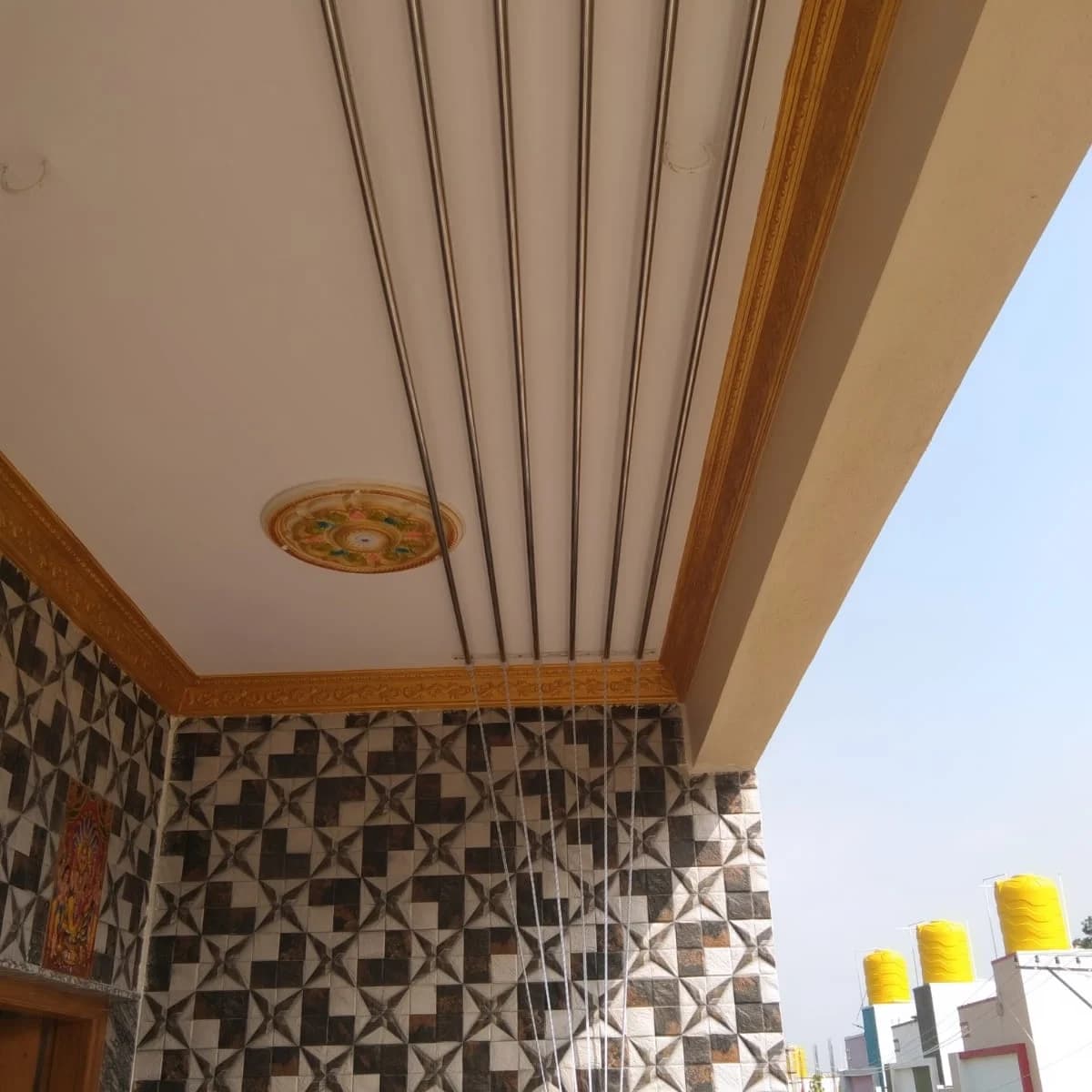
Stainless-steel and aluminium rods, different channels, cords and controls are available in the market. Compare the actual supplied kit and its instructions, including compatible replacement parts, rather than relying on a broad material label.
Ask for the rod material, dimensions and any stated grade or finish. A shiny surface does not establish a stainless-steel grade, while a lightweight rod does not by itself tell you the capacity of the system. The selected construction needs to suit its intended span and supplied operating guidance.
The pulleys should align with the intended cord route and the lock or cleat should be positioned for the user. Check how the chosen mechanism lowers, holds and raises the rods. Keep cords arranged as instructed and avoid loose loops accessible to children.
In a balcony exposed to salt-bearing air, brackets and fasteners matter as much as the rods. Specify the offered finish and ask how components should be cleaned. Terms such as rust-proof or maintenance-free should not replace a documented material and care recommendation.
Useful drying in Vizag weather
When choosing the hanger position, consider sudden rain, direct sun and humid periods. A manual hanger organises laundry; it does not heat the air, guarantee a drying time or make an open balcony weatherproof.
A position deeper under a covered slab can reduce direct exposure, but showers may enter from the open side. Keep a practical way to remove vulnerable items and an indoor alternative where needed. Dripping laundry should not affect electrical points or a neighbour's space below.
Avoid loading every line tightly during humid weather. Separate thicker garments and follow the washing-machine and fabric guidance for removing excess water. Raising the rods into a still, crowded ceiling corner can slow drying even while it clears the floor.
Some fabrics benefit from drying away from prolonged direct sun. Follow garment-care labels and bring dry laundry in when appropriate. The hanger improves placement and convenience; it does not soften fabric or prevent fading independently of how the clothes are washed and dried.
Comfort matters after installation day
The best-looking mechanism is not always the easiest one for the household. Discuss the user's reach, grip and preferred loading routine before confirming a manual system.
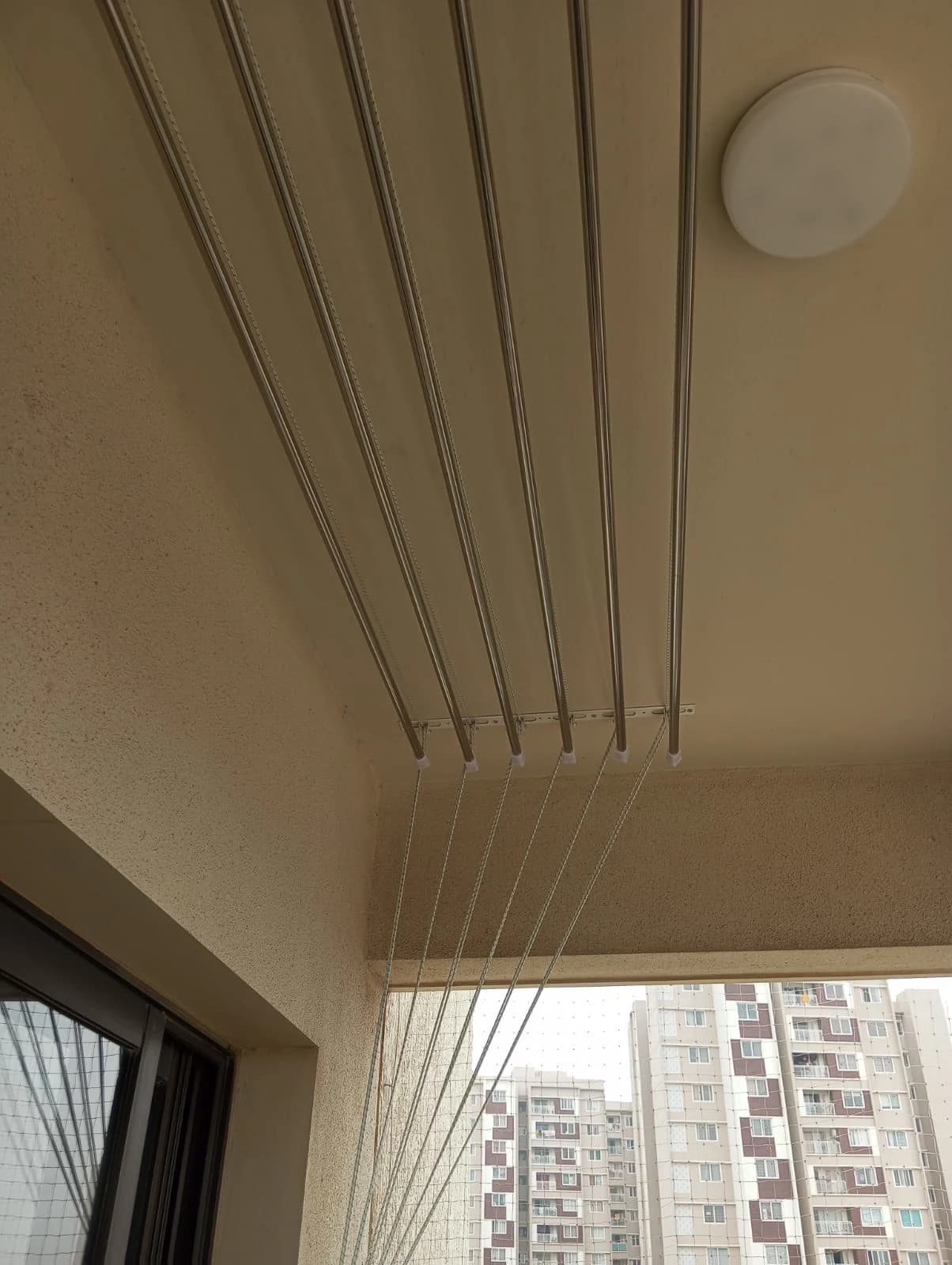
Individually controlled rods let the user organise lines separately and reach a particular garment without lowering the entire arrangement. More controls also need a tidy, understandable cord route. Ask to see how the selected lock works and how each line is identified.
A combined frame can simplify the number of controls but moves the laundry together. Check the operating effort and clearance with the chosen product guidance. Do not assume that a grouped frame and an individual-rod system have the same loading rules.
Follow the supplied instructions for wet laundry and load distribution. Do not use the rods for household storage, climbing or other improvised loads. If the rack slips, jams or moves at its support, stop using it and request an assessment rather than pulling harder on the controls.
Match the system to the home
A useful comparison includes fixing permission, floor space, airflow and the effort of moving laundry. Powered drying appliances are a separate product category and are not included in the manual-system starting price.
| Drying option | A practical reason to choose it | Check before ordering |
|---|---|---|
| Manual ceiling pulley hanger | You want to keep floor space usable and can operate the controls comfortably. | Structural support, lowered reach, line spacing and complete system instructions. |
| Wall-mounted folding drying rack | A suitable wall is available where ceiling fixing is unsuitable. | Wall condition, folded and open clearance, reach and mounting permission. |
| Movable floor stand | You need a portable option or cannot make permanent fixings. | Stability, floor space, storage and carrying it when loaded. |
| Simple clothesline | A basic drying line fits a suitable supported location. | Sag, fabric spacing, access and weather exposure. |
| Powered dryer or lifting appliance | You need appliance features beyond a manual pulley system. | Separate availability, electrical requirements, operating costs and service terms. |
Know what the installed price buys
Standard manual cloth hanger systems start from ₹2,800, including installation. The quotation should identify the precise arrangement for your room, without an unsupported maximum price range.
Confirm the rod count, usable length, overall dimensions, material and control format. The proposal should describe the brackets, pulley assembly, cord and locking method. Two systems advertised with the same number of rods may differ in both construction and everyday operation.
Custom frames, false-ceiling access, work to damaged supports, difficult access and removal of a previous system may be separate. Ask for delivery, taxes and any survey or minimum charge to be clear. Agree those items before the work begins.
Ask which replacement components can be supplied and what the actual written service or warranty terms are for the selected kit. No fixed warranty period is assumed here. Keep the component details and installer invoice so a future repair request can be assessed accurately.
A measured fitting process
The installation visit is planned after the room, support and selected mechanism are understood. Access and any additional work determine the booking and expected duration.
Include the entire ceiling, both side walls, windows, washing machine and the proposed control wall. Add approximate room dimensions, ceiling height and your Vizag locality. Mention false ceilings, rental permission and the main person who will operate the hanger.
Agree rod dimensions, spacing, control format and fixing method. Check raised and lowered clearances, including hanging garments. Identify any work needed before installation and keep a written list of inclusions and separate charges.
The installer uses the assessed support and the product's fitting method, then aligns the rod or frame and controls. Operation is checked through its intended travel. No extra drilling, extension or load claim should be improvised to force an unsuitable kit into the space.
Handover explains the controls, balanced loading and signs that need a service enquiry. Follow the supplied operating limits rather than a demonstration with an improvised heavy object. Store the system details for repairs or future relocation.
Small faults deserve early attention
EverSafe assesses affordable cloth hanger repair, compatible component replacement, reattachment and refitting of earlier installations. The service decision follows the actual fault and condition of the complete system.
Unload and stop using a system with a frayed cord, slipping lock, stiff pulley, bent rod or moving support. Cracks or movement around an anchor also need review. Continuing to operate a faulty mechanism can worsen the damage.
Show the full hanger, the controls and a close-up of the affected part. Mention its approximate age and whether anything was changed recently. A replacement cord or pulley must be compatible with the selected system; not every old kit can be repaired with a generic part.
Keep accessible rods and hardware clean using the product's recommended method. Do not add oil, solvents or harsh cleaners without checking compatibility. Where coastal deposits are present, include brackets and fasteners in the care routine rather than wiping only the drying rods.
A new room can differ in rod clearance, ceiling construction and control position. Check the existing kit and the proposed location before deciding to reuse it. Removal, any transport, refitting and making good previous fixing points should be itemised separately.
Around Visakhapatnam
A good drying layout follows the home and its laundry routine. Use the locality guides to identify the area, then send ceiling photos, room dimensions and any existing hanger details for a practical assessment.
Include the utility ceiling, washer and open side in one set of photographs.
Mention direct weather exposure where it applies; a sheltered utility needs a different discussion from an open balcony.
Show the door and window movement, intended control wall and available drying length.
Tell us about ceiling permissions, access and any earlier hanger needing repair or relocation.
Questions before booking
Standard installed manual systems start from ₹2,800 per system. The exact kit, rod length and count, components and ceiling conditions determine the quotation. Custom supports, false-ceiling access, removal or relocation are separate items to confirm. Ask for the installed system specification and all exclusions in writing.
The guide includes the agreed standard manual hanger kit and its installation on a suitable assessed support, with alignment and operating guidance. Confirm the exact supplied rods, pulleys, cords and fittings. Delivery, tax treatment, any minimum or survey charge and unusual ceiling or access work should be stated in the final quote.
This service is for ceiling cloth drying hangers, balcony pulley systems and suitable alternative drying arrangements. It is not a supply of wardrobe, coat or retail garment hangers. Send a photo of the laundry space and describe how you want to dry clothes so the enquiry reaches the right service.
Choose by usable room length, support clearance and your normal garments, then confirm the available system sizes. Brackets and ends take space beyond the usable rod length. Longer rods are not automatically better if they obstruct windows or crowd the laundry. Rod count and spacing should be considered with length.
Individual rods let you lower one line at a time, while a combined frame moves several lines together. The better fit depends on the user's reach, lifting comfort, normal laundry and control position. Ask to understand the selected locking and lifting method before confirming the system; appearance alone does not establish ease of use.
These can be considered when the selected system and fixing are suitable for the expected wet laundry. Follow its documented loading and spacing guidance, including the way heavier items are distributed. Do not assume a long rod or a general product advertisement establishes the capacity of the complete installation.
A decorative board alone should not be treated as the support. The arrangement needs a suitable structural fixing base or an appropriately designed support above or around the finish. Hidden services, access and permission must be reviewed before drilling, and any custom work is a separate part of the quote.
It may, if the support and complete operating space are suitable. The plan includes the raised rods, lowered loading position, hanging clothes, washer lid or door, cupboards and window movement. A shorter arrangement with clear access can be more useful than using every part of the ceiling.
A covered location can reduce direct exposure, but an open balcony can still admit wind-driven rain. A manual hanger does not make the room rainproof or dry clothes actively. Keep an indoor option for vulnerable items and position dripping laundry away from electrical fittings and neighbouring spaces.
Leave airflow between garments, separate thicker items and follow the fabric and washing-machine guidance for water removal. Crowding every rod or lifting wet laundry into a still ceiling corner can slow drying. The system organises the drying space; ventilation, weather and the load still determine the result.
Compare the exact rod and hardware specification, finish, dimensions and complete system rather than the metal name alone. Where salt-bearing air reaches the balcony, care of brackets, fasteners, cords and pulleys also matters. Ask for any claimed steel grade or protective finish in writing; no ordinary material should be described as maintenance-free.
A suitable wall-mounted or portable option may be more practical, depending on permission, wall condition, folding clearance and your laundry routine. A wall system still needs its own assessed fixing base. A floor stand avoids permanent fixing but uses floor area and requires stable placement and storage.
We can assess repair, compatible part replacement, reattachment and refitting of previous work. Send photos of the full system, controls and affected part. Stop using a hanger that slips, binds, bends or moves at the support. Whether repair is sensible depends on the condition and availability of suitable replacement components.
Relocation can be assessed after checking the old system and the new room. Rod length, missing or worn parts, ceiling support and control position may differ. Agree removal, transport if applicable, refitting and making good old fixing points separately. Include your exact locality and photos of both spaces when enquiring.
Your Visakhapatnam team
Send your locality, ceiling and utility photographs, approximate dimensions and preferred drying routine. We will explain a suitable manual system, the installed quote or repair options.