
Northern households
Bring balconies, bedroom windows and connected utility spaces into the same discussion.
Start at a child’s reach, not just the railing height
A low window beside a bed and a balcony beside a movable chair need different attention. Bring the reachable openings into one discussion so the netting is part of a practical household safety plan.
Children safety net planning begins with the places a child can reach in your home. EverSafe helps Visakhapatnam households assess balcony gaps, windows, stair openings and connected utility spaces before choosing net coverage. New installations start at ₹25/sq ft including the net, fittings and installation, with each opening measured and quoted for its own requirements.
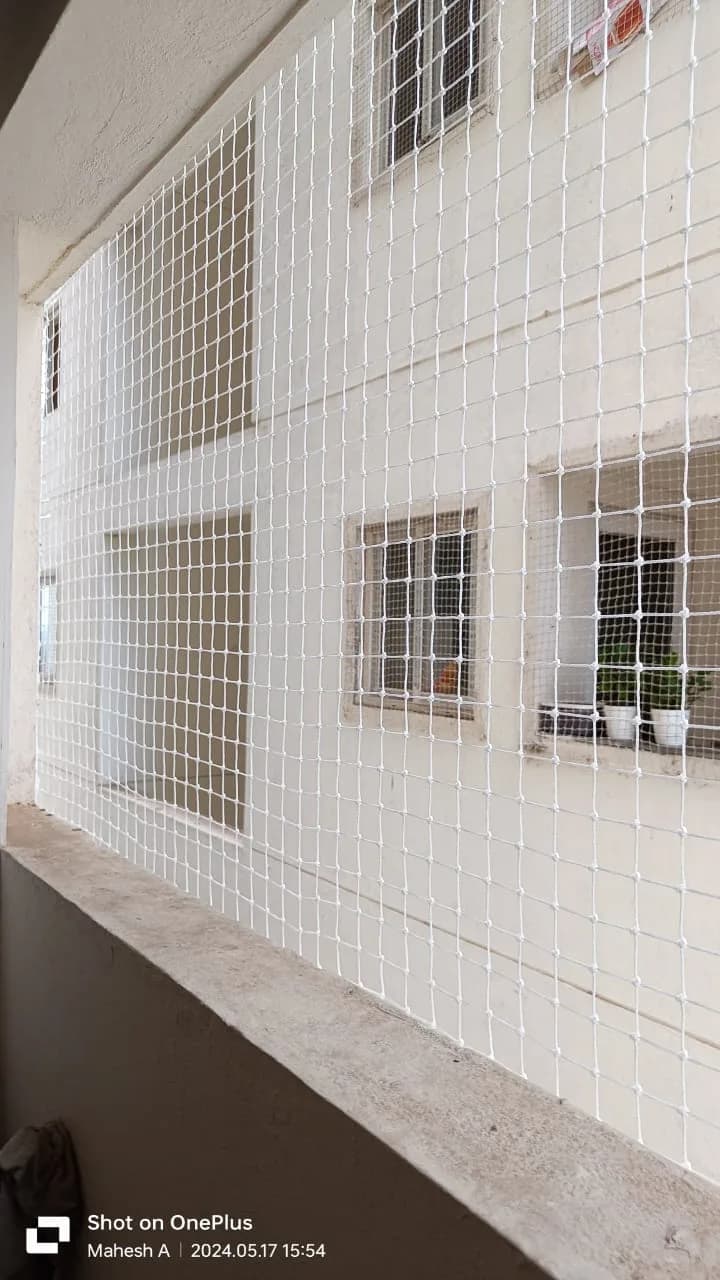
Look at how the home is used
The useful first step is a room-by-room look at reachable edges, movement and climbing opportunities. A balcony-only measurement can miss a more accessible opening elsewhere.
Show the balcony door, railing and nearby furniture in the same photo. Plan the open faces and lower corners, while keeping the household’s door-control and supervision arrangements in place after netting is fitted.
A window beside a bed, shelf or washing machine may be easier to reach than its height suggests. Include the sill, shutter movement and approach to the window when asking about a suitable protective arrangement.
Show an open stair side, landing gap or route onto the roof. Some concerns need a gate, a proper guard or access restriction in addition to, or instead of, netting. The whole route matters, not only the final opening.
The easily missed details
The most noticeable part of a net is its centre. The household review also needs to consider what happens around its edges.
Inspect where the railing meets the floor, wall and adjacent utility space. An end gap or a loose border can undermine the intended coverage even when the large central panel looks tidy.
Keep chairs, stools, storage boxes and planters away from windows and balcony edges. Their position can change after the fitting visit, so furniture placement remains an ongoing household responsibility.
A newly mobile child and an older child who can open a door use the same home differently. Review access controls and the condition of fitted barriers when routines, furniture or room use change.
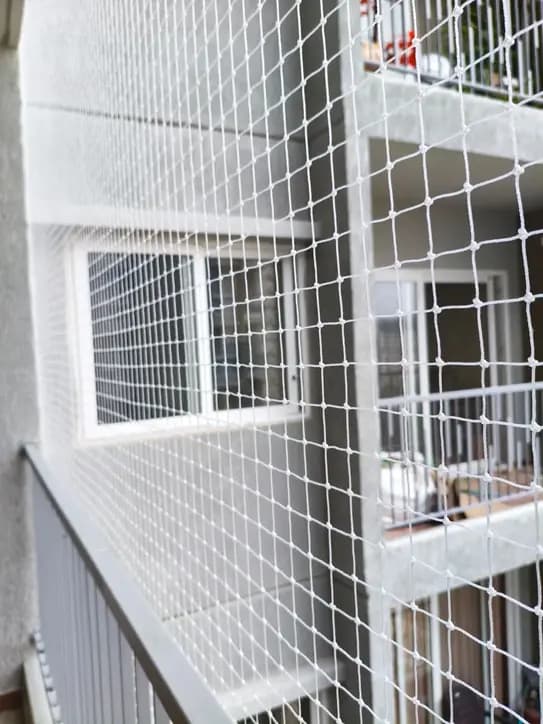
Understand your quote
Children safety net installation starts at ₹25/sq ft including the net, fittings and installation. A household with several openings receives a scope based on each measured panel and the selected product.
Plan your budget
Measure one covered face in feet. Discuss side returns and other openings separately.
The quote should distinguish netting from separate gates, guards, structural repairs or other household safety work. Confirm the total, any minimum-job terms, transport and applicable taxes before accepting.
Discuss suitability, not just thickness
Children safety nets may use materials also available for balcony work, but the selection and coverage follow the child-reach assessment.
Discuss the available nylon, HDPE or other suitable net products and ask for the supplied specification. Colour, thickness and a brand name do not by themselves establish that a net suits a particular protective purpose.
Different opening and mesh sizes are available. The installer should explain the proposed spacing, border treatment and closure of surrounding gaps for the actual application, rather than apply a single sample to every room.
The net, its border and its attachments form one installation. Loose plaster, unsuitable window frames or weak railing sections require attention; a stronger-looking mesh does not compensate for a poor supporting surface.
Separate an insect screen from a safety measure
An ordinary mosquito screen should not be relied on to keep a child from falling through an open window. Discuss a suitable guard, restrictor or netting arrangement for the specific opening.
Explain how the window opens and how it is cleaned. A proposed net position should be reviewed alongside the shutter, handle and any existing restrictor so one fitting does not quietly defeat another.
Do not permanently close an opening needed for escape or rescue without appropriate building-level advice. A secure everyday arrangement and the required emergency operation have to be considered together.
An opening beside equipment, a sill or a ledge may warrant attention even when it is not a bedroom window. Send a wider photo showing what a child could use to reach it.
Net coverage has a defined role
A stair-side gap is a different problem from an open doorway at the top of stairs. The assessment should identify which concern is being addressed.
A proposed net panel needs a suitable supporting boundary and clear edges. It should not obstruct the handrail, normal walking space or a required route through the building.
If the issue is a child entering a stair or rooftop area, discuss access control rather than treating a net across a distant edge as the complete answer. Existing gates, guards and supervision remain relevant.
Show where the opening sits relative to the household. A horizontal shaft cover and a vertical protective panel require different planning. Do not treat netting over a void as a floor or an area to stand on.
A coordinated household plan
Reviewing the intended coverage together helps avoid separate visits for connected gaps that could have been identified earlier.
Send photographs of each opening and say what worries you about it. Include the child’s reachable surroundings, floor level and locality rather than only requesting a roll size or a rate.
Agree which openings are suitable for netting and which need another protective measure or repair first. Specify the chosen product, measured panels, edge closure and any access requirements in the quote.
Keep children and pets away from the installation zone and agree building access and work timings. The schedule depends on the number of openings, condition of supports and material availability.
After fitting, review accessible edges and closure points with the installer. Keep the material and service information, and ask how to arrange an inspection if a fitting moves or the net is damaged.
Choose by the real concern
The same household may need more than one type of work. Separate the purpose so a single net is not expected to solve unrelated problems.
| Concern | Relevant direction | Scope to clarify |
|---|---|---|
| Several reachable home openings | Children safety assessment and suitable netting | Windows, balcony gaps, landings and climbable surroundings. |
| One balcony’s open faces | Balcony safety net installation | The measured opening and its continuous perimeter. |
| Preference for slim metal cables | Invisible grill assessment | Cable spacing, fixing structure and household suitability. |
| A cat or small pet using the opening | Pet safety net assessment | Animal size, behaviour, mesh and escape gaps. |
Act when the condition changes
Keep children away from an opening if the net or its attachment is damaged. A small visible defect should be assessed in the context of the surrounding installation.
We can assess patching or reattachment when the remaining material and supports are suitable. Share a close view of the damage and a wide view of the panel so the discussion includes the full border.
Brittle strands, damaged joins or repeated loosening may make replacement more appropriate than another patch. The decision should be explained after inspection rather than made from the age or appearance alone.
Painting, window replacement and moving a fixed frame can alter the original protective arrangement. Request a refitting assessment before reopening the space to normal use; do not assume the previous net still fits the revised opening.
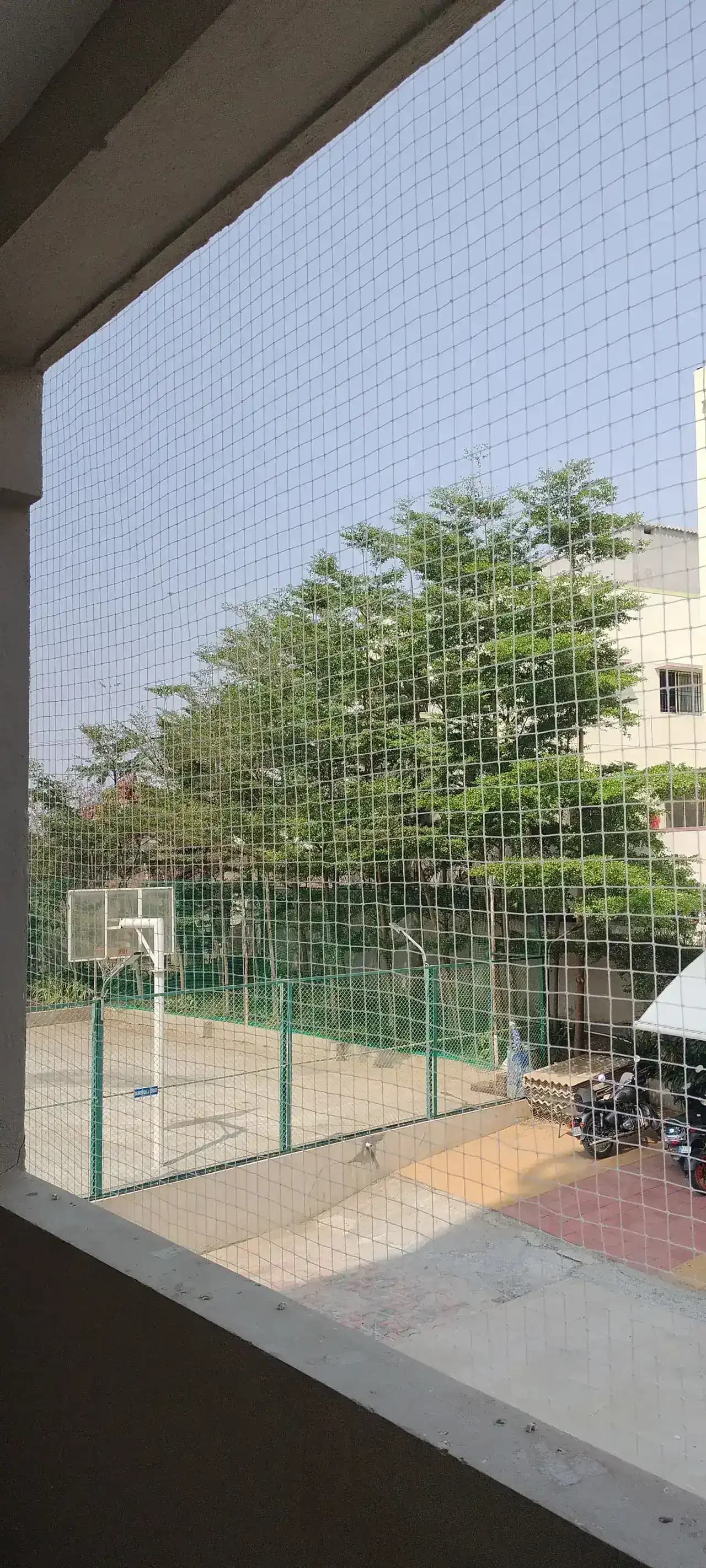
Keep the protection under review
Children net installation is one part of home safety. It does not make a balcony, window or staircase safe for unsupervised play.
From inside the home, look for new gaps, loose attachments, torn strands or objects pressed against the net. Arrange professional attention when something changes rather than pulling or loading the panel to test it.
Do not allow climbing, swinging or play against the mesh. Avoid attaching toys, drying lines or storage to it. Keep the controlled-access arrangements you use for balconies, windows and stairs.
Make sure family members and caregivers know which openings are restricted, what not to attach to the net and how to report damage. Revisit the plan when furniture is moved or a room is used differently.
Around Visakhapatnam
Use a local guide to start the enquiry, then share the openings inside your own home. Coverage links do not imply a particular building has been inspected or made child-proof.
Bring balconies, bedroom windows and connected utility spaces into the same discussion.
Include furniture positions and window access, not just a close-up of the railing.
List the child-reachable openings and any existing net or guard that needs checking.
Apartment planning
These guides can help prepare questions about an individual flat. They do not replace a household assessment or confirm past installation work.
Questions before booking
The starting rate is ₹25/sq ft including the net, fittings and installation. The final proposal depends on the measured openings, selected product, edge details and access.
The material may be similar, but the assessment starts with child reach across the home. Windows, stairs, low corners and nearby furniture are considered alongside the balcony opening.
Yes. Send a separate photo of each concern and a wider view showing how it is approached. Some openings may need a different protective measure, repair or access control instead of netting alone.
An ordinary insect screen should not be relied on for that purpose. Discuss an appropriate window guard, restrictor or netting arrangement, including required emergency access, with a suitable installer.
Mesh selection depends on the product, intended application and surrounding gaps. Ask for the proposed dimensions and installation details after a site review; one advertised mesh size is not a complete safety specification.
We can discuss available nylon, HDPE and other net products for the proposed scope. Request the exact supplied specification and its suitability instead of deciding by the material name alone.
No. They do not replace adult supervision, appropriate guards or controlled access. Children should not climb or play against netting, and movable furniture should be kept away from openings.
A staircase side or landing void can be assessed for a suitable protective arrangement. Walking space, handrail use, supporting surfaces and emergency routes need to remain workable.
Covering an open side does not necessarily control entry to the stairs. If access is the main issue, discuss an appropriate gate or other access measure as a separate requirement.
Open mesh allows air and light through, with the visual effect depending on the product and layout. It is not a sealed dust, insect or rain barrier.
We assess tears, loose borders and damaged attachments for repair, patching or reattachment. Reuse depends on the condition of the surrounding material and supporting structure; keep children away from the opening while it is damaged.
It can be assessed after the new opening and frame are known. Changed dimensions or fixing surfaces may mean the old panel is no longer suitable, so request a refitting proposal before reuse.
The schedule follows the number and shape of panels, supports, access arrangements and material availability. We confirm timing for the household scope after reviewing those details.
Watch for visible damage, new gaps or movement in fittings, and keep climbable furniture and extra loads away from the net. Revisit the arrangement after renovation or changes in how the rooms are used.
Your Visakhapatnam team
Share your Visakhapatnam locality and wide photos of balconies, windows or stairs. Include the nearby furniture and any existing protection so we can discuss an appropriate scope.