
Southern and western enquiries
For facilities or homes, include opening dimensions and available access.
- Gajuwaka
- Kurmannapalem
- NAD Junction
- Pendurthi
Measured bird exclusion for homes and facilities
Vents, shared shafts and roof-level gaps need a plan that follows bird movement and everyday building use. Compare target birds, mesh size and access before covering the opening.
Plan bird exclusion around the whole opening, not only the spot birds were last seen. EverSafe supplies and installs anti-bird nets in Visakhapatnam from ₹18/sq ft including net, fittings and installation for the agreed scope.
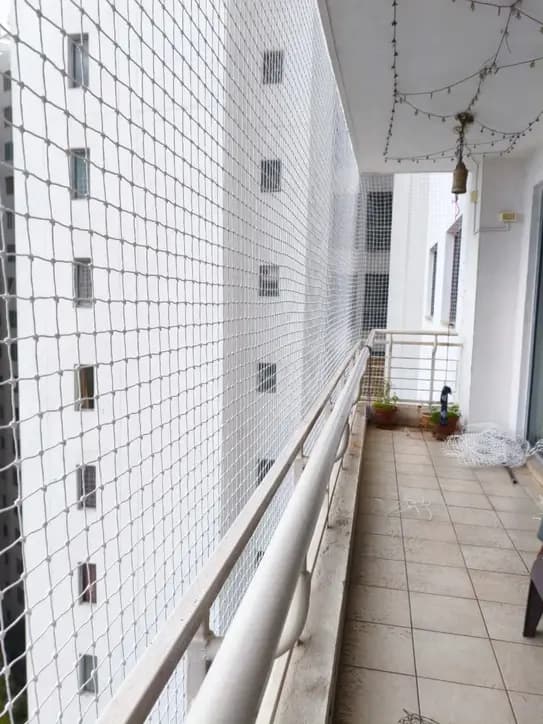
Define the exclusion area
Anti-bird netting is useful when a property has more than one entry route or needs a mesh selected for more than pigeons. The survey should follow movement around the building.
A bird resting on a sign edge and a bird entering a service shaft create different work scopes. Tell us which birds you see, where they enter and whether activity continues at another opening. Photos taken from a safe position can help identify what needs a closer look.
Birds can pass between a duct, roof void or adjacent service opening. Closing the most visible gap may leave the connected route open. A shared plan should mark which panels belong to the job and which spaces need separate assessment.
Define whether the aim is to exclude birds from a usable space, protect a service recess or restrict access to a roof-level void. The scope should not imply that netting one opening treats all perches, pests or structural issues throughout the property.
Specification before a square-foot rate
Custom panel size is the overall dimension of a net. Mesh size describes its individual openings. Both details matter when different birds share a building.
| Choice | What to establish | Why it matters |
|---|---|---|
| Target bird | Identify the actual bird rather than guessing from droppings | A mesh suitable for pigeons may leave smaller birds an entry route. |
| Mesh opening | Request the stated opening in millimetres | Broad labels such as small mesh are difficult to compare. |
| Material and twine | Record the available nylon, HDPE or other selected specification | Material, construction and twine are separate from colour. |
| Outdoor exposure | Ask about the selected product’s UV and exposure specification | Appearance does not demonstrate outdoor suitability. |
| Border and supports | Specify the perimeter attachment and suitable supporting surface | A panel is only one part of a complete exclusion system. |
Understand your quote
The starting rate includes the selected net, standard fittings and installation within the agreed bird-exclusion scope.
Plan your budget
Measure one covered face in feet. Discuss side returns and other openings separately.
Confirm minimum billing, taxes and any frame, removal or specialist cleaning costs in writing. Actual product and workmanship terms should be stated with the selected installation.
Detailed closures
These openings often contain the very equipment residents and maintenance staff need to reach. Netting should be planned with that use visible.
Bird-exclusion mesh should preserve the ventilation required by the building or equipment. A finer screen may collect debris differently, so maintenance access matters. Do not assume bird netting is also an insect filter, rain cover or dust barrier.
Close the route around penetrations without interfering with drainage, insulation, wiring or service clearance. Changes to pipework can reopen an edge later. Keep the maintenance team informed about how to restore the closure after work.
Association permission, occupied floors and shared access affect scheduling. Agree responsibility for opening and reclosing service sections. A building-level quotation should state its panels and boundaries so each resident understands what is covered.
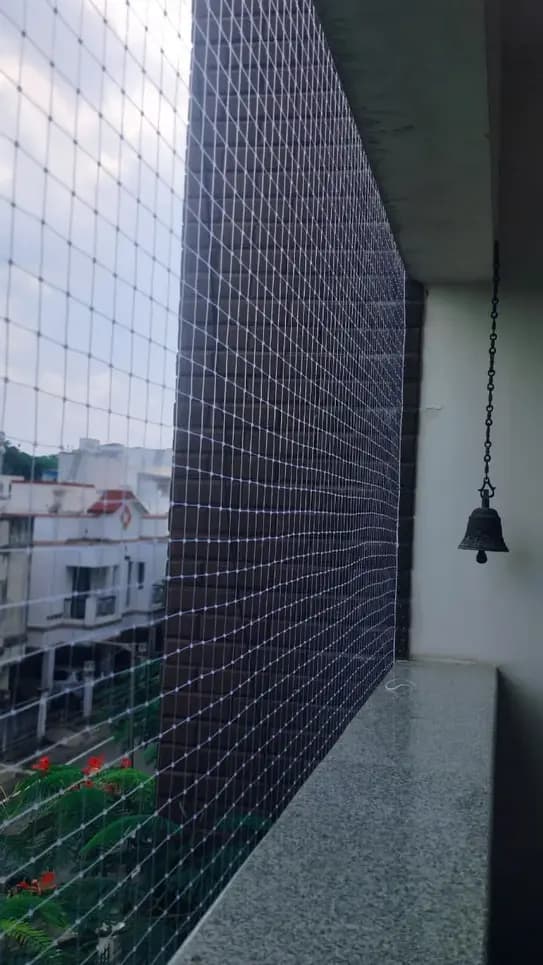
Commercial and industrial enquiries
For a Vizag shop, warehouse or facility, describe how goods, staff and maintenance teams use the space. The design discussion should fit that operating pattern.
The survey should identify the fixing structure and safe working method around the target opening. Tell us about stored goods, production lines and any restricted work area. Do not treat a roof void as a standard balcony without checking what is above and below the proposed net.
An entrance used all day cannot simply be closed by a fixed panel. Discuss compatible access or an alternative treatment for that part of the route. Routine opening of an unsecured net can defeat the rest of a carefully planned closure.
Keep lighting, fire equipment, signs, ventilation and service routes clear as required by the responsible facility team. Agree permissions and work windows. Bird-exclusion installation is not a certification of the building’s fire or structural systems.
Inspect the actual working conditions
The same net material can be used in very different surroundings. A dry sheltered vent and a weather-facing opening deserve separate checks.
Tell us about rusted old fixings or an edge repeatedly exposed to wind-driven rain. The proposed hardware and its substrate should be examined together. Coastal suitability needs a specific product and fixing discussion rather than a general rust-proof promise.
Large unsupported panels and corners that rub against sheet edges need careful detailing. The net should be cut and supported for the opening rather than pulled across a sharp obstruction. Relevant frame or support work belongs in the written scope.
A hidden panel that cannot be checked is difficult to maintain. Agree safe viewing points and access panels where required. Never use a photograph of another property as proof that the same fixing arrangement suits this opening.
Make quotations comparable
Net, fittings and installation are included in the starting rate for the agreed scope. A useful estimate also explains exactly what is being measured.
Document width and height for the faces to be covered, including changes of direction or separate gaps. Floor area alone may understate the material needed for a connected enclosure. Confirm the quantity on which the quote is based.
A request for a documented branded mesh, a removable section or extra support should appear in the quote. Compare like-for-like products and installation detail when reviewing offers. A lower material-only rate is a different purchase.
Any exceptional access equipment, removal, frame work or specialist cleaning should be priced separately where needed. Confirm minimum billing and taxes. The included installation should not be presented later as an unspecified additional charge.
A phased, checked closure
The sequence should accommodate occupied spaces and prevent birds from being trapped as connected openings are closed. Larger jobs need a clear handover owner.
Send the locality, property type, target birds and photographs of the route. Facility managers can include opening dimensions and available work windows. A small vent and a connected roof-level enclosure require different preparations.
Confirm target mesh, fixing surfaces, planned access sections and the work boundary. Record any preparation, access restrictions or specialist work. Explain active nests or trapped birds before the proposed work date.
Install the agreed net panels and perimeter details once the space is suitable to close. Check the area for birds and avoid loose pockets. Pay attention to corners and penetrations where a small remaining gap can preserve an entry route.
Review the panels and demonstrate any service opening. Identify the person responsible for reclosing it after maintenance. Keep the product details, quote and actual support terms so future repairs can be matched to the installed system.
Repair before replacing everything
A maintenance visit should investigate why the opening failed. Reuse is based on the condition of the net and support system.
A local repair may be possible where the surrounding mesh is still serviceable. Check whether a technician has opened the panel or whether rubbing caused the tear. Restoring the access detail can matter as much as closing the visible hole.
Loose fittings, damaged substrate or repeated contact with equipment require assessment. Refitting should address that cause. A new tie on a failed support may only disguise the same problem for a short time.
Where strands are brittle or supports have deteriorated, plan replacement in defined sections if suitable. We can assess work installed previously by another company. Repair and removal/refitting are quoted for the actual condition and access.
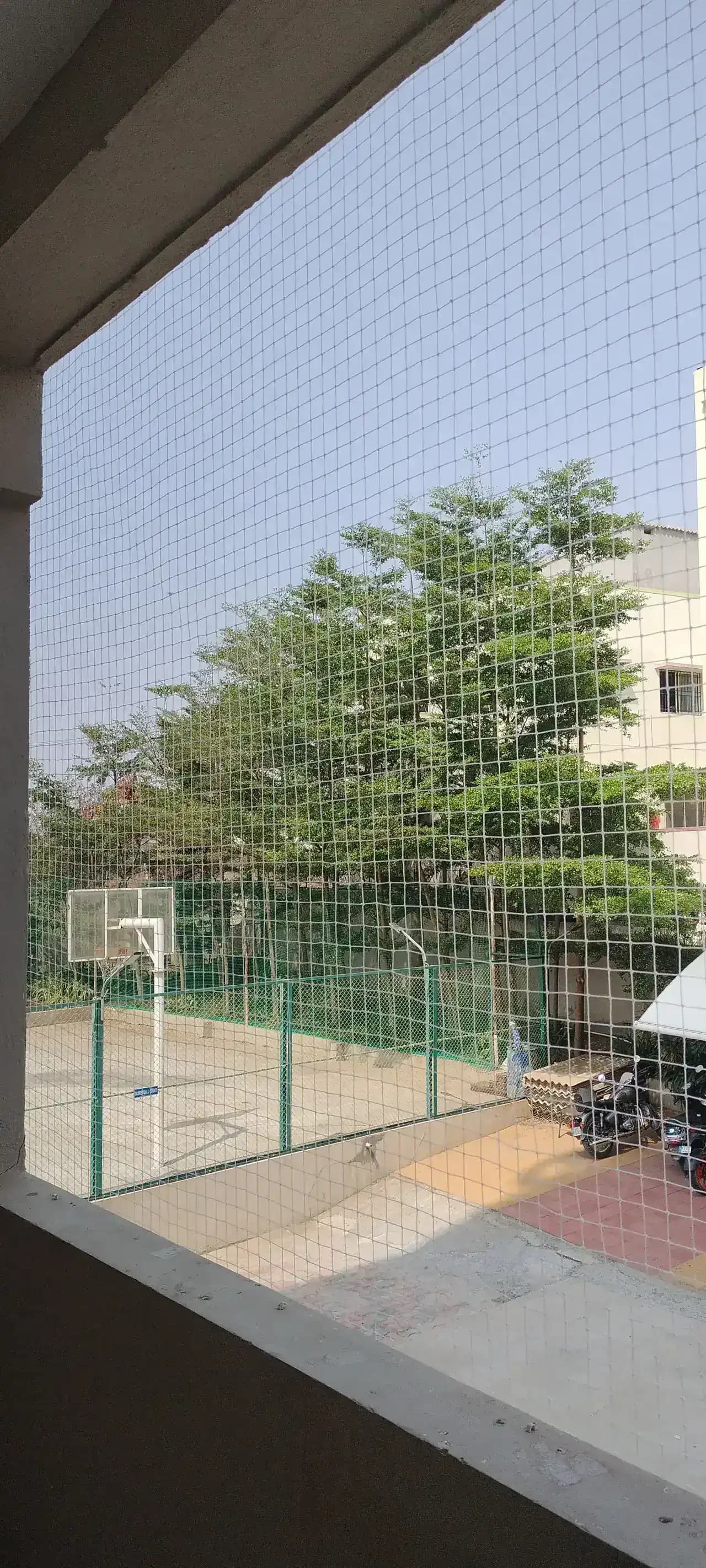
Keep exclusion working between visits
Weather, maintenance and changed building use can alter an installation. A simple responsibility plan helps keep a multi-panel job serviceable.
Ask painters, electricians and AC technicians to report any panel they open. Confirm that the agreed border and access closure are restored. Changes to a cable or pipe may need a new local detail.
Inspect visually from a safe location for broken strands, loose borders and material sitting on the mesh. Do not climb or put loads on a bird net. Arrange suitable maintenance where the installation cannot be reached safely.
If a different bird or a new entry route appears, reassess that requirement. It may need a revised mesh or additional closure rather than repeating the same treatment. Report an animal trapped near the net promptly and seek appropriate help.
Keep each service focused
Anti-bird netting describes an exclusion requirement, not every possible use of mesh around a property. Choose the next discussion by the actual problem.
| Your main requirement | Relevant service | How the scope changes |
|---|---|---|
| Pigeons entering one balcony | Pigeon safety nets | Concentrate on the balcony returns, view and AC access. |
| Birds sitting on a narrow sill | Bird spikes | Measure the perch length and usable width. |
| Monkeys reaching a terrace opening | Monkey-entry assessment | Review approach routes and the suitability of the full enclosure. |
| Children using an open edge | Child-safety assessment | Discuss a separate safety requirement; bird mesh is not automatically suitable. |
Around Visakhapatnam
Share the property type and connected openings along with your area. We use those details to scope the work, without assuming a neighbourhood has a particular infestation.
For facilities or homes, include opening dimensions and available access.
For common shafts, identify the association or maintenance contact.
Questions before booking
Anti-bird netting starts from ₹18/sq ft with net, standard fittings and installation included. Mesh specification, opening geometry and safe access affect the total. Ask for minimum billing, taxes and any separate frames, old-net removal or specialist preparation to be stated in the quote.
The product categories overlap: both use netting to exclude birds. A pigeon-net enquiry usually concerns pigeons entering a particular balcony or recess. An anti-bird assessment starts with every target bird and connected opening, which can require a different mesh or building-wide layout.
The required opening depends on the actual target species and the selected net specification. Do not select a larger pigeon mesh automatically when smaller birds also enter. Share a photograph or description of the birds, and confirm the proposed mesh opening in millimetres before fitting.
We can assess roof-level openings and connected bird routes for a measured exclusion scope. The facility must also consider machinery, stock, working access, lighting, ventilation and maintenance. The netting proposal is not a substitute for a building or fire-system design review.
A permanently closed panel may be unsuitable where people, vehicles or goods must pass. Tell us how the opening operates so a compatible access arrangement or a different treatment can be discussed. Avoid leaving a routine traffic route dependent on an unplanned hole in the net.
Bird netting has open mesh, but the opening size, coverage and accumulated debris can affect airflow. Preserve required equipment and building ventilation. Ordinary anti-bird netting does not provide the fine screening used for mosquitoes and is not a dust-proof enclosure.
These details need their own closures while keeping the equipment clearances and maintenance route intact. Show the full opening and the connected services. A gap beside a pipe can remain an entry route even when the main panel is correctly fitted.
Different panel dimensions, mesh openings and materials can be discussed, including documented branded products when available. Confirm the product, UV treatment, colour and twine in the written quote. A material name or brand alone does not specify every part of the installation.
Describe the actual wind, salt deposits, moisture and corrosion at the opening. The net, border, fixings and their supporting surface should be considered together. Properties in the same locality can have different exposure, so hardware selection should follow the site rather than a locality label.
The work should identify occupied spaces and inspect the area before each section is closed. Active nests or birds needing help can require a pause and appropriate local guidance. For a large facility, agree who checks the enclosed space and how maintenance access stays available.
Yes, we can assess torn panels, detached edges and service openings left loose after repairs. A local patch or refit is considered when the remaining mesh and supports are serviceable. Repeated failure may need a different fixing detail or replacement, with pricing agreed for the actual repair.
Only where the selected system has a suitable and approved attachment method for the actual surface. Existing frames or compatible fixing points may help, but a no-drilling promise cannot establish that a weak or unsuitable support will hold. Confirm the method and property permissions first.
Bird-exclusion suitability does not automatically establish either requirement. Monkeys, pets and child-safety openings involve different behaviour and design questions. Describe those needs separately so a net sold for bird control is not assumed to meet them.
Installation timing follows the size of the job, work windows, access and product availability. Agree who handles inspections and temporary openings after handover. Obtain the specific product and workmanship terms in writing rather than assuming one warranty applies to every panel or site.
Your Visakhapatnam team
Tell us your Vizag locality, property type, which birds enter and how the space is used. Include safe photographs of the opening and the surrounding services.