
Western and hill-side locality enquiries
Send the complete approach and the opening from a safe position.
- Simhachalam
- Adavivaram
- Gopalapatnam
- Pendurthi
Assess the approach before enclosing the opening
A terrace or balcony should be assessed as part of the route an animal can reach. Discuss mesh, supporting edges, alternate entry points and a serviceable closure before choosing a monkey net for your Vizag home.
When monkeys reach a balcony, window or terrace, the first question is how they get there. EverSafe assesses the approach and the whole opening before proposing monkey safety nets in Visakhapatnam, with suitable installations starting from ₹20/sq ft including net, fittings and installation.
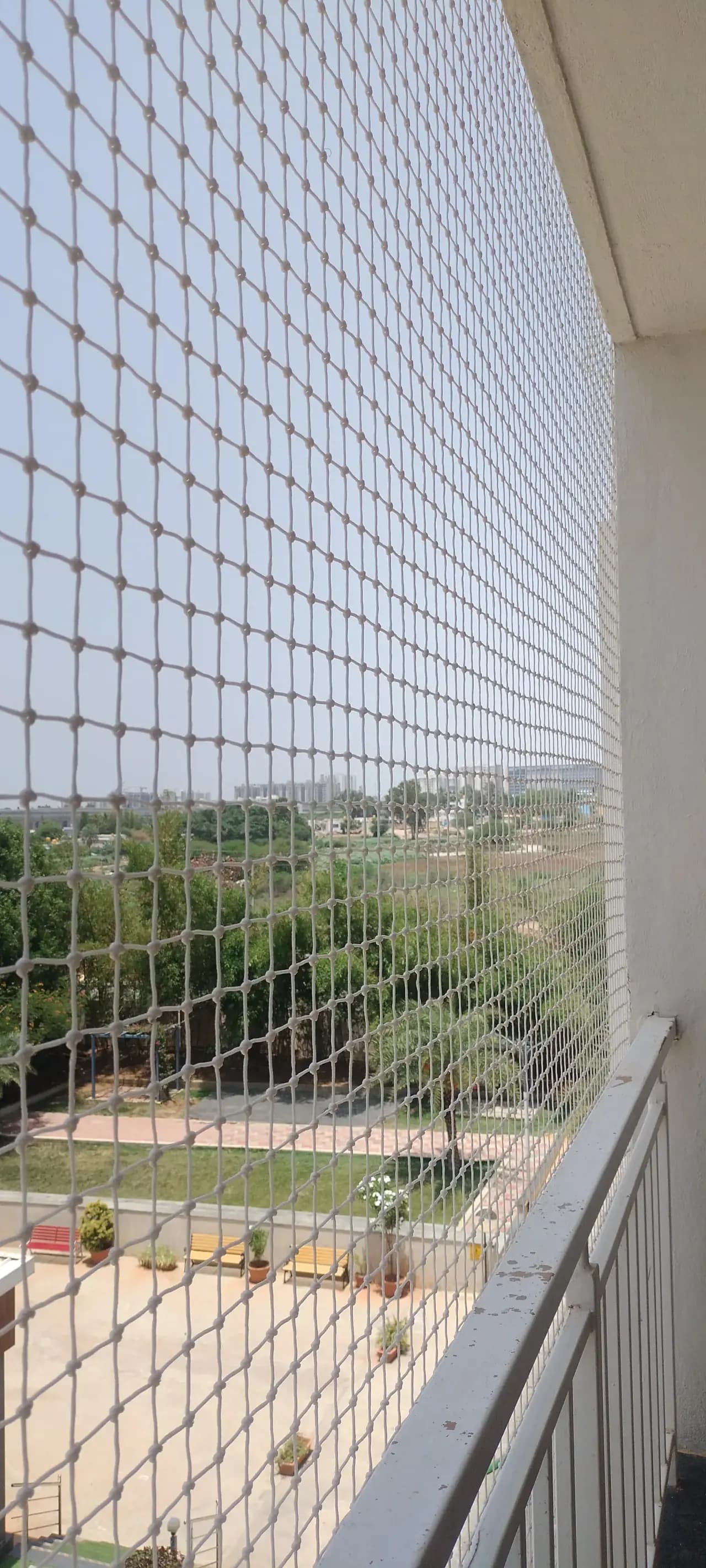
Follow the approach
The first sighting may be at the kitchen window, but the approach can involve a roof, wall or another connected opening. Describe what you have actually observed.
Tell us whether animals arrive from a tree, terrace, ledge or neighbouring structure. A safe wide photograph can show the relationship between these surfaces. Do not approach, feed or provoke an animal to obtain a closer image.
Identify the window, balcony return or service gap being crossed. A net on the most visible face can leave an opening at the top or side. The survey should define the complete proposed closure and any route outside its scope.
Explain daily window operation, washing, drying, AC servicing and terrace access. A barrier that is routinely left open may not meet the intended purpose. Maintenance access needs to be planned as part of the closure.
Assess the whole system
Material, twine, mesh, border, supporting structure and attachments all need to suit the proposed use. We do not infer performance from a product photograph.
| Part of the proposal | What to request | What it helps establish |
|---|---|---|
| Netting | Exact material, construction and available product details | What is actually supplied rather than an unqualified heavy-duty label. |
| Mesh opening | Opening dimensions matched to the assessed requirement | How the panel closes the route and interacts with the intended use. |
| Perimeter | Border design and continuity at corners | How the net is connected around the complete opening. |
| Supports | Sound fixing surfaces and any proposed frame | Whether the building edge is suitable for the planned attachment. |
| Access closure | A defined method for opening and securing it | Whether everyday maintenance leaves an avoidable gap. |
Understand your quote
Net, standard fittings and installation are included for a suitable agreed opening. Assessment determines the specification and whether netting is appropriate.
Plan your budget
Measure one covered face in feet. Discuss side returns and other openings separately.
Confirm minimum billing and taxes before approval. An animal-entry net is not a capture device and does not automatically establish child fall-protection suitability.
Different openings, different details
An exposed terrace and a recessed utility window should not receive the same assumed layout. Each opening has its own shape, support and access needs.
Inspect the top and bottom edges as well as the open front. Existing railings remain important building features; an animal-entry quotation does not establish that they can be removed. Discuss furniture or equipment that affects access to the opening.
Record roof lines, overhead gaps and access doors. Larger enclosures may require a separate frame or structural discussion. A side panel alone should not be described as a complete terrace enclosure when other approaches remain open.
Keep the normal use of shutters, ventilation and equipment in view. Netting must not casually block an escape route or required service access. Agree the closure around pipes and the way an authorised maintenance section is resecured.
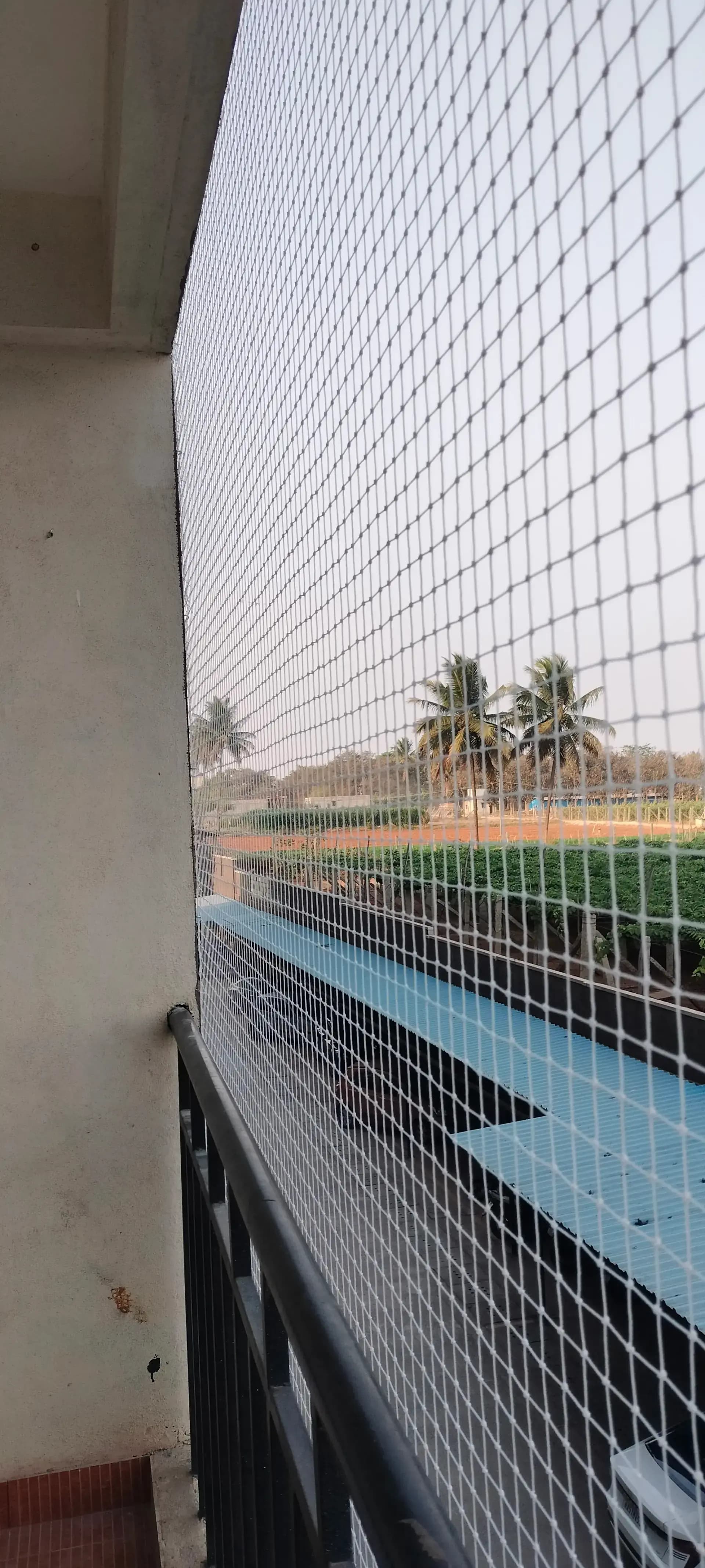
Suitability before purchase
Netting is not automatically the right solution for every repeated animal-entry problem. The proposal should explain both its intended coverage and its limitations.
Discuss an identifiable net system where the supports, opening and use make it a suitable option. Avoid choosing solely by the lowest price or the visible thickness of the cord. The quote should describe the actual product and attachment detail.
A rigid mesh or other suitable barrier may deserve consideration where flexible netting would be inappropriate. Frame design, fixing surfaces, maintenance and the surrounding building still need assessment. A material change alone does not resolve an incomplete route.
Pigeon exclusion, pet containment and child safety should each be described. One product label should not be used to promise all three without a relevant assessment. Keep existing guardrails and normal household supervision in place.
Supporting surfaces and exposure
More net is not useful if it is attached to a deteriorated surface. The condition of the intended support is part of the job discussion.
Tell us about loose brackets, failed old fittings or cracked finishes. Report actual exposure to wind-driven rain or salt deposits. The proposed border and attachments should be considered alongside the supporting structure.
Where a frame or surface repair is necessary, identify who will provide it and how it is quoted. Do not hide structural preparation inside a vague netting rate. The installer should be able to explain the planned attachment locations.
Rubbing, heat or sharp contact can damage a flexible barrier. Show nearby pipes, sheet edges, solar equipment or other installations during assessment. Required access and equipment clearances should remain part of the plan.
Written scope and price
Our starting rate includes the selected net, standard fittings and installation for a suitable agreed scope. Confirm the proposed specification before comparing totals.
Measure the opening height and width and account for side returns or overhead coverage where proposed. A terrace floor measurement alone may not describe the required net area. The quote should identify the exact faces included.
A separate frame, structural preparation or exceptional access requirement can affect the project. Have those items priced before accepting the job. Do not assume the starting rate confirms suitability for an uninspected opening.
A local refit, old-net removal or replacement of damaged fittings is a different task from fitting a new full panel. Request the options after assessment. Confirm minimum billing, tax treatment and any separately agreed work in writing.
Planned work at the property
The work should proceed only when the opening, supports and animal presence allow the agreed installation to be carried out appropriately.
Send your Visakhapatnam locality, property type, floor or terrace level and safe photographs. Explain when entry occurs and any existing enclosure. We do not assume animal activity from the area name alone.
Review material, mesh, supports, coverage and access sections. Resolve permissions and separately scoped frame or repair work. If netting is unsuitable, discuss that before committing to the installation.
Do not close animals inside an enclosure. Animal handling or rescue needs appropriate local help where required. Fit the agreed net and perimeter details after the space is suitable for work.
Check the stated coverage and demonstrate any maintenance opening. Keep written specification and support details. Ask how to report damage or an entry attempt without approaching or testing the net yourself.
After a damaged or detached net
Existing installations can be assessed for a patch or reattachment, including work by a previous installer. The right repair depends on whether the system remains suitable.
A patch may be discussed where the surrounding mesh is serviceable and a local repair addresses the cause. Damage linked to repeated animal contact needs particular attention. A cosmetic closure should not be described as proof of restored performance.
Inspect the attachment and the underlying support. Reattachment may require a different fixing point or other agreed work. Avoid relying on improvised ties or testing the barrier by applying your own load.
Brittle strands, multiple failed edges or an unsuitable old specification can favour replacement or another barrier. We explain the proposed repair scope and reusable components before pricing. Painting and other maintenance may also require planned removal and refitting.
Reduce avoidable access and report changes
The installed barrier is one part of managing an entry route. Routine use of the property can create new gaps or attract animals back to the same opening.
Keep food and waste secured around the affected opening and avoid feeding animals near it. Discuss shared housekeeping where several properties connect to the same route. Netting one balcony does not alter every surrounding attractant.
From a safe inside position, look for loose edges or visible damage, especially after building work or an observed interaction. Keep people and pets away from a compromised opening while it is assessed. Do not encourage animals onto the net to test it.
An animal trapped or distressed around a barrier needs appropriate local wildlife or rescue assistance. Pause installation or maintenance rather than attempting capture through the mesh. Follow the agreed access and reporting process after handover.
Around Visakhapatnam
Share what you have observed at your own property. These locality links help organise enquiries; they do not label a neighbourhood as having a verified animal problem.
Send the complete approach and the opening from a safe position.
Mention terraces, window returns and any existing enclosure that needs assessment.
Questions before booking
Suitable monkey-net installations start from ₹20/sq ft including the selected net, standard fittings and installation. The proposed material, opening geometry, support condition and safe access determine the final scope. Any frame, exceptional access or repair work should be itemised separately.
No honest assessment can promise universal exclusion without examining the animal route and enclosure. Monkeys may reach another side or interact with an unsuitable net. We discuss whether netting fits the opening and whether a different barrier or additional route management is needed.
Do not assume that it is. The intended use, material, mesh, perimeter and support system need a separate assessment for animal entry. A net’s colour or apparent thickness does not demonstrate suitability, and a bird-net description is not evidence of a monkey-resistant installation.
Choose a documented specification after the opening and animal access have been assessed. Ask for material, mesh opening, twine, border and attachment details together. Different dimensions and mesh sizes can be discussed; there is no one-size recommendation that is safe to apply from a locality name alone.
We can assess the terrace and the approach, including side gaps, roof returns and nearby structures. Do not cut vegetation or alter a neighbouring property without the appropriate agreement. A panel across one edge may leave another route available, so the scope should identify its limits.
These openings can be assessed while preserving window movement, ventilation and the space needed for maintenance. Tell us about food storage, pipe routes and equipment access. The selected barrier must suit the whole opening rather than leaving a loose flap for routine use.
The answer depends on the animal’s access, available supports and how the space is used. A rigid framed barrier may be worth discussing where flexible netting is unsuitable. Neither a thick-net description nor a photograph can replace assessment of the proposed complete system.
Monkey-entry control and child fall protection are separate requirements. Explain both if they apply. Do not let a child climb or lean on the net, and do not replace an existing guardrail based only on an animal-exclusion quotation.
Yes, we can assess existing work for a patch, replacement fittings or reattachment. The cause of damage matters: repeated animal interaction or a weak support may make a local repair unsuitable. We quote the proposed work after checking whether the remaining net and supports can be reused.
Keep people and pets away from the damaged opening and arrange an assessment. Do not test the net by pulling it or try to reach an animal through it. A patch is considered only where it addresses the damage and the surrounding installation remains suitable.
A planned access section may be possible if it can be properly secured when closed. Explain regular maintenance and required access before fitting. An unsecured flap or a permanently open service gap can leave an animal entry route, so the closure method matters.
The proposed purpose is to restrict entry, not capture or injure wildlife. Never close a space while an animal is inside. If an animal is trapped, distressed or needs handling, pause the work and seek appropriate local wildlife or rescue help; net installation is not an animal-capture service.
We look at the actual exposure, visible corrosion, fixing surface and proposed material. A sheltered opening and an exposed terrace may need different details. The quotation should name those details rather than promising that all nets and hardware are permanently weatherproof.
Timing depends on safe access, material availability, the scope and whether wildlife is present. Confirm it after assessment. Obtain the actual product and workmanship terms in writing; there is no single defensible lifespan, load claim or warranty that applies to every animal-entry enclosure.
Your Visakhapatnam team
Send your Vizag locality, property type and safe photographs of the approach and opening. Tell us about an existing net, visible damage and any animal currently inside.