Bird exclusion planned around the whole building opening
Anti Bird Nets in Bangalore
Plan bird exclusion around the species, the building openings and the access you need to keep.
Choose bird netting for the species, access route and space you need to keep usable. EverSafe installs anti-bird nets in Bangalore from ₹15 per sq ft, including installation, for suitable vents, utility openings, shafts and wider residential or commercial spaces.
Identify the birds, their route and the space behind it
Anti-bird netting is an exclusion system: it closes selected openings so birds cannot keep using the protected space. Good planning starts with observation.
Which birds are entering?
Tell us whether you see pigeons, mynas, sparrows, crows or birds you cannot identify. A safely taken photograph helps. Size and behaviour matter because a mesh suitable for one species is not automatically suitable for a smaller bird.
Where is the entry network?
A bird may enter through a vent and settle farther inside a shaft, roof void or equipment recess. Check connected faces, service penetrations and adjacent openings. A single attractive panel can leave the main route open elsewhere.
What happens in the protected space?
The answer changes the design: residents need window access; a facility team may need lights, fans or pipework serviced; a store may need deliveries to continue. The net should fit these routines instead of becoming an obstacle to them.
Specification before appearance
Mesh opening and material solve different questions
Mesh opening determines which birds can pass through. Material, construction and supporting hardware influence how the selected panel can be used and maintained.
Size the opening for the target species
Smaller birds can use gaps that exclude pigeons. Where several species are present, the smallest relevant bird is part of the mesh assessment. Do not choose a large opening only because it looks less noticeable across a window.
Compare the actual supplied net
HDPE, polyethylene, nylon and polypropylene are material descriptions, not interchangeable performance grades. Ask about mesh size, strand construction, outdoor suitability, knots, borders and any documented product limitations. Confirm available specifications before ordering.
Understand finer mesh trade-offs
A smaller opening can be more visible and can collect debris differently. Across a vent or equipment opening, the designer must consider usable airflow and cleaning access. Bird mesh does not itself certify an opening for ventilation, fire or mechanical requirements.
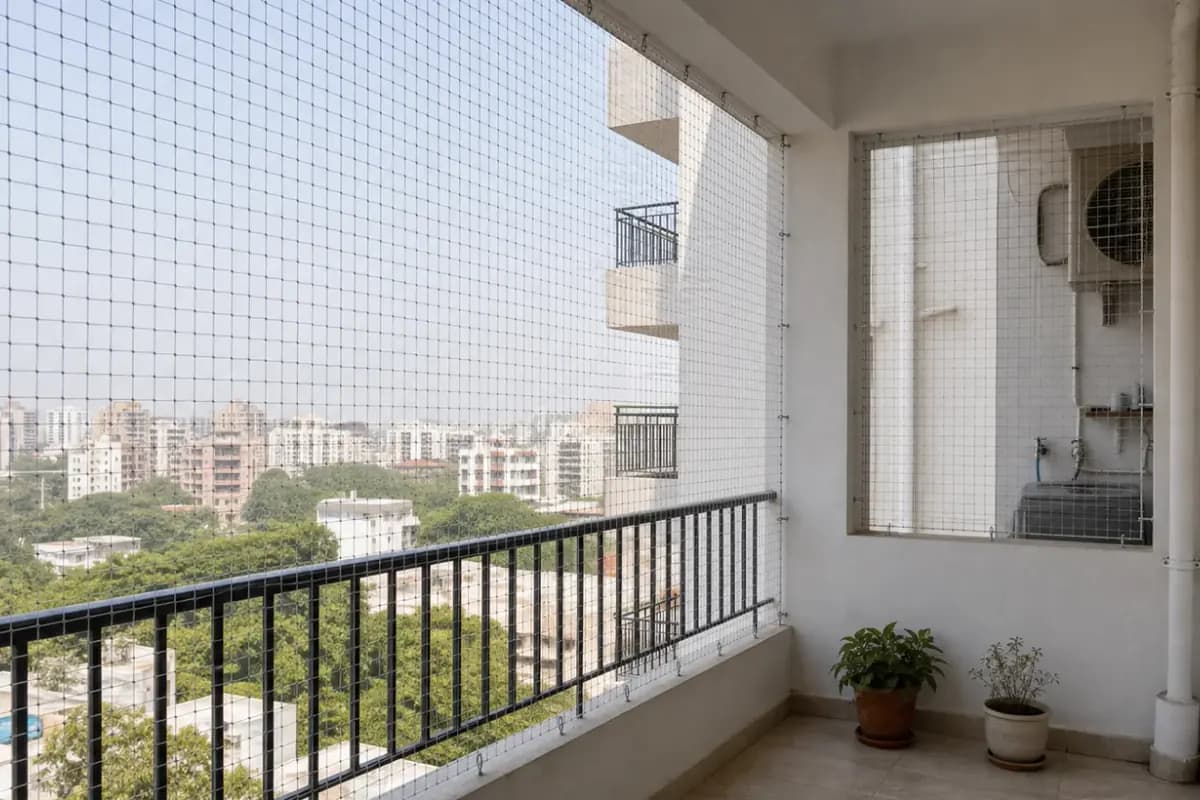
Installation illustration: mesh across a building opening; the bird species determines the specification.
Price, with the scope explained
Anti-bird net installation from ₹15 per sq ft
Installation is included in the starting rate for the agreed netting scope. A measured panel schedule is especially useful when several openings or building zones are involved.
Plan a starting budget
What could your installation start at?
Enter one netted or grilled face. Add side faces separately when discussing the full quote.
Enter your measurements to beginYour starting estimateStarting-rate illustration · Final scope and total confirmed in your quote.
Starting rate₹15/sq ft
What is included in the starting scope?
Selected anti-bird netting for the agreed panels
Fittings and installation in the quoted scope
Perimeter closure and agreed service-access details
What changes the final quote?
Target bird species and mesh specification
Number, orientation and shape of panels
Building supports, access and preparation needs
Special supports, removal, cleaning, minimum billing and taxes should be confirmed in writing. Timelines depend on access and the measured job.
Applications with different priorities
Bird netting for utilities, shafts and commercial spaces
Residential bird control and a large facility share an exclusion principle, but they need different measurements, access plans and handover information.
Utility windows and service shafts
The plan may need to close multiple openings around pipes while retaining window operation, drainage and equipment access. A shared shaft requires clarity about the association’s responsibility and any neighbouring openings connected to it.
Warehouses and covered work areas
Describe roof-level entry, beams, loading doors and daily movement. For warehouse bird netting, map the void to be protected and the maintenance points behind it. A constantly open operational doorway may need a different approach from a fixed net panel.
Offices, institutions and common spaces
Covered courtyards, selected canopies and shared equipment recesses need a coordinated access arrangement. The facility manager should identify scheduled maintenance, cleaning, work permits and any building systems that must remain clear.
Large or irregular building openings
Wide spans, corners and several elevations can need more supporting detail than a small utility window. A photograph-based estimate is provisional until the support surfaces, measured faces and safe installation method are understood.
Protect access as well as the opening
Keep vents, fans and building services maintainable
An anti-bird installation should not quietly obstruct the equipment behind it. Tell us what must be operated, opened, cleaned or replaced.
Ventilation and exhaust routes
Identify fans, exhaust outlets and any intake or flue before net placement. Appropriate clearances and airflow requirements come from the equipment and building design. Do not cover a hot exhaust or critical vent with a generic net as an improvised solution.
Access panels and removable sections
A designed access section may be possible where a technician needs to reach valves, AC components or lights. Agree how it opens, who can use it and how the perimeter closes afterwards. Frequent access can make a rigid framed solution more practical.
Inspection and housekeeping
The finished net should remain reachable for appropriate maintenance without residents or staff improvising exterior access. Debris accumulation, loose panels and open clips should be reported. Name the person responsible for arranging checks in a shared building.
The complete installed system
Edges, supports and penetrations deserve equal attention
A net is only one part of the closure. Its perimeter, supporting surfaces and details around services determine whether the agreed bird route stays closed.
Supporting surfaces and panel borders
The installer assesses where the perimeter can be secured and how corners are supported. Weak finishes, loose existing attachments or uncertain cladding should be resolved rather than used because they happen to be convenient.
Pipe and cable penetrations
Small residual gaps around services can bypass the main panel. The closure detail should suit the shape without binding equipment, hindering drainage or interfering with necessary maintenance. A moving component needs particular consideration.
Tension and inspectability
The panel should follow its intended shape without loose pockets or an edge pulled away from the building. Product-specific installation requirements determine the fitting detail. Future staff should be able to recognise damage and know who to contact.
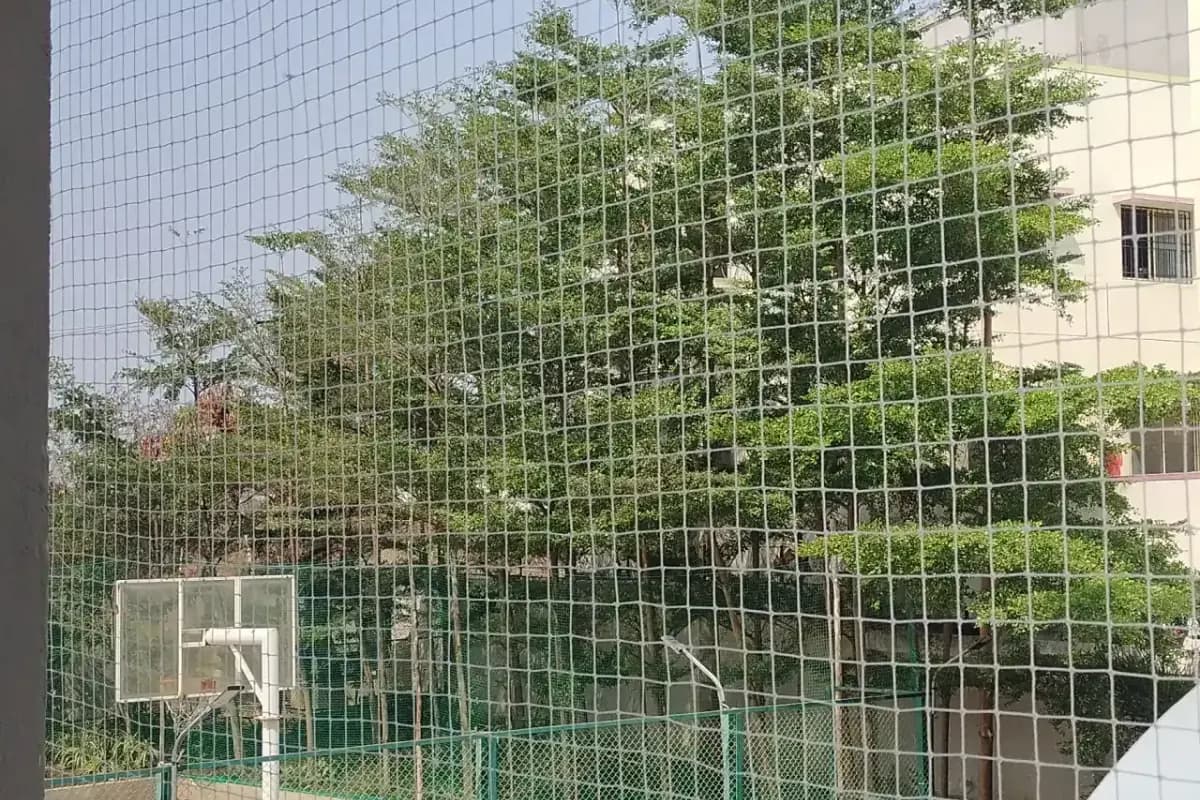
Installation illustration: inspect the panel edge as carefully as the central mesh.
Responsible closure
Check for birds and active nests before sealing the space
Exclusion should prevent access without trapping wildlife. The inspection has to include the concealed space behind the proposed net, not only its visible front.
Before work begins
Report live birds, nests, eggs, chicks or a history of birds becoming caught in existing netting. Where their presence is uncertain, pause closure and seek appropriate wildlife advice. Do not treat net fitting as a bird-capture service.
During the installation sequence
The route and timing of closure should avoid enclosing birds inside the protected area. Complex voids may need a coordinated plan with the property manager and a suitable wildlife professional before the installation can proceed.
After handover
Arrange visual checks for damaged mesh, loose pockets or birds behind the net. If a bird becomes entangled, seek professional assistance promptly. Residents and staff should not climb into a shaft or pull at occupied netting themselves.
Compare an installed quotation
Anti-bird net price follows coverage and access complexity
The starting price is ₹15 per sq ft including installation. For a large building, a useful quotation also explains the measured panel schedule and how access is arranged.
Anti-bird net price follows coverage and access complexity
Quote component
What should be recorded
Why it changes the discussion
Net area
Each face, overhead panel and return included
Protected floor area can differ substantially from net area.
Product selection
Target birds, selected mesh and construction
Different species or exposure can require a different specification.
Perimeter and supports
Fittings and any separately needed support work
An opening without suitable supports is a different scope.
Working access
Floor, reach, equipment and permitted work times
A small high-level void may require more planning than a larger accessible panel.
Preparation and future access
Removal, cleaning and service-panel arrangements
These items should be settled before work rather than assumed.
Minimum billing, taxes, special access and additional preparation are confirmed in the quotation. There is no unverified maximum-price band.
A planned installation visit
Survey, agree the coverage, fit and record the handover
A structured approach is especially useful when several residents or a facility team are involved. It keeps the scope understandable from the first inspection onward.
01
Map the affected openings
Start with the bird observations and photographs, then identify every proposed closure face. Mark private and common areas separately. Include maintenance doors, equipment and any inaccessible void that needs further inspection.
02
Confirm the design and access
Agree the target species, selected mesh, perimeter arrangement and removable sections. Confirm permissions, working hours and safe access before setting the fitting date. Product-specific restrictions should be resolved at this stage.
03
Install the agreed enclosure
Fit the panel and border details around the measured space, checking the sequence for wildlife presence and the perimeter for unintended openings. Unplanned changes should be discussed with the responsible customer or facility manager.
04
Hand over a maintainable system
Review panel edges, access closures and the maintenance contact. For multiple zones, identify which area each panel protects so future equipment work does not leave an unnoticed route back into the building.
Manage change over time
Repairs, refitting and replacement need a fresh inspection
Bird netting can be disturbed by maintenance even when it was intact beforehand. Include the net in the handover between the building’s contractors.
Damage in one panel
A local tear or detached edge may be repairable if the surrounding net and supports remain suitable. Send a wide view and a close-up taken from a safe position. The appropriate scope could be a patch, reattachment or replacement panel.
Painting or equipment replacement
Arrange planned opening and refitting before work starts. An improvised cut for a pipe or air-conditioning visit can defeat the exclusion system. Existing mesh must be assessed before reuse, including work fitted by another installer.
Widespread ageing or recurring entry
If several sections are brittle, attachments are failing or birds keep bypassing the same layout, replacing the weak panel alone may not solve the issue. Revisit the supporting system, species and entry network before spending again.
Your part of Bangalore
Anti-bird netting for Bangalore homes and facilities
Find your area and send the site location, the type of building and the openings birds use. For several vents or shafts, include a wider view of how the spaces connect.
Industrial and workplace enquiries
Describe the operating hours, roof access and equipment in the affected space.
Anti-bird netting questions for residents and facility teams
What is the anti-bird net price in Bangalore?
EverSafe anti-bird netting starts at ₹15 per sq ft including installation. The measured quote accounts for the selected product, panel area, supporting surfaces and access. Any additional preparation, minimum billing or taxes should be confirmed before work.
How is an anti-bird net different from a pigeon net?
Anti-bird netting is the broader service for different species and building openings, including vents, shafts and larger voids. Pigeon netting focuses on domestic pigeon routes such as balconies and AC recesses. The target bird determines the appropriate mesh.
Can one net exclude sparrows, mynas and pigeons?
A suitable specification may address several species, but it must be chosen around the relevant birds rather than assumed from the name anti-bird. Smaller birds can pass through openings that stop pigeons. Share a bird photograph if identification is uncertain.
What mesh size do I need?
The target species, opening and supplied product determine mesh selection. No single mesh size is suitable for every bird-control job. The quote should identify the proposed opening size and confirm any implications for visibility, debris and access.
Do you install bird netting in warehouses?
Warehouse and covered-workspace enquiries can be assessed for suitable exclusion panels. Send roof and entry photographs, dimensions, operating hours and service-access requirements. Loading doors, roof voids and fixed vents may need different solutions within the same building.
Can bird netting cover a ventilation opening?
Only after the opening and equipment requirements are checked. The proposed mesh must not obstruct essential ventilation, hot exhausts or required servicing. A rigid framed screen or a different layout may suit some openings better than flexible netting.
Can the net include an access opening?
A planned access section may be possible depending on the product and layout. Agree who will operate it and restore the closure after maintenance. Frequently accessed equipment may be better served by a different enclosure design.
Is anti-bird netting safe for wildlife?
Responsible exclusion requires suitable mesh, complete fixing and checks before and after closure. It should not trap birds behind the panel or leave loose entanglement pockets. Active nests or trapped birds need appropriate wildlife advice before the work proceeds.
Will netting make the area dustproof or mosquito-proof?
Bird exclusion is the intended function. The net is not automatically an insect screen, dust filter, rain cover or fall-safety barrier. Mention any additional requirement so that it can be considered as a separate product decision.
Can an old anti-bird net be patched or refitted?
A condition check can determine whether patching, edge reattachment or refitting is practical. Widespread deterioration or weak supports may require replacement. Existing installations from other providers can be assessed, with repairs quoted for the actual scope.
How long will a commercial bird-net installation take?
Duration depends on survey findings, panel count, working height, preparation, equipment access and permitted hours. A schedule can be discussed after the scope is clear. Large or occupied facilities may need planned phases rather than one uninterrupted visit.
What maintenance and warranty terms apply?
Ask for the supplied product and workmanship terms in writing. The responsible person should arrange inspection after disturbance or visible damage and keep service access properly closed. No universal lifespan or unconfirmed warranty period is promised.
A clear next step
Start with the birds and the building opening
Send site photographs, the bird species if known, approximate dimensions and your Bangalore locality. Mention service access and working-hour restrictions.