Build a practice space around the ball, the player and the session—from a single batting bay to academy lanes.
From one batting bay to adjoining academy lanes, a good cricket-net installation starts with the ball, the training format and the available space. EverSafe installs cricket practice nets in Bangalore from ₹14 per sq ft, including the quoted net, fittings and installation. Frames, foundations and pitch construction are separate scopes to confirm.
A practice lane, batting cage or replacement panel?
Cricket practice nets in Bangalore are requested for academies, schools, clubs and private spaces. Tell us whether you need a new layout or netting for a structure you already have.
Single practice lane
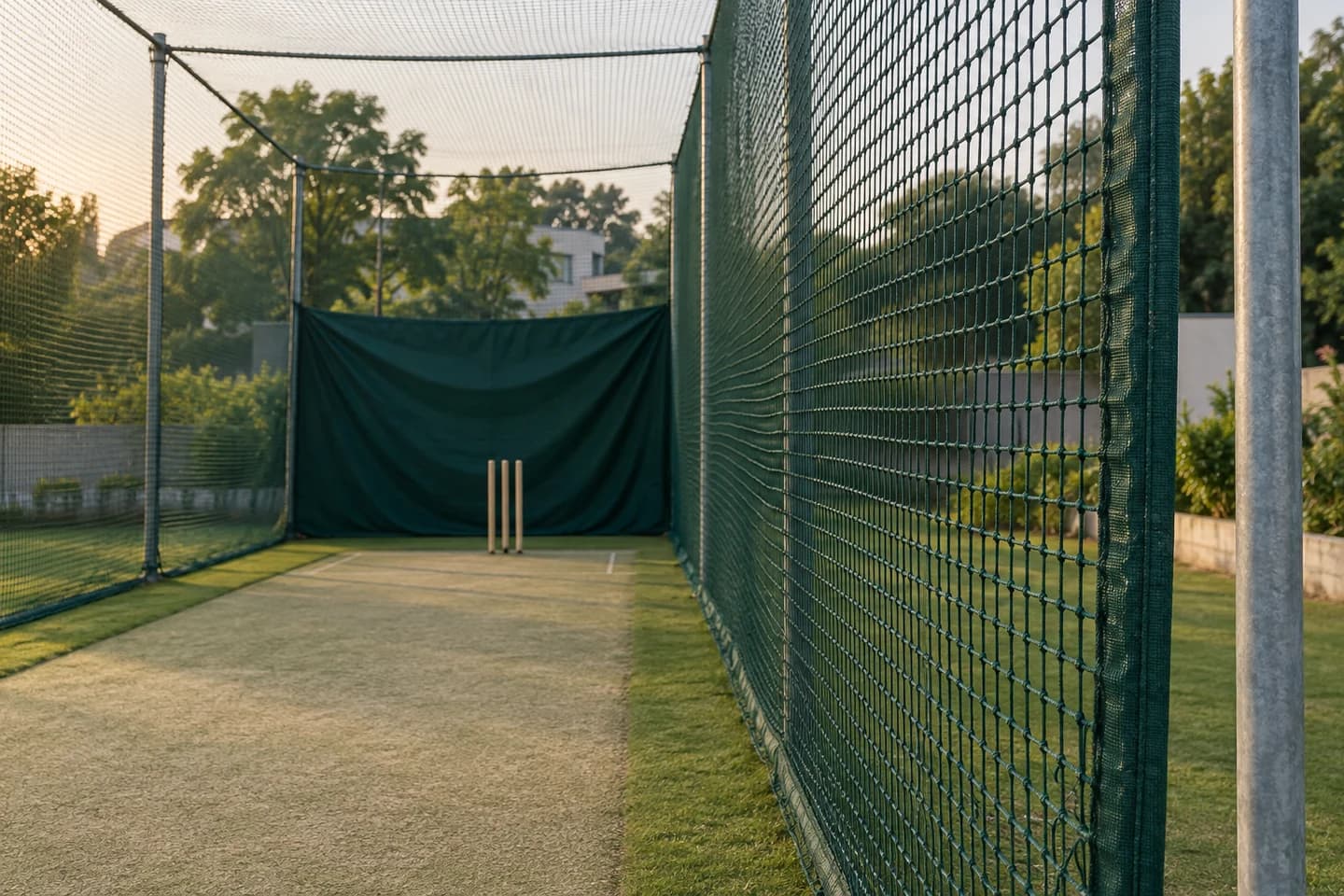
Plan the batter’s area, bowling direction, follow-through and required run-up together. A linear lane needs suitable side and end panels without forcing bowlers or coaches into adjacent play. The actual space and user group decide the arrangement; a compact batting drill is different from full bowling practice.
Multiple lanes for coaching
Adjoining lanes need effective divider panels, clear entry points and circulation outside the ball path. Explain how many groups train at once and whether lanes are used independently. The proposal should show shared seams and access so a ball cannot simply pass through the gap between two installations.
Batting cage or existing-frame refit
A cage may be fixed, removable or arranged for focused throw-down drills. If poles or a frame are already present, send their dimensions and condition. Replacement netting can be quoted separately where the support system remains suitable; new mesh does not certify an unknown frame.
Measure for use, not a stock label
Lane size includes more than the pitch strip
Available length, width and height establish the starting layout. They do not alone show whether the planned training format, run-up and circulation will work comfortably.
Bowling, batting and movement space
Describe the player age groups, bowling style and intended drills. Allow the designer to consider the delivery area, follow-through, stance and the position of other users. Formal club or institutional projects may need their own facility brief and competent design review; no universal cage size is promised for every site.
Neighbouring uses and escape routes
Show nearby windows, parking, roads, walkways and other courts. The direction of likely shots and the consequences of a missed ball inform side height and top coverage. A lane that fits inside a plot still needs a practical access route and enough separation from exposed hard structures.
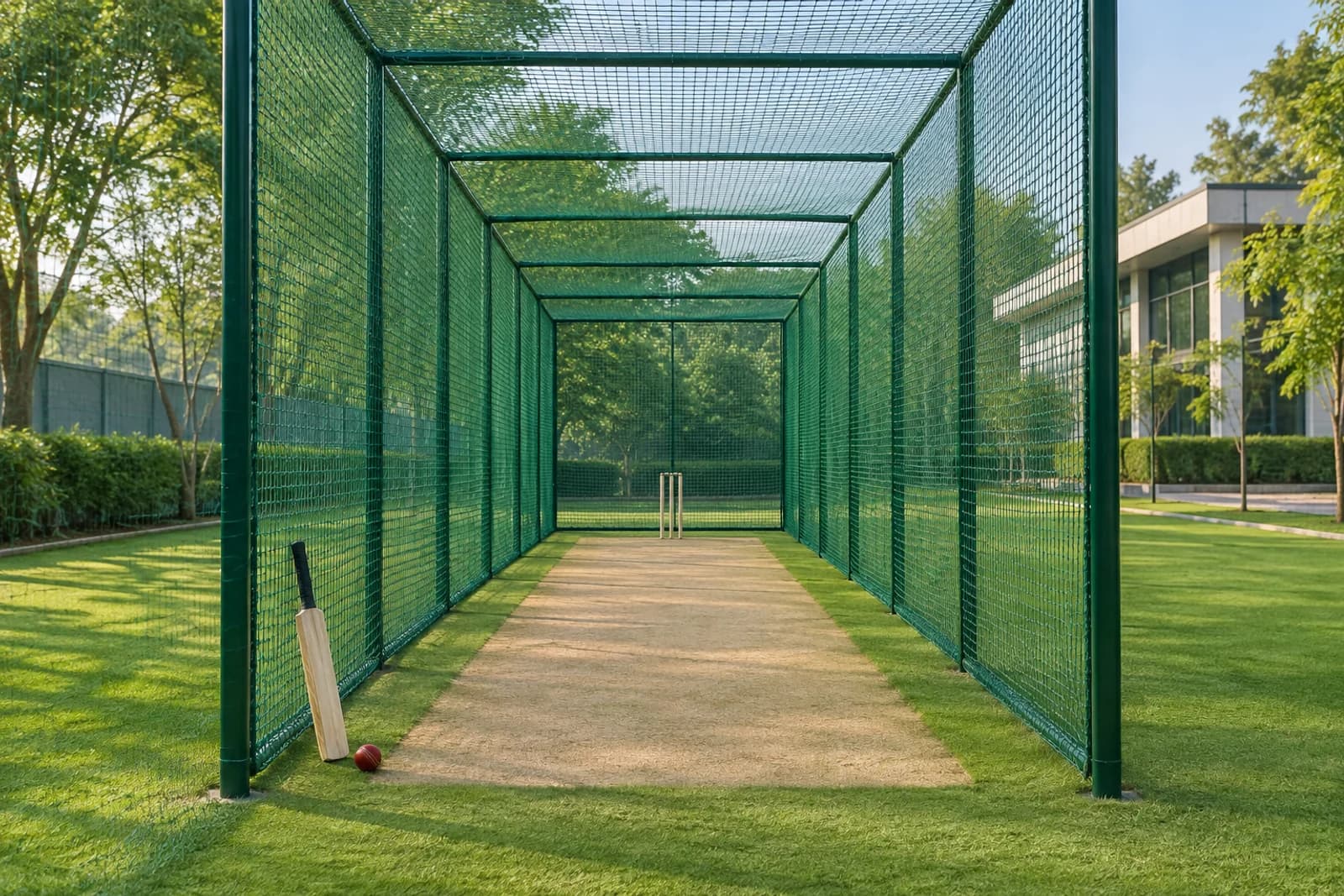
Cricket training-lane illustration. Dimensions, clearances and frame design require a site-specific plan.
Price, with the scope explained
Cricket net installation in Bangalore starts at ₹14/sq ft
The starting rate includes net, fittings and installation for the agreed standard netting scope. Each side, end, divider and top panel is measured separately. A cricket pitch’s floor area is not the total netted surface.
Plan a starting budget
What could your installation start at?
Enter one netted or grilled face. Add side faces separately when discussing the full quote.
Enter your measurements to beginYour starting estimateStarting-rate illustration · Final scope and total confirmed in your quote.
Starting rate₹14/sq ft
What is included in the starting scope?
Selected netting for the agreed training use
Standard perimeter fittings and panel finishing
Installation on suitable agreed supports
What changes the final quote?
Panel area, lane count and top-cover scope
Exact net product, borders and impact panels
Existing support condition and access
New frames, tracks, foundations or civil work if required
The ₹14 rate is for installed netting, not a turnkey pitch. Confirm frame and pitch work, tax, minimum billing, removal and specialist access separately. Final dimensions and training suitability require a site-specific plan.
Make the net identifiable
Compare mesh, twine, borders and the intended ball
Nylon, HDPE and other cricket-net products can differ in construction and application. Request the exact product, not simply “heavy-duty cricket mesh”.
State how the lane will be used
Tell us whether sessions use leather balls, tennis balls, softer junior balls or a bowling machine. Explain expected frequency and repeated impact areas. These details help select the product and identify where an impact curtain or replaceable panel should be considered; one thickness is not assumed suitable for every drill.
Record the complete specification
The quote should identify material, mesh aperture, twine construction, border reinforcement, panel joins and any relevant manufacturer application guidance. If Garware or another brand is selected, confirm the specific product on the invoice. Exact mesh sizes, colours and stock are checked before supply rather than inferred from a sample image.
How the panels work together
Controlled give matters more than a drum-tight finish
A practice net needs a hanging arrangement suited to the product and the training use. Appearance alone does not show whether rebound, wear and escape gaps have been considered.
Drape and impact zones
The selected system may need controlled give to absorb ball contact. Pulling every panel excessively tight can increase rebound or stress at the edges; unmanaged sag can obstruct players. Follow the product and design requirements for the actual panel instead of using one tension setting throughout the cage.
End curtains and replaceable wear areas
Repeated batting or machine drills may concentrate wear in particular places. Discuss an appropriate impact panel or curtain and how it will be inspected and replaced. Position hard supports outside likely contact areas or address their protection in the facility plan. A curtain is not a substitute for sound perimeter containment.
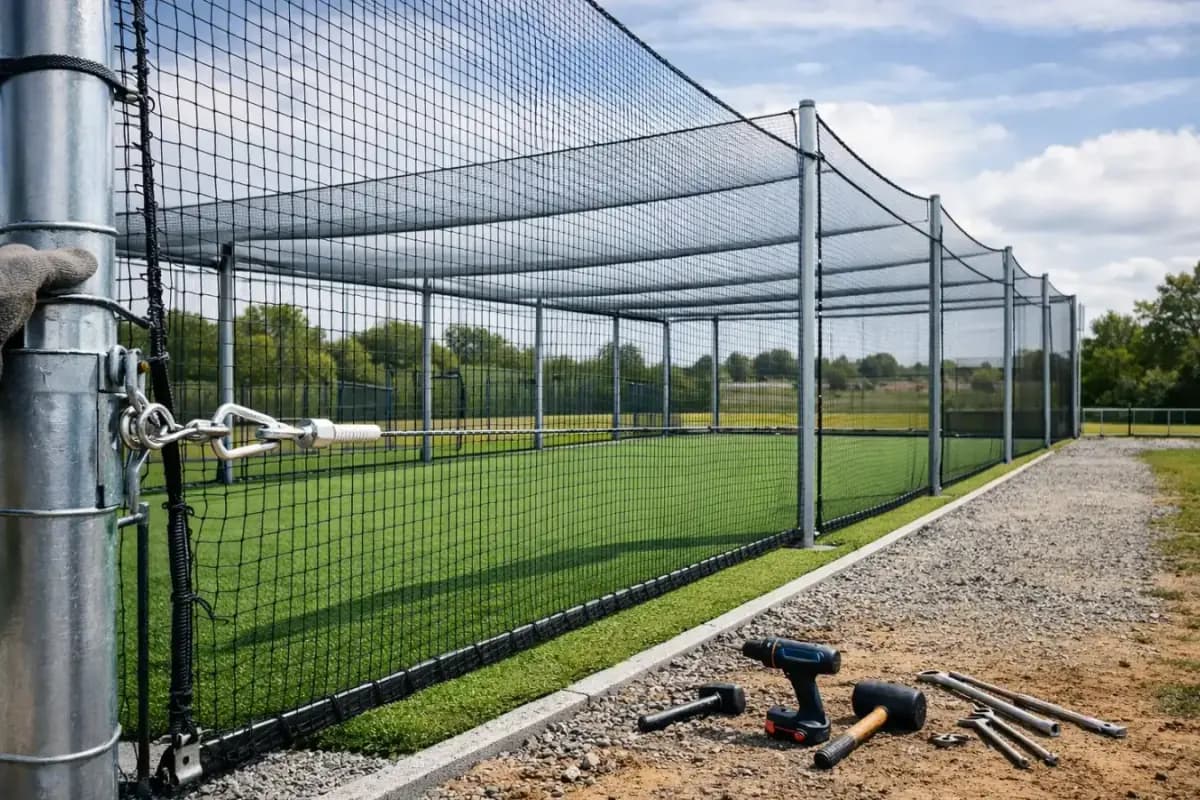
Installation illustration showing an outdoor netted lane and perimeter supports.
Account for every face
Side nets, dividers, back panels and top cover
A quotation should show which panels it includes. A low rate on three faces is not comparable with a fully enclosed lane using the same nominal floor dimensions.
Side nets, dividers, back panels and top cover
Panel
What it contributes
Detail to settle
Side panels
Contain shots and separate the lane from neighbouring activity.
Length, lower closure, approved hanging and hard-support clearance.
Batter-end or back panel
Closes the end behind the batter.
Impact wear, joined edges and any separate curtain.
Divider between lanes
Separates simultaneous training sessions.
Continuous joins, access and how coaches move between groups.
Top panel
Addresses relevant lofted-ball escape paths.
Span, support design, inspection access and clearance above play.
Entry or bowler-end return
Provides controlled entry without an unintended ball route.
Run-up clearance and a closure procedure during use.
The net is one part of the facility
Check poles, tracks, frames and the ground below
The starting netting rate does not turn an uncertain structure into a completed cricket facility. Supports need their own condition review and, where appropriate, design.
Existing frames and outdoor supports
Inspect corrosion, leaning poles, moving bases, brackets and supporting surfaces before reusing them. Ground conditions, underground services, wind exposure and access affect any new support proposal. Foundations, fabrication and structural advice should be itemised rather than hidden inside a net-only square-foot comparison.
Terraces and indoor buildings
Rooftop projects need permission and review of loading, waterproofing, anchors and the consequences of escaped balls. Indoors, identify lights, fans, sprinklers, doors and escape routes. Ceiling tracks and overhead supports require a suitable structural attachment and maintenance method; a net fitter cannot infer approval from an empty space.
Shared halls and flexible spaces
Retractable nets need a clear setup and storage routine
A school hall or shared court may benefit from panels that open when training finishes. The moving parts and staff responsibilities belong in the design from the start.
Indoor tracks and divider curtains
Check the proposed track, carriers, leading edges and storage position against the building and its other activities. State who supplies and approves the track, how it is serviced and whether the price includes it. Retractable netting is a separate system choice rather than a feature of every standard installed panel.
Temporary and removable arrangements
A removable cage or curtain needs a repeatable way to set it up correctly and close the same gaps each time. Confirm storage, supervision and the checks before use. Do not leave loose ropes, supports or folded nets in a route used by children or other court users.
From layout to first session
Agree the netting scope before installation starts
Useful handover information includes what was supplied, how the panels close and who checks them before training. The fitting duration follows the approved project scope.
01
Survey and measure
Share photos, locality, lane count, approximate dimensions and training use. A site review checks supports, surfaces, access and ball routes before final measurements and product selection.
02
Prepare and fit
Resolve permissions and any frame, civil or track work, then schedule the net installation. Hang and join the panels to the agreed arrangement, paying attention to borders, low gaps and entry points.
03
Review the completed lane
Inspect the panels and closures together and retain the product and maintenance details. The venue operator should approve the facility’s use and supervision arrangements. Installing nets does not certify the whole pitch, equipment or building.
Keep the lane ready for training
Inspect before play and repair the actual failure
A net sees repeated impact as well as weather and handling. A short inspection before training is more useful than waiting until a ball has escaped.
Look at the common wear points
Check side and end panels, seams, borders, bottom gaps, entry closures and repeated impact areas. Also look for moving poles, loose fittings or cracked surfaces. Stop using an affected lane when containment or support is uncertain and arrange an assessment before restarting.
Patches, reattachment and replacement
EverSafe can assess suitable existing cricket nets for repair, patching and reattachment. A local fault may be repairable, while widespread wear or a change to harder balls can justify replacement panels or a revised specification. Ask for a scope-based repair quote; the new-net starting rate is not a universal repair tariff.
Your part of Bangalore
Cricket-net installation enquiries across Bangalore
Choose your area, then share the practice-space dimensions, ball type and training format. For schools and academies, include the entry route and when the facility can be made available.
East and southeast venues
Send lane count, ball type and existing-frame details for the proposed training space.
What is the cricket practice net price in Bangalore?
Installed netting starts at ₹14 per sq ft, including the agreed net, standard fittings and installation. The final cost depends on panel area, product and access. Frames, poles, foundations, turf and pitch construction are separate unless expressly included in the quotation.
Do you provide practice slots or cricket nets for hourly rent?
This is an installation and repair service, not a venue booking or coaching service. For a lane at your own facility, share the site and training brief.
How is the area of a cricket net enclosure calculated?
Add the measured sides, batter end, dividers, top and returns included in the design. Pitch floor area alone is insufficient. The quote should identify the faces and available supports.
Which mesh should I choose for leather-ball practice?
Ask for a product documented for the intended use, with its mesh opening, construction, border and relevant supplier guidance. Ball type, training frequency, impact zones and the complete hanging arrangement matter. A generic thickness or the word heavy-duty cannot establish suitability by itself.
Can the same net be used for tennis balls and leather balls?
Confirm every intended ball type against the selected product and complete setup. Review suitability before changing a softer-ball facility to leather-ball training; appearance alone cannot establish interchangeability.
Do all practice lanes need a top net?
It depends on lofted shots, nearby activity, facility requirements and structure. The quote should explicitly include or exclude its measured area and support scope.
Should cricket nets be pulled as tight as possible?
No. Follow the selected hanging system’s requirements for controlled give, clearances and closed edges. Excessive tension or unmanaged sag can create different problems.
Can you replace nets on my existing cricket frame?
Suitable existing frames can be assessed for refitting. Send dimensions and photos of bases, corrosion and fittings. Resolve moving or uncertain supports before attaching new panels.
Can you plan indoor or retractable cricket nets?
Such layouts can be discussed with the building, track and support requirements clearly defined. Lights, fans, sprinklers, doors and escape routes must remain workable. Confirm who designs and supplies any overhead track and how staff will set up, store and inspect the panels.
Can a rooftop be used for a cricket practice cage?
Rooftop projects need appropriate permission and review of loading, waterproofing, anchors and escaped-ball consequences. Frame or roof design is separate from net installation; an empty roof is not approval to train.
Do you install cricket nets for schools and academies?
Yes, enquiries from schools, academies, clubs and private clients are welcome. Share lane count, age groups, balls, operating hours and supervision so quotations can follow the same brief.
Can you repair a torn cricket net or reattach a panel?
EverSafe can assess suitable panels for patches, repair and reattachment, including existing work. A repeated-impact panel may need replacement rather than a small patch. Stop using an affected lane when a ball can escape or a support is loose, then arrange a scope-based repair quote.
How long does cricket net installation take?
Timing follows lane count, support readiness and access. A panel replacement differs from a new framed facility. Confirm the programme after the measured scope and preparations are agreed.
What warranty or maintenance support should I expect?
Request the written terms for the actual product and installation, including wear, impact damage, alterations, inspections and service charges. Keep the specification and handover details. A stated warranty period cannot replace regular inspection or prove that every ball speed and use is covered.
A clear next step
Tell us the ball, the lane and the space available
Send your Bangalore locality, facility photos, approximate dimensions and whether you need a frame, a new net layout or replacement panels. We will help define an itemised installation scope.