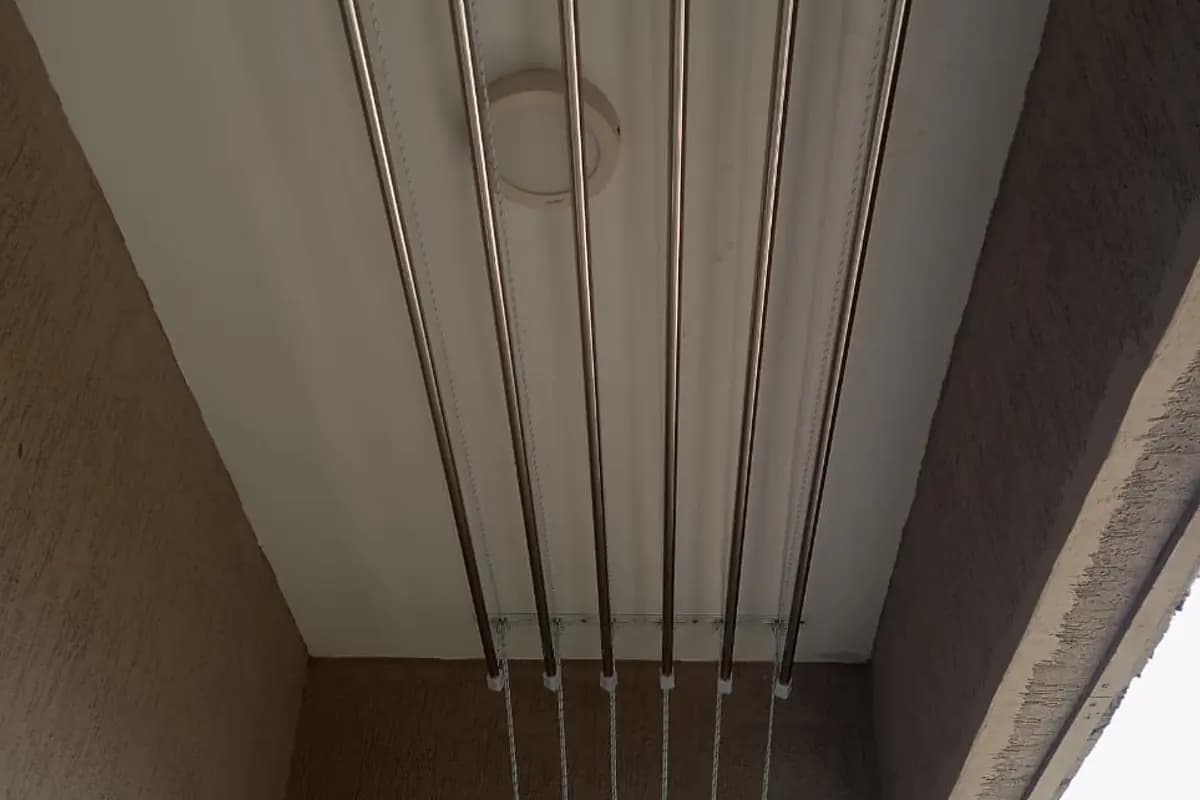
Lift laundry off the floor and bring drying rods down to a comfortable loading height.
Give laundry a place above the floor. EverSafe supplies and installs manual ceiling cloth hangers in Bangalore from ₹2,800 per system, including installation for the agreed starting arrangement. We help plan the rod layout, loading height, controls and fixing surface around your everyday wash.
Choose a drying layout that gives your balcony floor back
A ceiling cloth hanger raises laundry into overhead space after you load it at a comfortable height. It can make a balcony or utility room easier to use, provided the fixing surface, lifting controls and clearances are suitable. This service is for installed clothes-drying systems, rather than wardrobe or garment hangers.
Installation illustration: pulley rods provide an overhead laundry layout.
A clear walking and working zone
Plan the hanger above a usable drying area without blocking the washing machine, utility sink, balcony door or route to the drain. The system has to work in both its lowered and raised positions. A smaller arrangement with good clearance is often more practical than filling the whole ceiling.
Individual rods or a combined frame
Separately controlled rods let you lower one line at a time and organise different garments. A combined frame moves several lines together and may simplify the controls. Choose the format around the user’s reach, lifting comfort and normal laundry, then confirm the actual available system.
One laundry zone or two
Households drying towels, work clothes and larger fabrics together may prefer separate zones. Two smaller arrangements can keep a passage clear or avoid an awkward ceiling obstruction. The plan should show the final overall dimensions, line count and control position before fitting.
Measure usable space
Rod length, line spacing and working height
Familiar 4 ft to 8 ft product sizes are starting points for selection. Supports, end clearance and pulley travel also take space. The available rod length and count are confirmed after checking your room.
Allow for your largest regular garments
Bedsheets, sarees and bath towels need room to hang without being pressed against neighbouring laundry. Describe your normal wash rather than choosing by the number of rods alone. More lines can reduce useful drying space if they are crowded together or placed against a wall.
Check reach and comfortable operation
The user should be able to load and control the selected system without stretching over the balcony edge. Try the proposed loading position and consider who normally does the laundry. If manual lifting is unsuitable, discuss an appropriate alternative rather than selecting a longer or heavier rack.
Installation illustration: working height should suit the person loading laundry.
Price, with the scope explained
Ceiling cloth hanger installation from ₹2,800 per system
The starting guide includes installation for the selected standard manual arrangement. A measured quote identifies the rod layout, controls and fixing work for your balcony or utility.
Plan a starting budget
What could your installation start at?
Enter how many manual systems you need. The chosen model and site determine the final quote.
Enter the number of systems to beginYour starting estimateStarting-rate illustration · Final scope and total confirmed in your quote.
Starting rate₹2,800/system
What is included in the starting scope?
Agreed starting manual hanger kit and components
Standard fitting on a suitable assessed support
Alignment, operating checks and loading guidance
What changes the final quote?
Rod length, line count and individual or combined controls
Selected materials, cord and pulley assembly
Custom supports, false-ceiling details or difficult access
Separate drying zones, removal or relocation work
Ask for the exact system dimensions, documented working load, delivery, tax treatment, survey or minimum charges and exclusions in writing. Powered dryers are separate appliances and are not included in this manual-system guide.
The fixing surface comes first
RCC, false ceilings and the room around the hanger
An overhead drying system needs a suitable structural support for the selected installation method. Decorative panels, gypsum board and loose plaster are not a substitute for that support. A false ceiling requires assessment of the space above it and an appropriate route to the structural base.
Installation illustration: supports need an appropriate fixing surface.
Identify what is behind the finish
Tell us about false ceilings, hidden services, waterproofing and building drilling restrictions. Where the substrate or permitted fixing zone is uncertain, drawings or advice from the responsible building professional may be needed. Do not assume a visible ceiling panel can carry a wet-laundry system.
Check the complete movement envelope
Mark clearance from window shutters, lights, fans, sprinklers, electrical fittings, hot equipment and pipes. Include the fabric hanging below the rods, not just the empty rack. A washer lid or tall cupboard can conflict with the lowered system even when the ceiling appears clear.
Choose another support when necessary
A suitable wall-mounted rack or a portable stand can be a better option when ceiling fixing is unsuitable or a rental does not permit drilling. Wall systems need their own sound fixing surface and folding clearance. The assessment should follow the structure, not force an overhead layout onto it.
Look beyond the rod finish
Rods, pulleys, cords and locks work as one system
Stainless steel and aluminium appear in clothes-drying systems, with different finishes and component designs. Confirm the actual rod material, construction and manufacturer specification in the quote. A shiny finish does not establish a steel grade, and a material name does not establish the working load of the complete hanger.
Installation illustration: cords, pulleys and controls are part of the system specification.
Compare the complete component list
Check the rod length and count, pulley arrangement, lifting cord, brackets, fasteners and locking method. If a specific stainless grade, coating or UV-resistant cord is offered, ask for that supplied specification in writing. Compatible replacement parts matter as much as the appearance on installation day.
Use the documented wet-laundry limit
The permitted load comes from the selected complete system and its installation conditions. Rod thickness alone is not enough to calculate capacity. Wet garments can be unevenly distributed, so follow the stated loading pattern and never use the rack as a support for a person or other household storage.
Keep controls manageable
The lock or cleat should be accessible to the intended user and operate as designed. Avoid leaving long loose cord loops within a child’s reach. Keep hands clear of moving pulley parts and keep people away from underneath while lowering or adjusting the loaded system.
Plan for the air you actually have
Covered balconies help with rain, but airflow still decides drying
A manual ceiling hanger organises laundry; it does not heat the air or actively dry fabric. Placement should suit ventilation, rainfall exposure and the way your utility room is used. No fixed drying-time promise applies to every load or season.
Leave space between fabrics
Spread laundry without layering thick garments tightly together. Give towels and longer items enough room to move air around them. Raising the rack frees the floor, but placing it in a still, crowded corner can limit the practical benefit.
Check rain direction and nearby equipment
A covered balcony can still admit wind-driven rain. Keep dripping fabric clear of electrical points, hot appliances and neighbouring balconies. Consider where water goes during loading and whether a fan, exhaust outlet or window movement conflicts with the raised or lowered position.
Use indoor and bathroom spaces selectively
A covered utility, laundry room or bathroom may suit a drying system if the support, ventilation, electrical clearances and finish are appropriate. Damp-room hardware and waterproofed surfaces need particular care in planning. Share the room photographs before choosing the installation location.
Installation illustration: room clearance and airflow belong in the layout plan.
Choose a system you will use comfortably
Ceiling pulley, wall rack, floor stand or powered dryer?
Compare the available support, loading comfort and storage needs. A manual overhead system is a good fit for some homes, while a portable solution is easier for a rental. Motorized drying appliances are a separate product decision and should not be assumed to be part of this manual-system quote.
Ceiling pulley, wall rack, floor stand or powered dryer?
Option
Useful when
Check before choosing
Manual ceiling pulley hanger
You want to keep the floor open and can operate the lifting controls.
Structural fixing, working height, line spacing and documented load.
Folding wall rack
Ceiling fixing is unsuitable but a sound wall is available.
Wall anchors, folding space and reach.
Portable floor stand
Drilling is not allowed or the drying area changes.
Floor space, stability and storage when folded.
Simple clothesline
A basic low-cost drying route suits the available supports.
Sag, access and exposure to rain.
Motorized drying appliance
Powered lifting or additional appliance features are needed.
Separate product availability, electrical work, service and warranty.
A measured installation visit
From utility-room measurements to a working drying system
The installation plan combines the room dimensions with your laundry routine. Visit duration depends on support, access and any custom work, and is confirmed with the booking.
01
Share the room and laundry needs
Send the Bangalore locality, ceiling height, available width and length, and photographs showing the washing machine, windows and ceiling. Mention rental permission, false ceilings, preferred rod count and who will operate the controls.
02
Confirm the system and scope
Agree the format, overall size, material specification, support method and control position. The written quote lists the selected kit and installation, with separate details for custom supports, removal, transport, tax treatment and any minimum charge.
03
Fit supports and align the controls
The installer uses the specified method on the verified fixing surface, assembles the rods or frame and sets the control route. Clearance is checked through normal travel so the system does not interfere with the room when raised or lowered.
04
Demonstrate operation and hand over details
Handover explains the selected lock, balanced loading, documented working limit, cord handling and cleaning. Functional checks follow the product instructions. Keep the component and service details for future repairs rather than relying on an improvised demonstration load.
Keep the mechanism dependable
Cord wear, stiff pulleys and relocation need the right assessment
Wipe accessible rods and hardware as the supplier recommends and keep the control path clear of lint. Do not add oil, solvent or chemicals unless permitted for that component. Regular observation is more useful than assuming an overhead system is maintenance-free.
Stop when something changes
Unload and stop using the hanger if a cord frays, a lock slips, a pulley binds, a rod bends or a support moves. Cracks or movement near a fixing also need attention. Continued operation can turn a small fault into more extensive damage.
Send a fault-specific service enquiry
Photograph the full system, affected part and ceiling fixing. Mention its approximate age and whether the issue involves a cord, pulley, lock, rod or support. Compatibility and access determine the available repair method; a repair enquiry is quoted separately from a new installation.
Review the new site before relocation
An existing rack may not fit another balcony or ceiling. Rod length, fixing condition, missing parts and available support must be reviewed before reuse. Agree removal and refitting scope first, including any work needed to make good the previous fixing points.
Your part of Bangalore
Arrange a cloth hanger installation visit in Bangalore
The best layout follows the room rather than the postcode. Send your locality, ceiling photographs and usual laundry needs so the installation can be coordinated with building access and drilling permissions.
East Bangalore and nearby utility-room enquiries
Photograph the washer and ceiling together to show the usable drying space.
Cloth hanger questions before choosing your system
What is the ceiling cloth hanger price in Bangalore?
Manual ceiling cloth hanger installation starts from ₹2,800 per system for the agreed starting arrangement. Final pricing follows the rod length and count, control format, support conditions and any custom work. Confirm the product, installation, tax treatment, delivery and exclusions in a written quote.
Is a pull-and-dry hanger the same as a ceiling pulley hanger?
These terms commonly describe a manual system whose drying rods or frame lower for loading and rise towards the ceiling. The exact controls differ: some rods move separately and other racks move together. Ask which arrangement is being supplied instead of relying on the product name alone.
Which rod length and count should I choose?
Choose from the measured usable space, end clearance and normal laundry. Sizes such as 4 ft to 8 ft are reference points; actual dimensions and availability are confirmed in the quote. Crowding extra rods can reduce useful drying space.
Can the hanger be fitted below a false ceiling?
Only when there is a suitable assessed support route to the structural base. Gypsum or decorative panels alone are not a suitable load-bearing fixing surface. The gap above the ceiling, concealed services, building restrictions and selected system method need review before a fitting plan is agreed.
Do you install in narrow utility balconies?
A measured arrangement may suit a narrow utility if the ceiling support and full movement clearance are suitable. Shorter rods, a different control position or separate zones can be considered. The washer lid, sink, window and walking route must remain usable when the system is lowered.
How much wet laundry can the hanger hold?
Use the documented working load for the selected complete system and installation. There is no universal capacity across all rods, cords, pulleys and ceiling supports. Follow the instructed distribution and avoid improvised overload tests. Ask for the relevant product load information before purchase.
Are stainless steel hangers completely rust-proof?
No blanket promise applies to every product or environment. Confirm the supplied materials and finish, then follow the cleaning instructions. Rods, fasteners and pulley parts may use different materials.
Will a ceiling hanger dry clothes faster during Bangalore rain?
It saves floor space but does not provide active drying. Airflow, humidity, garment thickness, spacing and rain exposure affect drying. A covered location can still receive wind-driven rain. Leave room around fabrics and choose a position that suits the actual ventilation.
Can I install a cloth hanger in a rented flat or bathroom?
A rental needs the owner’s drilling permission. A bathroom also needs suitable structure, ventilation and clearances from water-sensitive or electrical equipment. Share the room details before booking. If permanent fixing is unsuitable, a portable drying stand may be the practical choice.
What should I do if a cord frays or the lock slips?
Unload and stop using the system, then send clear photographs of the fault and complete hanger. Replacement depends on component compatibility and the condition of the supports. Do not tie an improvised extension or keep forcing a slipping control. Repair scope receives a separate quote.
Can an existing hanger be moved or repaired?
Send a service enquiry with photographs, the system dimensions and details of the old and new locations. Parts compatibility, wear, access and the new fixing surface determine whether reuse or replacement is practical. Removal, repair and refitting are assessed separately from a standard new-system installation.
How long does fitting take and what warranty is included?
The booking estimate depends on the support, selected system and any custom work. Confirm timing and the actual warranty terms in the quotation, including covered components, workmanship, exclusions and service charges. A standard visit is not a promise that every ceiling can be completed in the same time.
A clear next step
Let us plan your drying space
Send a room photograph, approximate dimensions and your Bangalore locality. We will review a practical manual hanger layout and explain the installed quote.