
Western locality enquiries
Provide a safe wide view of the opening and any connected approach.
An assessed barrier for the opening animals can reach
Before choosing a net, connect the observed approach with the balcony, terrace or window you want enclosed. A useful proposal explains the coverage, supports, access and circumstances where another barrier is a better fit.
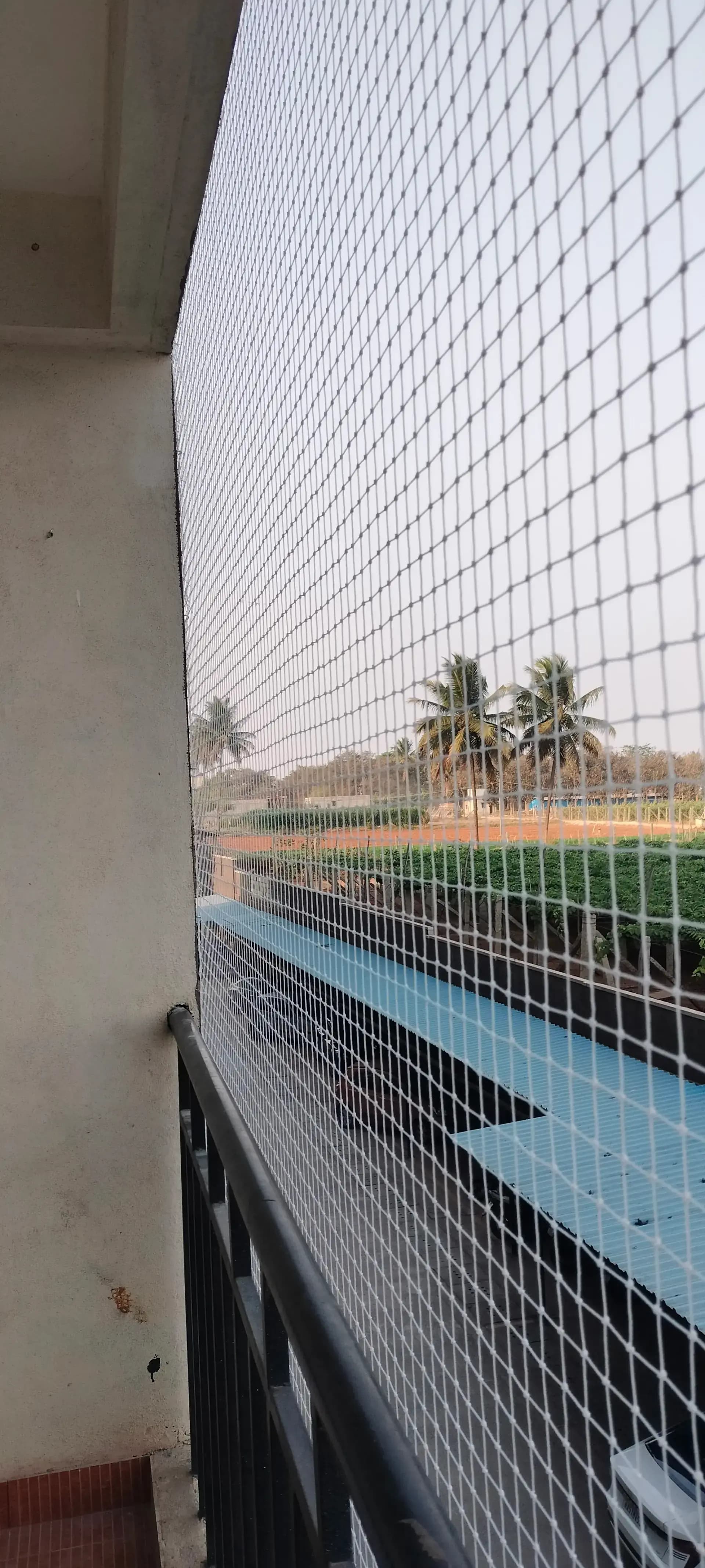
Describe where monkeys reach your home and the opening you want protected. EverSafe assesses monkey safety nets in Vijayawada as a complete proposed barrier, with suitable agreed installations starting from ₹20/sq ft including net, standard fittings and installation.
Start with what you have seen
An accurate enquiry describes the connection to the opening, rather than assuming that all properties near trees or hills require the same treatment.
Vijayawada includes low hills as well as densely built streets, but the approach at your home still needs observation. In a Gunadala, Mogalrajpuram or Gollapudi enquiry, show the particular wall, branch or roof connection you saw from a safe position. The area name does not prove an animal route.
Identify the window, side opening or terrace boundary involved. Explain whether the route changes when a door is open. This helps distinguish one isolated gap from a connected set of accessible edges.
Send photographs of existing railings, mesh, frames and any damage. Tell us about earlier repairs or a previous failed closure. The assessment should consider why that arrangement did not meet the requirement.
Define the proposed enclosure
A barrier needs a clear top, bottom and side perimeter. The proposal should show where it starts and finishes and which other routes remain outside its scope.
| Boundary part | Question to answer | Possible effect on the scope |
|---|---|---|
| Front opening | Where does the main panel attach? | Establishes the primary measured face. |
| Side returns | Can the animal reach either side? | May require additional panels and corner details. |
| Upper boundary | Is there a roof, beam or an open overhead approach? | May change the enclosure and support requirements. |
| Lower boundary | What closes the space below the panel? | Keeps the full opening in view alongside existing rails. |
| Door or access section | How is the closed boundary restored? | Requires a suitable secure closure and operating plan. |
Price, product and complete scope
The installed starting rate applies to a suitable agreed scope with the selected net and standard fittings. Assessment determines the proposed complete barrier.
Work out a starting budget
Use the width and height of one net or grill face, rather than the balcony floor area. Add other faces to the final enquiry.
Installation is included in the starting scope. The selected product, complete coverage, access and any agreed additional work determine the final quote.
Confirm minimum billing, taxes and actual product/workmanship terms. Repairs and removal/refitting are quoted after reviewing the existing system.
Specify more than cord thickness
A useful description links the supplied net to the perimeter and its support. Marketing words alone cannot show that the arrangement suits animal-entry control.
Request the material, available product details, mesh opening and twine construction. The visible cord diameter does not describe every relevant property. A bird-net specification should not be accepted as equivalent without assessment.
Ask how the panel is held along each edge and where changes of direction are handled. Attachment details need to match the support and intended system. Increasing the number of fasteners does not automatically make unsuitable material appropriate.
Keep the supplied product information and actual terms with the quote. Where a specific performance claim is made, ask what evidence applies to the complete proposed use. We do not assign a universal load rating or service life to every opening.
The building connection
The installer must consider the existing structure where the barrier is to be attached. An old or visibly damaged fixing point should be assessed before being reused.
Show cracks, loose coatings, rusted brackets and previous pulled fittings. The proposed attachment cannot be judged from the centre of the net alone. Surface or support repair may need a separate scope before fitting.
Where the shape or supports require a frame, agree the proposed design, provision and access to it. Net installation should not conceal an unresolved structural question. Confirm how separate frame or building work is coordinated.
Explain any rubbing against sheet edges, pipes or other equipment. Material selection and the net line should address foreseeable contact. Inspect existing damage so a replacement panel is not put back into the same avoidable condition.
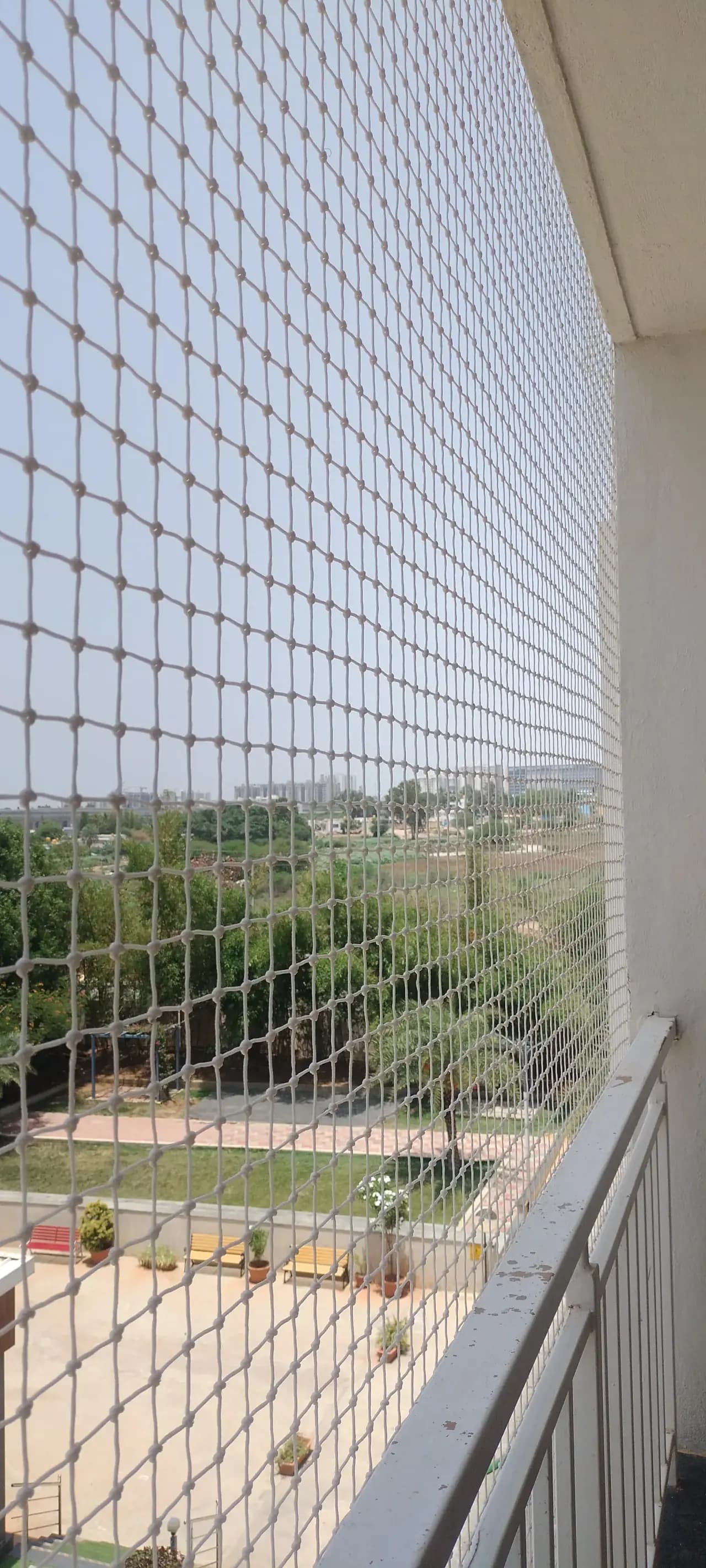
Balconies and service windows
A household should understand how the space will operate after fitting. Maintenance and regular access are design inputs, not exceptions to discover later.
Check the movement of shutters and the opening required for cleaning. Any net line should respect required ventilation and equipment clearance. A loose flap created for convenience may leave the intended entry route available.
Describe the washing area, hangers and the route people use through the balcony. Do not rely on the animal-entry net to carry household items. Arrange separate supports and keep the closed boundary practical to use.
Tell us if these are also part of the requirement so they receive their own assessment. Existing guardrails remain relevant. A monkey-net label alone is not evidence that the enclosure is suitable for child fall protection or a particular pet.
Larger and connected spaces
A terrace can connect to several roofs or sides, so the intended enclosure needs to be defined before a material area is calculated.
Show open edges, overhead gaps and any equipment located within the proposed boundary. The net area can involve vertical and other faces rather than only the terrace floor. Clarify any part that remains untreated.
Discuss access to tanks, pipes and equipment with the people who maintain them. A designed access section should close securely after use. Required building routes should not be obstructed casually by the new enclosure.
If the approach involves a neighbouring wall or vegetation, define what can be inspected and who can authorise changes. Net fitting is not permission to alter another property. Separate actions should have a responsible owner.
Consider alternatives
The appropriate choice depends on the observed interaction, supports and daily use. Compare complete proposals instead of equating a lower per-square-foot rate with a suitable barrier.
| Option | Useful discussion | Limit of the comparison |
|---|---|---|
| Specified flexible net | Panel, border, support and access suited to the opening | Thickness alone does not establish suitability. |
| Rigid mesh with a frame | A structured enclosure where flexibility is inappropriate | Frame and building connections still need design consideration. |
| Existing barrier repaired | Serviceable material with a clearly repairable defect | Do not reuse unsuitable parts just because they are already fitted. |
| Additional route management | Changes to an accessible approach, subject to agreement | Closing one route does not prove every other route is closed. |
Understand the installed rate
The starting scope includes the specified net, standard fittings and installation where the proposed system is suitable. The quote should separate quantity from additional work.
One 10 ft × 10 ft face is 100 sq ft, giving an example base amount of ₹2,000. That figure does not include unmeasured returns or confirm a particular barrier design. The full proposed coverage is measured before the total is agreed.
Record mesh, material, perimeter, access closure and the support arrangement in the same proposal. Product options and a separate frame should be priced clearly. This helps you compare equivalent finished systems.
Removal, damaged support repair, unusual access and other preparation can affect the total. Confirm minimum billing and tax treatment before approving the work. Repair requests have their own assessed scope rather than an automatic new-panel price.
Assessment and installation
The sequence should establish suitability and make the space ready before fitting. Animal presence can change when the work can proceed.
Provide the Vijayawada locality, floor or terrace level and safe images. Explain the observed approach and what the household wants to keep using. Include the existing barrier if one is fitted.
Agree the coverage, support condition, selected material and access closure. Confirm any property permissions and separate support work. Discuss a rigid alternative if a flexible net would not suit the assessed need.
Never enclose an animal inside. Where wildlife assistance is needed, pause the affected work for appropriate local help. Once ready, complete the agreed panel and perimeter installation.
Check the intended boundary and show how any access section is secured. Keep the product and work details. Explain the contact process for damage so the household does not attempt its own load test or outside repair.
Damaged and previous installations
We assess earlier work for repair, reattachment or planned removal and refitting. The proposed remedy should address the cause as well as the visible defect.
Inspect the neighbouring strands and ask what caused the damage. A patch may be considered for a limited defect in serviceable material. Repeated pulling or other animal interaction can require a broader review of the system.
The repair may involve fittings, a changed attachment location or separate surface work. Simply tying a detached panel back to the same weak point can leave the problem unresolved. The quote should explain what is reusable.
Coordinate painting or other maintenance with the refitting appointment. Check the material and support after removal before putting the panel back. Keep people and pets away from the compromised opening until the appropriate enclosure is restored.
After the enclosure is fitted
The household’s observations remain useful after fitting. Changes to building use, food access or an adjacent structure may change the original entry problem.
Avoid leaving accessible food around the affected opening or feeding animals near the barrier. Where several properties share a route, coordinate ordinary housekeeping. A net does not remove every nearby attraction.
Note a new accessible gap or visible damage from a safe position. Arrange review after building work or an observed interaction with the barrier. Do not pull, climb or place a load on the net to test it.
If an animal is inside, trapped or distressed, keep a safe distance and seek appropriate local wildlife or rescue assistance. Entry-net installation is not a capture service. Avoid closing, chasing or handling the animal yourself.
Vijayawada and nearby coverage
Choose a locality to organise the enquiry and share the route you have actually observed. These links describe coverage, not a verified level of wildlife activity in a neighbourhood.
Provide a safe wide view of the opening and any connected approach.
Mention previous netting, supports and regular access requirements.
Explain the proposed terrace or balcony boundary before requesting a measured quote.
Make an informed choice
The starting rate is ₹20/sq ft including the specified net, standard fittings and installation for a suitable agreed opening. The final proposal depends on the access route, barrier specification, supporting structure and work required.
A 100 sq ft face gives an example starting amount of ₹2,000 with installation within the standard scope. This arithmetic does not confirm that a particular net is suitable for the property. Returns, support work, access conditions and the selected product can change the total.
No. An assessment must consider the full approach and the proposed barrier, including other reachable gaps. Monkeys may interact with a flexible net or reach an untreated route. We explain the coverage and limitations before recommending the work.
We ask for your observations and safe photographs showing nearby walls, roof edges, branches and the affected opening. The survey looks at how these connect. A locality name alone does not establish the behaviour at a particular home.
Extra hooks alone do not establish monkey-entry suitability. The net material, mesh, border, supporting surface and attachment method need review as a complete system. An existing bird net may require replacement or a different type of enclosure.
Ask for the exact product, mesh opening, twine construction and proposed border arrangement after the opening is assessed. A thicker-looking cord is not a substitute for an appropriate specification. Available dimensions and mesh options should be matched to the intended use.
The front and each reachable return need to be included in the assessment, along with the upper and lower boundary. The proposed coverage may involve more area than a front rectangle. Existing guardrails and routine access must also remain part of the discussion.
That situation can be assessed, but the proposal needs to account for the connections and any overhead approach. Several faces or a supporting frame may be required. Changes to vegetation or neighbouring structures need the relevant agreement rather than being assumed part of net fitting.
A rigid alternative should be discussed when a flexible net does not suit the observed animal interaction, available supports or use of the opening. Frame design, fixing and access still matter. The right comparison concerns the complete barrier rather than only the net price.
We plan the proposed boundary around how you use the space. An access section must be appropriate for the enclosure and properly secured when closed. Tell us about tank cleaning, AC servicing and other regular visits before the layout is agreed.
Those are separate intended purposes that should be discussed explicitly. A monkey-entry quotation does not establish child fall-protection or pet-containment suitability. Retain existing guardrails and do not let anyone climb or lean on the net.
We can assess patches, replacement fittings and reattachment, including previous installations by other providers. Reuse is considered only where the remaining system is suitable. Damage from repeated animal interaction may require more than closing the visible hole.
Keep people and pets away from the affected opening and arrange an inspection of the mesh, border and supports. Do not load-test it yourself or attempt to reach the animal through it. Report what happened so the assessment considers the cause of damage.
Removal and refitting can be assessed as one planned scope. The existing panel and fittings must be checked for reuse, and the supporting surface should be reviewed after the building work. Confirm who will restore the enclosure before the opening is left unprotected.
Do not close it in or use the net to capture it. Installation may need to wait for appropriate local wildlife or rescue assistance. Keep a safe distance; animal handling is a separate requirement from installing an entry barrier.
Timing depends on access, preparation, product availability and whether the space is clear to work in. Request the actual product and workmanship terms with the selected installation. No fixed duration, lifetime or load claim is assumed for every site.
Let’s plan your installation
Tell us your Vijayawada locality, what you observed and the opening involved. Include safe photographs, details of any old net and the access the household needs to keep.