
Patamata and Benz Circle enquiries
Include the front-facing balcony and any utility return, together with apartment work rules.
Opening coverage with everyday living in mind
The useful question is not only how wide your balcony is. It is where the boundary starts and ends, what needs to move beside it and how your family intends to use the space.
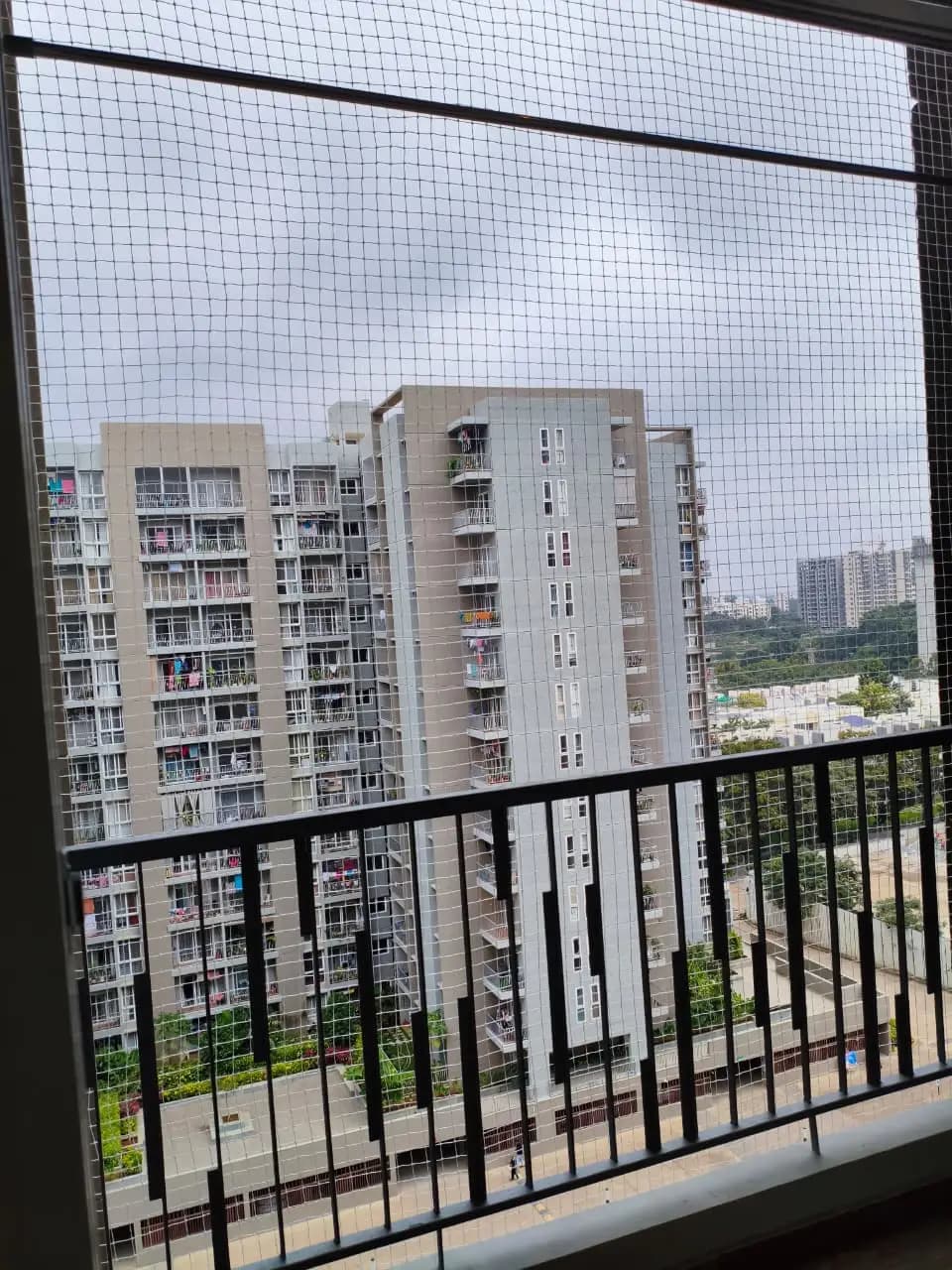
Make room for a better-used balcony with net coverage planned around its real shape. EverSafe installs balcony safety nets in Vijayawada from ₹20/sq ft, including net, fittings and installation. We help you choose the material and mesh, identify the opening to be covered and account for windows, drying space and future maintenance before the price is finalised.
Describe the job before choosing a net
Start with the concern you can see. A usable quotation should connect that concern to a defined netting area, rather than offer the same panel for every enquiry.
A balcony net can be considered for the open face above a railing, a side return or a lower gap. Include the existing guard in the assessment. The chosen net supplements the agreed boundary; it is not a reason to remove a required railing or let people lean against mesh.
Tell us who can reach the opening and how the balcony is used. A child climbing onto furniture and a cat squeezing beside a pipe create different design questions. If several rooms need attention, a wider child- or pet-focused assessment may be more useful than a balcony-only order.
If pigeon entry or nesting is the primary problem, use the pigeon-net service to follow that route. A family safety concern should still be stated separately. Similar-looking netting does not make the two installation specifications interchangeable.
Look beyond one rectangular photograph
A simple sketch with each open face marked helps distinguish the netted area from the floor area and keeps awkward parts within the initial scope.
For a straight face, record width and covered height. Where the balcony turns, measure the return independently and show how it joins the front. Pipework, planter ledges and an adjacent utility recess can interrupt a neat-looking rectangle and need their own closure detail.
A deck-style sit-out may have several open sides, a different floor drop and no overhead slab. Show the entire perimeter and available supporting surfaces. A net arrangement used on an enclosed apartment balcony should not be transferred to that layout without assessing the supports and intended coverage.
Price, product and complete scope
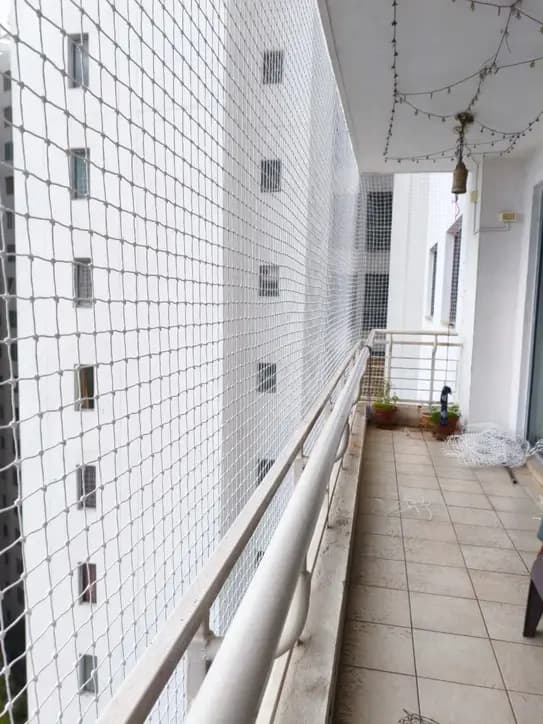
The starting installed rate is ₹20/sq ft, including net, fittings and installation for the accepted scope. Measure each covered face: a ten-foot by ten-foot opening is one hundred square feet, giving a starting-rate illustration of ₹2,000 before separately agreed items.
Work out a starting budget
Use the width and height of one net or grill face, rather than the balcony floor area. Add other faces to the final enquiry.
Installation is included in the starting scope. The selected product, complete coverage, access and any agreed additional work determine the final quote.
Ask the written proposal to show any applicable minimum billing, transport, taxes or work outside standard fitting. A material-only net sold online is a different purchase from an installed balcony system.
Compare identifiable products
You can discuss different net products and custom sizes with us. Ask for a specification that remains understandable after the sales conversation is over.
Nylon and HDPE describe material families. Record the actual product, strand construction, twine specification and border finish as well. If two estimates use the same material name, those remaining details can explain why the products and completed installations differ.
For a sun-exposed opening, ask about the supplied product’s outdoor and UV specification. A colour description such as white, green or transparent does not establish that information. Match any product document to the net being supplied, rather than to a different item in a catalogue.
Mention a requested brand at the enquiry stage so availability and the exact option can be checked. Keep the product identity and available supply information with your quotation. A named-product request is useful; it does not mean that every job automatically uses that brand or specification.
Separate panel size from mesh opening
Panel dimensions determine how much opening is covered. Mesh opening describes the space between strands. Both belong in the specification.
Ask for the mesh opening in a clear measurement and discuss any small gaps at the wall or railing base. Selecting a smaller mesh does not solve an uncovered corner. Children, smaller pets and different birds may need separate suitability decisions even within the same balcony.
Look at an available sample against the sky, the opposite building and the indoor view. Strand colour and thickness affect how the net appears from those positions. Fine or transparent mesh can still catch the light; it should not be sold as literally invisible.
Open balcony mesh is not a dust filter, rain screen or mosquito net. It normally leaves light and air passing through, with the degree of visibility depending on the product. Say so early if insects, dust or weather protection are the result you mainly want.
Find a sound attachment route
The installer needs a usable perimeter for the proposed net. Finishes and existing metalwork should be inspected before attachment decisions are made.
Fresh paint can cover old holes, loose plaster or a previous failed fixing. Show any history of movement, leakage or renovation. Where the underlying surface needs repair or a different support arrangement, have that work explained before agreeing the net installation.
A glass panel, decorative finish or thin window section is not automatically a suitable attachment base. Discuss how the installation will reach an appropriate support while respecting nearby waterproofing, concealed services and building drilling restrictions. The visible finish should not hide an unsuitable fixing choice.
Useful checks for a Vijayawada property
Vijayawada has hot summers and seasonal rain, but the conditions at the actual opening are more useful than a general city-weather label.
Explain when direct sunlight reaches the mesh and which edges remain sheltered. The selected net and fittings need an appropriate outdoor specification. Dust caught behind a border or close to equipment also affects where a useful inspection and cleaning route should be retained.
Show rain-facing edges, existing staining and any drainage outlet near the proposed line. During wet or unsuitable working conditions the schedule may need to change. Netting should preserve drainage and be detailed for its location, rather than treated as a way to seal the balcony against weather.
Design around the routine
A netting proposal is easier to assess when you can picture using the balcony after it is fitted. Point out the things that move or need frequent attention.
Show the full travel of a ceiling hanger and the space a loaded drying rack uses. The net should have clearance from those movements. Rods, ropes and planters need independent supports; adding their weight to the net border changes the installation’s intended use.
Include window shutters, AC service positions and any access needed behind a pipe or cabinet. If a controlled service opening is proposed, agree how it will close again. A technician should not need to cut a new hole in order to do foreseeable routine work.
Prepare the building arrangements
The location can help arrange a visit, while permission and access are settled for the individual property.
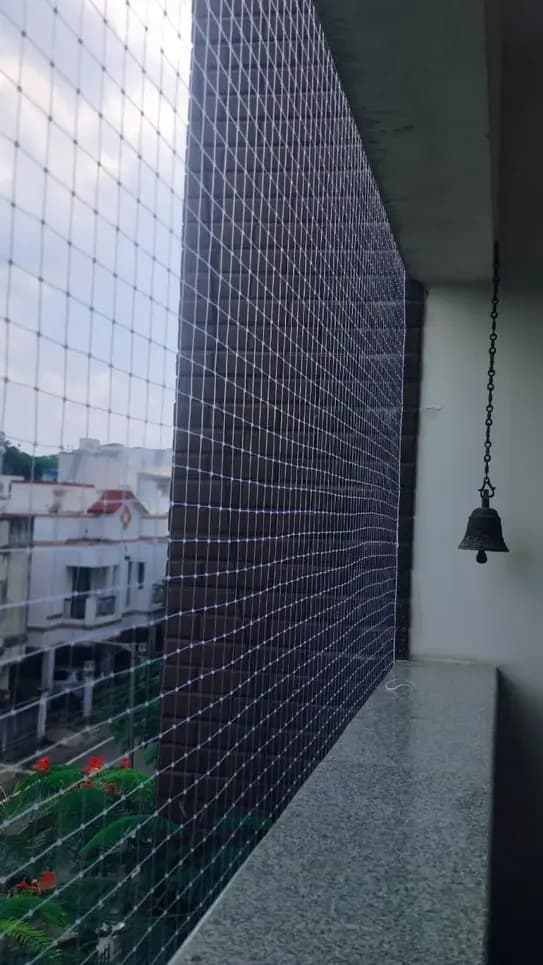
Share requirements for net colour, external appearance, contractor registration and working hours. Explain lift access and whether the outside of the opening can be reached appropriately. Repeated balconies in a block can share a specification, but each face and attachment line still needs checking.
Tenants should settle owner approval for fixings before the fitting date. At an independent house, identify who controls the wall or shared boundary. Easier ground access does not remove the need to assess the railing, supports or an elevated deck edge.
A practical fitting sequence
The amount of work follows the measured opening, chosen material and site preparation. We confirm timing when those are understood.
Send your Vijayawada locality, approximate face dimensions and indoor photographs of the front, ends and railing base. Mark any existing tear, hidden side gap or equipment that changes the scope.
Confirm the selected net, mesh, colour, covered panels and proposed attachments. Have old-net removal, supporting work or special access listed when needed. Installation is included in the starting rate; the final total reflects the agreed job.
Move loose belongings out of the work zone and keep children and pets away during fitting. The installer follows the agreed perimeter, with attention to the lower line, returns and any planned service opening.
Review each edge from inside, the movement of adjacent windows and the operation of service access. Keep product and service information for future reference, and ask how to arrange attention if the condition changes.
Choose by the result you need
These options can look suitable in a photograph while addressing different needs. Compare their purpose before comparing only their starting rates.
| What matters most | Option worth discussing | Decision to make |
|---|---|---|
| Flexible coverage of a balcony opening | Balcony safety net | Choose the product, mesh and attachment line for household use. |
| A slim metal cable appearance | Invisible grill | Assess the structural support, clear spacing and cable system. |
| Pigeon entry into a recess | Pigeon safety net | Follow the bird routes and retain equipment access. |
| Insects, dust or rain | A suitably specified screen or enclosure | Open safety netting is not a substitute for that product. |
| Several child-reachable openings | Children safety assessment | Consider the home’s windows, stairs and furniture together. |
Help with work already installed
We can assess previous net installations, including another provider’s work. The repair choice follows the cause of damage and the condition of the rest of the assembly.
A compatible patch or replacement section may be practical when the surrounding material is serviceable. Show where the panel touches a pipe, sharp edge or moving object so a repair can address the source of wear as well as the visible hole.
Photograph both the loose net and the surface behind its fitting. Reattachment may involve the border, fastener or supporting base. Reusing an existing hole is not automatically the right method when the previous attachment has moved or failed.
Discuss taking down and refitting before other work starts. Reuse depends on the panel condition and the dimensions of the revised opening. Repair, removal and refitting receive their own quote; the new-net starting rate is not a fixed tariff for every service visit.
Make the installation easy to look after
Keep the net in the role agreed at installation and arrange attention when its appearance or attachments change.
Look from a safe indoor position for loose borders, damaged strands or contact with a sharp object. Recheck after painting, equipment work or an impact. Do not pull on the net to perform a home-made strength test.
Retain the product description, measured scope and written service terms. Those details help identify suitable replacement material or parts later. Follow the supplied cleaning instructions and keep unsupported loads, heat and sharp tools away from the mesh.
Vijayawada and nearby coverage
Choose the locality closest to the property, then share the opening details. These area links organise service enquiries; they do not imply that every home in the locality has the same balcony or has received our work.
Include the front-facing balcony and any utility return, together with apartment work rules.
For a flat, individual house or raised sit-out, show which sides are open and what provides the fixing boundary.
A wide view of the opening, floor level and existing railing helps prepare the fitting discussion.
Apartment enquiries
Residents can use these existing pages when describing their own flat and permissions. The links are planning guides, not evidence of an installation at a particular property.
Make an informed choice
Prices start at ₹20/sq ft for the agreed installed scope, including net and fittings. The final amount follows the measured coverage, product and access, with any additional work stated before acceptance.
The billable quantity is the area being netted. A front panel and a side return are measured as separate faces; the floor measurement alone may not describe either of them.
At the starting rate, one hundred square feet gives an illustration of ₹2,000. The measured quote still needs to confirm the selected net and any minimum billing, support work, tax or access items that apply.
Yes, tell us the product or brand you want to compare. We confirm the available option and its specification for your opening; the requested name should also be identifiable in the written proposal.
That depends on its intended use and the surrounding gaps. Discuss mesh size alongside edge closure, the chosen product and any child or pet requirement, instead of selecting by appearance alone.
It remains visible, with the effect changing according to strand, colour, light and background. An available sample helps you compare the look while keeping the intended protective purpose central.
Ordinary balcony mesh does not seal the opening against mosquitoes, dust or rain. If screening or weather protection is your priority, describe that separately before choosing the product.
It can be assessed, including its floor drop, open sides and suitable supports. A sit-out without a slab above it may require a different arrangement from a conventional apartment opening.
The proposed fixing line needs to be checked independently of the glass. Do not assume the glass panel or decorative railing components can accept the chosen attachments.
Show the hanger in its highest and lowest operating positions. The layout should allow adequate clearance while the drying system remains supported separately from the net.
We assess high-floor work with the access method, supporting surfaces and building permissions included. The appointment and scope are confirmed for the actual opening rather than from the floor number alone.
We can review tears, loose fittings and perimeter gaps in previous work. A repair is appropriate only where the remaining net and supports are suitable; extensive deterioration may call for replacement.
Possible reuse is assessed from its condition and the finished opening. Plan removal and refitting before painting so avoidable cutting or changes to the original panel can be discussed.
Timing depends on material availability, preparation, access and the agreed panels. Share your preferred date and building work hours; we confirm the practical schedule after reviewing the enquiry.
Check owner approval and any association rules concerning drilling, net colour, exterior appearance and contractor entry. Send those requirements before the installation method is agreed.
Retain the supplied material details, invoice and written product and service terms. Follow its care guidance, avoid loading the mesh and report damage or movement without attempting to test it yourself.
Let’s plan your installation
Send the locality, a photograph from the doorway and approximate opening sizes. Tell us if you want a new net, a patch or refitting, and what needs to remain accessible.