
Central and eastern enquiries
Mention vents, window returns and any access sections needed for daily use.
One coordinated plan for scattered entry openings
A bathroom vent, shared light shaft and roof gap may each need a different closure detail. Define the target birds, measure the panels and keep building services accessible before comparing an installed quotation.
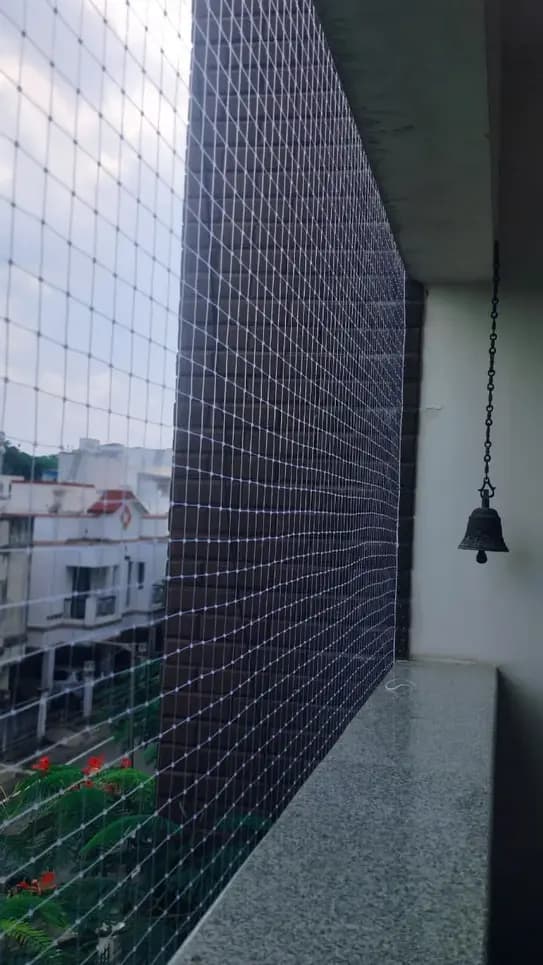
Bring scattered bird-entry gaps into one clear work plan. EverSafe supplies and installs anti-bird nets in Vijayawada from ₹18/sq ft including net, fittings and installation, with the mesh and access arrangements selected for the birds and openings at your property.
List the work before measuring it
A simple list of openings prevents a multi-location job from becoming a vague square-foot total. Mark the space, bird activity and access requirement for each item.
Kitchen vents, bathroom vents and window returns may be separate jobs within one home. Give each a name or photograph so the quote is clear about coverage. An opening used for ventilation still needs access to inspect and maintain it.
Identify where a light shaft or service duct connects to other floors, roof gaps and adjacent spaces. The visible entrance may not be the only route. A shared plan defines both the treated panels and what remains outside the job.
Record a narrow sill separately if birds only stand on it. Netting is not automatically necessary for every mark on a facade. A perch treatment may be assessed alongside mesh for different parts of the property.
Match the species
The phrase anti-bird net does not identify one universal mesh. The quotation should connect the chosen opening size and construction to the actual requirement.
| Information | Ask for | Practical purpose |
|---|---|---|
| Target | The birds using the opening | Avoid specifying only for pigeons when smaller birds enter. |
| Mesh | Opening size in millimetres | Shows the space within the mesh rather than just a cord description. |
| Twine | Material and construction of the supplied net | Makes product comparisons specific. |
| Panel | Width, height and any shaped boundaries | Relates the supplied dimensions to the building opening. |
| Exposure | Product information for the intended use | Supports material selection beyond a colour or quality label. |
Price, product and complete scope
The quoted standard scope includes net, fittings and installation. Each covered opening and chosen specification is confirmed before work.
Work out a starting budget
Use the width and height of one net or grill face, rather than the balcony floor area. Add other faces to the final enquiry.
Installation is included in the starting scope. The selected product, complete coverage, access and any agreed additional work determine the final quote.
Confirm minimum billing, tax treatment and actual written support terms. Building services and required clearances remain part of the site planning discussion.
Keep the vent doing its job
A ventilation opening may also discharge warm air or require frequent cleaning. Record those functions before fixing netting across it.
Show any exhaust outlet, fan or equipment beside the opening. The selected mesh and position must allow the required clearances and airflow. A bird barrier is not an insect or dust filter, so discuss those separate needs at the same time.
A screen that cannot be reached can make routine maintenance awkward. Discuss how the face is accessed and whether a closable section is appropriate. Accumulated debris and altered airflow should be reported to the responsible maintenance team.
Small edges deserve their own detail
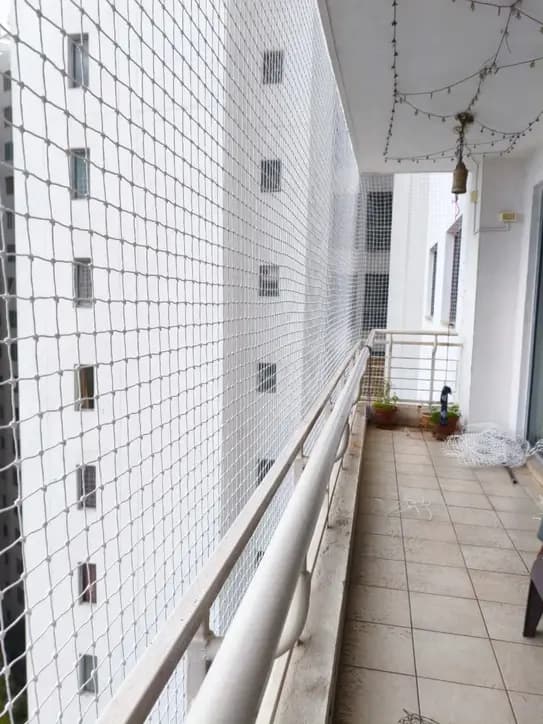
Netting a large face does not close the gaps around objects passing through it. Include penetrations in the work sketch rather than leaving them for an improvised final cut.
Show the available space around a pipe, its insulation and nearby supports. The closure must respect drainage and service clearance. Sharp contact points should be considered where they may rub against the mesh.
A beam, offset wall or projecting fixture can change the panel shape. Clarify whether it sits inside or outside the proposed boundary. The result should remain inspectable at the corner instead of concealing an open pocket.
New cable runs or equipment replacement can alter a penetration later. Keep a note of the affected panel and arrange a revised closure when needed. Cutting a new hole and leaving it unsecured changes the original scope.
Commercial premises
For a warehouse, workshop or shop frontage in Vijayawada, the work boundary should fit the facility’s access and service requirements. Building users can help identify what must remain reachable.
For a Governorpet or Auto Nagar business enquiry, list the actual loading times, public access and person authorised to open the work area. A fixed panel across an active passage may be unsuitable. Define separate access arrangements for the premises and any residences sharing the same shaft.
Show lights, pipes, sprinklers, signage and other systems near the proposed panel. The facility team should verify required clearances and any supporting design. A bird-net installation does not certify those building systems.
Identify sensitive goods, machinery or areas that need to be protected or temporarily cleared. Include preparation and access equipment in the scope when required. This allows the quotation to describe the real working conditions.
Choose what matters at the opening
An outdoor mesh proposal should identify the actual product and fittings. The appearance can then be selected without turning a colour preference into a technical claim.
Ask for the selected material, twine and relevant outdoor-use information. For a requested brand, record the exact product and current availability. Similar-looking nets may have different constructions or application guidance.
A light mesh, dark mesh or transparent option can look different against the same opening. Compare the border line as well as the strands. For common areas, agree any association appearance rule before supplying repeated panels.
Vijayawada’s hot summers and seasonal rain make the actual opening’s exposure worth recording. If your panel faces direct afternoon sun, rain or road dust, say so and show old damage. A sheltered shaft may have different conditions from the same building’s street front; the product and maintenance plan should follow that difference.
Installed quantity and scope
The starting rate includes net, standard fittings and installation for the agreed scope. A list of measured panels is the easiest way to make a larger quotation reviewable.
| Quote item | Useful description | Why it helps |
|---|---|---|
| Panel area | Named faces with measured width and height | Shows which openings are counted. |
| Specification | Selected material, mesh and colour | Allows equivalent products to be compared. |
| Included fitting | Perimeter work and standard installation | Makes the base service explicit. |
| Options | Service sections or an additional frame, if required | Separates a design choice from the ordinary panel. |
| Other work | Removal, substantial preparation or exceptional access | Allows the customer to approve additional scope in advance. |
For reference, 100 sq ft at the starting rate is ₹1,800 within the standard scope. Confirm minimum billing and tax treatment in the final quote.
Installation across several openings
Where spaces connect, the installer needs a clear view of what is occupied and how each closure affects the next. The plan should fit the building, not just a delivery of net rolls.
Provide photos, property type and your Vijayawada area. For facilities, add the work window and maintenance contact. Explain the birds observed and any existing nets that must stay or be removed.
Confirm dimensions, target mesh, supporting surfaces and any service openings. Identify separate preparation or frame work. Record the quoted scope so a later request for extra coverage can be assessed clearly.
Check for birds and nesting activity as the affected areas are prepared. Pause when appropriate animal-welfare or rescue guidance is required. Exclusion should not create a trapped animal behind a newly closed panel.
Complete the agreed perimeter and local closure details. Review service sections with the person responsible for them. Retain the panel information and actual support terms for future changes or repairs.
Existing installations
A wide image plus a close view of damage is useful when assessing an older bird net. We consider patches, border repairs and refitting, including previous work by another installer.
An isolated cut can be assessed for repair when the surrounding material is serviceable. Identify whether a contractor opened the panel or contact with equipment caused the tear. The repair should correct the immediate opening and the avoidable cause.
A loose edge can require new fittings or attention to the supporting surface. Reusing mesh after painting or building repairs is possible only if it remains suitable. Note which panel was removed so the original coverage can be restored.
Where mesh is brittle or several supports are deteriorating, repeated small patches may not offer good value. Ask for a clearly scoped replacement option. Repair cost depends on condition and access rather than applying a new-net area rate automatically.
Handover to the people using the building
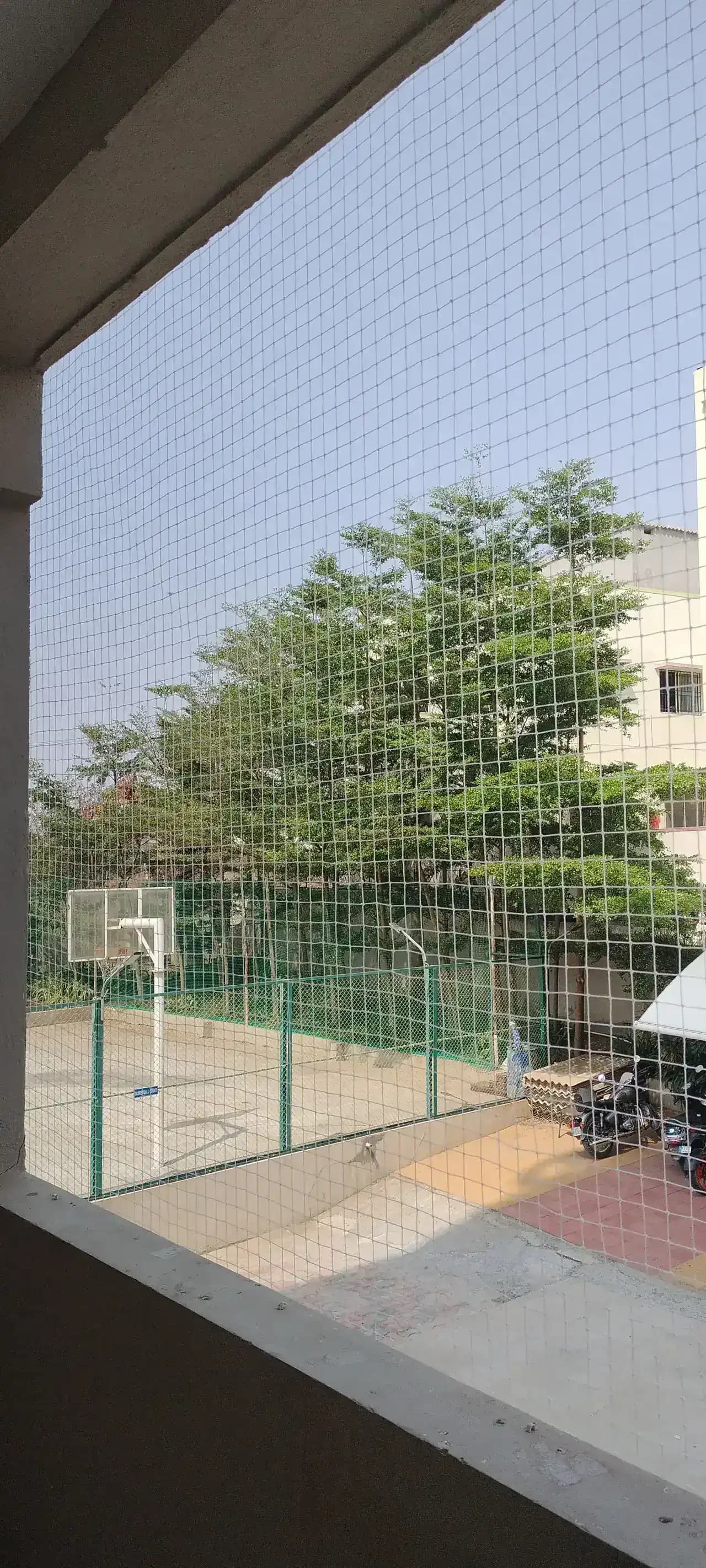
A well-fitted panel can lose its purpose if everyday maintenance leaves it open. Assigning a practical owner is especially useful for shared ducts and commercial premises.
Identify the normal closed position and how the opening is secured. The next technician should know which section is intended for access. Explain any special tools or refitting work required before they start.
Confirm that the panel edge, pipe gaps and access closure have been restored. Arrange inspection if the scope changed during maintenance. Avoid treating a loose flap as an acceptable long-term service opening.
Watch for sagging, broken strands or debris from a suitable inside position. Do not climb on or suspend loads from bird mesh. Hard-to-reach panels should have a realistic maintenance access plan.
Choose the appropriate enquiry
Bird exclusion is a specific purpose. Other animals, household safety or a single perching ledge can need a different design and quotation.
| Main issue | Relevant discussion | Focus |
|---|---|---|
| Pigeons occupying one balcony | Pigeon safety nets | Balcony returns, view and equipment access. |
| Birds resting on a narrow ledge | Bird spike installation | Perch dimensions and suitable placement. |
| Monkeys reaching an opening | Monkey-entry assessment | Approach, supporting structure and barrier suitability. |
| Children using a potentially hazardous opening | Children’s safety assessment | The child-safety purpose and the complete proposed system. |
Vijayawada and nearby coverage
Select the area and describe your opening or facility. We use the information to organise the survey and scope rather than make assumptions about local bird pressure.
Mention vents, window returns and any access sections needed for daily use.
Include the property type and the person responsible for common maintenance.
Make an informed choice
The starting installed rate is ₹18/sq ft for the agreed net and standard fittings. Your quotation should list the covered openings and selected product, then show separately any required frame, access equipment, removal or other additional work.
At the starting rate, 100 sq ft gives an example amount of ₹1,800 including installation within the agreed base scope. That example covers the specified panel area only. The actual product, extra faces, minimum billing or special access can change your project total.
Ask for anti-bird assessment when several bird types or scattered building openings need attention. Pigeon-net enquiries are often centred on a balcony or recess used by pigeons. The products can overlap; the target species and layout determine the useful specification.
Do not assume so. The relevant opening depends on the smallest bird to be excluded and the selected net system. Describe the birds or share a photograph, then confirm the mesh opening in millimetres. Cord thickness alone does not determine whether a small bird can pass through.
A vent can be assessed for a bird-exclusion screen while preserving its required airflow and maintenance. Its opening size, exhaust conditions and cleaning reach influence the choice. Bird mesh should not be treated as a filter or attached to hot equipment without an appropriate product assessment.
A shared shaft or connected elevation can be scoped as a coordinated job. Identify the common entry routes, affected openings and access responsibilities with the property manager. Each panel and any future service opening should have a clear owner after fitting.
Yes, the enquiry can cover connected bird-entry openings at commercial premises. Include dimensions, work hours, machinery and stock locations. The proposal needs to fit building services and operating access, with permissions and any specialist supporting work agreed separately.
A fixed panel may conflict with vehicle or goods movement. Describe the traffic and the hours the entrance must remain open before choosing a treatment. A suitable access system or another approach may be needed for that particular route.
The closure detail should follow the penetration and maintain the service clearance. Ask how new cables or later pipe repairs can be accommodated without leaving an opening. A panel schedule helps maintenance staff locate and restore the affected section.
The proposed layout must respect required lighting, ventilation and fire-system clearances. Open mesh is not a reason to ignore those requirements. The facility team should review the location relative to services before authorising overhead or shared-area work.
Available nylon, HDPE and other appropriate net specifications can be discussed for the intended exposure and bird species. Specify the panel dimensions, mesh opening and twine separately. For branded material, ask for product details and confirmation of the selected supply.
Look for named openings, dimensions, material and mesh, border fittings, access sections and the included installation. The quotation should explain any preparation, removal or exceptional access outside that scope, along with minimum billing and applicable tax treatment.
A local patch may be possible if the nearby mesh and support system remain serviceable. Where the same point keeps failing, investigate rubbing, maintenance access or a weak fixing. We can also assess reattachment and refitting of panels installed previously by another provider.
Only the parts needed for access should be discussed with the maintenance coordinator. A planned removable section can reduce unnecessary dismantling. If netting is taken down, check its condition before reusing it and inspect the restored perimeter after the work.
Check occupied spaces before fitting and before final closure, particularly when several openings connect. Active nests or a bird that needs assistance can require a pause for appropriate local guidance. The job is exclusion, not trapping or capture.
The scope, access windows, site preparation and material availability determine scheduling. Ask for actual product and workmanship terms, then assign responsibility for periodic visual checks and service panels. Report openings caused by later building work promptly.
Let’s plan your installation
Include your Vijayawada area, property type and photographs of each opening. Tell us which birds enter and what building services or daily access must remain available.