
Kanuru and Poranki homes
Send the normal balcony layout, furniture and upper boundary, with association or owner permissions where relevant.
Animal-specific balcony and window assessment
Describe the pet, follow its routes and plan the complete perimeter before choosing the mesh.
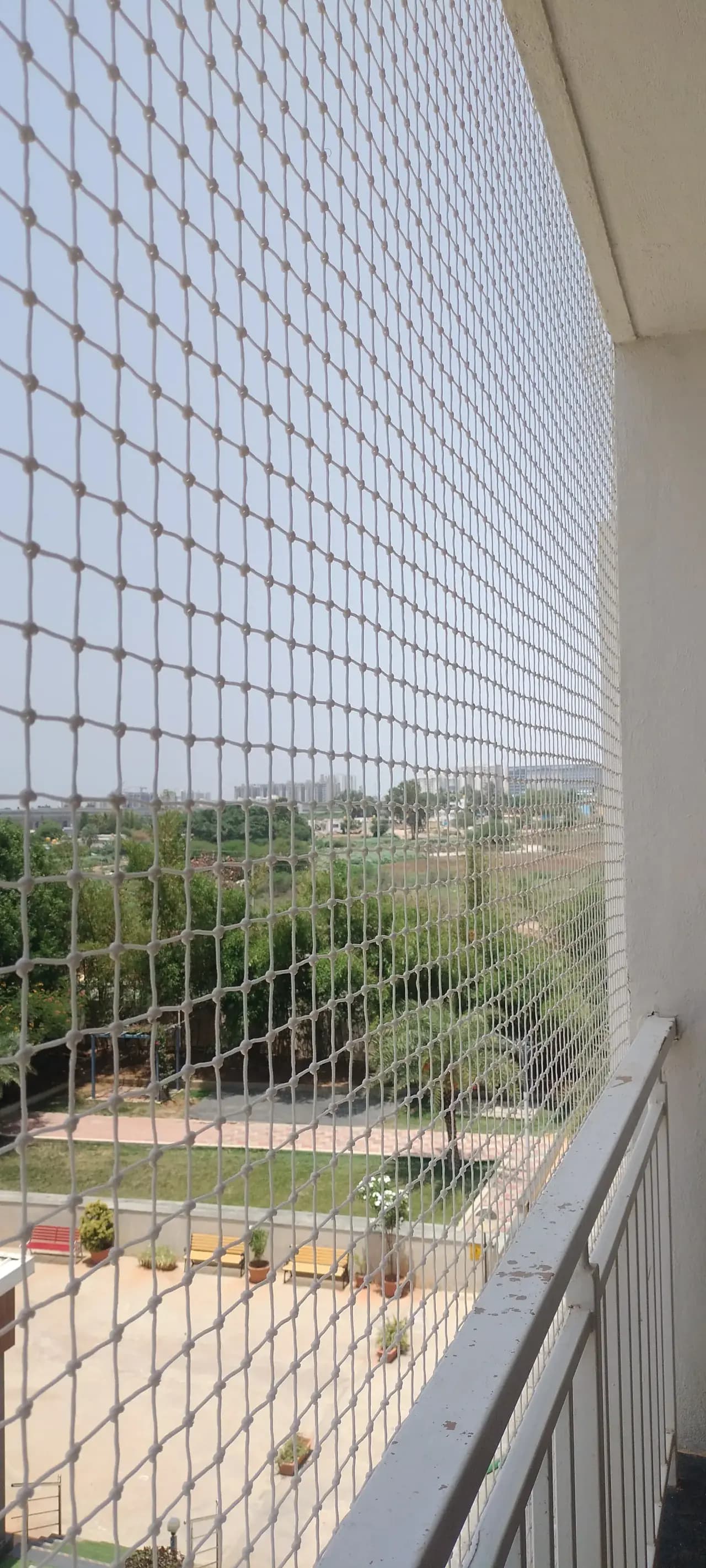
A pet-net enquiry in Vijayawada should describe the animal as carefully as the balcony. EverSafe assesses the openings your cat or dog can reach, including floor-level gaps, corners, windows and climbing routes. Standard net installation starts from ₹15 per sq ft with installation included. We also assess patches, repairs and reattachment of previous work.
Start with the animal
Two households with the same balcony dimensions may need different arrangements. Tell us how the pet behaves in the space, not only its breed or weight.
Include kittens, puppies and any additional pet expected to use the opening. Aperture and accessible corner gaps should be assessed with that animal in mind. A panel that appears appropriate for a larger pet may leave a route for a smaller one.
Explain jumping toward birds, scratching at mesh, leaning at a rail or persistent chewing. Show the place where it happens and what the pet stands on. These observations give the installer information that cannot be obtained from a wide balcony photograph alone.
Begin at floor level
An adult's eye is drawn to the wide opening above a railing. An animal may find a much smaller route beside or beneath it.
Show the lower railing line behind planters, baskets and utility equipment. Gaps should be considered where the pet can actually approach them. An enclosure should not depend on movable furniture permanently covering an opening.
Trace the boundary where the net meets a wall, pipe or change of railing direction. A neatly filled centre panel does not resolve a loose side return. The finished detail should be appropriate to the selected system rather than a collection of improvised ties.
Drainage, cleaning and access to services still need to work. Identify these requirements before choosing where the edge is fixed. If an opening is needed for maintenance, its location and secure operating method belong in the original plan.
Price, product and complete scope
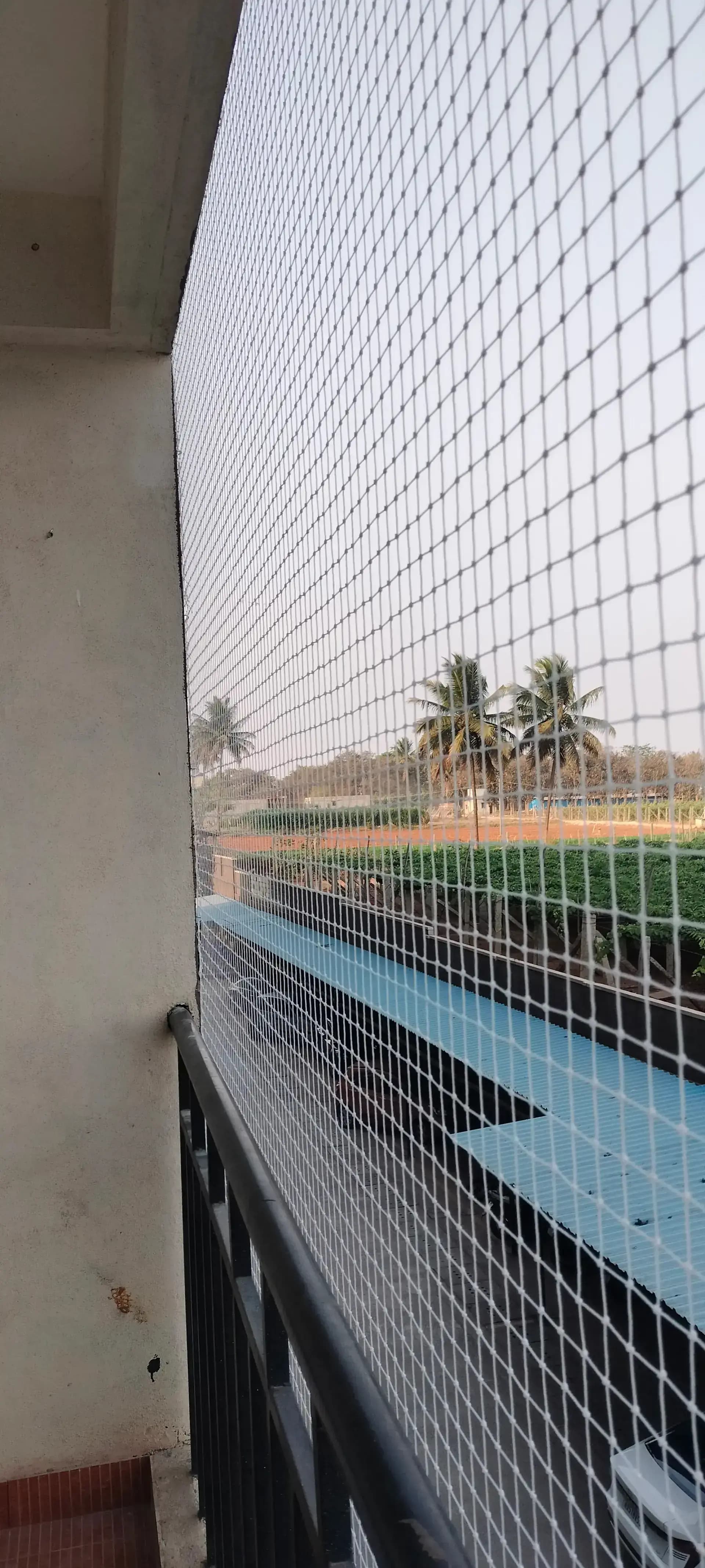
The starting guide includes the agreed standard net, compatible ordinary perimeter fittings and installation on a suitable assessed base. Coverage and material selection follow the individual animal and opening.
Work out a starting budget
Use the width and height of one net or grill face, rather than the balcony floor area. Add other faces to the final enquiry.
Installation is included in the starting scope. The selected product, complete coverage, access and any agreed additional work determine the final quote.
Custom frames, civil repairs and special access are separate. Confirm delivery, taxes, minimum billing and any visit charge in the written quote. Previous-work repair and refitting are assessed independently.
Look at the next step up
Pet access is not static. A new chair, taller plant or moved cupboard can make a previously unreachable edge accessible.
Photograph ledges, shelves and outdoor units the pet uses or could reach. Show adjacent walls and the top of the proposed coverage. An animal that climbs should not be assessed only from the normal standing position on the floor.
An open-top balcony or adjoining terrace may need a more complete enclosure or a different arrangement. Any extra support must be suitable for that coverage. Do not assume that increasing a front panel a little will resolve every reachable route above it.
Distinguish the panel from its label
Different nylon, HDPE and appearance options can be discussed. The relevant question is whether the particular product and installation arrangement suit the pet and opening.
A panel's width and height describe coverage; the aperture describes the gaps inside it. These are different specifications. Ask how the chosen mesh behaves when fitted and whether the perimeter remains suitable when the animal touches it.
Transparent, pale or dark netting can look different against the sky, trees or a building. Appearance should be considered after suitability. A subtle strand should not be substituted for the agreed material simply to make the installation less noticeable.
Pet-net products do not all share one fitting rule. The chosen manufacturer's instructions should guide the arrangement, including tension and attachments. Avoid a blanket promise to make every net drum-tight, or seasonal adjustments made without knowing how that product is intended to work.
Review the moving opening
Handle movement, shutters, hinges and the sill affect the arrangement. A screen fixed in front of a window should not conceal unresolved pet-access routes around it.
Show the window both open and closed, with its adjacent wall and sill. The assessment should retain the intended operation and any required access. An insect screen is not evidence of pet containment simply because its holes are small.
Tilt-opening windows and gaps around equipment need a specific review. Keep the pet away while an unsafe opening remains unresolved. The solution should account for the moving mechanism and access needs rather than applying a loose panel without considering the shape behind it.
Be clear about the limit of a soft net
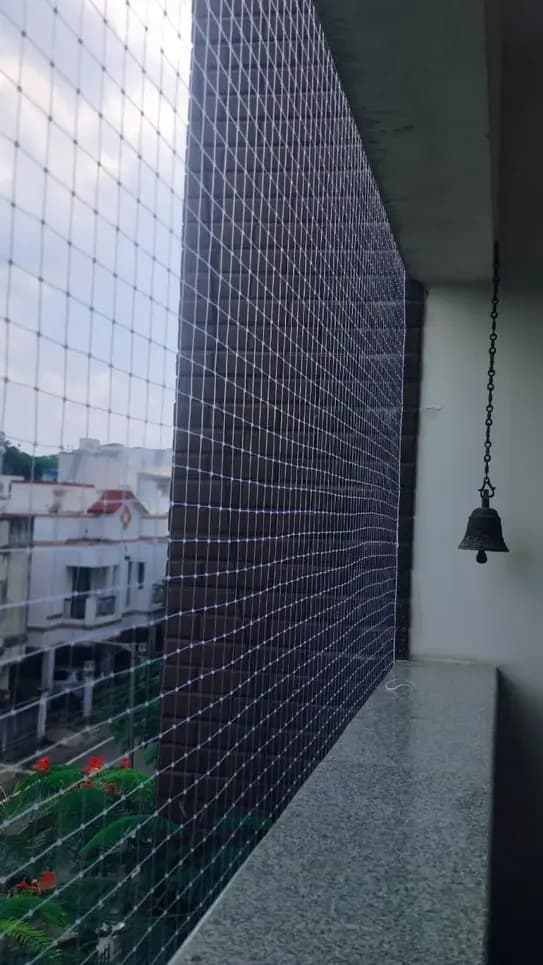
The honest assessment is whether a soft-net arrangement is useful for this animal. Choosing a thicker-looking strand is not an answer to every behaviour.
If the pet has chewed through mesh or repeatedly displaced a screen, include photographs and an explanation. That history may change the recommendation. Replacing the same material without discussing the cause could leave the household with the same problem again.
A suitable rigid mesh, a purpose-built enclosure or managed access may be more practical for some animals. Its support and openings still need assessment. No general bite-proof or escape-proof statement should replace a decision about the actual pet and perimeter.
The space may serve more than one purpose
Many household openings are used for fresh air, washing and family activity. Coordinating those uses avoids an enclosure that is repeatedly moved or left open to make the room usable.
A child and an animal can interact with different parts of the same opening. Discuss both if relevant, including movable furniture and supervision. The net is an additional assessed arrangement, not a substitute for a sound railing or appropriate window controls.
Review child-accessible openingsShow drying rods, washing-machine access, drains and any planned maintenance opening. Keep their supports and operating movement compatible with the enclosure. A pet should be kept away while a service opening is in use, then the boundary restored to its intended position.
Compare the purpose and the gaps
Products that look like barriers can differ in aperture, attachment and intended use. Make those differences explicit when comparing a new installation with an existing arrangement.
| Existing or proposed option | What needs review | Useful next step |
|---|---|---|
| A selected pet net | Animal behaviour, mesh and the complete perimeter. | Agree the product and coverage for the smallest pet. |
| A pigeon-exclusion net | Climbing, chewing and reachable edge or top gaps. | Assess reuse instead of assuming its original purpose covers pets. |
| An insect screen | Screen mounting, moving edges and strength for the intended contact. | Keep insect control and pet containment separate. |
| An invisible-grill cable system | Spacing and attachment rules for the complete system. | Assess a separate pet arrangement where needed. |
| Rigid mesh or an independent enclosure | Support, edge finish and controlled openings. | Discuss where persistent damage makes a soft net unsuitable. |
Make the fixing plan feasible
For a rented or shared building, confirm permitted work before choosing the attachment method. The required support should be assessed with the net, not added as an afterthought.
Photograph the wall, frame or other proposed base and disclose loose plaster, old holes or damaged fittings. The method should suit that substrate. Reusing an old attachment is only reasonable when its condition and purpose remain appropriate.
Tell us if drilling, outside access or an independent frame is restricted. A permitted alternative may be possible, but temporary ties or adhesive hooks should not be presumed suitable. If the necessary support cannot be provided, the installation plan needs to change.
Provide a person who can open the room and keep the animal safely away from work. Move only the items agreed for access and retain photos of the normal arrangement. Floor level and building access help plan the visit; they do not establish the mesh choice.
Price complete coverage
Pet-net area follows the opening being enclosed. The floor below it is not the same measurement, and small service details may affect the work even when the panel area is modest.
Mark the front width and height, each side return, window and any required upper face. Show where pipes, corners or an access panel interrupt it. This helps explain what a complete quote covers and prevents an important return from disappearing from the price comparison.
A measured 100 sq ft of agreed standard net coverage at ₹15 per sq ft gives an illustrative ₹1,500. Actual specification, support and separately listed work determine the final quote. A repair enquiry is assessed from the fault rather than this new-installation example.
From household brief to handover
Keep the pet away from the work zone and make the opening available for assessment. The completed arrangement should be explained in terms the household can use day to day.
Send complete photographs, approximate dimensions, the locality and information about climbing, chewing or pushing. Include furniture, plants and upper space. Mention children or other pets where their use is part of the brief.
Agree the mesh, attachment arrangement and any controlled service opening. Identify additional support, removal or access work in the quote. The household should understand what the proposed enclosure addresses and any reason another barrier is preferable.
The selected method is used on the assessed base, with joins and accessible edges reviewed. Unplanned changes to the support or the opening should be resolved before handover. Keep the agreed component information for later service.
Observe the pet in the finished space and follow the supplied guidance. If it finds a new route or damages the material, restrict access and ask for a review. Reassess the arrangement when furniture, occupants or animal behaviour changes.
Keep the opening under observation
Regular household checks should focus on the places the pet touches and the points disturbed by cleaning or maintenance. Safe inside access is preferable to reaching around an exterior edge.
Check accessible strands, joins and borders for cuts, fraying, widening or detachment. Inspect around equipment where rubbing occurs. Follow the supplied cleaning instructions and arrange suitable access for work beyond reach.
After strong weather or adjoining building work, inspect the perimeter before normal use resumes. In hotter periods, remember that mesh does not provide shade or make an exposed balcony comfortable by itself. The pet's use of the space still needs to be managed.
An access flap or removable section should be restored after servicing. Do not leave it loose for convenience. A change in the pet's sitting position or a new piece of furniture is a useful prompt to review upper and side routes again.
Old work can be assessed
We offer scope-based repair assessment for pet nets, including installations by another provider. Keep the animal away from a damaged opening until the issue is resolved.
A compatible repair can be considered when the surrounding panel is serviceable. Include photos showing the cause, such as rubbing against a bracket. Widespread brittle material or repeated animal damage may justify replacement or a different barrier instead of another patch.
Show the support as well as the loose net. Reattachment may require new fittings or work to the base. A repair should address why the component failed rather than simply fastening it into the same unresolved defect.
Discuss removal before panels are cut or disturbed. Check their dimensions and condition against the final opening and support. Storage, replacement components, disposal and making good earlier fixing points are separate details to agree.
Vijayawada and nearby coverage
The local address helps plan access; the animal and the opening determine the specification. Area links are locality guides rather than evidence of a particular neighbourhood risk.
Send the normal balcony layout, furniture and upper boundary, with association or owner permissions where relevant.
Include all accessible windows and lower railing gaps, plus the contact who can provide inside access.
Mention the smallest pet, any earlier net damage and the service or laundry openings that need to stay usable.
Make an informed choice
The starting guide is ₹15 per sq ft including the agreed standard installation. The complete measured coverage, suitable mesh, edge details and access determine the quote. Special supports, old-net removal and repairs should be separately identified rather than hidden inside an assumed balcony-floor price.
An illustrative 100 sq ft of agreed standard net coverage at the starting rate totals ₹1,500. It is a measurement example, not a fixed balcony package. The final quote follows the actual opening faces, product selection and separately agreed work.
No. A cat may climb, chew or push at an edge in ways that a bird-exclusion specification does not address. An existing pigeon net can be reviewed for its material, aperture, perimeter and the cat's routes. Its name or previous purpose is not evidence that it contains the pet.
We start with the smallest animal that will use the opening, then review aperture, possible distortion, lower edges and corner gaps. The full perimeter matters as much as the centre panel. Ask for the actual selected product details rather than a generic promise that one mesh suits every small pet.
Different material and appearance options can be discussed where suitable for the animal and opening. Transparent does not mean invisible, and nylon or HDPE alone does not establish chewing resistance. Selection should record the product, mesh opening and installation method.
Describe that behaviour before ordering. A determined chewer or forceful dog may need an appropriately assessed rigid enclosure or another arrangement instead of relying on a soft net alone. A patch or thicker-looking strand should not be presented as a universal solution to persistent barrier damage.
The accessible lower route needs to be addressed. Railing details, bottom gaps and side returns vary, so coverage is planned from the animal's reach and the actual opening. Do not stop at the top of a railing if a pet can still pass through an unprotected section below.
An upper edge can remain an escape route where a cat can reach or climb above it. We assess surrounding walls, furniture and the top boundary before deciding whether more coverage or another enclosure is needed. A front panel alone should not be described as complete protection for an accessible open top.
Windows can be assessed with their normal opening and closing movement, handles, sill and adjoining gaps. Existing insect mesh is not automatically a pet barrier. The plan should preserve the intended window function and any required access rather than simply fixing a loose sheet across the front.
These need a specific review because the opening shape and service needs differ from a plain balcony face. Show the window mechanism or equipment and every accessible side. Keep the pet away from an unresolved gap, and do not obstruct ventilation or maintenance access with an improvised closure.
A combined arrangement may be assessed, but spaced cable gaps and a small pet's needs are different considerations. The net's supports must be suitable in their own right. Do not assume that its attachments can be tied to the grill cables without the relevant system guidance.
State the owner's and association's restrictions before the visit. A suitable permitted fixing or independent support option can be discussed where practical. No-drill does not automatically mean suitable for a pet, and adhesive hooks or temporary ties should not be assumed to solve every opening.
The assessment should cover both the child's reach and the animal's routes, including furniture used for climbing. Neither review replaces the other. Netting should not substitute for a sound railing, appropriate opening controls or supervision; the selected coverage must be understood in that wider arrangement.
Yes. We assess damage, surrounding material and the fixing base before proposing a patch, border repair or reattachment. Send wide and close photos. Where the net has deteriorated widely or the animal repeatedly damages it, replacement or a different barrier may be more appropriate than a local repair.
Refitting depends on what remains serviceable and the final opening dimensions. Arrange removal before renovation starts, and protect reusable panels from damage. Moving home requires a new site review; old panel size and attachments may not suit the next balcony. Making good prior fixing points is separately agreed.
Send the exact locality, floor level, photos of the whole opening, approximate dimensions and your smallest pet's size and habits. Include furniture, plants, upper space and windows. Kanuru, Benz Circle, Labbipet, Currency Nagar, Patamata and Poranki enquiries are included; mention permissions and who can provide inside access.
Let’s plan your installation
Send complete opening photos, the smallest animal's size and habits, your locality and any permission or repair details. We will explain suitable coverage and a clear quote.