
Best fit
Where school netting is used
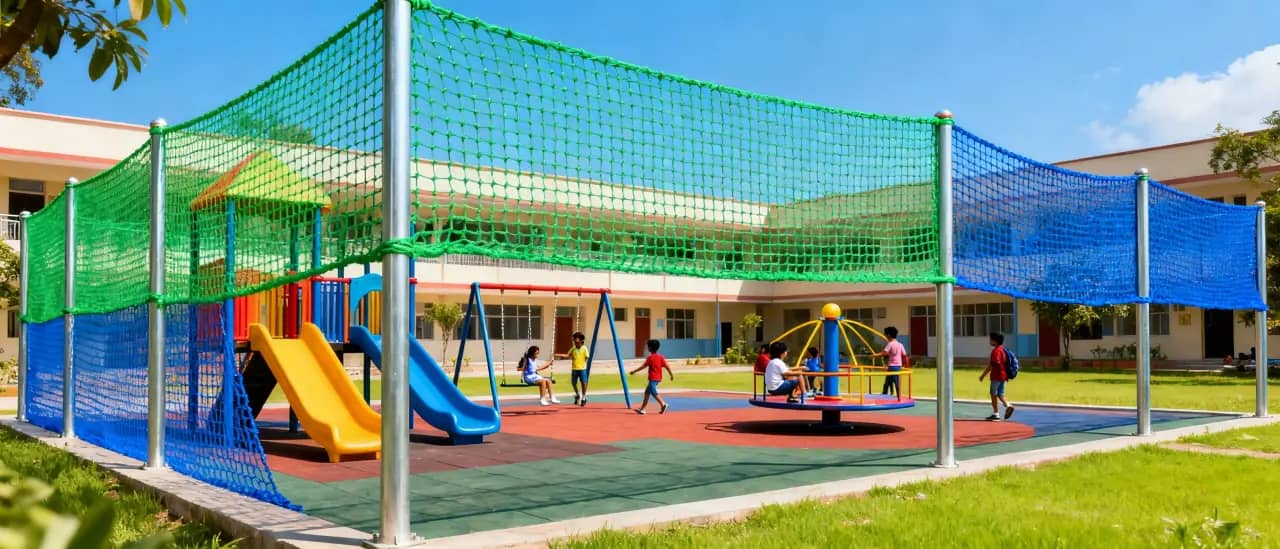
Schools, nurseries, and colleges — ground-level sports areas, rooftop and terrace playgrounds, courts and MUGAs, cricket lanes, and internal open edges.
Main service page
Start with the gallery, then use the sections below to compare fit, material, pricing factors, and booking questions before you decide.
Quick decision view
A fast read on where school netting fits, what shapes the estimate, and the child-safety details worth checking before you commission it.
Why this helps
These are the four signals most people scan first before they decide whether to stay on this page, compare another service, or move straight to a quote.
Best fit
Schools, nurseries, and colleges — ground-level sports areas, rooftop and terrace playgrounds, courts and MUGAs, cricket lanes, and internal open edges.
Main job
Keeping balls inside the play area and away from roads, and guarding children on rooftop or elevated play spaces from a fall.
Mesh & material
Non-toxic UV-stabilised mesh, small enough to prevent limb and head entrapment and matched to the sport, in a knotted or knotless construction.
Structure & fixing
Powder-coated poles and coated cables, with smooth padded fixings and no sharp edges at child height — engineered for wind on rooftops.
Price factors
Netted area, height, mesh and material grade, and whether it's a ground-level net or a full elevated enclosure.
Upkeep
Periodic checks of net, cables, and fixings, early repair of any tear, and net replacement at end of life.
Buyer guide
For a children's space the cheapest net is the wrong lens. A sound choice starts with the age group and use, then the right non-entrapment mesh, safe non-toxic material, child-safe fixing, correct height, and honest after-service.
Age & use
A nursery rooftop, a primary ball court, and a senior cricket lane need different mesh, height, and enclosure. Match the youngest age group that will use the area.
Mesh aperture
The mesh should be too small for a child to pass a head or limb through, and smaller than the smallest ball in play — with a safe margin, not right at the limit.
Material safety
Ask whether the netting is non-toxic and UV-stabilised HDPE or treated nylon, and fire-retardant for indoor halls — for children, material safety and durability come before price.
Fixing & structure
Fixings should be smooth and sleeved with no sharp edges at child height, and any rooftop enclosure must be engineered for wind at that height.
Height & coverage
Height and coverage should come from the ball's trajectory and, for elevated play, the fall risk — not a round number chosen to keep the quote low.
Estimate scope
A useful quote separates netting, structure, installation, and after-service, and states the mesh and material grade so two quotes compare fairly.
Fast school-netting shortlist checklist
A quick scan of these points usually tells people whether this page fits well, whether a nearby page may suit better, or whether it is time to request a quote.
Service highlights
Highlight 1
Small, non-entrapment mesh in non-toxic material, with smooth padded fixings and no sharp edges where children play.
Highlight 2
Ball-stop and boundary nets stop footballs, cricket balls, and stray shots leaving the ground onto roads or neighbouring property.
Highlight 3
Full side-and-top enclosure for terrace and rooftop playgrounds, engineered to guard against a fall and hold up in wind.
Highlight 4
UV-stabilised, rot-proof mesh that stays safe and intact across seasons of daily outdoor use.
School playground nets do two connected safety jobs: they keep balls inside the play area — off roads, car parks, and neighbouring property — and they protect children on rooftop, terrace, and elevated play spaces from a fall. In space-constrained urban schools especially, that second role has become one of the most important, as playgrounds move onto terraces and upper floors.
Because the users are children, two things lead every decision. The mesh has to be small enough that a child cannot pass a head or a limb through, and matched to the smallest ball in play; and the material has to be non-toxic and UV-stabilised so it stays strong and safe rather than turning brittle in the sun. Fixings are kept smooth and sleeved with no sharp edges where children reach.
The supporting structure matters too, particularly on rooftops, where the enclosure carries real wind load at height and must be engineered for it. A net is only as safe as the poles, cables, and anchors behind it, and as the care taken over how it's fixed at child height.
This page explains the child-safety essentials, the rooftop and elevated-play enclosures, the ball-stop and boundary systems, the mesh and material choices, and what drives the estimate — covering both what a school needs to understand and what it needs to commission the right, safe system.
Schools install netting to solve concrete, recurring safety problems — balls leaving the ground, children at risk on elevated play areas, or open internal edges. These are the situations it's built for.
Why choose us
Benefit 1
Non-toxic, UV-stabilised netting suitable for children's play areas
Benefit 2
Mesh aperture chosen to prevent limb and head entrapment
Benefit 3
Smooth, padded fixings with no sharp edges at child height
Benefit 4
Rooftop and elevated-play enclosures engineered for wind and fall safety
Benefit 5
Custom heights and spans for grounds, courts, and terraces
Benefit 6
Fire-retardant netting for indoor sports halls
Benefit 7
Work scheduled around holidays and weekends to avoid disrupting classes
Benefit 8
After-service inspection, hole repair, and net replacement
Features
School netting fits any space where children play near balls, edges, or drops. The specification changes with the age group and the setting, but the aim — a safe, contained play area — stays the same.
The right system depends on how the space is used. A nursery rooftop, a primary ball court, and a senior cricket lane each call for different mesh, height, and enclosure, which is why the same product is planned differently for each.
For a children's space, safety leads every choice. The mesh aperture is kept small enough that a child cannot pass a head or a limb through, and small enough to hold the smallest ball in play — chosen with a margin rather than right at the limit. Where only older children use a ball-stop net, a wider mesh is acceptable, but the youngest user sets the default.
Material matters just as much. We use non-toxic, UV-stabilised netting that stays strong instead of turning brittle in the sun, and every fixing is smooth and sleeved so there are no sharp edges or protruding hardware where children reach. None of this removes the need for supervision — the net is one layer of a safe play area, alongside adult oversight and sensible rules.
As schools build playgrounds on terraces and upper floors, rooftop enclosure has become a life-safety requirement rather than a nice-to-have. These areas need full enclosure — sides and usually a top net — designed to guard both children and balls against a fall, and to handle the stronger wind that comes with height.
The build is planned around the parapet, the roof structure, and the surrounding buildings, and fixed so nothing is climbable or sharp where children play. On an upper floor the enclosure also carries real wind load, so the poles, cables, and anchors are engineered for it — this is exactly the judgement a site survey settles.
Keeping balls inside the ground protects children, neighbours, and passing traffic, and saves the constant interruption of chasing stray balls. Ball-stop nets behind goals and boundary nets along the perimeter catch footballs, cricket balls, and stray shots before they leave the play area.
The height and mesh are planned around the sport and where balls tend to travel, so the containment is reliable rather than partial. For grounds beside roads, car parks, or housing, this is often the single most valuable part of the installation.
Two specs decide how a net performs: the mesh aperture and the material. Aperture is set first by child safety and then by the ball — small enough to prevent entrapment, and smaller than the smallest ball in play. Material then decides durability and impact behaviour: UV-stabilised HDPE is rot-proof, weather-resistant, and cost-effective for most outdoor school areas, while high-tenacity nylon absorbs impact better and suits high-impact or indoor use with UV treatment.
Construction is the third choice. Knotted netting ties every intersection for maximum strength at the crossing points, which suits high-impact and tall enclosures; knotless (raschel) netting is lighter and more economical for lower-impact areas. Twine thickness is then chosen for the ball speed and the life expected, with a fire-retardant grade available for indoor halls.
A safe enclosure depends on the structure and the way it's fixed. Powder-coated poles, coated wire ropes to carry the net, and turnbuckles to tension it evenly keep the enclosure flat, firm, and free of the sag that wears netting out. Even tension is what makes a net look right and stay safe.
Because children are close to it, the fixing detail matters as much as the strength. Hardware is kept smooth and sleeved, with no sharp edges or protruding bolts at child height, and low-level areas can be padded where needed. On rooftops, mast spacing, cable diameter, and anchoring are engineered for the wind at that height.
Beyond enclosure, netting helps a school get more from limited space. Cricket practice nets and batting cages give safe, repeated batting and bowling in a contained lane, using a tighter, durable mesh for close-range impact. Court nets contain basketball, volleyball, and similar activities within their area.
Divider and partition nets then let one space serve several groups at once — separating a cricket lane from a football area, or splitting a hall into courts — so activities run side by side without balls crossing over. Each is planned around the sport, the age group, and the layout.
Indoor sports halls bring an extra requirement: fire safety. Many venues require netting to meet fire-retardant standards, and using a non-rated net can be a compliance problem as well as a safety one.
For these spaces we supply and install a fire-retardant grade, with the same care over mesh, tension, and child-safe fixing as an outdoor system. Indoor also tends to favour nylon for its impact absorption, since sun exposure is no longer the limiting factor.
Netting price can't be judged on one per-square-foot figure, because a ground-level ball-stop net and a full rooftop enclosure with engineered structure cost very differently, even at the same mesh. The netting itself and the structure that holds it are two separate variables behind every quote.
A clear estimate separates the netting, the structure and fixings, the installation, and any after-service, and states the mesh and material grade. That breakdown lets a school compare quotes fairly and see where a cheaper number is quietly leaving out structure or using a lower-grade net.
Installing safely in a live school means planning around teaching. Larger works, especially rooftop enclosures, are scheduled around holidays, weekends, or non-teaching hours wherever possible, and the site is kept secure while work is underway. A capable installer will raise this at the survey.
When choosing, don't decide on price alone. Ask how the mesh prevents entrapment for your youngest users, whether the material is non-toxic and UV-stabilised, whether the quote includes the structure, and how any rooftop enclosure is designed for wind. A survey for anything elevated protects you from a quote that changes on site.
A well-built net does its job quietly, but everyday care keeps children safe. Inspect the net and fixings after storms and heavy use, and repair any tear early — a hole is where a ball escapes or a gap opens near an edge.
Keep climbable furniture and equipment away from the enclosure so children can't use it as a step, keep cables at proper tension, and recheck the system after any building or roof work. Above all, treat the net as one part of a supervised, well-planned play area rather than the only safeguard.
Safety net installation process
A professional installation starts with a site survey and a child-safety-led design, because a playground net is an engineered enclosure of mesh, cables, poles, and fixings — timelines vary, and larger rooftop enclosures run as phased projects around the school schedule.
Step 1
The team assesses the area, the age group, the sport, the spans and heights, and whether it's a ground-level net or an elevated enclosure with fall risk and wind exposure, so the system is designed for the real space and its youngest users.
Step 2
Mesh aperture is set for child safety and the ball, the material and construction are chosen for durability and impact, and the poles, cables, and anchoring are sized for the height and wind.
Step 3
Net panels are cut, bordered, and joined to the exact dimensions, and the poles, wire ropes, sleeves, padding, and fixings are prepared to the design.
Step 4
Poles and anchors are installed into a sound surface or parapet, with fixings kept smooth and sleeved so nothing is sharp or climbable where children reach.
Step 5
The netting is hung and secured along the cables and turnbuckles are used to tension it evenly for a flat, firm enclosure with no sag or edge gaps.
Step 6
A final check confirms coverage, tension, non-entrapment, and that no fixing is sharp at child height, and the school is guided on inspection, repair, and safe use.
School netting rewards light, regular attention. A quality UV-stabilised system shouldn't need much upkeep, but periodic checks of the net, cables, poles, and fixings keep everything safe and firm — and catch small problems before they become a failed net or a loose fixing near children.
The two things that shorten a net's life and safety are unrepaired damage and slack tension, both of which let balls through and can open gaps at edges. Inspect after storms and heavy use, and pay attention to any fixing that could become sharp or protrude at child height.
FAQs
For an enclosure around young children, the mesh is kept small enough that a child cannot push a head or a limb through, and small enough to contain the smallest ball in play — chosen with a safe margin rather than right at the limit. Where only older children use a ball-stop net for football, a wider mesh can be used. We match the aperture to the youngest age group that will use the space, which is the safer default.
Yes. We use non-toxic, UV-stabilised netting suitable for children's areas, fixed with smooth, sleeved hardware so there are no sharp edges or protruding fixings at child height. The material is chosen to stay strong without becoming brittle in the sun, because a degraded net is both a safety and a durability problem.
Yes — this is one of the most important things we do for schools. Rooftop and terrace play areas need full enclosure, sides and usually a top net, designed to guard children and balls against a fall from height and to handle the extra wind exposure of an upper floor. We plan the structure around the parapet, the roof, and the surrounding buildings, and fix it so nothing is climbable or sharp where children reach.
Yes. Ball-stop and boundary nets are installed along the edges of the play area to keep footballs, cricket balls, and stray shots inside the ground. The height and mesh are planned around the sport and where the balls tend to travel, so the risk of a ball reaching a road, car park, or neighbouring property is contained.
It depends on the sport and where the net sits. Behind a football goal or along a boundary, systems commonly run a few metres high; cricket and higher-trajectory sports need more height. The right figure comes from the ball's likely path and what lies behind the net — we work it out at survey rather than guessing.
For most outdoor school areas we use UV-stabilised HDPE: it's rot-proof, weather-resistant, doesn't absorb water, and lasts well in sun and rain at a sensible cost. High-tenacity nylon absorbs impact better and suits very high-impact or indoor use, though it needs UV treatment outdoors. We recommend based on where the net sits and how hard it will be hit.
Yes. Single-lane or multi-bay practice nets and batting cages are a common school install, using a tighter, durable mesh because they take repeated close-range impact, with the lanes arranged so they sit side by side safely.
Yes. Divider and partition nets let one space serve several activities at once — for example separating a cricket lane from a football area, or splitting a hall into courts — so groups can play safely without balls crossing over.
Yes. Indoor halls often require fire-retardant netting to meet venue safety rules, and we supply and install a fire-retardant grade for these spaces, with the same care over mesh and fixing as an outdoor system.
Yes. Internal open edges — stairwell voids, atrium galleries, mezzanine railings — can be fitted with safety netting to reduce the risk of a child or object falling through, planned to suit the opening and the building's appearance.
No — and we're clear about this. Netting is one layer of a safe play area, not a substitute for supervision. It works best alongside adult oversight, keeping climbable furniture and equipment away from the enclosure edge, and sensible play rules. We'll always frame the net as part of a wider safety setup.
There's no single rate, because cost depends on the netted area, the height, the mesh and material grade, and the structural scope — and a rooftop or elevated enclosure involves more than a ground-level ball-stop net. A clear quote separates the netting, the structure, and the installation so you can see what you're paying for.
Yes. We design and install the powder-coated poles, cables, tensioning, and fixings together with the netting as one system, because a net is only as safe as what holds it up. If you already have a suitable structure, we can assess it and supply netting to fit.
A single ball-stop net can go up quickly; a full rooftop enclosure is a larger, phased job. We schedule work around holidays, weekends, or non-teaching hours wherever possible, and give a realistic timeline after the survey so disruption to the school day is kept to a minimum.
A quality UV-stabilised net installed at the right tension lasts for years of school use. Upkeep is light — periodic checks of the net, cables, and fixings, and early repair of any tear, since a hole is exactly where a ball escapes or a gap opens. We'll set realistic expectations for your material and site.
Yes — netting is fabricated to the space. Panels are cut, bordered, and joined to fit the exact ground, court, terrace, or opening, including wrap-around and enclosed layouts.
Related services
If this page is close but not exact, these are the next service pages worth comparing before you request a quote.
Main service page
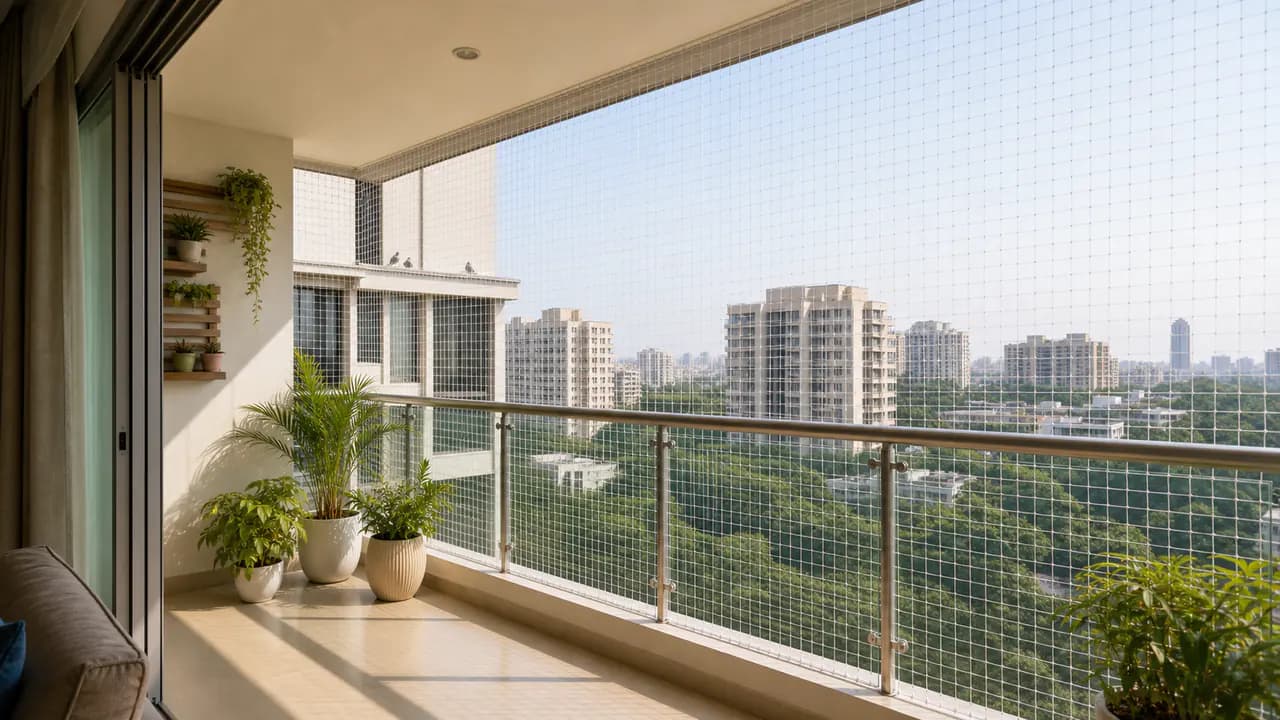
Balcony Pigeon Nets help keep apartment balconies, ledges, AC corners, ducts, and utility ...
Explore →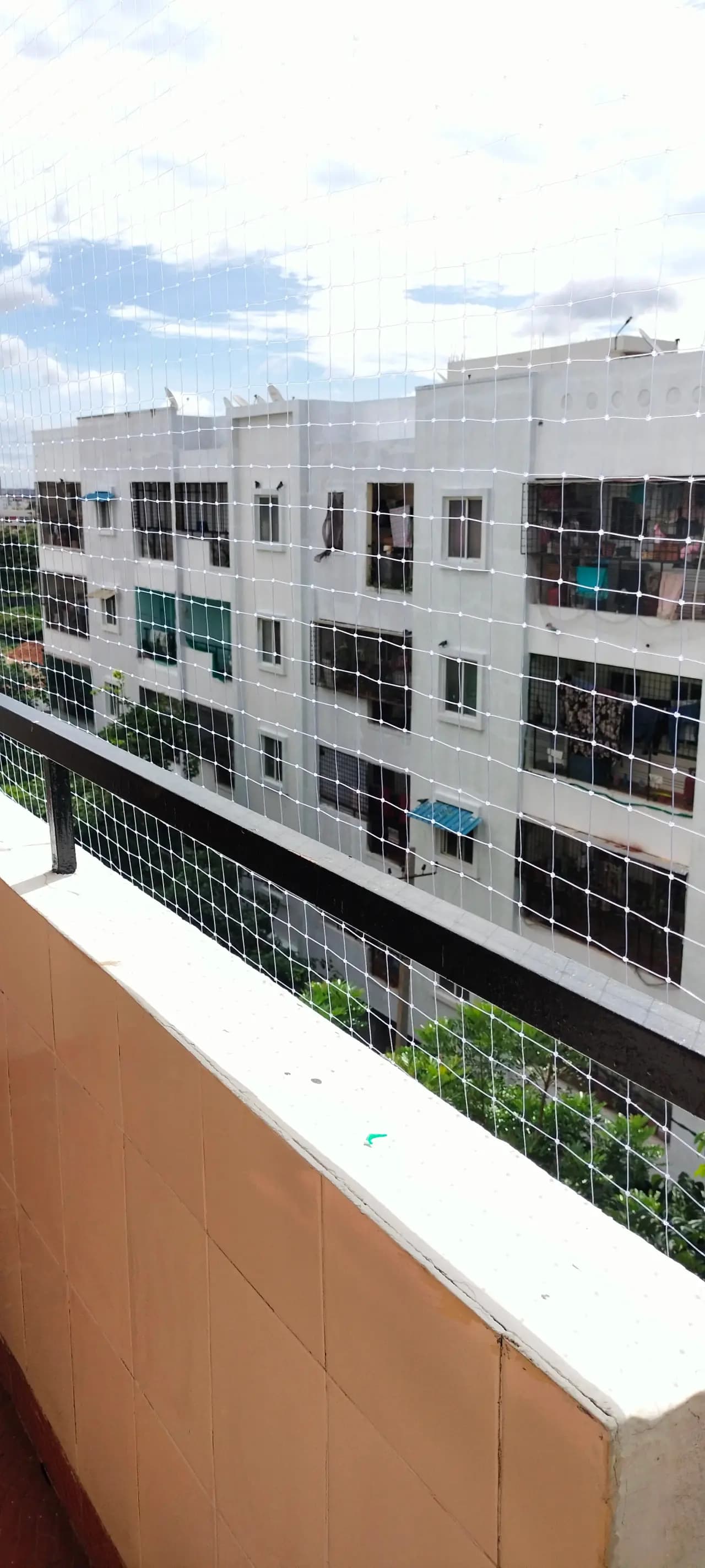
Main service page
Invisible Bird Nets are designed to protect balconies and windows without affecting your v...
Explore →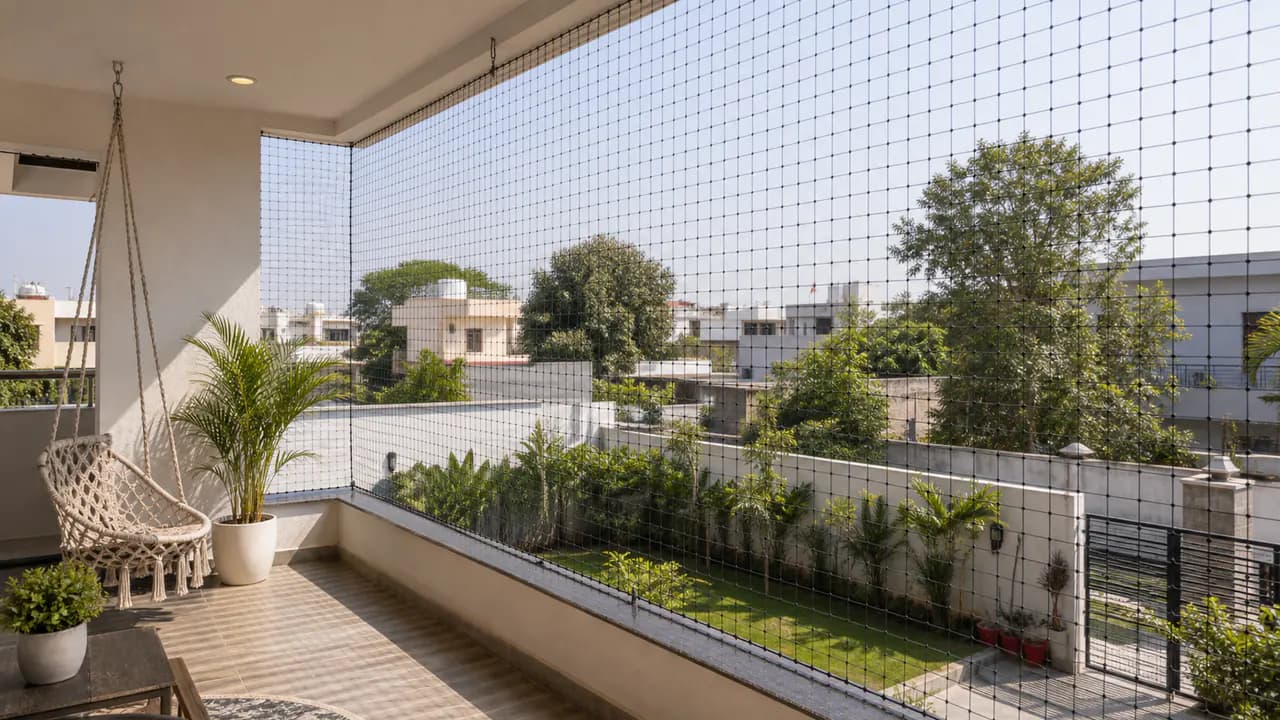
Main service page
HDPE Pigeon Nets are UV-stabilized high-density polyethylene mesh systems used for pigeon-...
Explore →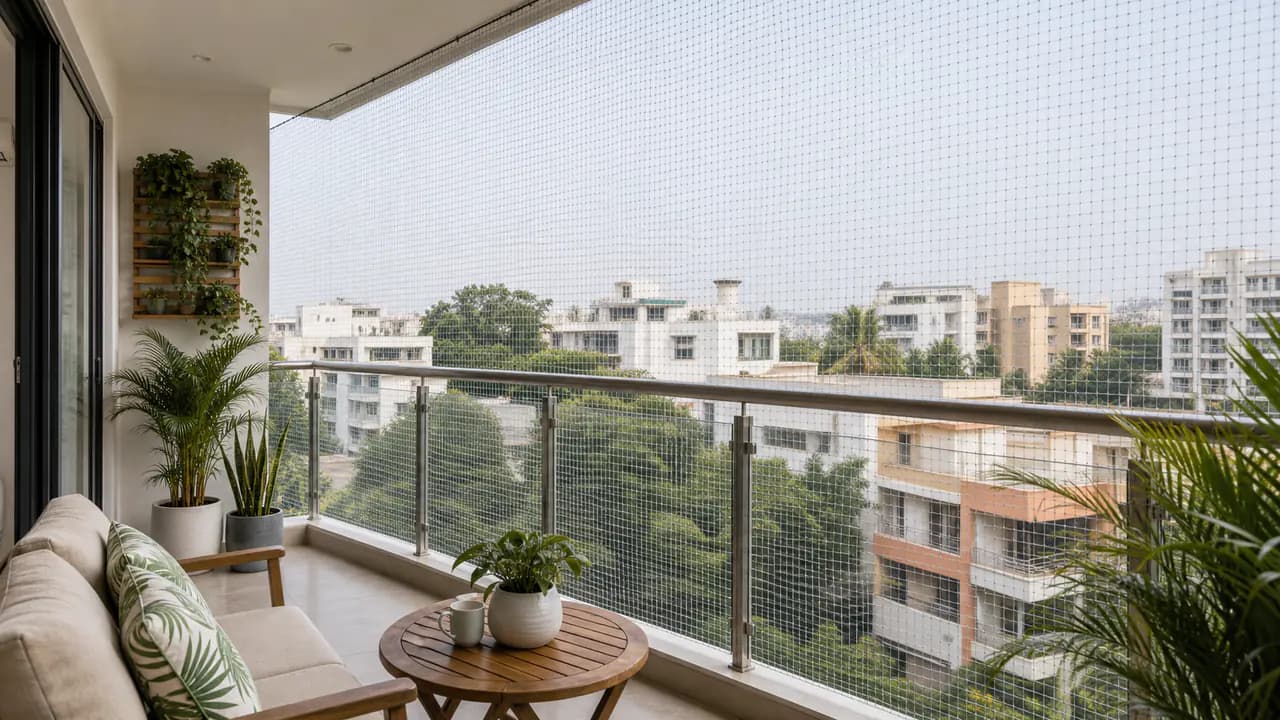
Main service page
Anti Bird Nets are custom-fitted mesh barriers for balconies, windows, ducts, shafts, terr...
Explore →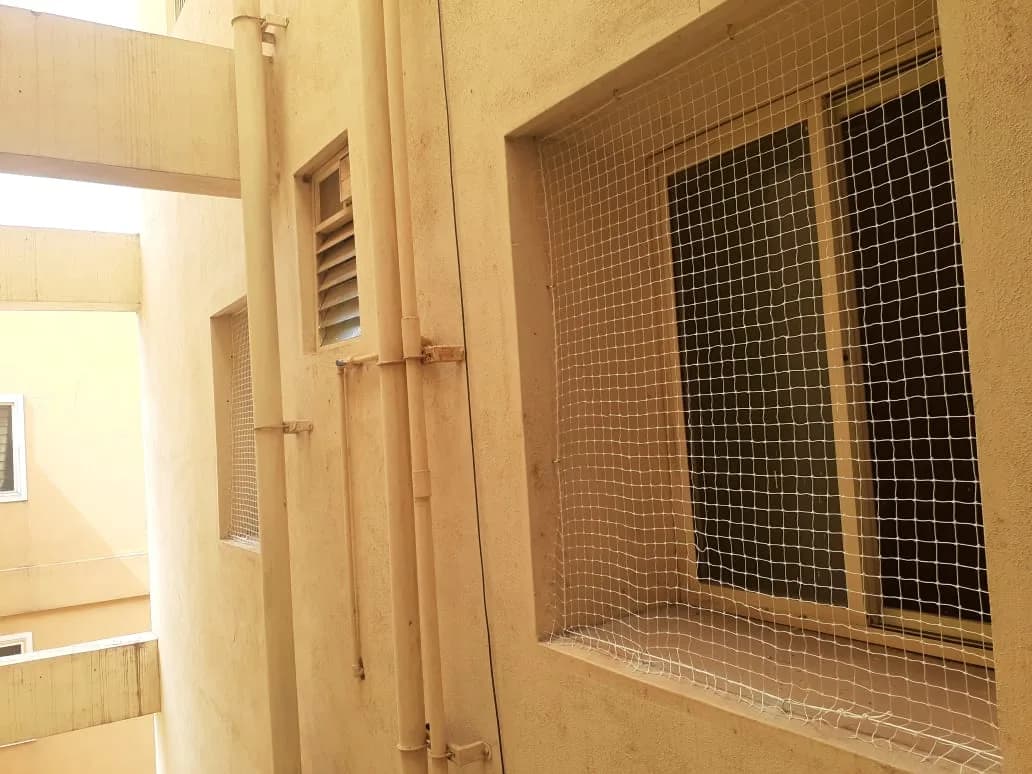
Main service page
Anti-Bird Nets for Windows prevent birds from entering your home while allowing fresh air ...
Explore →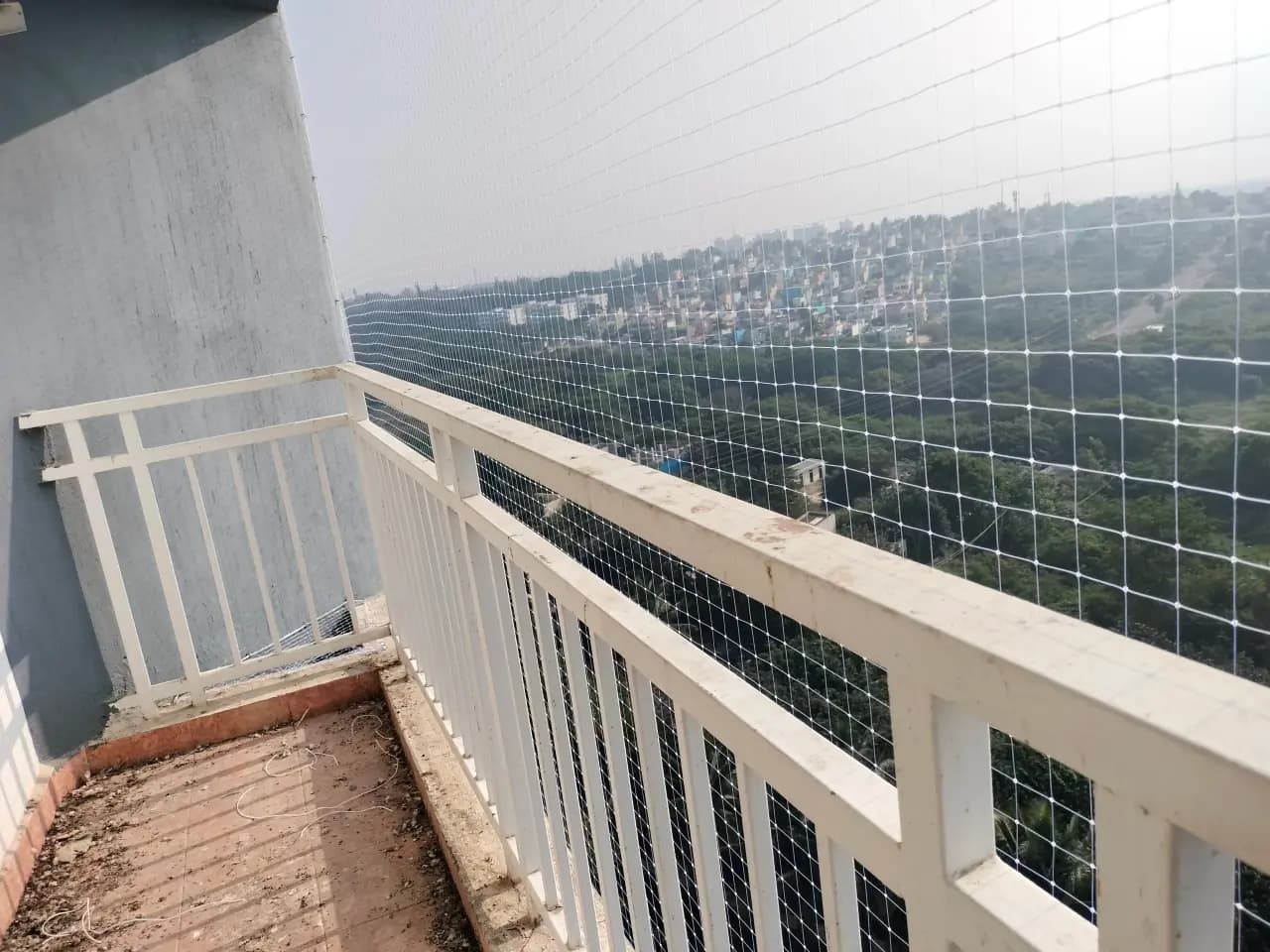
Main service page
Industrial Bird Nets are heavy-duty nets designed for factories, warehouses, production un...
Explore →Ready to compare or book
Get a clearer inspection brief, material guidance, and installation advice before you commit to school playground nets.
Share the opening size, photos, or site condition and we will help you judge the right next step quickly.