
Indicative price
₹130–₹180 per sq ft for standard fixed work
This is a planning range in selected service areas, not a final universal rate. The measured opening and written specification decide the quote.
Main service page
Start with the gallery, then use the sections below to compare fit, material, pricing factors, and booking questions before you decide.
Quick decision view
Use these six checks to compare the price, specification and installation—not just the appearance in a sample photo.
Why this helps
These are the four signals most people scan first before they decide whether to stay on this page, compare another service, or move straight to a quote.
Indicative price
This is a planning range in selected service areas, not a final universal rate. The measured opening and written specification decide the quote.
Common material
The full system includes the cable core, optional coating, channel, tensioners, sleeves, anchors, fasteners and finishing caps.
Common sizes
Diameter alone does not prove strength. Confirm the grade, strand construction, coating and matching product certificate.
Typical gap
The exact clear gap and orientation should reflect children, pets, corner openings and building requirements.
Main types
Vertical fixed layouts are simple; openable, hinged or sliding sections add access, hardware, maintenance and cost.
Strength check
Cable breaking load, safe working load and the capacity of a completed panel are different measurements.
Buyer guide
A reliable choice starts with the risk and fixing conditions, then compares like-for-like material and installation details.
Purpose
State whether the priority is a toddler, pet, wide railing gap, high-rise opening, cleaning access or simply a clearer view. It is not a replacement for the original guardrail or a burglary grille.
Configuration
Choose among vertical fixed, fixed-frame and approved openable options after checking corners, span, glass railings, false ceilings and access.
Specification
The quote should state steel grade, bare diameter, strand construction, coating, clear spacing and orientation—not just 'premium wire'.
Fixing
Sound RCC, suitable masonry or a designed frame may accept approved fixings. Glass, cladding, loose plaster and weak railings should not be guessed at on installation day.
Price
Check measured square feet, system type, all hardware, labour, access, taxes, warranty and service terms before treating one rate as cheaper.
Evidence
Ask which test certificate matches the supplied cable or system, what substrate assumptions apply, and what the written material and workmanship warranty excludes.
Invisible grill quotation checklist
A quick scan of these points usually tells people whether this page fits well, whether a nearby page may suit better, or whether it is time to request a quote.
Continue to the dedicated Bangalore service guide for local details, or browse every supported city and area.
Main city service page
Open the Bangalore page for city-specific service guidance and local-area coverage.
Open Bangalore service →
Browse city pages and local area coverage
Not in Bangalore? Find the matching service coverage for another city or nearby area.
Browse all locations →
Service highlights
Highlight 1
Slim cables remain visible at close range but create far less visual obstruction than conventional iron bars.
Highlight 2
SS 316 or SS 304 cable, coating, channels and fasteners are specified around coastal exposure, rain and site conditions.
Highlight 3
Cable direction and clear gap are decided around toddlers, pets, railing gaps and climbable features—not a one-size-fits-all layout.
Highlight 4
The quote identifies covered area, cable specification, system type, fixing method, labour and any access or custom-work charge.
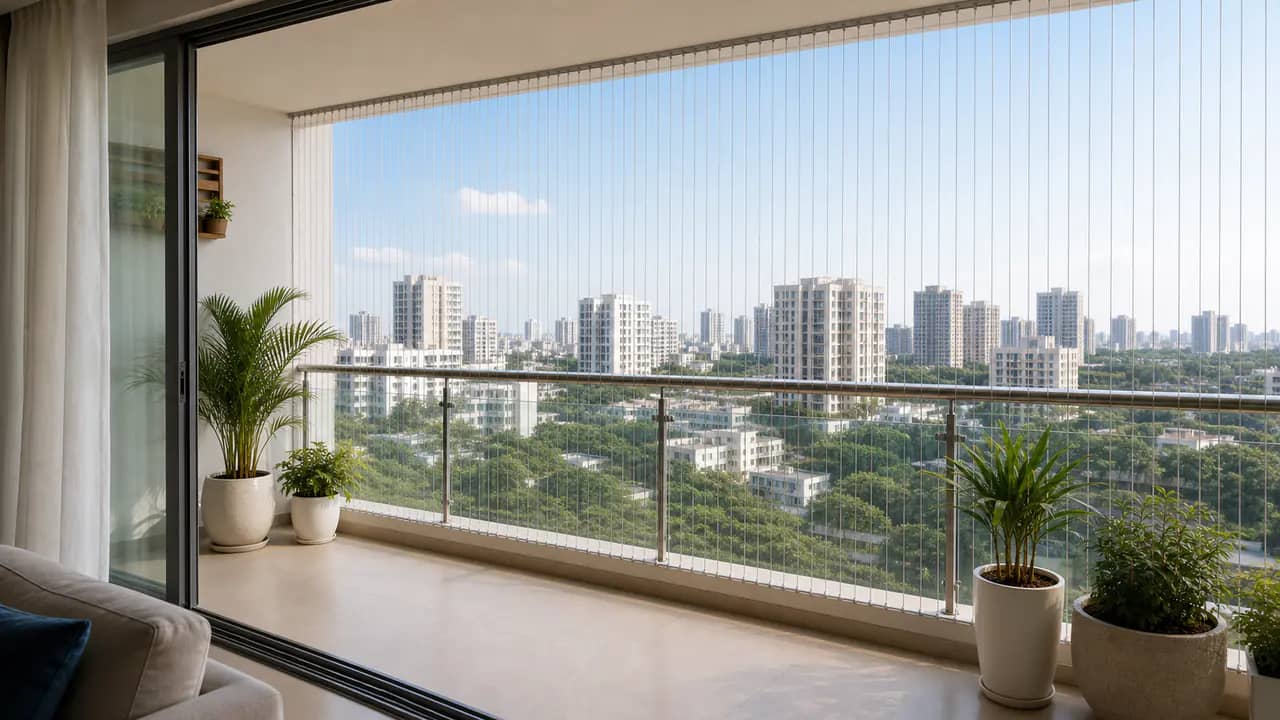
An invisible balcony grill—also searched as an invisible grille or transparent grill for balcony—is a cable-and-channel system fitted across an opening to reduce the chance of a person or pet passing through large gaps while preserving more of the view than conventional bars. The cables are not transparent and do not disappear: they look light from normal viewing distance and remain clearly visible up close.
The cable is only one part of the installation. Its performance depends on the steel grade, diameter, strand construction, coating, spacing, span, terminals, channel, anchors, supporting substrate and the way each line is tensioned. This is why a photograph or a price per square foot cannot confirm whether two quotations describe the same product.
EverSafe Safety Nets plans fixed and openable balcony systems after measurement. The original balcony railing stays in place, and any additional frame or fixing must respect owner, society, facade, waterproofing and applicable fire-safety requirements.
This system suits households that need to reduce open railing or balcony gaps while keeping the space bright and visually open. It is most useful when the original structural guardrail is sound and there is an approved surface for fixing the added cable barrier.
Why choose us
Benefit 1
On-site measurement before the final quotation and cable layout
Benefit 2
Written specification for steel grade, diameter, construction, coating and clear spacing
Benefit 3
Indicative standard price explained before site-specific additions
Benefit 4
Fixed, framed and openable options recommended around the actual balcony use
Benefit 5
Fixings selected for an approved structural substrate—not weak plaster, glass or decorative cladding
Benefit 6
Vertical, child-conscious layouts recommended where climbing is a concern
Benefit 7
Neat channel alignment, sequential cable tensioning and finished edges
Benefit 8
Handover covering safe use, cleaning, warranty scope and service conditions
Features
Fixed vertical cable is the most straightforward configuration: top and bottom channels hold continuous lines with few moving parts. It keeps visual bulk low and is generally preferable to horizontal cable where young children may try to climb. A fixed-frame grille uses a separate supporting frame when direct channel fixing is unsuitable or a defined module is required.
Openable designs use a hinged, sliding or removable framed section for approved cleaning and service access. They need extra fabrication, locks or latches, alignment and periodic checking. A fully fixed panel may be simpler and cheaper, but it can restrict exterior cleaning or AC work. Do not designate any panel as an emergency exit unless it agrees with the sanctioned building and fire-safety plan.
The usual system combines multi-strand stainless-steel cable with aluminium channels and compatible terminals, tensioners, sleeves, anchors, fasteners and caps. SS 316 offers better resistance than SS 304 to chloride-related pitting because of its molybdenum content, making it a common choice for coastal or strongly exposed openings. That does not make it immune to staining or corrosion.
A nylon or PVC outer layer can improve touch, colour and surface protection, but the coating and the core are separate specifications. A quote should identify both and confirm that an outdoor coating is suitable for UV exposure. Channel finish may be anodised or powder-coated depending on the supplied system; fasteners and isolation between stainless parts and aluminium must also suit the environment to reduce dissimilar-metal corrosion.
Invisible grill wire is commonly offered in 2 mm, 2.5 mm and 3 mm sizes. A larger diameter is generally capable of a higher breaking load only when grade, construction and manufacturing quality are comparable. A quote that lists diameter but not grade or strand pattern is incomplete. Common 7×7 and 7×19 constructions differ in flexibility and published performance, so the supplied certificate—not a generic internet figure—should settle the specification.
A clear gap of roughly 40–50 mm is common in residential work, often searched as a two-inch invisible grill gap. The quote should say whether the number is a clear opening or centre-to-centre measurement. Smaller pets, active cats, existing corner gaps and local building requirements may call for a different layout or an added pet mesh.
Search results frequently advertise 350 kg, 400 kg, 500 kg or more, but those numbers often mix up individual-cable breaking load, tensile test results and completed-system capacity. They are not interchangeable. Published data for some bare 2 mm 7×7 ropes falls around 2.2–3.0 kN minimum breaking load, approximately 225–310 kgf, while other products can differ by grade and tensile class.
The safe installed capacity may be governed by a terminal, channel, anchor or weak substrate long before a cable reaches its laboratory breaking point. It also requires a design safety factor; breaking load is not a recommended working load. Building guards are normally assessed against prescribed line or point loads, not by hanging one headline number of kilograms. The responsible answer is to request a certificate that identifies the exact cable and, when a system-capacity claim is made, the tested assembly, span, anchors, substrate and test method.
The indicative installed price for a standard fixed balcony invisible grill is ₹130–₹180 per sq ft across selected service areas. This range is useful for early planning, but it is not a fixed national promise. Final pricing follows the measured openings and the agreed specification.
Square feet are usually calculated as width × height for every covered face. For example, an 8 ft × 10 ft opening is 80 sq ft, giving an early standard-range estimate of about ₹10,400–₹14,400 before any stated custom additions or applicable taxes. L-shaped or U-shaped balconies are measured face by face and added. Ask the installer to show the calculation so that cable length, running feet and panel square feet are not confused.
A clean installation begins before drilling. The installer maps the opening, confirms the cable direction and gap, checks the slab, wall or approved frame, identifies obvious waterproofing and service risks, and agrees on channel colour and joint positions. Fixing into loose plaster, decorative cladding, glass or an unverified railing is not an acceptable shortcut.
Channels are marked level, drilled at approved points and fixed with substrate-appropriate anchors. Cables are threaded and terminated, then tensioned gradually in sequence so the panel stays aligned rather than pulling one side out of line. Final checks cover clear gaps, cable firmness, end sleeves, sharp edges, corner openings, locks or latches and the condition of the surrounding finish.
The main advantage is balance: an invisible grill provides a defined cable barrier with much less visual weight than traditional metal bars. Air and daylight continue through the opening, and the slim finish often suits apartment-facade rules better than bulky fabrication.
The trade-offs matter. It normally costs more than a basic nylon safety net, creates no privacy, and is not an anti-burglary grille. Standard gaps may allow birds or small objects through, cats may climb the lines, and damaged coating or loose tension needs professional attention. Wide spans may need extra support, and fixed systems can make exterior access difficult.
Choose by the main problem rather than the product name. Invisible cable works best when a clean view and a permanent-looking supplementary barrier matter together. An iron or steel grille is more visually dominant but can be designed for stronger security objectives. A certified safety net can be more economical and better for broad pet or bird coverage, although it looks and ages differently.
A glass enclosure blocks more wind and rain but changes ventilation, load, cleaning and facade considerations; it is not the same product. For pigeon control, use purpose-made bird netting or mesh because ordinary cable spacing is too wide. Some balconies legitimately need a combination, but every added layer must still respect access and fire-safety requirements.
A nearby installer is useful for measurement and service, but distance and headline rate do not establish quality. Compare written specifications, similar completed work, fixing plans, product evidence and warranty terms. Photos can support a preliminary discussion; the final layout should respond to actual dimensions and substrate conditions.
This broad service page covers the product and buying decision. Current coverage includes Hyderabad, Bengaluru, Chennai, Visakhapatnam, Vijayawada, Rajahmundry, Ongole, Eluru, Coimbatore and selected Kerala locations, subject to pin code, project size and schedule. Use the dedicated city and area pages for local details rather than relying on a generic city list. Share balcony photos, rough width and height, floor, railing type, children or pets, and whether exterior access is needed for a useful first estimate.
An invisible grill is an added barrier, not permission to remove or weaken the original balcony guardrail. Keep chairs, stools, planters and other climbable objects away from the edge, continue supervising children, and use a dedicated pet solution when an animal can climb or squeeze through the proposed layout.
Before work, confirm rental-owner and society approval, facade rules, approved drilling zones and whether the opening forms part of a refuge or fire-safety route. Do not block required access or ask an installer to improvise an emergency feature. A qualified building professional or the responsible authority should resolve any conflict with the sanctioned design.
Safety net installation process
A standard balcony is often completed within one working day after measurement, approval and material preparation, but multiple faces, custom frames, access restrictions or substrate repairs can take longer.
Step 1
Confirm the users, balcony shape, original railing, desired access, owner or society rules, facade restrictions, fire-route considerations and any visible waterproofing or concealed-service risk.
Step 2
Measure every width, height, corner, return and end gap; calculate each face as width × height; and show the total square feet used for the quotation.
Step 3
Record the steel grade, bare diameter, construction, coating, clear gap, direction, channel or frame, anchor approach, fixed/openable type, colour, price inclusions and warranty terms.
Step 4
Verify the proposed fixing surface, mark level lines, avoid unapproved glass or cladding, drill at approved points and secure the channels or designed frame with suitable anchors.
Step 5
Thread and terminate each cable with the specified hardware, maintain the agreed clear spacing and tension the lines progressively so the channel and panel remain aligned.
Step 6
Check gap consistency, cable firmness, terminals, channel joints, corner openings, edge caps, surrounding finishes and the operation of any approved hinged or sliding section.
Step 7
Provide the final specification, measured scope, invoice and warranty, and explain safe use, cleaning, warning signs, service contacts and when a reinspection is advisable.
Routine care is simple but should not be described as zero maintenance. Wipe cables and channels with water and a mild cleaner, rinse salt deposits more often in coastal locations, and avoid abrasive pads, strong acids or chloride-based cleaners. Inspect the lines, terminals, channels, anchors and any hinges or locks for movement, staining, damaged coating or sharp edges.
Warranty language should separate material from workmanship and state the period, exclusions, corrosion conditions, coating damage, anchor movement and whether re-tensioning is included. Request a professional check after nearby drilling, waterproofing, facade work, AC installation or any impact on the system.
FAQs
A practical indicative rate for a standard fixed balcony installation is ₹130–₹180 per sq ft in our selected service areas. The covered area is normally calculated as width × height for each grill face and then added together. The final quote can change with SS grade, cable diameter and gap, coating, fixed or openable design, corners, long spans, difficult drilling or access, minimum-job charges, travel and applicable taxes. Ask whether cable, aluminium channel, anchors, labour, finishing, warranty and any later tension check are included before comparing two rates.
There is no honest universal kilogram rating for every invisible grill. For context, published data for some bare 2 mm 7×7 wire ropes shows a minimum breaking load of roughly 2.2–3.0 kN, about 225–310 kgf, but that is the laboratory breaking load of one cable—not the safe working load of the installed balcony system. The complete result is limited by the exact cable, terminals, channel, anchors, span, tension, substrate and workmanship. Treat any 350 kg, 400 kg or higher claim as product-specific and ask for a matching test certificate. Never test a grill by hanging body weight, swings, planters or heavy laundry from it.
SS 316 contains molybdenum and generally resists chloride-related pitting better than SS 304, so it is usually the stronger choice for sea-facing, humid or exposed balconies. SS 304 can suit covered inland openings when the complete system is correctly specified and maintained. Nylon or PVC is a protective outer coating; it improves touch and surface protection but does not turn an unidentified or lower-grade core into SS 316. Ask the installer to state the core grade, bare cable diameter, strand construction and coating separately. No stainless grade is completely corrosion-proof, so coastal cleaning still matters.
Fixed vertical cables are the simplest low-visual-bulk option and are normally preferred where child climbability matters. A fixed-frame system helps where the opening needs a defined supporting frame. Openable, hinged or sliding panels provide cleaning or maintenance access but cost more, contain moving parts and must suit society, facade and fire-safety rules. Horizontal cables can act like ladder rungs, so they need extra caution in homes with young children. L-shaped, U-shaped and glass-railing balconies may need corner posts, returns or an independent approved frame after a site check.
The installer first measures the opening, checks the substrate and confirms hidden-service and building restrictions. Channels or an approved frame are aligned and anchored into sound RCC, masonry or a designed structural member; cables are then threaded, terminated and tensioned in sequence before gaps, edges and moving sections are checked. Correct drilling should be limited to approved fixing points and neatly finished, but every fixing leaves holes and can affect waterproofing or finishes if planned badly. Obtain owner or society approval first and do not permit fixing into glass, loose plaster, ACP cladding or an unverified railing.
They can reduce hazardous openings when the full system is properly designed, installed and maintained. Vertical cables and a clear gap around 40–50 mm are common starting points, but toddlers, cats and small dogs may require tighter spacing or a separate pet mesh after an actual risk check. Cats may climb cables, so an invisible grill should not automatically be sold as cat-proof. On high floors, cable area is low, but span, substrate, anchoring and building approval still determine suitability. Keep furniture away from edges and continue active supervision.
Related services
If this page is close but not exact, these are the next service pages worth comparing before you request a quote.
Main service page
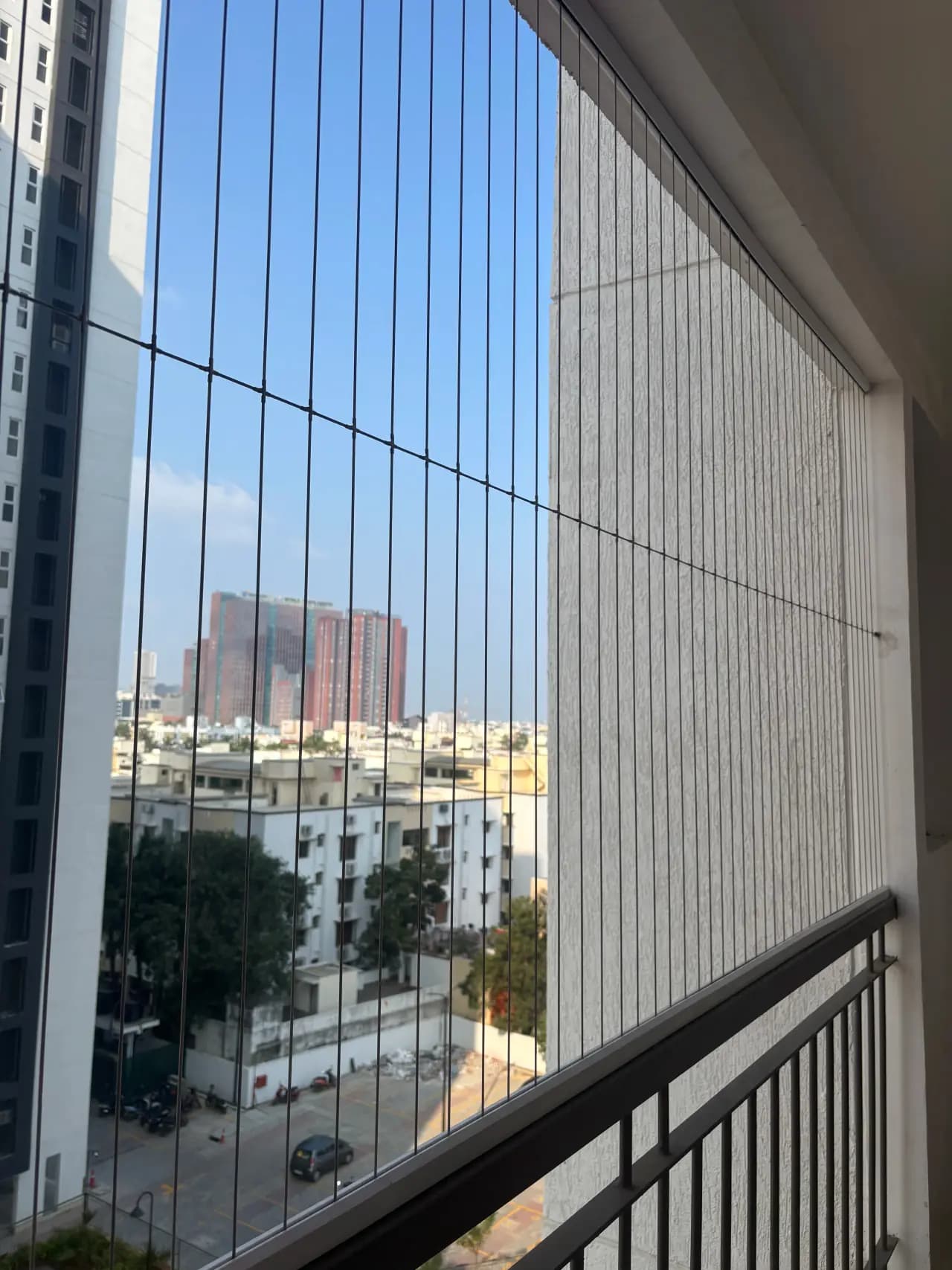
Stainless Steel Invisible Grills combine elegance with strength. Ideal for balconies, wind...
Explore →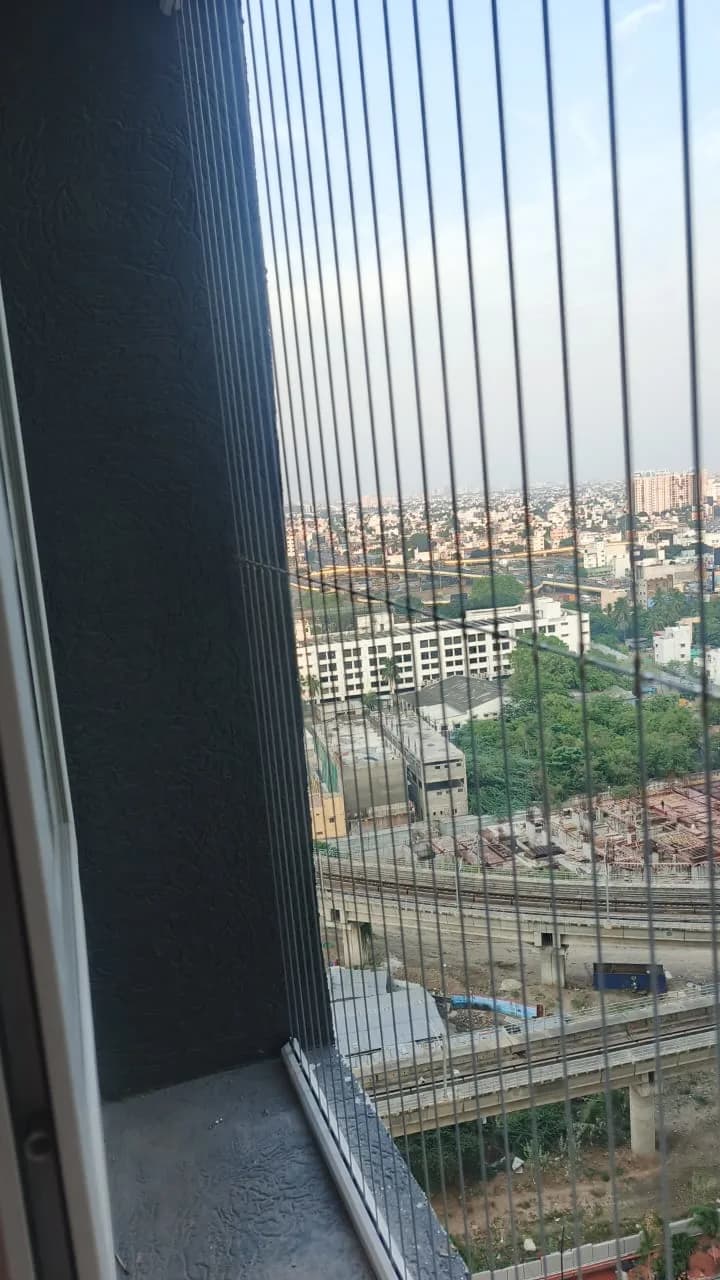
Main service page
Invisible Grills for High Rise apartments provide safety for children, pets, and residents...
Explore →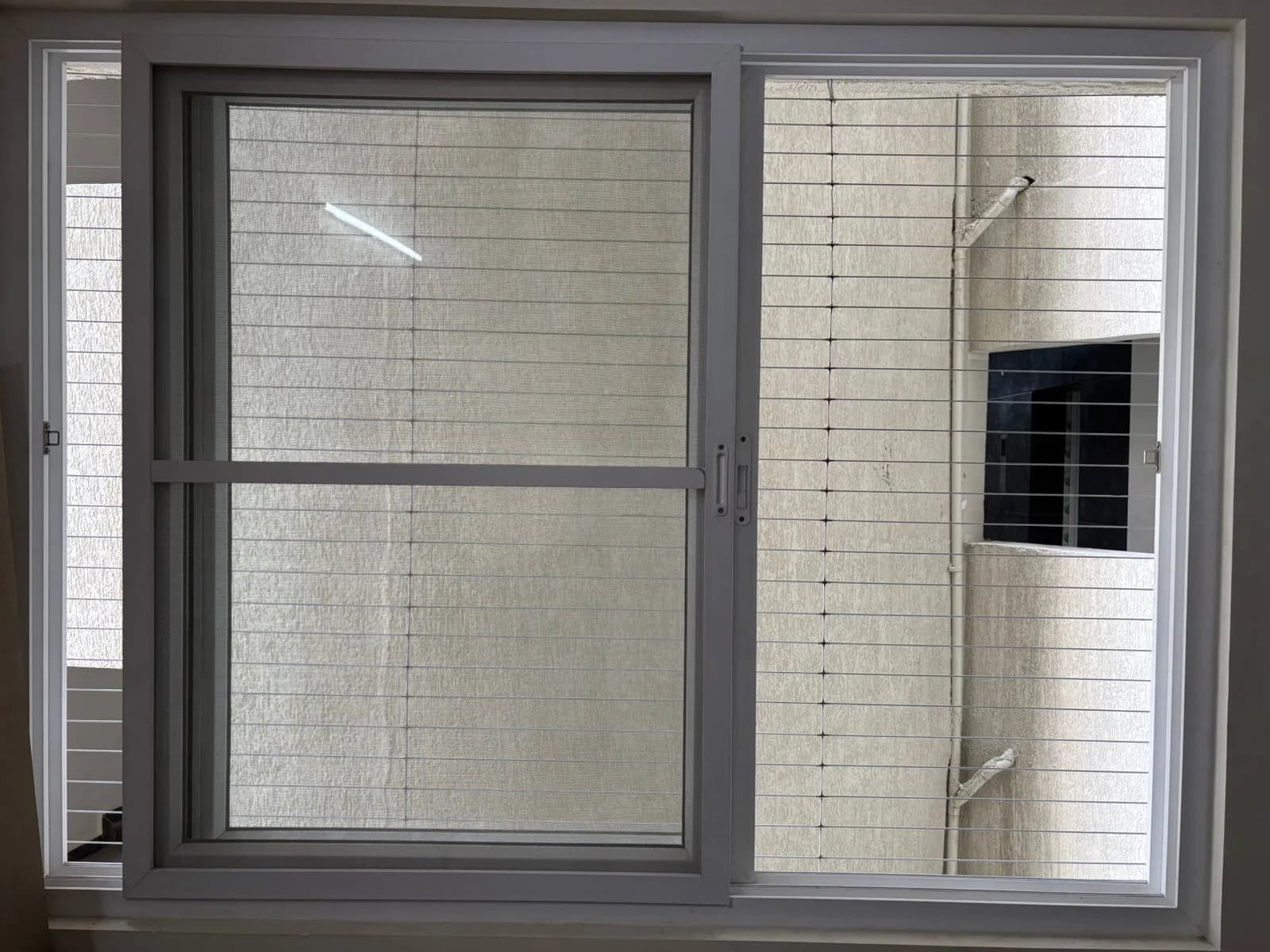
Main service page
Invisible Grills for Windows offer a secure solution for high-rise apartments and homes wi...
Explore →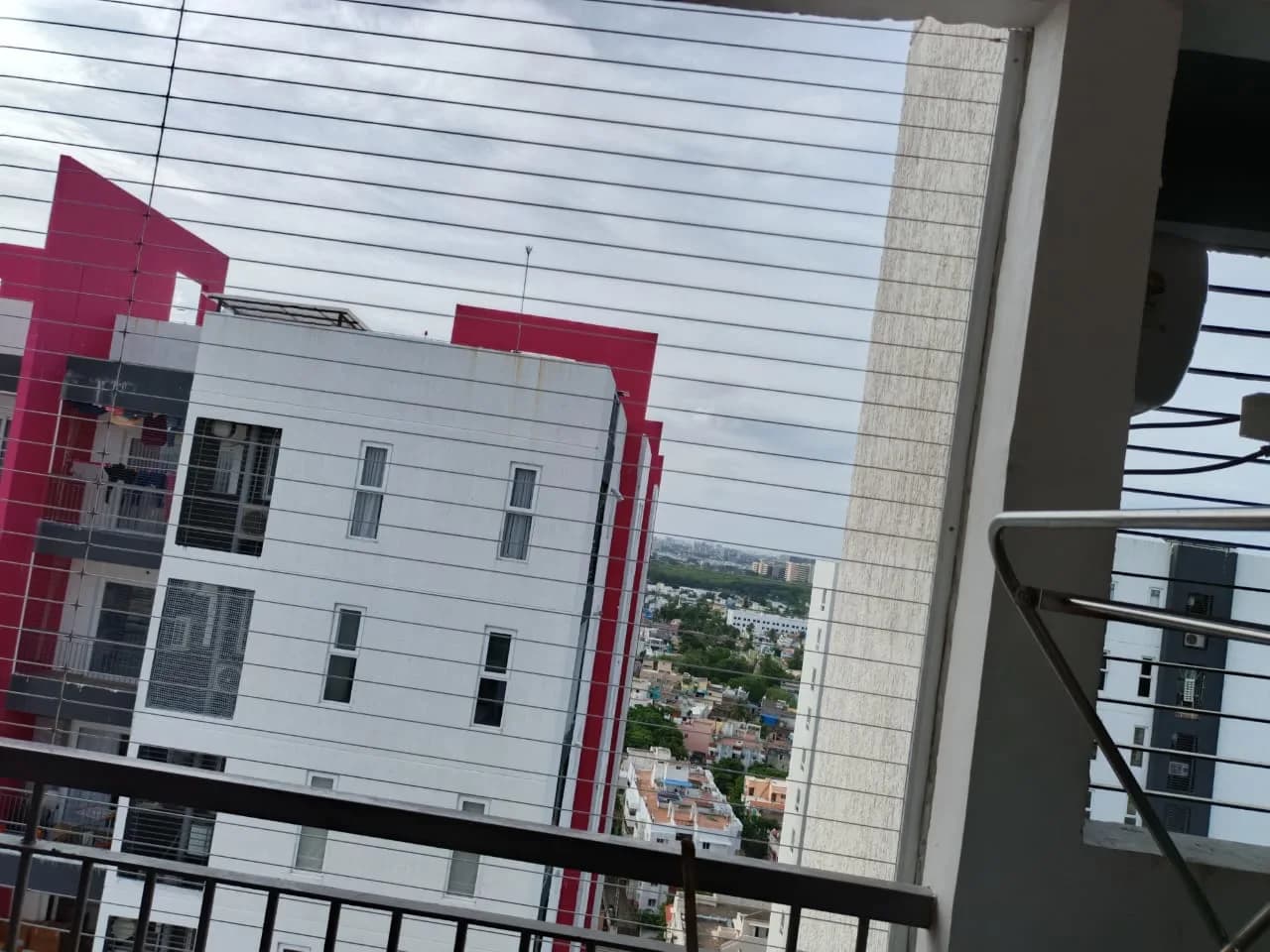
Main service page
Custom Invisible Grill Designs allow you to tailor grills according to your space, aesthet...
Explore →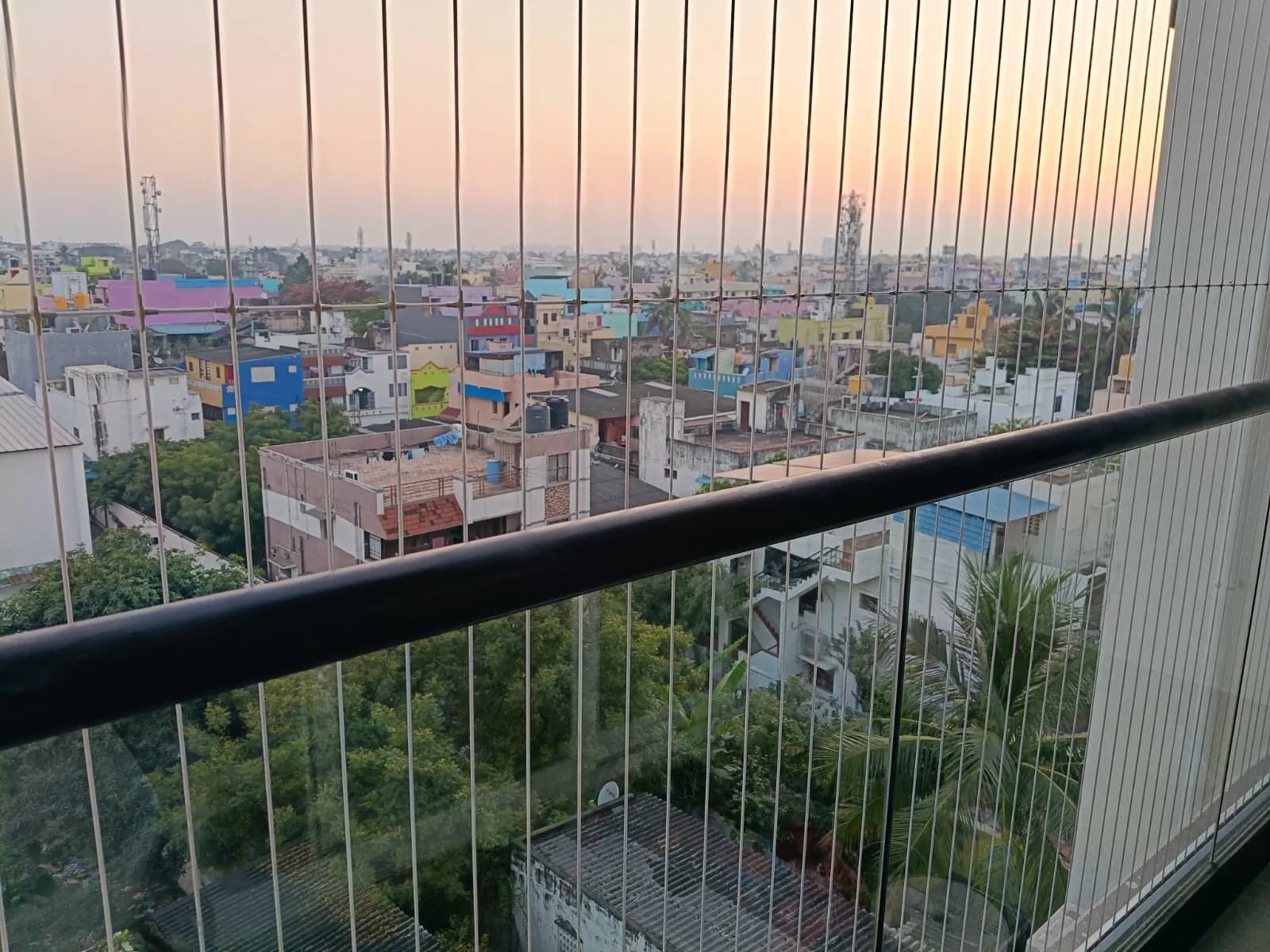
Main service page
Transparent Balcony Nets provide safety while maintaining clear views. Ideal for high-rise...
Explore →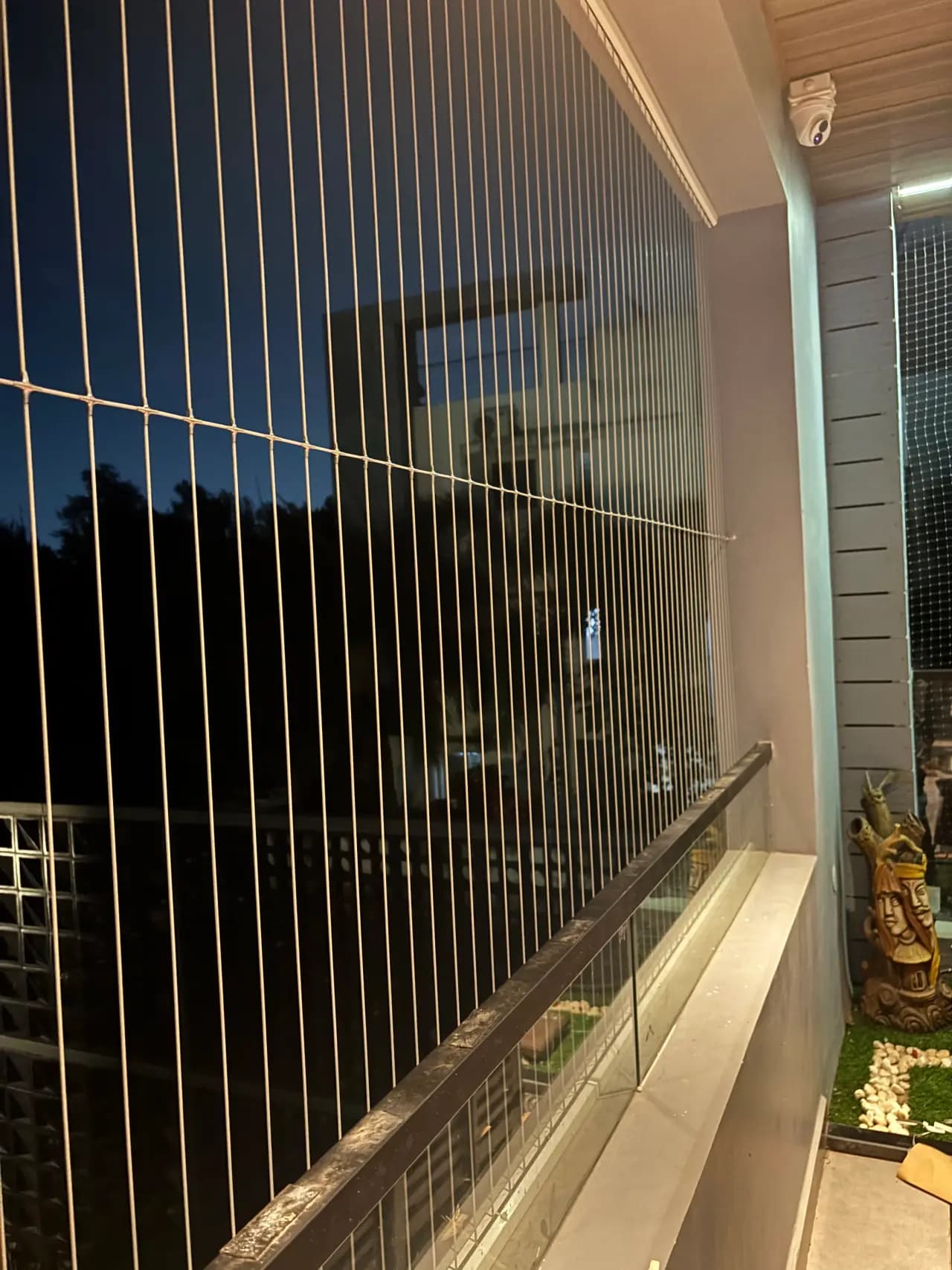
Main service page
Balcony Grill Safety Nets provide a strong barrier for children, pets, and birds while mai...
Explore →Ready to compare or book
Get a clearer inspection brief, material guidance, and installation advice before you commit to invisible grills for balcony: types, price and installation.
Share the opening size, photos, or site condition and we will help you judge the right next step quickly.