
Best fit
Where apartment balcony nets work best
High-rise flats, gated communities, rental homes, villas, utility balconies, window openings, and sit-outs needing a clean protective barrier.
Main service page
Start with the gallery, then use the sections below to compare fit, material, pricing factors, and booking questions before you decide.
Quick decision view
A fast read on which net suits your balcony, what shapes the price, and the details worth checking before you book a measurement.
Why this helps
These are the four signals most people scan first before they decide whether to stay on this page, compare another service, or move straight to a quote.
Best fit
High-rise flats, gated communities, rental homes, villas, utility balconies, window openings, and sit-outs needing a clean protective barrier.
Main use
Child safety, pet safety, or pigeon control — or all three in one net — depending on how the balcony is used every day.
Mesh & material
Small mesh for children and pets, 50 mm mesh for pigeons, in UV-stabilised HDPE, nylon, or transparent netting.
Fixing
Drilled anchoring for owned homes, or no-drill and low-impact options that leave little to no wall damage for rentals.
Price factors
Width, height, mesh and material, fixing method, floor access, city, and whether windows, ducts, or terraces are included.
Service area
Selected cities including Hyderabad, Bangalore / Bengaluru, Chennai, Visakhapatnam / Vizag, Vijayawada, Rajahmundry, Kakinada, and Coimbatore, subject to area and schedule.
Buyer guide
The best balcony net isn't the cheapest mesh. It should match your balcony size, the mesh to your use, a durable weather-suited material, the right fixing for your building, society rules, and the look you want afterwards.
Use case
One net can cover child safety, pet comfort, pigeon control, and open railing gaps — but the mesh and fitting still get planned around the priority use.
Mesh size
Small mesh for children and pets so a limb can't pass; 50 mm for pigeons; tighter for small birds. A net quoted without a stated mesh is hard to compare.
Material
UV-stabilised HDPE is the durable outdoor default; nylon suits specific uses; transparent mesh is for a clear view. Choose by exposure and visibility, not just price.
Fixing
Owned homes can take drilled anchoring for the firmest fix; rentals and drill-restricted societies need a no-drill or minimal-drill method that protects the walls.
Weather & hardware
The hooks and fasteners face the same sun, rain, and salt as the net. In coastal cities, insist on stainless or coated hardware.
Estimate & proof
A useful estimate breaks down area, mesh, material, hardware, fixing, and after-service — and the installer should show apartment work like yours.
Fast shortlist checklist
A quick scan of these points usually tells people whether this page fits well, whether a nearby page may suit better, or whether it is time to request a quote.
Continue to the dedicated Bangalore service guide for local details, or browse every supported city and area.
Main city service page
Open the Bangalore page for city-specific service guidance and local-area coverage.
Open Bangalore service →
Browse city pages and local area coverage
Not in Bangalore? Find the matching service coverage for another city or nearby area.
Browse all locations →
Service highlights
Highlight 1
Custom measured for flats, gated communities, rental homes, villas, and high-rise balconies — not a stock size stretched to fit.
Highlight 2
Small, well-tensioned mesh that closes open railing gaps while keeping the balcony bright, airy, and usable.
Highlight 3
UV-stabilised HDPE, nylon, and transparent options, with hardware chosen to survive sun, rain, and coastal salt air.
Highlight 4
Transparent, black, or colour-matched mesh with tidy rope, hook, and edge finishing that suits apartment rules.
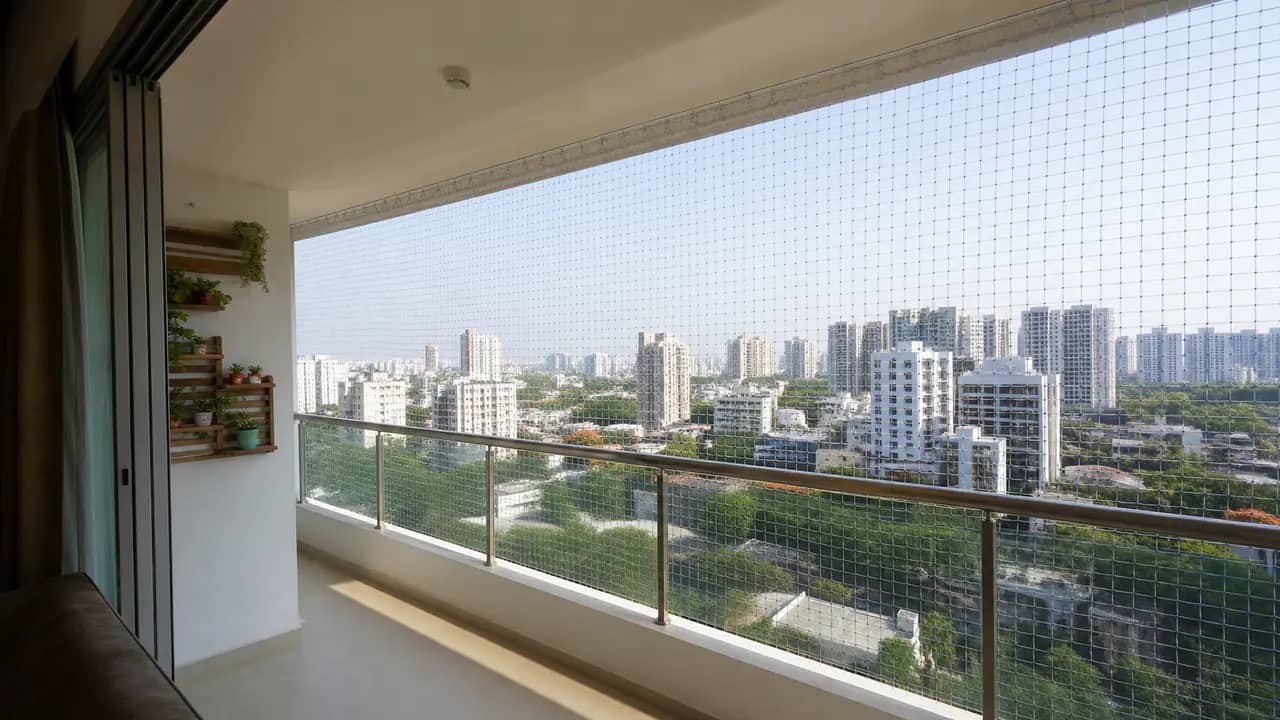
Balcony safety nets for apartments are custom-fitted mesh barriers installed across open balcony areas to make flats, high-rise homes, and gated-community balconies safer and calmer for everyday family life. A good net covers the opening neatly while letting fresh air, sunlight, and normal balcony access carry on as usual.
The two decisions that shape the result are the mesh and the fixing. Mesh size is matched to what you're protecting against — small for a toddler or a cat, 50 mm for pigeons — and material is chosen for outdoor durability and how visible you want the net to be. Fixing is then planned for your building, with drilled anchoring for owned homes and no-drill options for rentals and drill-restricted societies.
Service is available in selected cities, including Hyderabad, Bangalore / Bengaluru, Chennai, Visakhapatnam / Vizag, Vijayawada, Rajahmundry, Kakinada, and Coimbatore. Sharing your city, area, balcony photos, and rough measurements lets us confirm availability and give a realistic estimate.
Beyond the front opening, the right installation considers railing style, balcony height, wall surface, sun and rain exposure, side gaps, ledges, ducts, and AC units — and how the space is actually used. A balcony used by children, cats, dogs, elderly family members, or plants needs a different plan from one used only for storage.
The aim throughout is practical safety without closing the balcony in: a clean, durable, low-maintenance net that blends with the home and holds up for years.
Most apartment owners don't want a bulky barrier — they want a clean safety layer that keeps the balcony open and easy to maintain. The right net makes everyday use calmer for families, pets, and high-rise residents.
Why choose us
Benefit 1
Mesh size and material matched to child, pet, or pigeon needs
Benefit 2
Drilled and no-drill fixing options for owned and rented homes
Benefit 3
UV-stabilised HDPE, nylon, and transparent balcony net choices
Benefit 4
Stainless or coated hardware for coastal cities like Vizag and Chennai
Benefit 5
Air-, light-, and view-friendly fitting that keeps the balcony open
Benefit 6
Neat rope, hook, and edge finishing that suits society appearance rules
Benefit 7
Free measurement support and a clear, itemised estimate
Benefit 8
Coverage across selected cities, confirmed by area and schedule
Features
We install in selected service cities rather than making a broad all-location promise, which keeps each enquiry starting with the right availability check. Share your city, exact area, balcony photos, rough size, and main requirement, and we'll confirm whether installation is available and which net suits the site.
Coastal cities are called out for a reason: salt air changes the hardware choice, so a Vizag or Chennai balcony should use stainless or coated fittings that inland balconies may not need.
Mesh aperture is the spec that most affects both safety and how the net looks, and it's set by what you're keeping in or out. For pigeons, a 50 mm (2-inch) mesh is the standard — large enough to stay nearly invisible and cost-effective, small enough to block birds. Small birds like sparrows and mynas need a tighter mesh, around 20–25 mm.
For children and pets the mesh is kept small — so a toddler can't push a limb or head through and small objects don't slip out — and for cats it also has to be sturdy and firmly tensioned, since cats squeeze through gaps and test edges. Larger mesh is lighter, cheaper, and less visible; smaller mesh is safer and slightly more visible. Where a balcony has more than one need, the youngest child or smallest pet sets the mesh.
Balcony nets suit modern flats, older residential buildings, gated communities, rentals, villas, duplexes, and high-rise towers. The product name is the same, but the installation is always planned around the actual opening and how the space is used.
Whether the home is in a metro, a coastal tower, a hot-weather city, or a monsoon-facing area, the same core details decide a good result: the right mesh, a weather-suited material, clean finishing, airflow, visibility, and sound fixing.
Families choose child safety nets for an added layer of comfort around open balconies, closing the visible gaps while keeping the space usable for air, plants, seating, and daily routines. The mesh is kept small enough that a child can't pass a limb through, and the net is tensioned and edged so there's nothing loose to work at.
Pet owners fit nets because railings and open corners don't match how cats and dogs move. A pet net needs careful measurement, a small sturdy mesh, and firm tensioning. Whatever the use, the net is one layer of a safe balcony — it works best alongside supervision, with climbable furniture kept away from the railing, and a young child should never be left on a balcony unattended.
Balcony pigeon nets solve the mess and hygiene problem when birds start using ledges, AC units, pipes, and corners. A well-fitted bird net is a humane physical barrier that keeps the area cleaner without chemicals or traps.
The key to a net that works is covering the real entry points, not just the front opening. Corners, ledges, window sides, ducts, and AC spaces all need attention at measurement, so birds can't simply find the gap you left.
Outdoor balconies face sun, rain, dust, humidity, and wind, so material grade decides how long the net lasts and how it looks. UV-stabilised HDPE is the durable default — it resists sun and rain, doesn't absorb water, and holds up for years. Nylon is strong and flexible but absorbs water and needs UV treatment for long open-air life, so it suits specific uses more than constant exposure.
Transparent (near-invisible) netting is a fine, low-visibility mesh for balconies where a clear view matters most — worth not confusing with invisible grills, which use steel cables rather than mesh. Beyond the net itself, the hardware grade matters just as much, especially on the coast.
How the net is fixed matters as much as the net, and it's the question renters ask most. Standard installs anchor into the wall or slab for maximum firmness, but that means drilling — a problem in a rental or a society that restricts it. No-drill and low-impact options use tension systems, railing clamps, or brackets that grip existing surfaces, so the net can be fitted and later removed with little or no wall damage.
For an owned home, drilled anchoring gives the most secure long-term fix. For a rental, a no-drill or minimal-drill method protects your deposit and keeps the building happy, and the whole net can come down cleanly when you move. The right method depends on your railing, wall surface, and building rules.
A quality UV-stabilised balcony net lasts several years of open-air use; lifespan depends on the material grade, the sun and rain it takes, and the hardware holding it up. The mesh is only part of the system — hooks, fasteners, and rope face the same weather, which matters most in coastal cities like Visakhapatnam and Chennai, where salt air corrodes cheap fittings fast.
Specifying stainless or coated hardware there keeps the whole installation sound, not just the net. On high-rise balconies the open mesh is an advantage in wind: it lets gusts pass through rather than acting like a sail, so a well-tensioned, properly anchored net stays firm at height.
Most people compare balcony net price before booking, but a fixed rate without measurement can mislead. The cost depends on the measured area, mesh and material, fixing method, floor access, building surface, city serviceability, and whether the job is only the balcony or also nearby windows, ducts, staircases, or terrace edges.
A clear estimate tells you what's included: net material, hooks or fasteners, rope or border support, installation labour, finishing, access planning, and after-service — plus any extra work for difficult corners or large spans. That breakdown lets you compare two quotes fairly.
Apartment balcony net installation should be practical, neat, and respectful of building rules. Before fitting, the installer checks the balcony surface, railing design, fixing points, drainage, AC units, clothes-drying areas, and any society or RWA guidelines — including whether drilling is allowed.
A good finish shouldn't feel loose, uneven, or visually heavy. The net is aligned cleanly, secured at the edges, and fitted so the balcony stays usable for normal routines — with transparent or colour-matched mesh where the society prefers a uniform look.
Balcony nets, invisible grills, bird spikes, and shade nets solve different problems. A balcony net is flexible and covers child safety, pet safety, bird control, and open railing gaps in one fitting. An invisible grill is a more structured steel-cable system focused on a rigid, architectural look. Bird spikes only protect ledges. Shade nets are mainly for sun and privacy.
Start from the real need: family safety, pet comfort, pigeon entry, visibility, heat control, society appearance, or long-term upkeep. Many apartments choose a net because it balances protection with an open balcony — but if you want a firmer, more finished cable look, an invisible grill may suit better.
Searching for balcony net installation near me, don't choose on the nearest listing or the lowest quote alone. The stronger installer measures properly, matches the mesh to your use, explains drilled versus no-drill fixing, shows similar apartment work, and gives a clear scope.
These are the questions that move you from research to booking without another search — the ones behind balcony net price, child safety net, pet net, pigeon net, transparent net, and no-drill searches.
Safety net installation process
A professional balcony net installation starts with confirming service availability, then measurement, understanding the use, matching the mesh and material, and choosing a fixing method that suits the apartment and its rules.
Step 1
The team confirms your city, exact area, balcony photos, and access, and the main need: child safety, pet safety, pigeon control, or an all-in-one net.
Step 2
Width, height, corners, side gaps, railing style, wall surface, ledges, AC units, and fixing points are checked so the net fits the actual balcony, not a generic size.
Step 3
The mesh size and HDPE, nylon, or transparent material are matched to the use, visibility, and weather, and a drilled or no-drill fixing method is chosen for the surface and building rules.
Step 4
Anchors, clamps, rope supports, or suitable fasteners are set according to the surface, edge condition, and clean-finish requirement — with coastal-grade hardware where needed.
Step 5
The net is aligned, fixed, tensioned, and secured at the edges so it looks neat, stays firm, and keeps airflow and normal balcony use comfortable.
Step 6
The team checks the installation, confirms the covered areas, and explains cleaning, maintenance, warranty, and future service or removal.
A balcony net stays easy to maintain when it's measured correctly, fixed with suitable hardware, and tensioned without strain at the corners. Upkeep is simple and keeps the net neat and safe for daily use.
Clean it gently during routine balcony cleaning, check the edges and fixings after strong wind or heavy rain, and on coastal balconies rinse off salt now and then. Recheck after painting, renovation, AC work, or railing changes, and call the installer if any hook, rope, or fastener needs adjustment.
FAQs
We currently install apartment balcony nets in selected cities, including Hyderabad, Bangalore / Bengaluru, Chennai, Visakhapatnam / Vizag, Vijayawada, Rajahmundry, Kakinada, and Coimbatore. Availability depends on your exact area, project size, site access, and installer schedule, so share your location and balcony photos to confirm.
No. A properly chosen balcony net keeps the space bright and ventilated because the mesh is an open weave — light and air pass straight through. If a clear view is the priority, a transparent (near-invisible) mesh keeps the visual footprint to a minimum.
The mesh is matched to what you're keeping in or out. For pigeons, a 50 mm (2-inch) mesh is the standard — nearly invisible and cost-effective while still blocking birds. Small birds like sparrows need a tighter mesh, around 20–25 mm. For children and pets the mesh is kept small so a limb or head can't pass through and small objects don't slip out. The youngest child or smallest pet using the balcony sets the mesh, which is the safer default.
Not with the right specification. Cats squeeze through smaller gaps than people expect and test edges and corners, so a cat net uses a small, sturdy mesh, tensioned firmly and secured cleanly at the edges so there's nothing to push under or around. Measured and fitted properly, it holds up to normal feline curiosity.
The net adds a real protective layer, but it's one part of a safe balcony, not a replacement for supervision. Young children shouldn't be left unattended on a balcony, and it helps to keep climbable furniture away from the railing. We fit the net to close the gaps; safe habits keep it working.
For most outdoor balconies we use UV-stabilised HDPE: it resists sun and rain, doesn't absorb water, and lasts for years. Nylon is strong and flexible but needs UV treatment for long open-air life. Transparent mesh is a fine, low-visibility net chosen when a clear view matters most. The right pick depends on your balcony's exposure, how it's used, and how visible you want the net to be.
Often, yes. No-drill and low-impact options use tension systems, railing clamps, or brackets that grip existing surfaces, so the net can be fitted and later removed with little or no wall damage — ideal for rental flats and societies that restrict drilling. For owned homes, drilled anchoring gives the firmest long-term fix. We suggest the method that suits your surface and building rules.
Usually yes, after checking society or RWA guidelines. A no-drill or minimal-drill method protects your deposit and keeps the building happy, and the installer will suggest neat fixing options based on your railing and wall surface.
Good stainless or coated hardware resists corrosion. This matters most in coastal cities like Visakhapatnam and Chennai, where salt air attacks cheap fittings quickly — so there we specify stainless or coated hooks and fasteners to keep the whole installation sound, not just the mesh.
A quality UV-stabilised net lasts several years of open-air use; the exact life depends on the material grade, the sun and rain it takes, and the hardware holding it. Ask specifically what the warranty covers — the mesh, the hardware, and the workmanship — and keep your invoice and material details for any future service.
Yes. A pigeon net is a humane physical barrier that keeps birds off balcony corners, ledges, AC units, and utility spaces without chemicals or traps. For it to work, the net has to cover the actual entry points — corners, ledges, and duct sides — not just the front opening.
They're different products. A transparent balcony net is a fine, low-visibility mesh; an invisible grill uses thin, tensioned steel cables between tracks. Both keep the view open, but a net is a flexible mesh barrier while an invisible grill is a more structured cable system. If you're unsure which suits your balcony, we can advise or point you to the invisible grill option.
Yes. The open mesh lets wind pass through rather than acting like a solid sail, so a well-tensioned, properly anchored net handles gusts well on high-rise balconies. Correct fixing into a sound surface is what makes the difference at height.
Yes. A net fitted with a no-drill or low-impact method comes down cleanly, and drilled fixings leave points that are simple to patch. Whether the same net can be reused depends on its condition and the new balcony's size — we'll advise honestly rather than refit worn mesh.
Most standard apartment balconies are completed in a single visit once measurement and material are confirmed. Larger balconies, ducts, terraces, or difficult access points may need extra planning, which we'll flag before booking.
Related services
If this page is close but not exact, these are the next service pages worth comparing before you request a quote.
Main service page
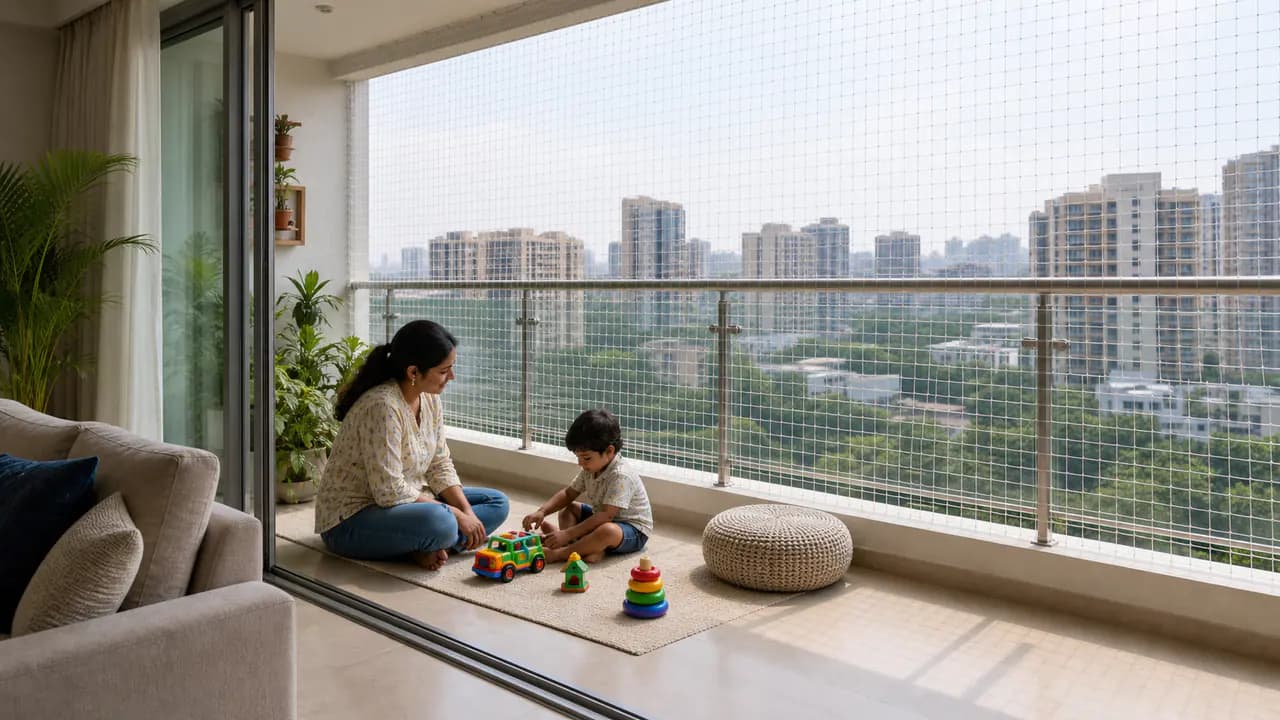
Children Safety Nets add a custom-fitted protective mesh for balconies, windows, staircase...
Explore →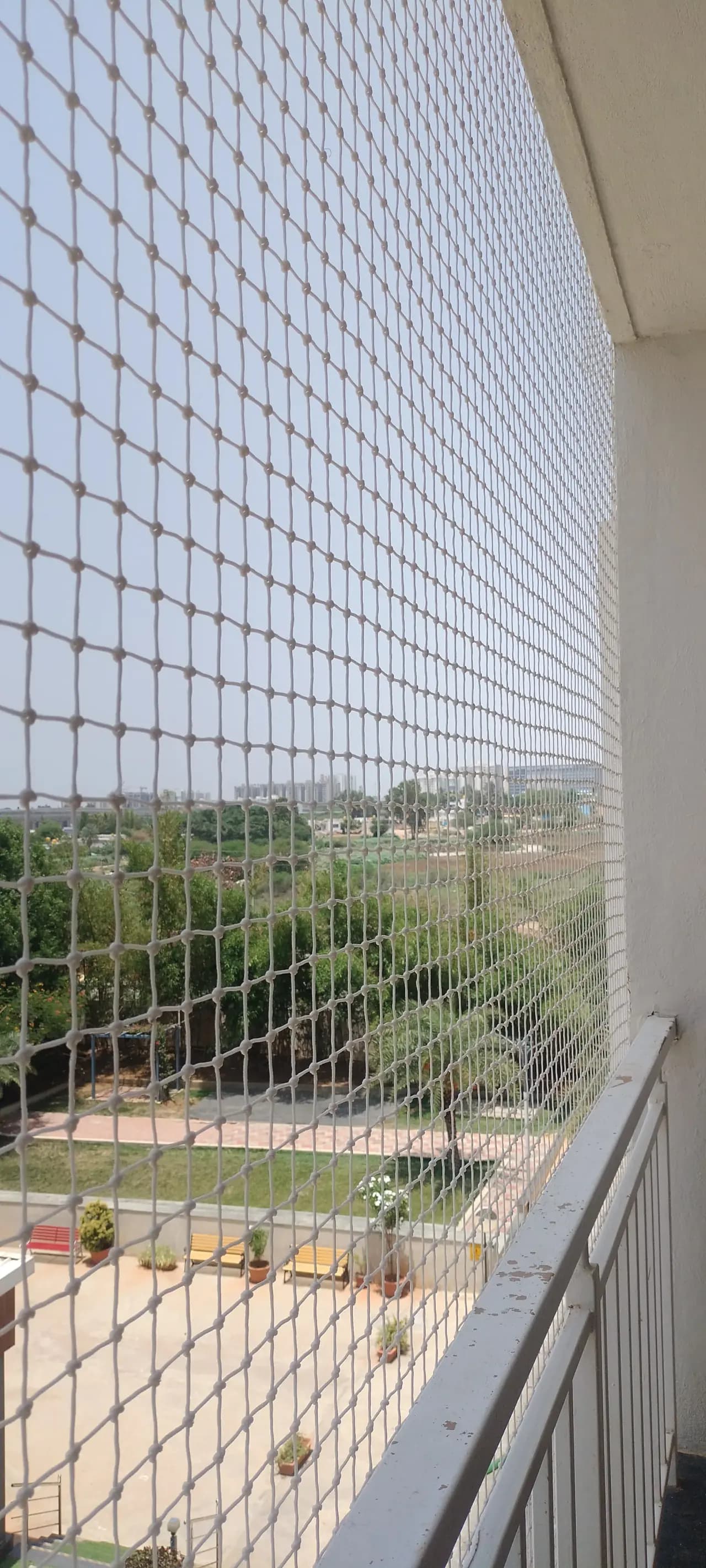
Main service page
Pet Safety Nets prevent pets like cats and dogs from falling off balconies or windows. Str...
Explore →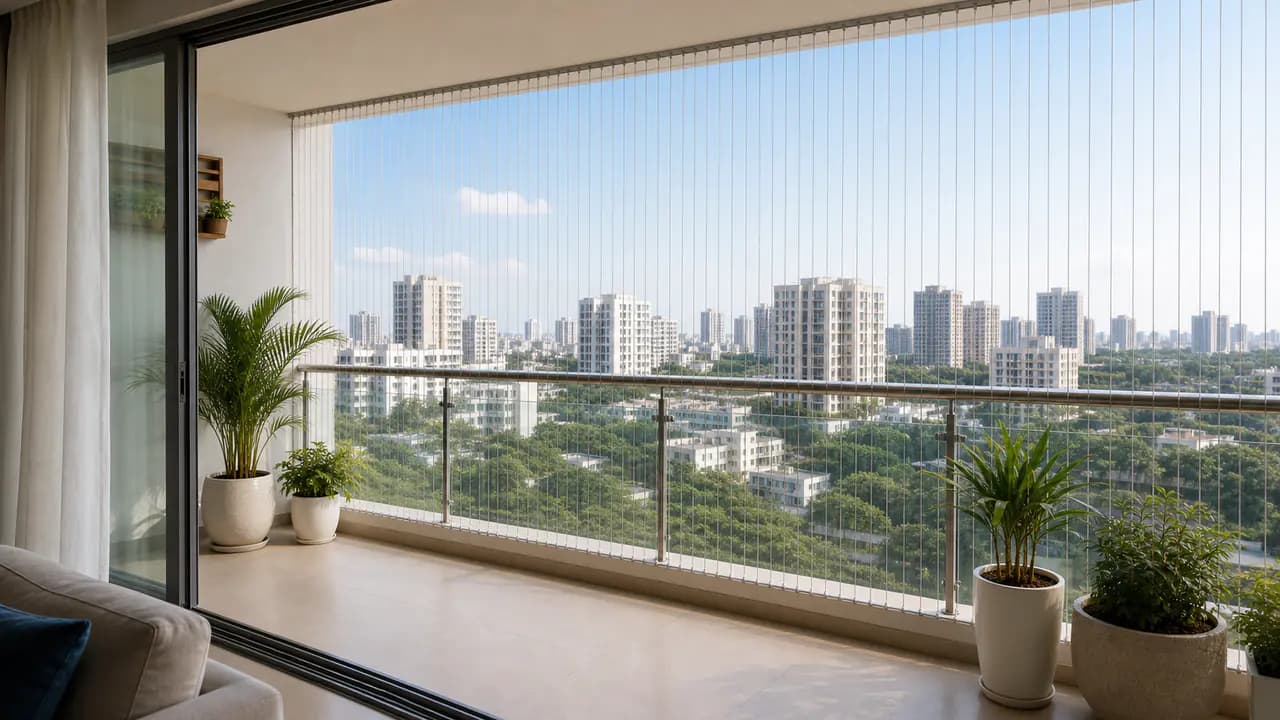
Main service page
Invisible grills for balcony openings use slim, tensioned stainless-steel cables held by a...
Explore →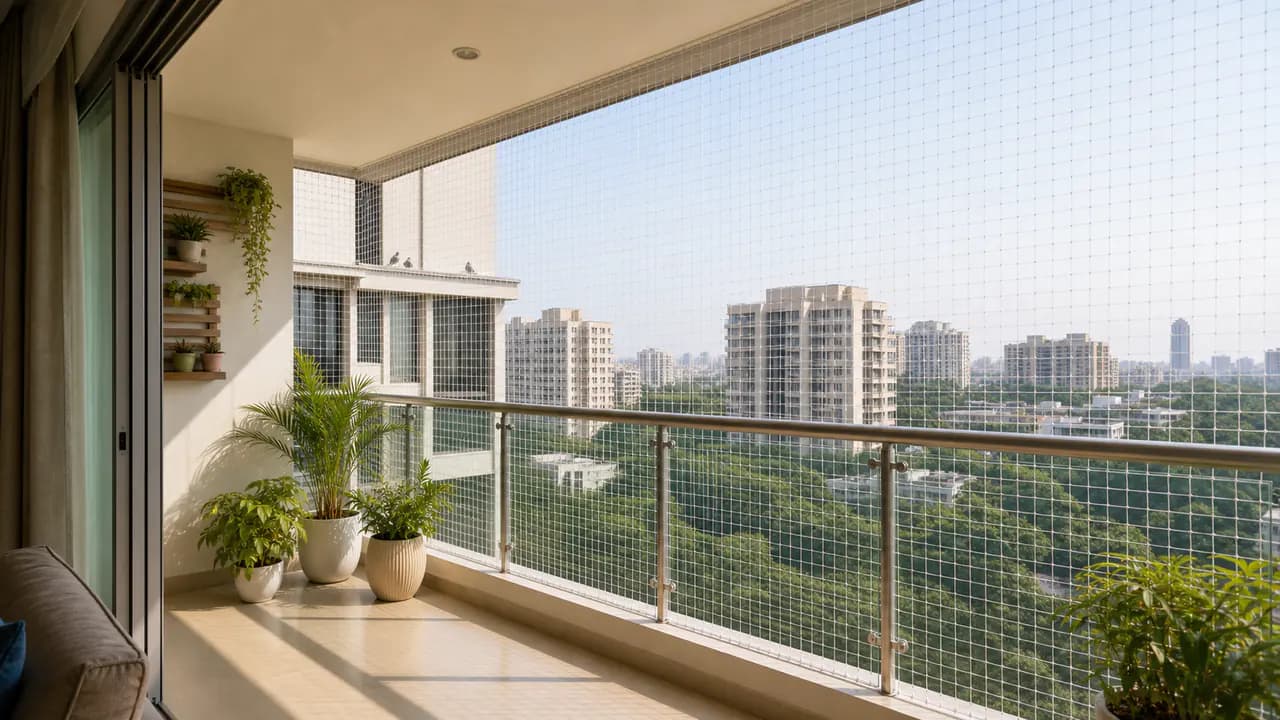
Main service page
Balcony Pigeon Nets help keep apartment balconies, ledges, AC corners, ducts, and utility ...
Explore →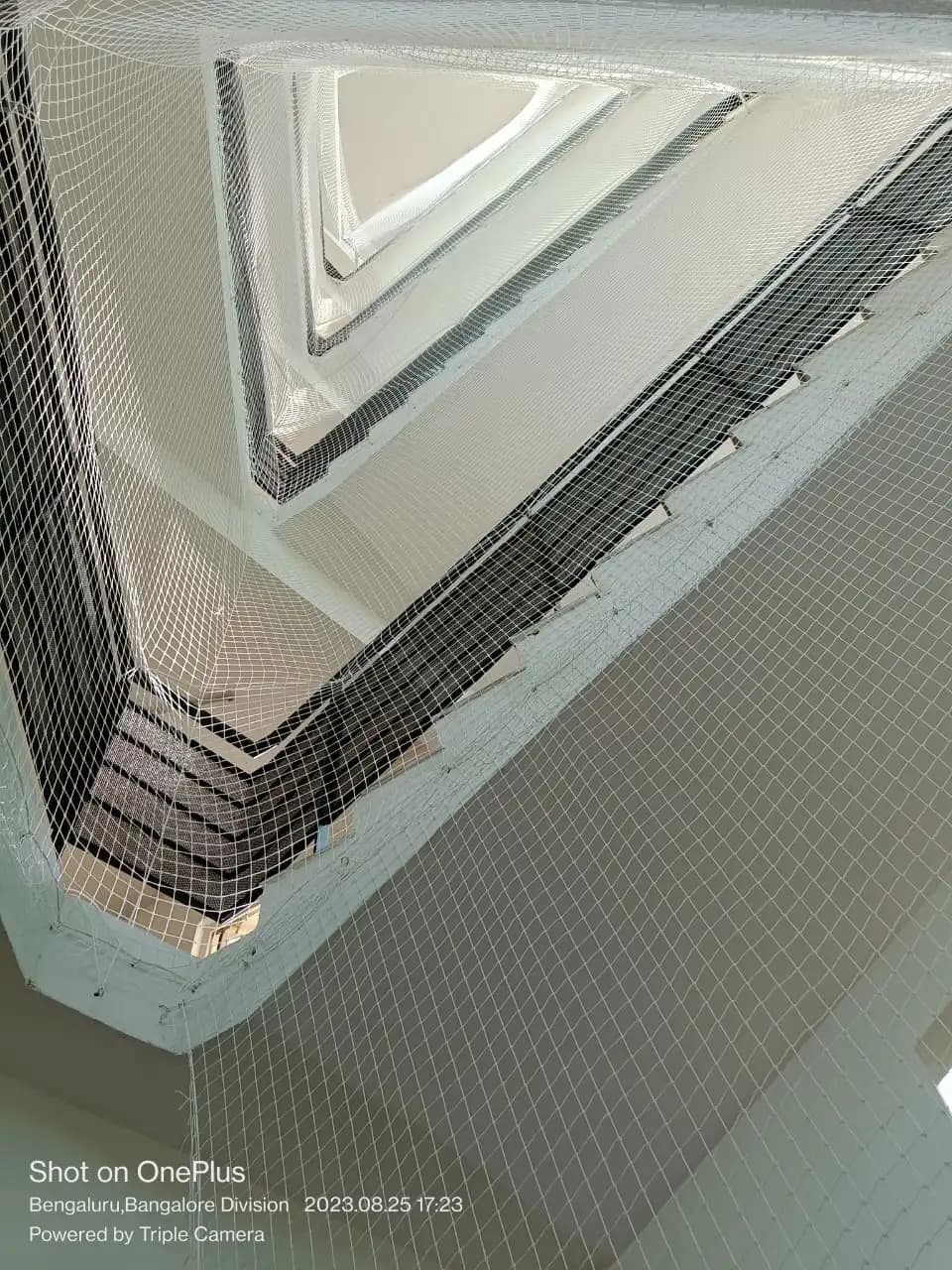
Main service page
Staircase Safety Nets prevent accidents by covering open gaps between railings, balconies,...
Explore →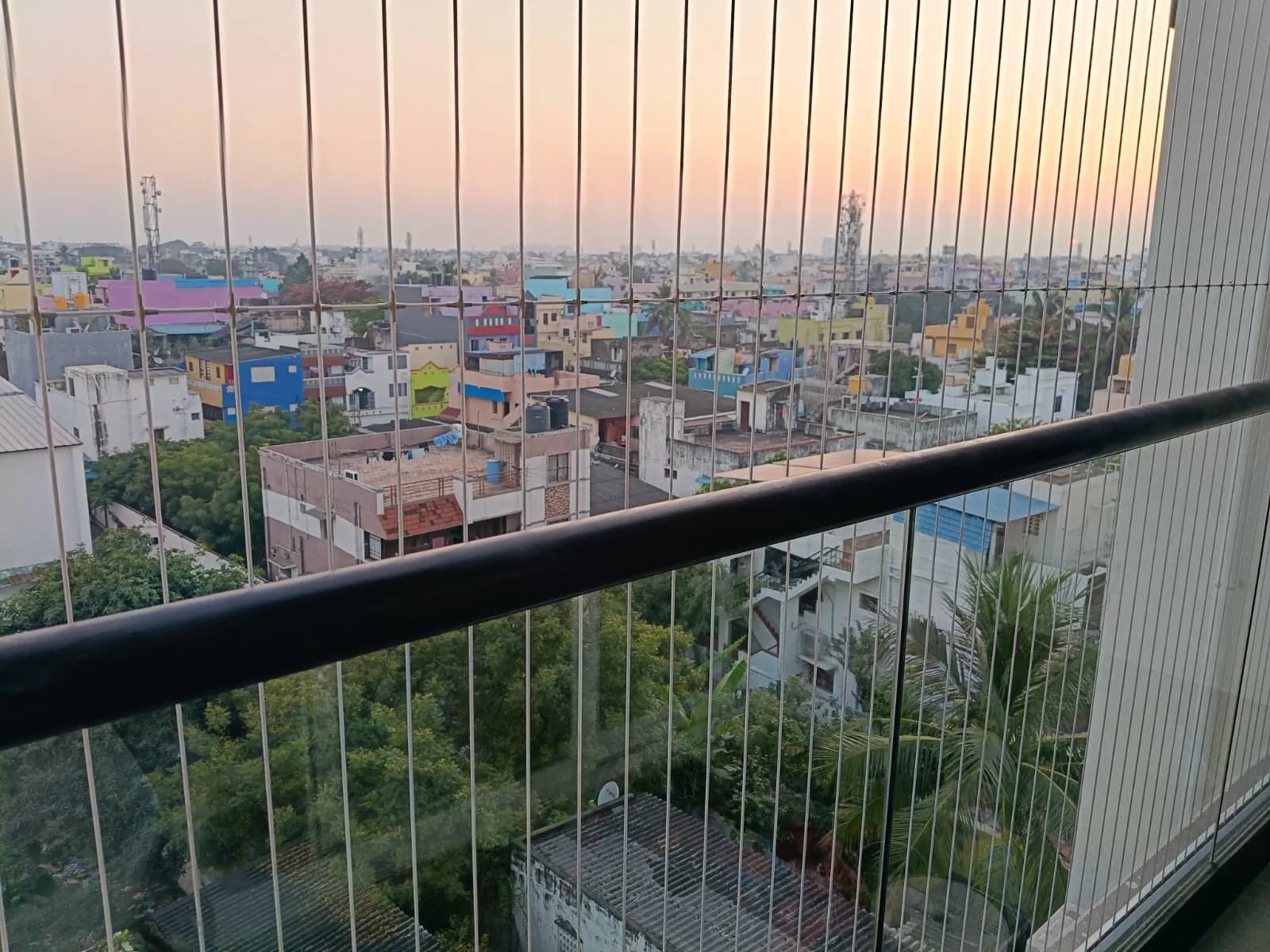
Main service page
Transparent Balcony Nets provide safety while maintaining clear views. Ideal for high-rise...
Explore →Ready to compare or book
Get a clearer inspection brief, material guidance, and installation advice before you commit to apartment balcony nets.
Share the opening size, photos, or site condition and we will help you judge the right next step quickly.