
Best fit
Where these nets are used
Home and terrace gardens, nurseries, polyhouses, farms, and orchards — protecting crops and plants and controlling sun.
Main service page
Start with the gallery, then use the sections below to compare fit, material, pricing factors, and booking questions before you decide.
Quick decision view
A fast read on which net suits your crop and threat, what shapes the estimate, and the specs worth checking before you buy.
Why this helps
These are the four signals most people scan first before they decide whether to stay on this page, compare another service, or move straight to a quote.
Best fit
Home and terrace gardens, nurseries, polyhouses, farms, and orchards — protecting crops and plants and controlling sun.
Main job
Saving crops from birds, insects, hail, and animals, and controlling sun and heat with the right shade.
Key specs
Shade percentage for shade nets, mesh size for bird nets, mesh count for insect nets, and GSM for durability.
Material
UV-stabilised HDPE mesh that resists sun and rain for years, rather than thin netting that turns brittle in a season.
Price factors
Net type, area, shade % or mesh, GSM, and whether you also need a net-house or shade-house structure.
Upkeep
Periodic checks and cleaning, early repair of any tear, re-tensioning, and net replacement at end of UV life.
Buyer guide
The cheapest net rarely protects a crop best. A sound choice starts with the threat and crop, then the right shade % or mesh, a durable UV-stabilised material, a suitable structure, and honest after-service.
Threat & crop
Birds, insects, hail, animals, or sun each need a different net. The threat and the crop drive the shade %, mesh, and strength.
Shade % / mesh
For shade nets, the shade percentage; for bird nets, the mesh size; for insect nets, the mesh count. A quote without these is hard to compare.
Material & GSM
Ask whether it's UV-stabilised HDPE and what the GSM is. Weight and UV treatment decide how many seasons the net lasts, not just the price.
Structure
Net houses, shade houses, and orchard nets need a sound framework. Ask whether the quote includes poles, cables, and fixings, not just netting.
Coverage & size
From a terrace bed to acres of orchard, the net and structure scale differently. Confirm the installer can handle your area cleanly.
Estimate scope
A useful quote separates netting, structure, and installation, and states shade %, mesh, and GSM so two quotes compare on equal terms.
Fast garden & farm net shortlist checklist
A quick scan of these points usually tells people whether this page fits well, whether a nearby page may suit better, or whether it is time to request a quote.
Service highlights
Highlight 1
The right net for each threat — birds, insects, hail, and animals — matched to your crop.
Highlight 2
Shade nets from light filtering to heavy shade, chosen by shade percentage for the crop and climate.
Highlight 3
Insect nets, net houses, and shade houses that let you grow cleaner crops with fewer sprays.
Highlight 4
HDPE mesh that resists sun and rain for years, so the net doesn't turn brittle after one season.
Garden and farm nets are not one product but a family of agricultural and horticultural nets, each solving a different threat to a crop. Shade nets control sunlight and heat, bird nets save fruit and seed, insect nets exclude pests for protected cultivation, anti-hail nets shield orchards, and fencing nets keep out larger animals. The right net is chosen by the threat, the crop, and the local climate.
Because the jobs differ, so do the specs that matter. Shade nets are rated by shade percentage, bird nets by mesh size, and insect nets by mesh count — and across all of them, the material grade and GSM decide how many seasons the net survives outdoors. Matching these correctly is the difference between a net that protects a crop for years and one that fails after a season.
For anything beyond a small garden, the structure matters too. Net houses, shade houses, and orchard nets need a sound framework of poles or GI pipe, cables, and fixings to hold the net taut and stable. A net is only as good as what supports it.
This page explains the main net types, how to choose shade percentage and insect mesh, the material and durability specs, the structures for protected cultivation, and what drives the estimate — covering both what a grower needs to understand and what they need to commission the right system.
Growers install nets to solve concrete, recurring losses — a crop eaten, damaged, or scorched. These are the situations the different nets are built for.
Why choose us
Benefit 1
Shade percentage, mesh, and material matched to your crop and climate
Benefit 2
UV-stabilised HDPE nets built for multi-year outdoor life
Benefit 3
Bird, insect, hail, and animal protection all under one roof
Benefit 4
Net houses and shade houses designed and installed, not just netting
Benefit 5
Guidance on shade % and insect mesh count before you buy
Benefit 6
Custom sizes for terrace gardens, nurseries, farms, and orchards
Benefit 7
Coverage from a single home garden to commercial-scale land
Benefit 8
After-service repair, re-tensioning, and net replacement
Features
Agricultural nets fit any space where a crop needs protecting from a threat or from the sun. The specification changes with the crop and the setting, but the aim — a healthy, protected crop — stays the same.
The right net depends on how and where you grow. A terrace kitchen garden, a nursery of ornamentals, a vegetable net house, and an orchard each call for different nets, specs, and structures, which is why the same category is planned differently for each.
The single most useful thing to understand is that each threat has its own net, and using the wrong one wastes money and leaves the crop exposed. Bird nets stop birds but not insects; insect nets exclude pests but aren't for hail; shade nets manage sun but won't stop a raiding animal.
A good plan starts by naming the real problem — or problems, since many growers need more than one net working together, such as an anti-hail net that also deters birds, or a net house that combines insect exclusion with partial shade.
Shade nets are rated by the percentage of sunlight they block, and picking the right one is the key decision. Too little shade and the crop still stresses in heat; too much and light-hungry plants slow down. As a rough guide, 35–50% suits many vegetables and hardening seedlings in moderate climates, 50–75% suits nurseries, ornamentals, and hotter regions, and 75–90% suits deep-shade plants like orchids and ferns, very hot or arid conditions, and shade for livestock or parking.
Colour and weight matter after that. Green nets are popular for their look and light quality, black nets tend to be the most UV-durable and give even shade, and reflective nets keep things cooler for certain crops. GSM — the net's weight — is the honest indicator of durability at any given shade percentage.
Bird nets save the part of the crop that birds take first — ripening fruit, sown seed, and young seedlings. A small mesh, commonly around 15–25 mm and tighter for very small birds, is stretched over trees, beds, ponds, or vineyards so birds can't reach the crop while light and rain still pass through.
For orchards and vineyards the net is carried on a structure over the rows; for gardens and ponds a lighter pole or wire framework does the job. UV stabilisation is what lets a bird net survive full sun season after season rather than degrading quickly.
Insect nets let growers raise cleaner crops with fewer sprays by physically excluding pests, and they're rated by mesh count — the number of threads per inch. Around 40 mesh keeps out many common insects with good airflow, while 50 mesh is needed to exclude the smallest pests such as whitefly and thrips, which also spread crop viruses.
The trade-off is ventilation: finer mesh blocks more insects but also cuts airflow, which can raise temperature and humidity inside a net house. Getting this balance right — pest exclusion versus cooling — is central to a net house that actually helps the crop, and it's exactly the judgement we help growers make.
In hail-prone regions a single storm can destroy a season's fruit, and an anti-hail net is the defence. It's a tough, UV-stabilised mesh installed on an overhead structure across orchard rows, sized to break the impact of hailstones before they bruise fruit or shred foliage.
Because it sits over the canopy, an anti-hail net often gives incidental shade and bird protection too, though its primary job is hail. The structure has to be engineered to carry the net and shed hail load, which makes this a planned installation rather than a simple cover.
Fencing nets keep larger raiders out of the field, and the right height and density deter deer, wild boar, and stray cattle reasonably well. This can save a crop that would otherwise be trampled or grazed overnight.
Monkeys are the honest exception — they're very hard to fully exclude with any light net, and serious monkey pressure usually needs extra height, overhangs, or additional measures alongside netting. Rather than over-promise, we'll advise a realistic solution matched to the animal you're actually dealing with.
Beyond protection, nets help crops grow better. Trellis and plant-support nets give climbing crops like cucumber, beans, gourds, and peas something to climb, which improves airflow, keeps fruit off the ground, cuts disease, and makes picking easier.
Windbreak nets reduce wind speed across exposed fields and nurseries to protect delicate plants and reduce moisture loss, while pond nets keep birds off fish and ornamental ponds. Each is sized and supported to the crop, row, or water body.
Material grade decides how long any agricultural net lasts. UV-stabilised HDPE is the standard for most farm and garden nets because it resists sun and rain, doesn't rot, and holds up for years; nylon is used for some lighter, finer bird nets. The one non-negotiable outdoors is UV stabilisation — without it, netting embrittles and frays within a season or two.
GSM (grams per square metre) is the practical durability indicator: at the same shade percentage or mesh, a higher-GSM net is tougher and longer-lasting than a thin, light one. Asking the GSM and the UV rating, not just the price, is how you avoid a false-economy net.
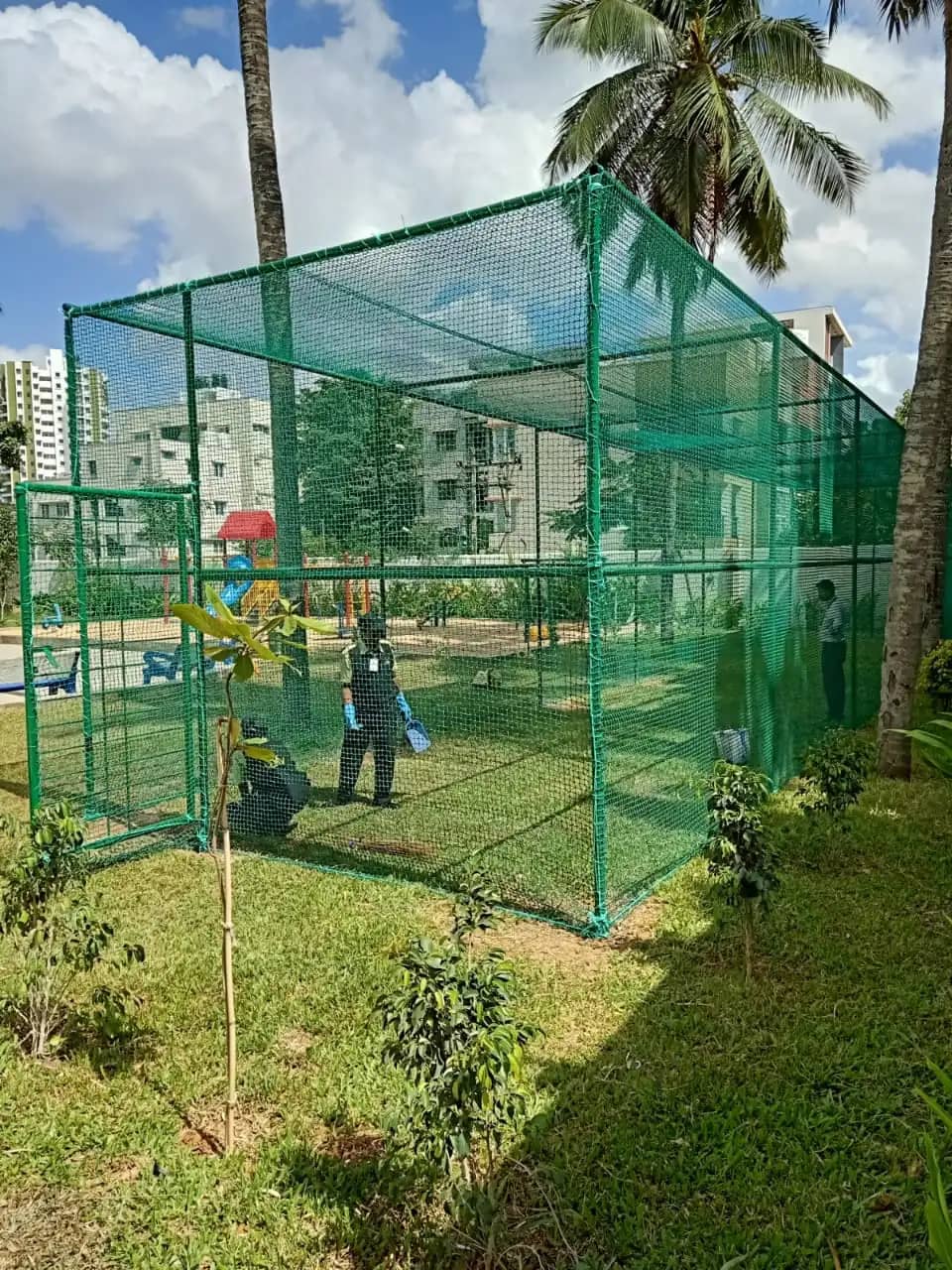
For protected cultivation the structure is as important as the net. Net houses and shade houses use a framework of GI pipe or poles, tensioned cables, and secure fixings to hold shade or insect net taut and stable across the growing area, with planned doors and access so the enclosure stays sealed against pests.
The same principle applies to orchard nets, bird nets over trees, and trellis systems — a sound, well-tensioned structure keeps the net working and lasting. We design and install the structure and netting together so the whole system performs as one.
Net pricing can't be judged on one figure, because a shade cloth over a terrace and a full net house over a field are entirely different jobs — as are a light bird net and a hail-rated orchard net. The netting and the structure are separate variables behind every quote.
A clear estimate separates the netting, any structure, and the installation, and states the shade %, mesh, and GSM. That breakdown lets a grower compare quotes fairly and see where a cheaper number is using a thinner net or leaving out the structure.
We supply and install for the full range — from a single home or terrace garden to nurseries, polyhouses, and commercial farms and orchards — because the nets and structures scale to the land. Each project is advised from the crop, the threat, and the area rather than a fixed catalogue.
When choosing, don't decide on price alone. Ask which net suits your threat, what shade % or mesh and GSM are quoted, whether the structure is included, and what realistic protection you'll get against tougher animals. Sharing your crop, area, and location gets you a firm, useful proposal.
Safety net installation process
A professional installation starts with the crop, the threat, and the area, because the right net and structure depend on what you're growing and protecting against — timelines vary, and larger net houses run as phased projects.
Step 1
The team reviews the crop, the threat (birds, insects, hail, animals, or sun), the area and terrain, and whether a net-house or shade-house structure is needed, so the system fits the real site.
Step 2
The net type, shade percentage or mesh, GSM, and material are chosen for the crop and climate, and the structure is designed for the area and load.
Step 3
The net is cut and bordered to size, and the poles or GI pipe, cables, tensioners, and fixings are prepared to the design.
Step 4
Posts and framework are set into the ground or fixed in place and aligned to carry the net squarely and stably.
Step 5
The net is spread, secured, and tensioned evenly across the structure so it sits taut, with sealed access where an insect enclosure needs it.
Step 6
A final check confirms coverage, tension, and fixing, and the grower is guided on upkeep, repair, and getting the best from the net for the crop.
Agricultural nets reward light, regular attention. A quality UV-stabilised net shouldn't need much upkeep, but periodic checks of the net, cables, and fixings keep everything taut and effective — and catch small tears before they open into gaps that let in birds or pests.
The two things that shorten a net's life are unrepaired damage and slack tension, both of which reduce protection and accelerate wear. Clear debris and fallen leaves off the net, re-tension after storms, and watch for UV ageing so you can plan replacement before the net fails at harvest time.
FAQs
Shade nets are rated by how much sunlight they block. As a rough guide, 35–50% suits many vegetables, field crops, and hardening seedlings in moderate climates; 50–75% suits nurseries, ornamentals, and shade-tolerant crops or hotter regions; and 75–90% suits shade-loving plants like orchids, anthuriums, and ferns, or very hot, arid conditions and livestock and parking shade. The best figure depends on the specific crop and your local climate, so we advise on it rather than defaulting to one percentage.
Shade percentage is the main spec; colour is secondary. Green nets are popular in nurseries and gardens for their look and the light they let through, while black nets are often the most UV-durable and give even shade. White or reflective nets keep things cooler and suit certain crops. We'll suggest a colour alongside the right shade percentage for what you're growing.
Bird nets use a small mesh — commonly around 15–25 mm — tightened further where you need to stop very small birds like sparrows. The net is stretched over fruit trees, vegetable beds, ponds, or vineyards so birds can't reach the crop while light and rain still pass through. We match the mesh to the birds you're dealing with.
Insect nets are rated by mesh count — the number of threads per inch. Around 40 mesh excludes many common insects with good airflow, while 50 mesh is needed to keep out the smallest pests such as whitefly and thrips, which also carry crop viruses. The trade-off is that finer mesh reduces airflow and can raise temperature inside, so the choice balances pest exclusion against ventilation — we help you weigh that for your crop.
They solve different problems. A shade net manages sunlight and heat; an anti-hail net is a tougher, UV-stabilised mesh installed on an overhead structure to break the impact of hailstones before they damage fruit and foliage. Anti-hail nets are common over orchards and also give some incidental shade and bird protection, but a shade net alone won't stop hail.
For most agricultural nets we use UV-stabilised HDPE (polyethylene): it resists sun and rain, doesn't rot, and lasts for years outdoors at a sensible cost. Nylon is sometimes used for bird nets where a lighter, finer net is wanted. The key for any outdoor net is proper UV stabilisation — without it, cheap netting goes brittle and frays within a season or two.
A quality UV-stabilised net lasts several years of continuous outdoor use; the exact life depends on the material grade, the UV stabilisation, the climate, and how much handling it takes. Weight (GSM) and UV treatment are the honest indicators of a durable net — a very cheap, light net is usually a false economy.
GSM is grams per square metre — the weight of the netting, and a good proxy for how substantial and durable it is. A higher-GSM shade or crop net is generally tougher and longer-lasting than a thin, light one at the same shade percentage. It's worth asking the GSM, not just the shade %, when comparing quotes.
Yes. We design and install the structures for protected cultivation — GI-pipe or pole frameworks covered in shade or insect net — from small nursery shade houses to larger net houses for vegetables and ornamentals. The netting, the structure, and the fixing are planned together as one system.
Fencing nets help against larger raiders, but the honest answer is it depends on the animal. High-density fencing net at the right height deters deer, boar, and stray cattle reasonably well. Monkeys are the hardest to exclude with any light net — serious monkey pressure usually needs extra height, overhangs, or additional measures. We'll advise a realistic solution for your specific problem rather than over-promising.
Yes. Bird, shade, and insect nets all work at small scale for terrace gardens, balconies, and kitchen plots — often on a light pole or wire framework sized to the space, so you can grow without birds or pests taking the crop.
Yes. Trellis and plant-support nets give climbing crops like cucumber, beans, gourds, and peas something to grow up, which improves airflow, keeps fruit off the ground, and makes picking easier. We size the net and support to the crop and row length.
Yes. By cutting direct sun, shade net lowers leaf and soil temperature, reduces heat stress on plants, and slows evaporation — which can reduce watering needs and protect crops during peak summer. The right shade percentage matters here, since too much shade can slow growth in light-hungry crops.
There's no single rate, because cost depends on the net type, the area, the shade percentage or mesh, the GSM, and whether you also need a structure. A shade cloth over a small terrace and a full net house over a field are very different jobs. A clear quote separates the netting, any structure, and the installation so you can compare fairly.
Yes. We provide the complete system — poles or GI-pipe framework, cables or wires, tensioning, and fixings — together with the netting, because a net over crops needs a sound support to stay taut and last. If you already have a structure, we can assess it and supply netting to fit.
A small garden or terrace net can go up quickly; a shade house or net house over a larger area is a bigger job involving the structure first. We give a realistic timeline after seeing the site and the area to be covered.
Yes. We patch tears, re-tension slack netting, and replace nets that have reached the end of their UV life — often reusing the existing structure where it's still sound.
Related services
If this page is close but not exact, these are the next service pages worth comparing before you request a quote.
Main service page
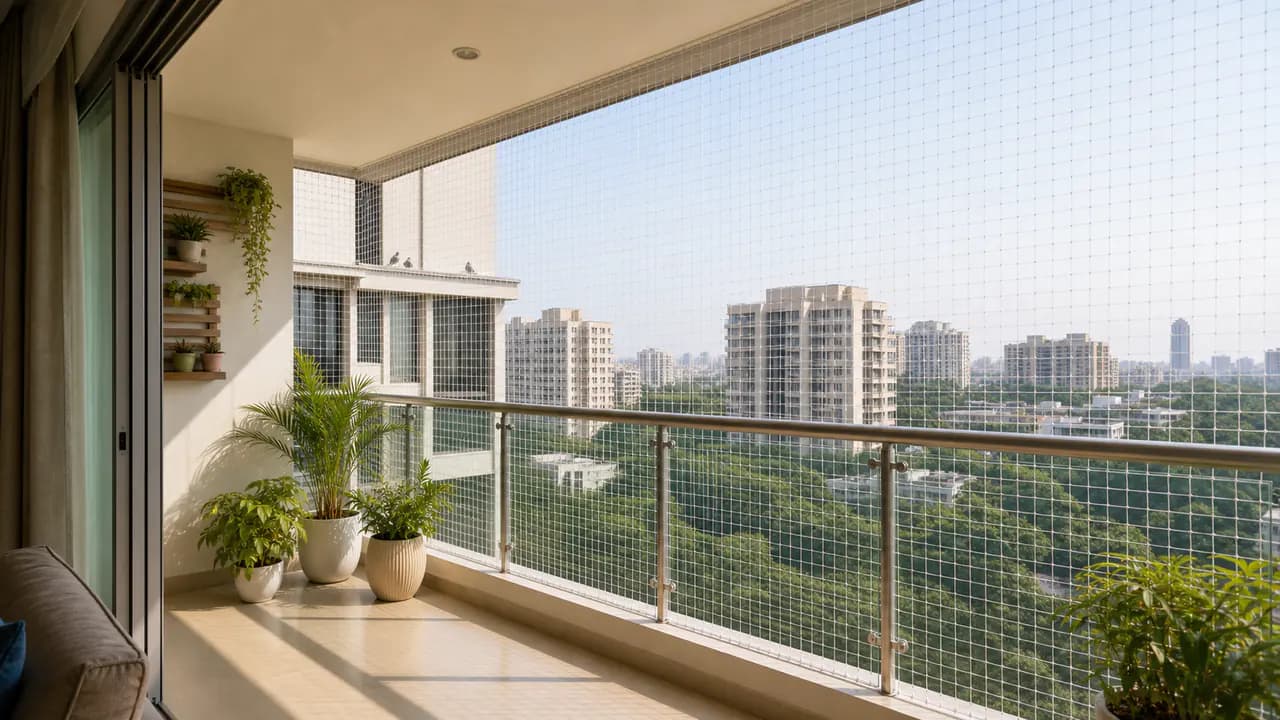
Balcony Pigeon Nets help keep apartment balconies, ledges, AC corners, ducts, and utility ...
Explore →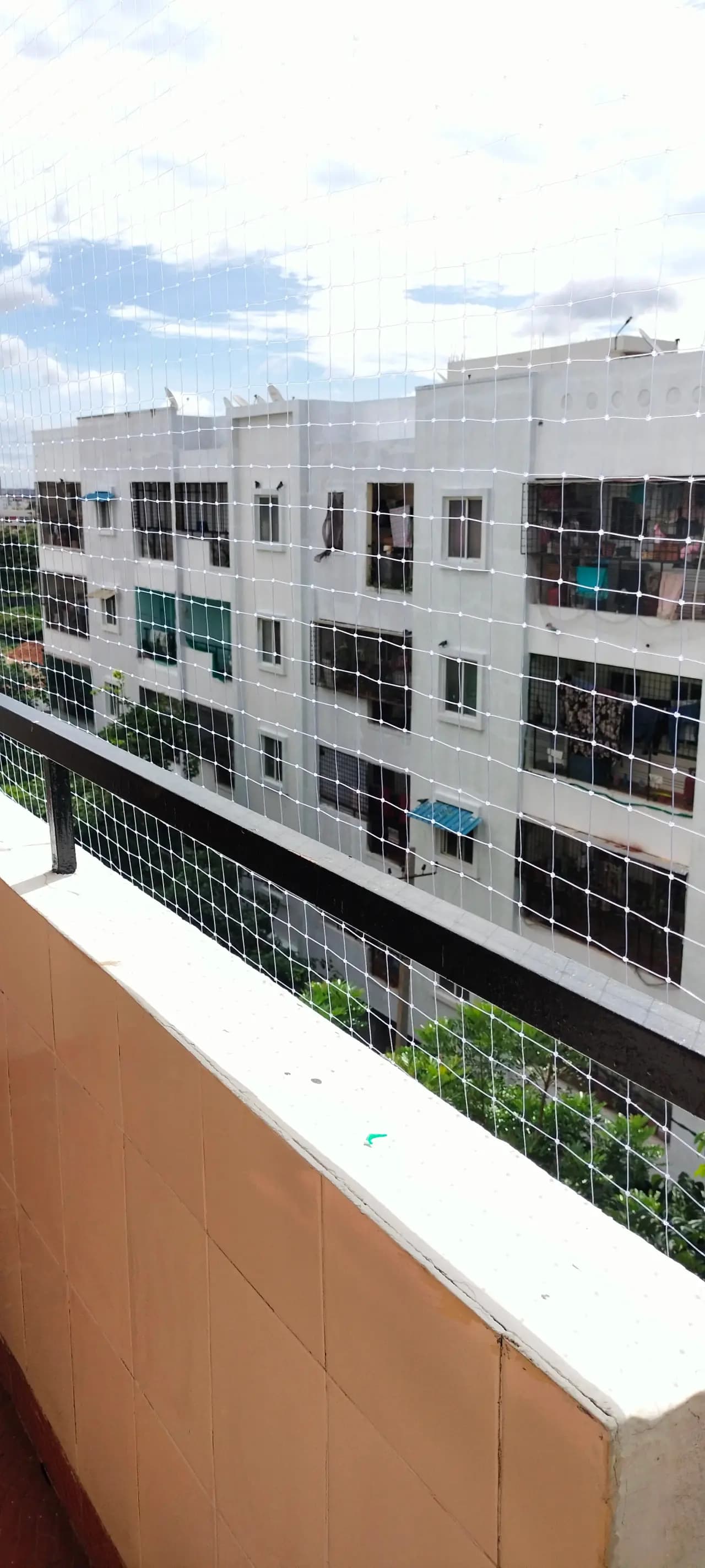
Main service page
Invisible Bird Nets are designed to protect balconies and windows without affecting your v...
Explore →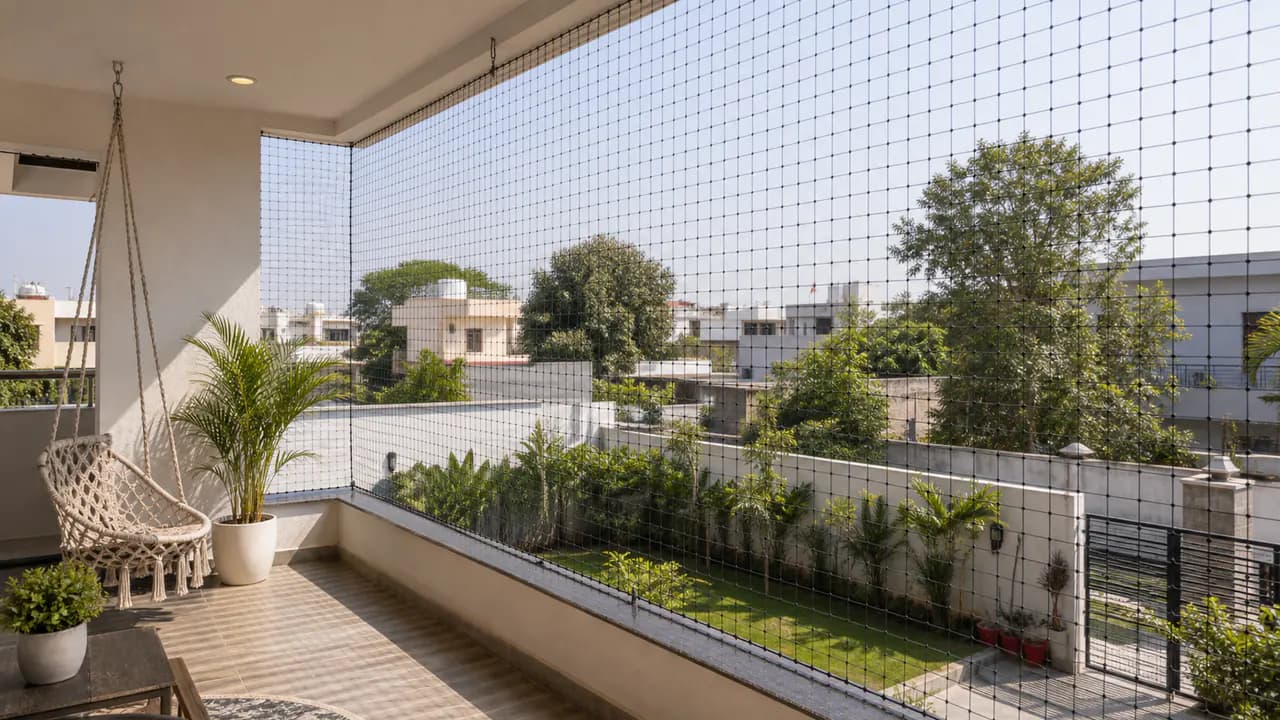
Main service page
HDPE Pigeon Nets are UV-stabilized high-density polyethylene mesh systems used for pigeon-...
Explore →
Main service page
Anti Bird Nets are custom-fitted mesh barriers for balconies, windows, ducts, shafts, terr...
Explore →
Main service page
Anti-Bird Nets for Windows prevent birds from entering your home while allowing fresh air ...
Explore →
Main service page
Industrial Bird Nets are heavy-duty nets designed for factories, warehouses, production un...
Explore →Ready to compare or book
Get a clearer inspection brief, material guidance, and installation advice before you commit to garden and farm nets.
Share the opening size, photos, or site condition and we will help you judge the right next step quickly.