
Best fit
Where this page usually fits best
High-rise buildings under construction - floor edges, open cut-outs, shafts and full elevations
Main service page
Start with the gallery, then use the sections below to compare fit, material, pricing factors, and booking questions before you decide.
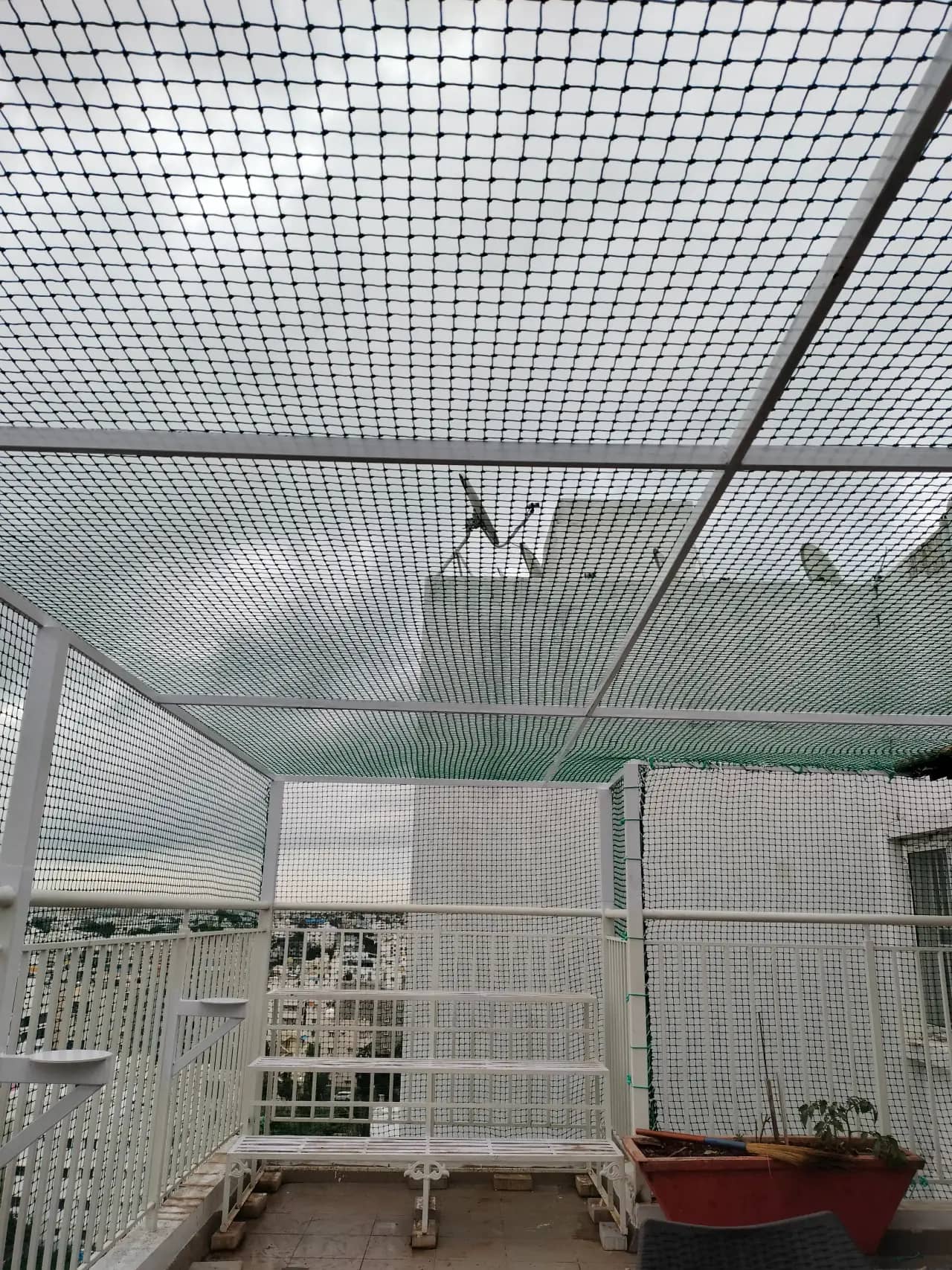
Quick decision view
Use this quick snapshot to judge fit, estimate logic and long-term practicality before reading the full page.
Why this helps
These are the four signals most people scan first before they decide whether to stay on this page, compare another service, or move straight to a quote.
Best fit
High-rise buildings under construction - floor edges, open cut-outs, shafts and full elevations
Main need
Stopping falls from open floor edges and keeping tools, rubble and dust from dropping off the building
Estimate factors
Elevation area, building height and access, net type and layer count, and whether supply-only or installed - so the per-sq-ft rate shifts with the actual building.
Upkeep
Building safety nets should be reviewed after harsh weather and as the floors rise. Tall-building installs need scheduled checks for anchor load, abrasion points and debris build-up.
Buyer guide
This section helps you decide whether this is the right page to start from, what to compare next, and which signals separate a useful supplier from generic listings.
Strong fit
A building envelope with work at height - high-rise towers, floor edges, shafts and terraces
Compare first
If you need the whole site covered - scaffolding wraps and ground-level barrier fencing - the construction site safety nets page fits better; if it is a small residential opening, a balcony or window page will suit more than heavy building netting.
Ask first
Is this fall-arrest edge protection, vertical building debris netting, or both - and does the grade suit the building height?
Good proof
Material grade, layer count, certification and elevation-specific sizing instead of a single blanket rate
Fast shortlist checklist
A quick scan of these points usually tells people whether this page fits well, whether a nearby page may suit better, or whether it is time to request a quote.
Service highlights
Highlight 1
Edge and floor nets that catch falls on tall buildings.
Highlight 2
Vertical wrap that keeps rubble and dust on the structure.
Highlight 3
Trained crews for high-rise elevations across South India.
Building safety nets protect a structure under construction and everyone around it. Fall-arrest edge nets run along open floor edges, cut-outs and lift shafts to catch a falling worker or tool, while vertical building debris netting wraps the elevation so rubble, dust and spray stay on the building instead of dropping onto the street. On a high-rise, the two are usually installed together and extended floor by floor as the structure rises.
The right specification depends on the building height, the drop, the load the net must catch, and exposure to sun and monsoon rather than the product name alone. Standard nets are commonly supplied around Rs 8 to Rs 15 per sq ft, with heavy-duty, multi-layer or branded Garware nets higher, and height, access and installation added on top.
This page explains where building safety nets fit, how to read the material and grade choices, what moves the estimate, and how to shortlist a supplier or builders' safety netting contractor across South India.
Most projects reach this page because of a real risk on a tall building - a worker who could fall from an open edge, tools and rubble dropping onto the public, dust drifting off the elevation, or an inspection that needs proper fall protection in place. These are the practical problems building safety nets are built to solve.
Why choose us
Benefit 1
Over a decade on high-rise buildings and elevations across South India
Benefit 2
Genuine HDPE, nylon and PP mesh, including Garware-grade nets
Benefit 3
Fall-arrest edge nets and full building debris netting from one team
Benefit 4
Certified installers rated for high-rise and floor-edge work
Benefit 5
Custom sizes for full elevations, shafts and open edges
Benefit 6
Bulk supply and on-site fitting for builders and developers
Features
Building safety nets are chosen once a project has identified the work at height, the fall risk at the open edges, and the debris that has to be kept on the structure. The best fit depends on the building envelope and how the floors are worked, not just the product name - edge protection and a debris wrap solve different parts of the same job.
Across the South Indian building boom - the high-rise towers and IT parks of Bangalore and Hyderabad, apartment and commercial buildings in Chennai, Visakhapatnam and Vijayawada, and the many mid-rise projects in between - the strongest results come from wrapping each building properly and extending the net as it grows.
Buyers comparing suppliers want to know whether the mesh will survive the sun and monsoon, whether the grade suits the building height and load, and whether it carries the right certification. The material and build matter more than the label: nylon and HDPE for strength, polypropylene for lighter debris wraps, single layer for basic containment and double or triple layer for genuine fall arrest at height.
Colour and mesh size signal the use too. Green is the everyday building net in India; black suits vertical debris wraps that read cleaner on a facade; a tighter mesh catches fine debris while an open mesh sheds wind load on a tall elevation. Fire-retardant grades handle hot-work floors, and UV treatment protects against months of direct sun.
There is no single fixed rate for every building because the cost of a safety net for a high-rise depends on the net type, layer count, mesh grade, building height, access and whether you want supply-only or full installation. As a working guide, standard nets sit around Rs 8 to Rs 15 per sq ft to supply, budget nets from about Rs 6, and heavy-duty, multi-layer or branded Garware nets Rs 40 per sq ft and above.
A clear quote should show that logic - the elevation area, the floor count and phasing, the material grade, and exactly what the installation scope covers - so builders and developers can compare like with like instead of chasing the lowest headline number.
The right choice comes from matching the net to the building envelope, the drop height and the load, rather than picking the first similar-looking listing. Edge protection and a debris wrap are not interchangeable, and a mid-rise and a forty-floor tower need different grades, so define the building and its risks first.
Compare building safety net options by what changes in material, layer count, colour, mesh size and certification, and confirm the supplier can work at your building height and phase the net cleanly - from a single elevation to a full envelope or a multi-tower development.
Safety net installation process
Professional installation starts with understanding the building envelope, the open edges and the right fixing method for the structure at each floor.
Step 1
The team studies the building envelope, the open floor edges, shafts and access, and the fall or debris risk that has to be controlled.
Step 2
Measurements are taken for span, floor height, corners and anchor or clamp points so the net fits the actual elevation instead of a generic size.
Step 3
The correct mesh, layer count, colour and border are chosen and cut for the building - fall-arrest edge nets or a vertical debris wrap - based on height and load.
Step 4
Hooks, clamps or approved hardware are fixed in position and the net is aligned to the floor edge or facade without leaving weak corners or loose spans.
Step 5
The installer tensions the net, secures the edges and border rope, trims excess, and confirms it sits cleanly and holds debris without gaps.
Step 6
A final inspection confirms fit, coverage and anchoring, and the site is guided on checks, extending the net as floors rise, and service support.
Building safety nets stay dependable when the mesh grade suits the building, the anchors and border ropes are sound, and tension is checked as the floors rise. UV-treated HDPE and nylon nets resist the sun and monsoon well, and most failures come from a worn anchor or a missed edge rather than the mesh itself.
Routine visual checks after harsh weather, prompt fixing of any loose span or accessory, and clearing built-up debris are usually enough to protect the net across a long building programme.
FAQs
Standard building safety nets usually cost about Rs 8 to Rs 15 per sq ft to supply, with budget nets from around Rs 6 and heavy-duty, multi-layer or branded Garware nets running Rs 40 per sq ft and above. On a high-rise building the working height, access and layer count matter as much as the area, so the safety net price is best confirmed against your elevation drawings and floor count or after a site check.
Yes. A safety net for a high-rise building is fitted as fall-arrest edge nets along the open floor edges and shafts, with vertical building debris netting wrapping the elevation to protect people on the road. The work is done by installers rated for height, with the mesh grade and anchoring matched to the drop and the load the net has to catch.
Building debris netting is a vertical HDPE mesh that wraps the elevation of a building under construction, holding tools, rubble, dust and paint spray on the structure instead of letting them fall onto pedestrians and vehicles below. We supply it in green or black, in UV-treated and fire-retardant grades, as rolls for builders or as a fitted building site safety netting service.
Yes. Building nets for safety are a passive fall-protection and fall-arrest system, and using them supports the fall-protection duties under the BOCW Act for work at height. For certified performance we supply knotless, EN 1263-tested nets such as Garware's DSN range, and set the grade and layer count to the building height and edge condition.
Installation starts with an elevation and edge survey, then the right mesh is cut, anchors and border ropes are fixed floor by floor, and each section is tensioned and checked before handover. We install and supply building safety nets across Bangalore, Hyderabad, Chennai, Visakhapatnam and Vijayawada, and reach nearby South Indian hubs like Coimbatore, Kochi, Mysuru, Mangaluru, Warangal, Guntur and Tirupati.
Yes. As builders' safety netting suppliers and installers we handle single elevations and full building envelopes, offer custom sizes and layer options, and provide bulk supply for developers who prefer their own crew. Share the building height, floor count and net type and you get a clear quote with sizes, material grade and installation scope spelled out.
Related services
If this page is close but not exact, these are the next service pages worth comparing before you request a quote.
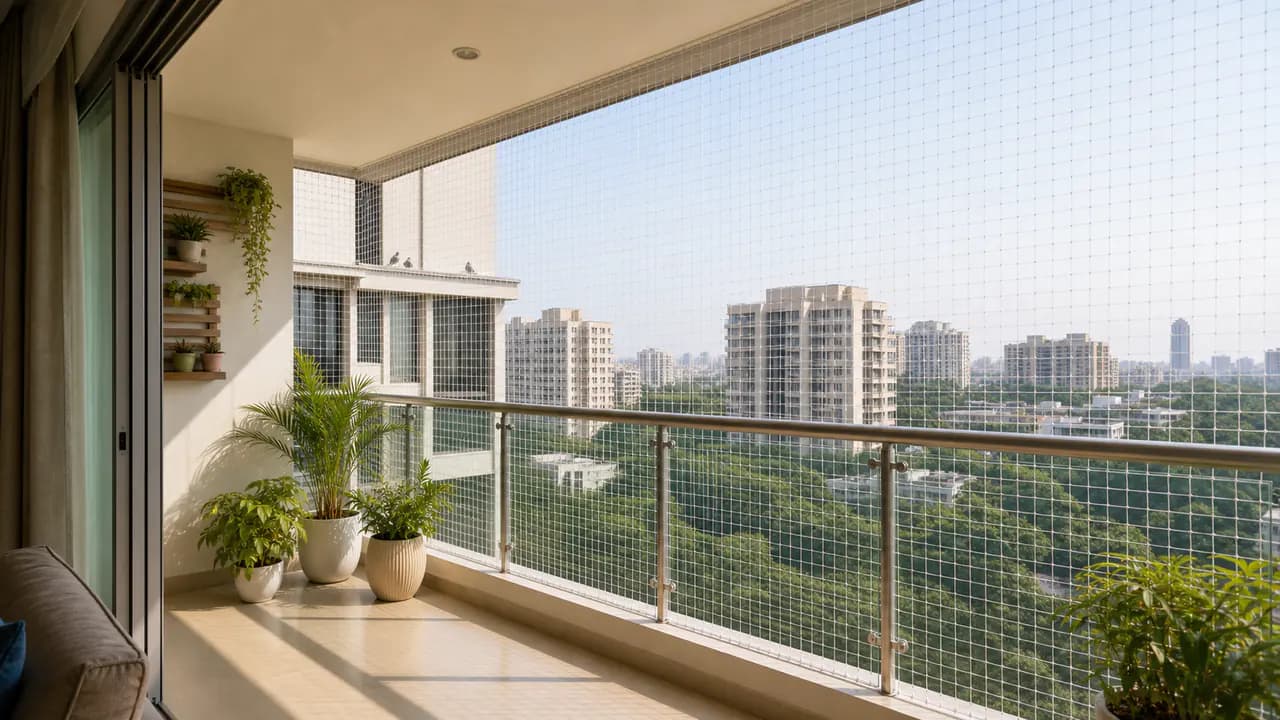
Main service page
Balcony Pigeon Nets help keep apartment balconies, ledges, AC corners, ducts, and utility ...
Explore →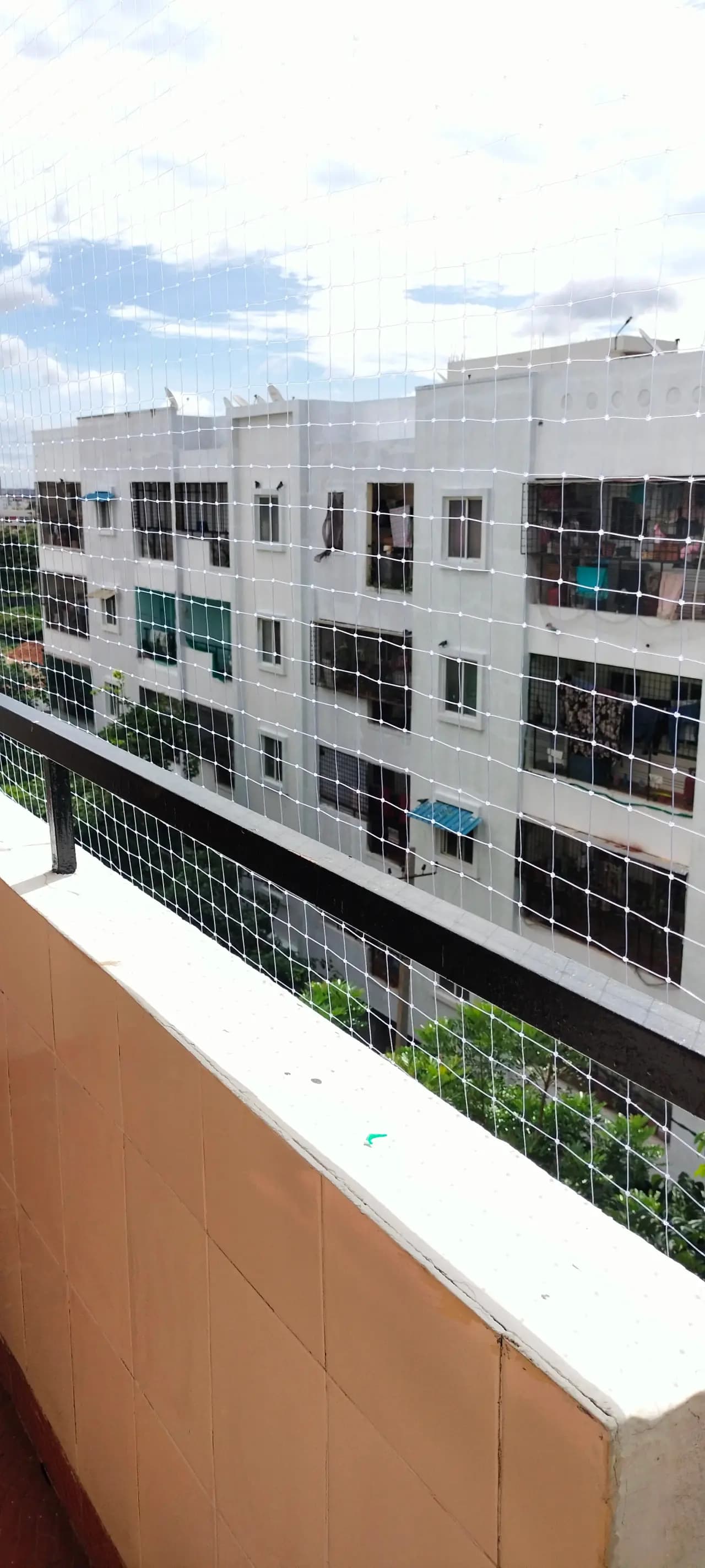
Main service page
Invisible Bird Nets are designed to protect balconies and windows without affecting your v...
Explore →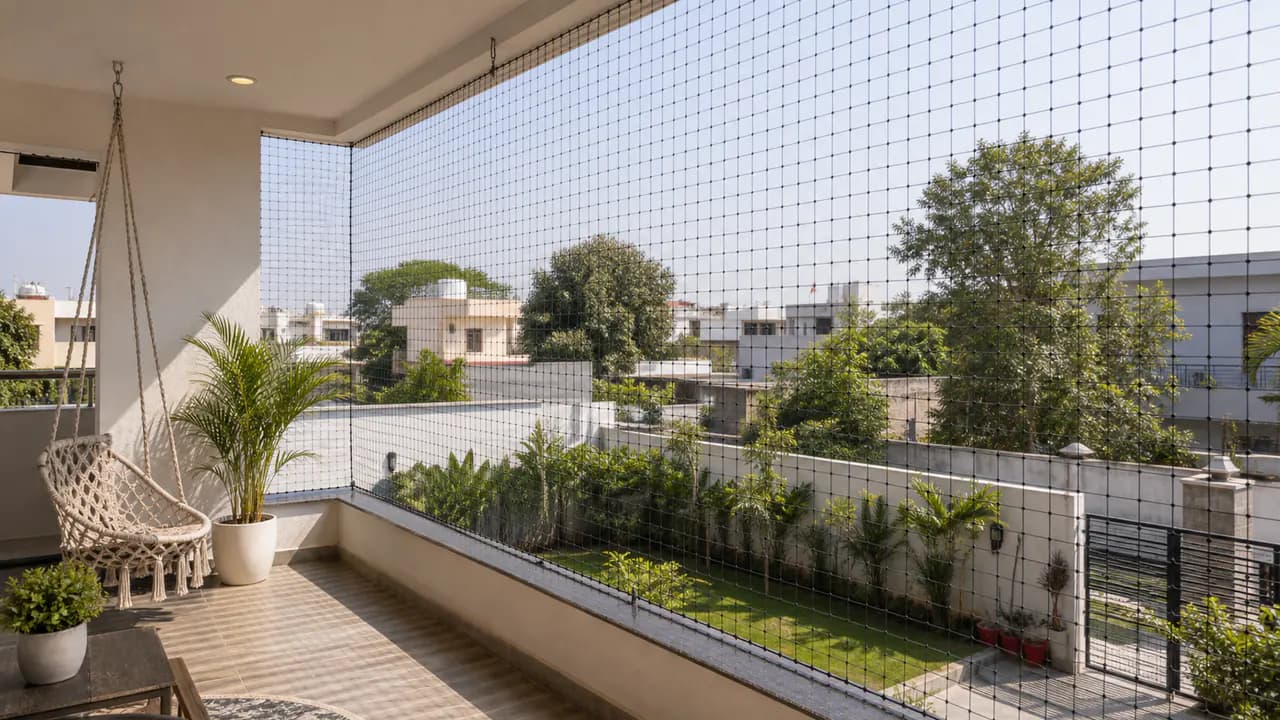
Main service page
HDPE Pigeon Nets are UV-stabilized high-density polyethylene mesh systems used for pigeon-...
Explore →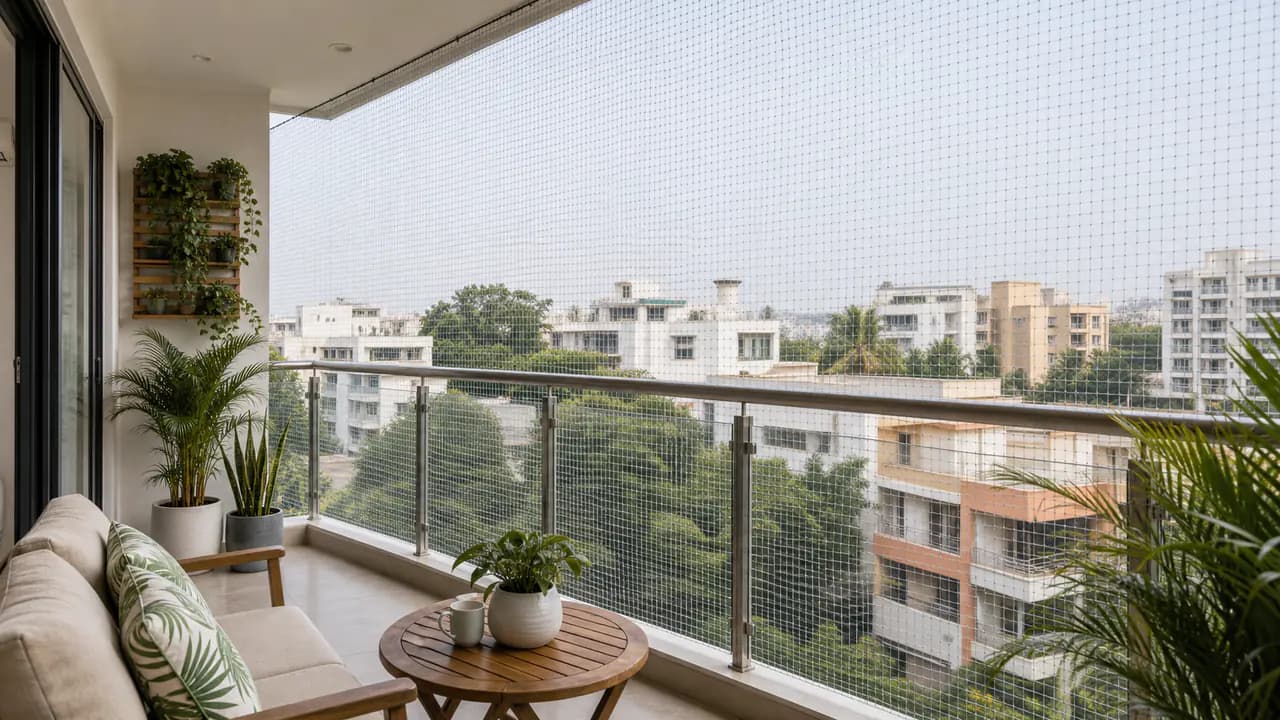
Main service page
Anti Bird Nets are custom-fitted mesh barriers for balconies, windows, ducts, shafts, terr...
Explore →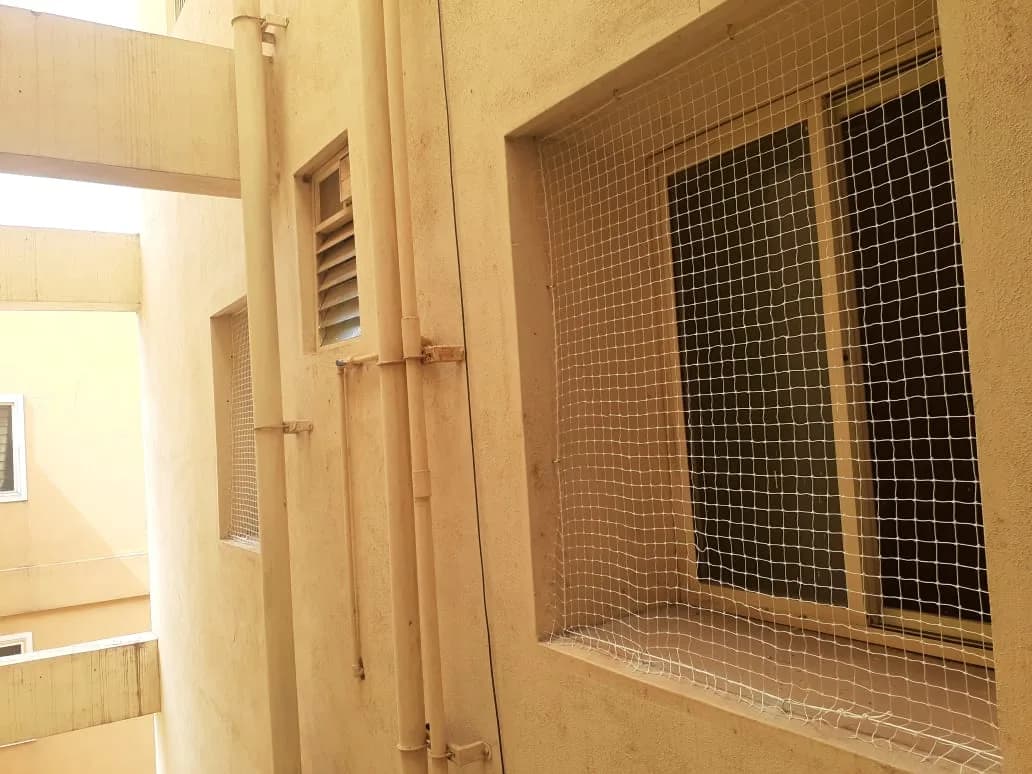
Main service page
Anti-Bird Nets for Windows prevent birds from entering your home while allowing fresh air ...
Explore →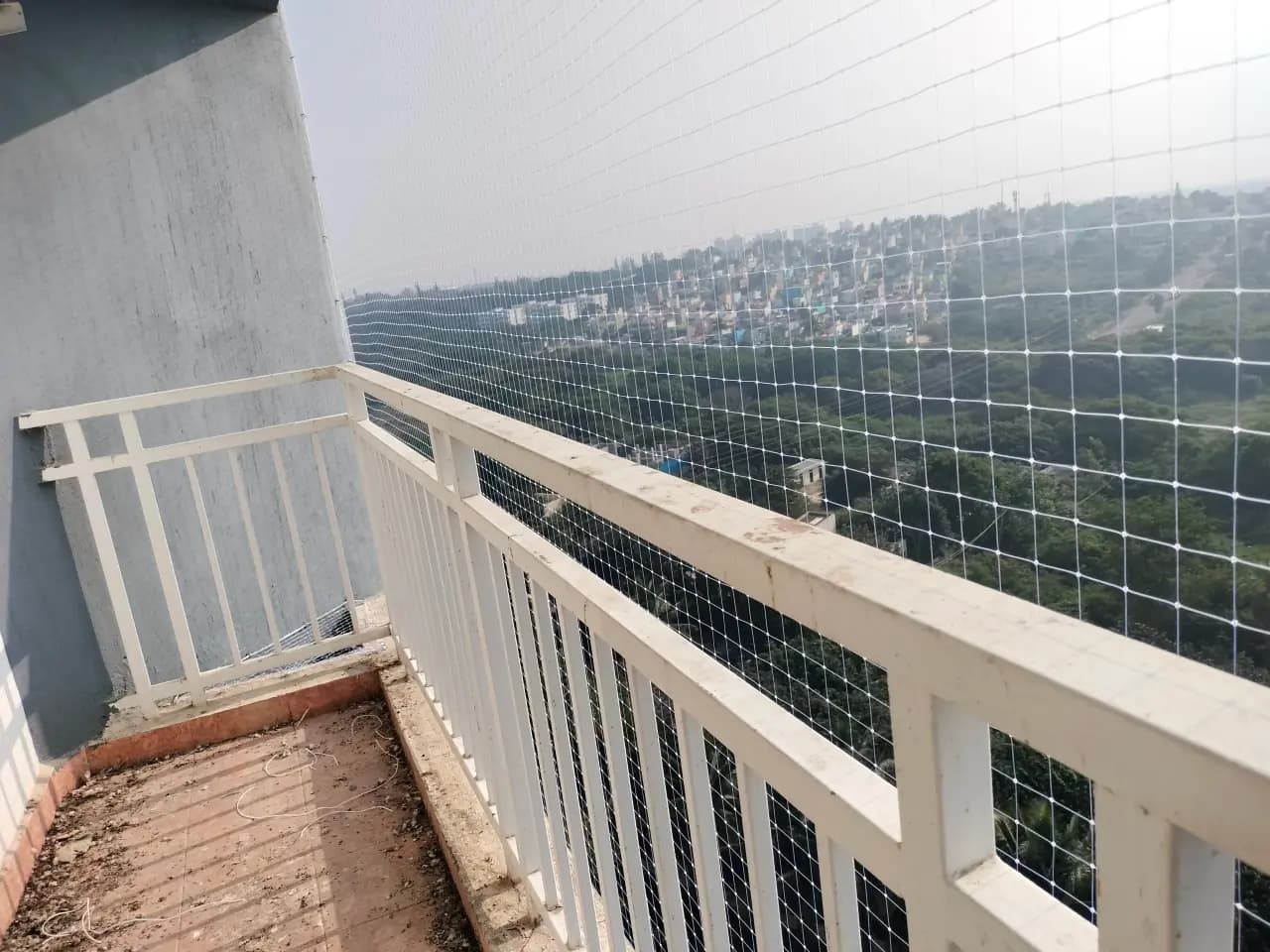
Main service page
Industrial Bird Nets are heavy-duty nets designed for factories, warehouses, production un...
Explore →Ready to compare or book
Get a clearer inspection brief, material guidance, and installation advice before you commit to building safety nets.
Share the opening size, photos, or site condition and we will help you judge the right next step quickly.