
Best fit
Where bird spikes work best
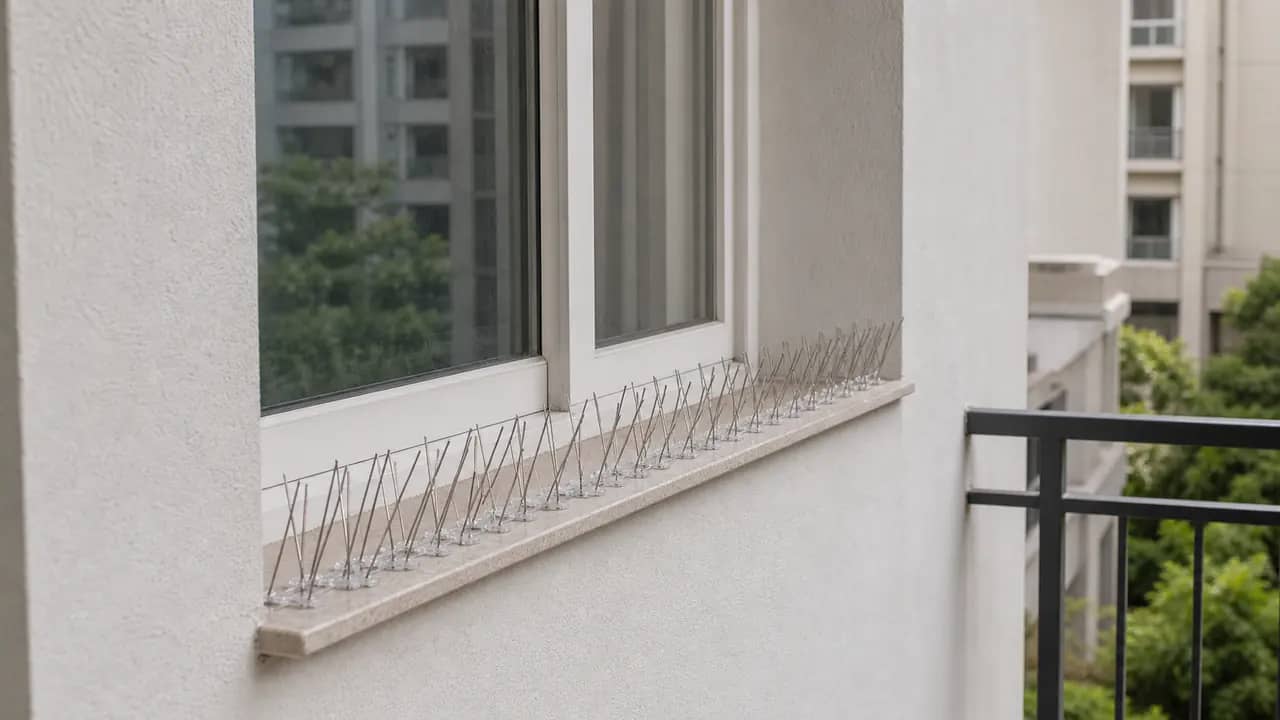
Narrow perch lines — ledges, AC outdoor-unit tops, parapets, window sills, pipes, beams, signboards, and small building projections.
Main service page
Start with the gallery, then use the sections below to compare fit, material, pricing factors, and booking questions before you decide.
Quick decision view
A fast read on whether spikes are the right solution, what to measure, and when a pigeon net is the better call.
Why this helps
These are the four signals most people scan first before they decide whether to stay on this page, compare another service, or move straight to a quote.
Best fit
Narrow perch lines — ledges, AC outdoor-unit tops, parapets, window sills, pipes, beams, signboards, and small building projections.
Not ideal for
Full balcony openings, ducts, shafts, and windows where birds enter and move inside usually need pigeon nets, not spikes.
The key spec
Spikes must cover the full depth of the ledge — a flat strip left behind the row just gives birds somewhere else to land.
Material
Stainless-steel spikes for tough exposure (marine-grade for coast) or polycarbonate for a lighter, lower-visibility finish.
Price factors
Running length, ledge depth and rows, material, fixing method, access height, cleaning, and nearby perch points.
Responsible fitting
Active nests, trapped birds, loose debris, weak surfaces, AC airflow, and safe access are checked before any work starts.
Buyer guide
Bird spikes are a high-intent service — most customers already know the problem: birds keep sitting on one line, leaving droppings, noise, and cleaning behind. A good page helps confirm spikes fit that problem and what a proper quote includes.
Use case
Choose spikes when birds sit on a narrow surface. If they're entering a balcony, duct, shaft, or window, a netting service is more relevant.
Coverage width
The single biggest cause of spike failure is coverage that's too narrow, so birds land on the uncovered strip behind. Match the spike width to the full ledge depth.
Material
Stainless (marine-grade for coastal air) suits exposed, demanding surfaces; polycarbonate suits residential ledges and spots where a discreet look matters.
Fixing
Screws or anchors for firm, long-term holds on concrete; outdoor adhesive as the no-drill option for tiles, membranes, signage, or rentals.
Gap control
Birds shift a few inches to an open corner if returns and side ledges aren't covered. A good installer checks brackets, pipe bends, and nearby flat spots.
Proof
A generic spike photo proves little. Ask for ledge, AC, parapet, pipe, signboard, or commercial-facade work that looks close to your site.
Fast shortlist checklist
A quick scan of these points usually tells people whether this page fits well, whether a nearby page may suit better, or whether it is time to request a quote.
Continue to the dedicated Bangalore service guide for local details, or browse every supported city and area.
Main city service page
Open the Bangalore page for city-specific service guidance and local-area coverage.
Open Bangalore service →
Browse city pages and local area coverage
Not in Bangalore? Find the matching service coverage for another city or nearby area.
Browse all locations →
Service highlights
Highlight 1
Planned for AC tops, window sills, parapets, pipes, beams, and sign edges where birds land on a surface.
Highlight 2
Spike width matched to the ledge depth so birds can't simply land on an uncovered strip behind the row.
Highlight 3
Adhesive, screws, clamps, or ties chosen for concrete, metal, tile, pipe, or AC surfaces — drilled or no-drill.
Highlight 4
Stainless-steel or UV-stabilised polycarbonate spikes, with marine-grade pins where the site faces salt air.
Bird spikes — also called pigeon spikes, anti-bird spikes, or bird deterrent spikes — are fitted to narrow landing surfaces where pigeons and common urban birds sit again and again. The aim isn't to close off a whole area but to make that one landing line unusable for perching, so birds relocate.
The service suits AC outdoor-unit tops, window sills, balcony ledges, parapet walls, pipes, beams, signboards, and commercial facade strips. When birds are entering a full balcony, duct, shaft, or window opening rather than just perching on an edge, pigeon nets solve the problem better than spikes.
The result comes down to three things done well: covering the full depth of the ledge with the right spike width, fixing the strip soundly for that surface, and leaving no flat gap at corners or returns where birds can simply shift across. Get the width wrong and birds land behind the spikes; get the fixing wrong and the strip lifts.
A proper install starts at the exact landing point — where birds sit, how deep and long the ledge is, what it's made of, how exposed it is, and whether nearby flat areas will let birds move a few inches away — and ends with clear guidance for keeping it working after painting, AC work, or facade cleaning.
Most customers choose spikes because the problem is specific and visible: birds keep sitting on the same ledge, AC unit, sill, pipe, beam, signboard, or parapet. Treating that exact line cuts the repeat landing and the cleaning that follows.
Why choose us
Benefit 1
Clear, honest guidance on bird spikes versus pigeon nets
Benefit 2
Spike width matched to ledge depth so nothing is left uncovered
Benefit 3
Surface-specific fixing for ledges, AC units, pipes, beams, and parapets
Benefit 4
Stainless-steel and UV-stabilised polycarbonate spike options
Benefit 5
Marine-grade stainless pins for coastal cities like Vizag and Chennai
Benefit 6
Photo-based quote support before confirming a visit
Benefit 7
Responsible checks for active nests, trapped birds, and safe access first
Benefit 8
Service across selected cities and Kerala service areas
Features
The most common reason bird spikes fail isn't the spikes — it's coverage that's too narrow. Birds land on the flat strip left behind a single front row, and the ledge is right back to square one. The fix is simple in principle: cover the full depth of the surface, front to back.
That means measuring the ledge depth, not just its length. A narrow sill or pipe takes a single-row strip; a deep parapet or a wide beam needs a wider strip or two and three rows placed so there's no landing gap between or behind them. Corners, returns, and the flat tops of brackets get covered too, since birds will happily shift a few inches to any spot the strip missed.
Setting expectations honestly is part of a good install. Spikes are highly effective at stopping pigeons and larger birds from perching on a line, and they're low-profile, durable, and discreet on functional surfaces. They're the right tool for an edge that birds sit on.
What they don't do: they won't stop birds flying into a space — only landing on the treated line — so an open balcony or duct still needs netting. Very small birds like sparrows can slip between the pins and sometimes nest among them, and any spike strip loses effect if leaves and debris pile up and give birds a base to build on. Knowing these limits up front is how you avoid a solution that disappoints.
Spikes suit any narrow, repeat landing surface, from a home AC unit to a commercial facade. The surface may be small, but the daily cleaning it creates makes it worth treating properly.
Commercial and industrial sites are a strong fit too, where bird fouling is a hygiene, safety, or brand issue — warehouses, offices, malls, hospitals, food premises, and signage all use spikes to keep ledges, beams, and rafters clear.
We install bird spikes in selected cities and service areas. Because each job depends on surface type, access height, and schedule, sharing your city, pin code, photos, and rough running length before booking gets you a faster, firmer answer.
Coastal cities are flagged for a reason: salt air corrodes standard fixings and pins, so a sea-facing ledge should use marine-grade stainless. Kerala is handled as selected locations only, so confirm your exact area first.
Spikes are one of several perch deterrents, and knowing where each fits helps you pick right. Spikes suit most ledges and edges. Pigeon nets are for openings birds enter — balconies, ducts, shafts, and windows — which is a different job, so this page stays focused on spikes rather than competing with net coverage.
For situations where spikes don't suit, two alternatives exist: post-and-wire (bird wire) is a low-visibility tensioned line good for aesthetic or heritage ledges, and optical/tactile gel discs work on light-use perching spots. We'll point you to the right approach — including netting — rather than force spikes onto a problem they don't fit.
Spike systems come in two main types. Stainless-steel spikes — typically pins set into a UV-stabilised polycarbonate base — are the tougher, longer-life option for exposed and demanding surfaces. Polycarbonate spikes are lighter and less visible, which suits residential ledges and spots where a discreet look matters more than maximum strength.
Grade matters near the sea. Standard stainless can stain and corrode in salt air, so coastal balconies in Vizag or Chennai are better served by marine-grade pins. Spike height is chosen for the target bird — standard heights deter pigeons and crows, while taller profiles suit larger birds — and the base is picked to bond well with the surface underneath.
How the strip is fixed matters as much as the spikes, and it's driven by the surface. Screws or anchors give the firmest, longest-lasting hold on concrete and masonry, and are the default where drilling is possible. Outdoor adhesive or silicone is the no-drill option for tiles, waterproof membranes, glass, signage, and rentals where drilling isn't wanted or would risk cracking the surface.
The trade-off to know: on very hot, sun-exposed surfaces, adhesive can weaken over years, so screw-fixing is preferred there for longevity. We choose the method for your surface, exposure, and any building or society rules — and combine methods where a run crosses more than one surface type.
AC outdoor units and service areas need extra care: the strip is placed so it never blocks airflow, drainage, wiring, or the access a technician needs later. On parapets, pipes, beams, and signboards, the fixing is matched to the surface and the run is sealed at corners and returns so birds can't shift nearby.
Solar panels are a special case worth calling out. Pigeons nest in the gap underneath panels, and spikes on the frame tops won't stop that — the proper fix is a perimeter mesh clipped around the panel edges to seal the gap. We flag this so you get the right proofing for under-panel nesting rather than spikes that only treat the top.
Bird spikes are a long-life solution when fitted well. Stainless-steel spikes last many years outdoors, the polycarbonate base is UV-stabilised against sun degradation, and screw-fixed strips outlast adhesive on exposed surfaces over time. The main enemies of longevity are salt corrosion on the coast and adhesive fatigue on hot surfaces — both handled by the right material and fixing choice.
Ask what the warranty covers — the spike system and the workmanship — and keep your invoice and material specification for any future service. A short annual look at the strip, especially after storms or facade work, keeps it performing for the long run.
Bird spikes price shouldn't be quoted from a product photo alone. A proper estimate reflects the running length to cover, the ledge depth and number of rows, the spike material, the fixing method, access height, any cleaning needed, and whether nearby perch lines also need treating. Spikes are usually priced by length, not square foot.
For faster quote support, send photos from a few angles, the approximate ledge length and depth, your city and floor level, access details, and whether the problem is an AC, ledge, parapet, pipe, beam, signboard, or solar-panel edge.
Spikes are a deterrent, not a trap, and responsible fitting starts before the strip goes up. The surface is checked for active nests, eggs, and trapped birds, and for any situation where proofing could cause harm or block drainage. Active nests are often protected during nesting season, so work may need to wait or be handled carefully.
After installation, periodic checks keep the strip clear of leaves, dust, and feathers that could give birds a base to perch or build on. Bird control is site-specific work — the right answer depends on the surface, the bird, and the season, not a one-size fitting.
Searching for bird spikes near me or pigeon spikes near me, the best enquiry is a clear one. A few photos and measurements confirm whether spikes are the right service or whether netting is needed, and let us suggest the material, fixing, and rough scope before a final measurement.
That saves an unnecessary visit and gets you a more accurate quote first time.
Safety net installation process
A professional install starts by confirming spikes are the right solution, measuring the actual perch line for both length and depth, and choosing the fixing that suits the surface.
Step 1
The team checks where birds are actually sitting, whether the issue is a ledge or a full opening, and whether spikes or netting will solve it better — plus any active nests or trapped birds.
Step 2
The ledge, AC top, parapet, pipe, beam, or sign edge is measured for total running length and — just as important — depth, so the coverage width and row count are right.
Step 3
Surface strength, dust, paint condition, metal or concrete finish, AC access, drainage, wiring, and safe working access are checked before choosing the fixing method.
Step 4
Stainless (marine-grade where coastal) or polycarbonate strips are selected for exposure, visibility, and surface, and laid out single-row or multi-row to cover the full depth.
Step 5
The surface is cleaned, and the strips are fixed with adhesive, screws, clamps, or ties suited to the surface — sealing corners and returns against shift-over.
Step 6
The finished line is checked for loose strips, open gaps, uncovered corners, AC airflow, service access, and a neat visible finish.
Step 7
The customer is guided on cleaning, maintenance checks, repainting or AC-service precautions, and when to call if birds shift to a nearby surface.
Bird spikes stay effective when the strips stay fixed, clean, and fully covering the ledge. Dust, leaves, feathers, and old nesting material are the main threat — a debris-filled strip gives birds a surface to sit or build on, slowly undoing the deterrent.
Check the line from time to time, especially after heavy rain, strong wind, painting, AC servicing, signage repair, or facade cleaning. Early adjustment is far easier than waiting for birds to return to the same spot.
FAQs
Spikes are for narrow landing lines — ledges, AC outdoor-unit tops, parapets, pipes, beams, and sign edges — where birds sit on a surface. Nets are for openings birds fly into and move around inside: balconies, windows, ducts, and shafts. If birds are only perching on an outer edge, spikes fit; if they're entering a space, netting is the right tool. Some sites need both.
This is the detail that decides whether spikes work. The spikes must cover the full depth of the ledge, not just the front edge — if there's a flat strip left behind the row, birds simply land there instead. Narrow ledges and pipes take a single-row strip; wide parapets and beams need a wider strip or multiple rows. Measuring the ledge depth, not just its length, is what separates a spike line that works from one birds ignore.
They work best against pigeons and larger birds. Very small birds like sparrows can sometimes slip between the pins, and over time may even wedge nesting twigs among the spikes. Where small birds are the main problem, or where they're nesting rather than just perching, netting or a finer solution usually does better — we'll tell you honestly if spikes aren't the right fit.
It can happen if leaves, dust, and debris build up on the strip and give birds a base to build on — which is why a clean install and occasional cleaning matter. Correctly fitted spikes on a clean, covered ledge strongly discourage nesting; a neglected, debris-filled strip slowly loses its effect.
No — they're a deterrent, not a trap. The pins are blunt-tipped and simply make the surface uncomfortable to land on, so birds move elsewhere. The important responsibility is not disturbing an active nest: the site is checked for nests, eggs, and trapped birds before any work, and local rules on nesting seasons should be respected.
Stainless-steel spikes (usually pins set into a UV-stabilised polycarbonate base) are the tougher, longer-life choice for exposed and demanding surfaces. Polycarbonate spikes are lighter and less visible, which suits residential ledges and spots where a discreet look matters. For coastal balconies, marine-grade stainless pins resist salt corrosion far better than standard grade.
Both are used, for different surfaces. Screws or anchors give the firmest long-term hold on concrete and masonry. Outdoor adhesive or silicone is the no-drill option for tiles, membranes, glass, signage, or rentals where drilling isn't wanted — though on very hot, exposed surfaces adhesive can weaken over years, so screws are preferred where drilling is possible. We choose the method for your surface and any building rules.
Yes, where the surface and access allow safe fixing. The strip is placed so it doesn't block airflow, drainage, electrical points, service panels, or the space a technician needs for future AC maintenance.
Not on their own. Pigeons nest in the gap underneath panels, and the real fix there is a perimeter mesh clipped around the panel edges to seal that gap — spikes only stop landing on the frame tops. If under-panel nesting is your problem, ask about solar-panel mesh proofing rather than spikes alone.
Well-fitted stainless-steel spikes last many years outdoors; the polycarbonate base is UV-stabilised for long life, and screw-fixed strips outlast adhesive on exposed surfaces over time. Ask what the warranty covers — the spike system and the workmanship — and keep your invoice and material details for any future service.
Bird spikes are widely used and considered a humane deterrent because they discourage landing without injuring birds. The key legal and ethical point is active nests: these are often protected during nesting season, so proofing should wait or be handled carefully where a nest is present. We check for this before installing.
On functional surfaces — AC units, hidden ledges, service areas — they're barely noticed. On a prominent architectural or heritage facade where appearance matters, a lower-visibility option can look tidier, and we'll say so rather than fit a heavy strip where it stands out. Polycarbonate strips and neat placement keep the visual impact low.
The estimate is based on running length, ledge depth and number of rows, material, fixing method, access height, any surface cleaning, and whether nearby perch points also need covering. Spikes are usually priced by the length to be covered rather than by square foot.
For a simple, low, accessible ledge, DIY strips are possible. The reasons to use a fitter are the ones that make spikes fail or unsafe: getting the coverage width right, sealing corners and returns so birds can't shift nearby, choosing the correct fixing (and coastal-grade material), and working safely at height on parapets and exterior ledges.
Yes, Tirupati is one of our selected service areas. Availability depends on your exact location, site access, project size, and installer schedule, so share photos and rough measurements to confirm.
Related services
If this page is close but not exact, these are the next service pages worth comparing before you request a quote.
Main service page
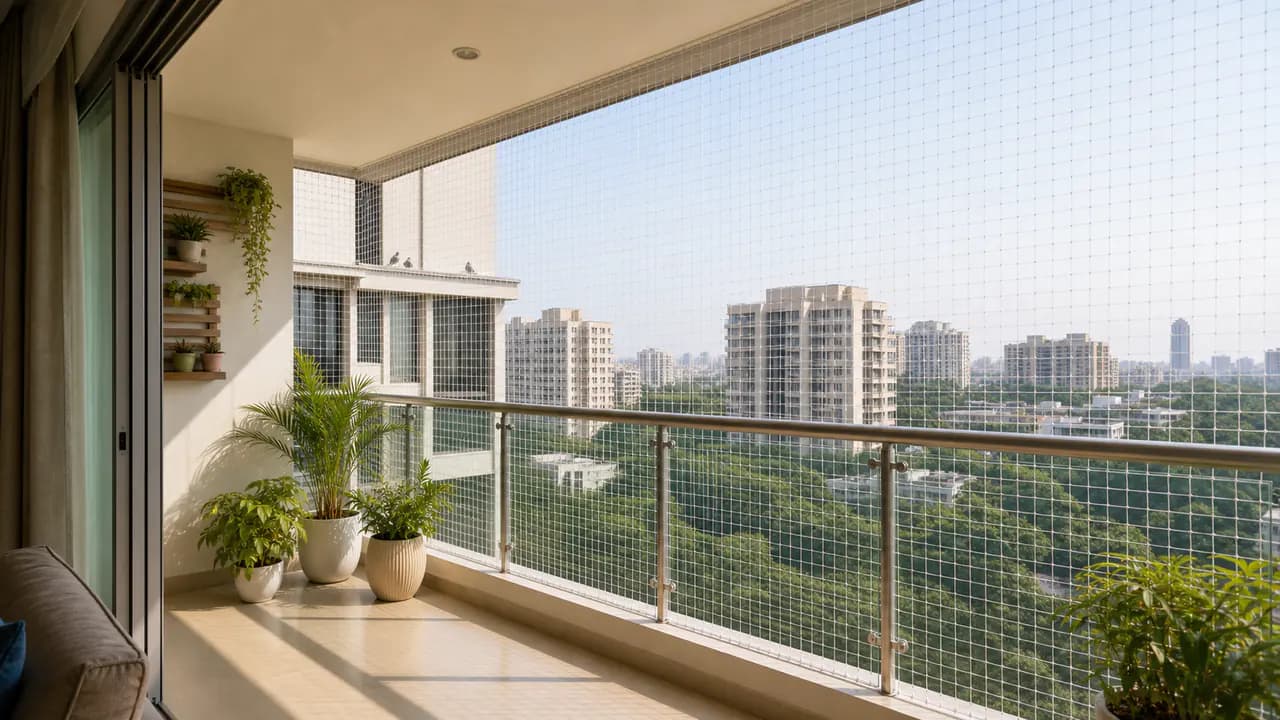
Balcony Pigeon Nets help keep apartment balconies, ledges, AC corners, ducts, and utility ...
Explore →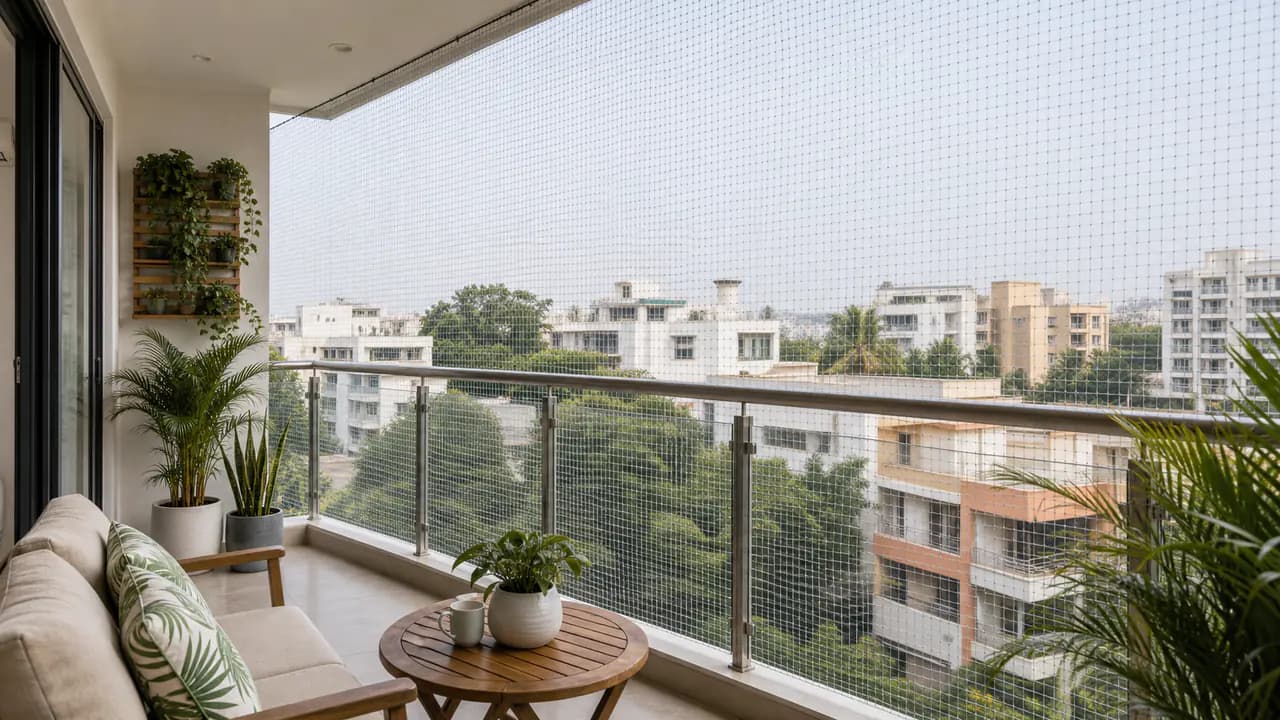
Main service page
Anti Bird Nets are custom-fitted mesh barriers for balconies, windows, ducts, shafts, terr...
Explore →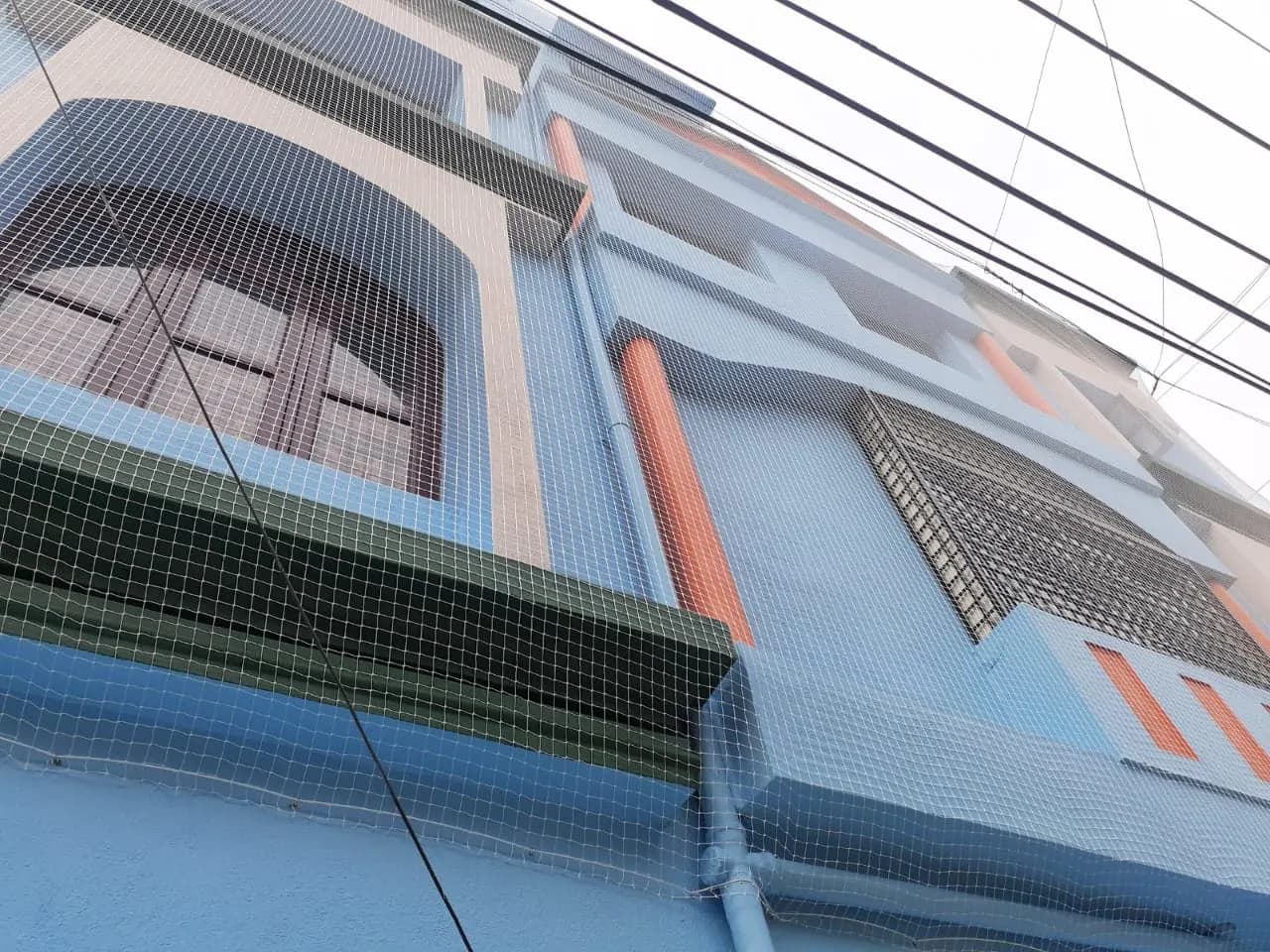
Main service page
Glass Facade Bird Protection Nets prevent birds from colliding with large glass panels and...
Explore →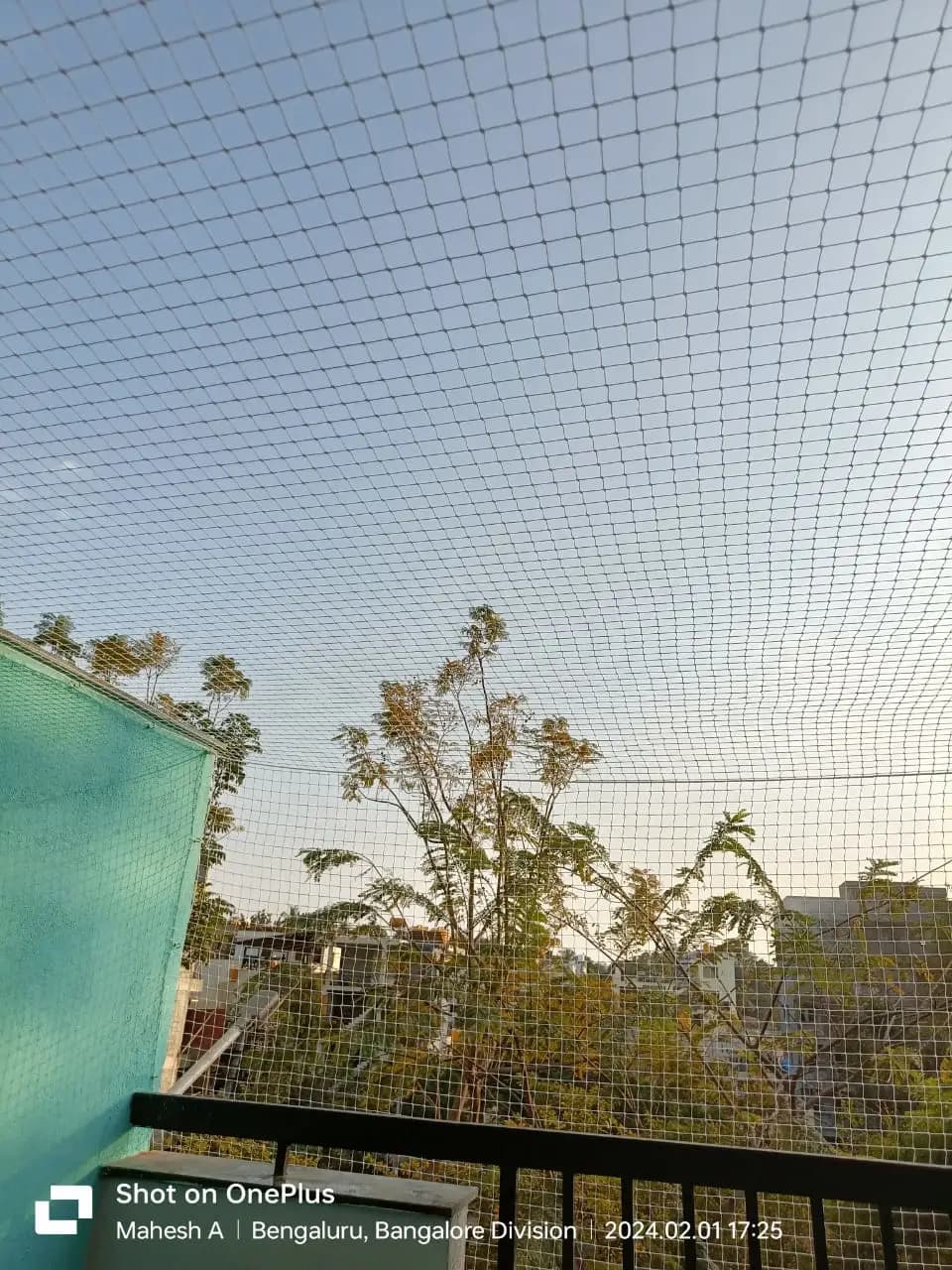
Main service page
Open Area Bird Nets provide strong and large-coverage netting ideal for terraces, open bal...
Explore →Main service page
Solar Panel Bird Protection Nets prevent birds from nesting under panels, ensuring efficie...
Explore →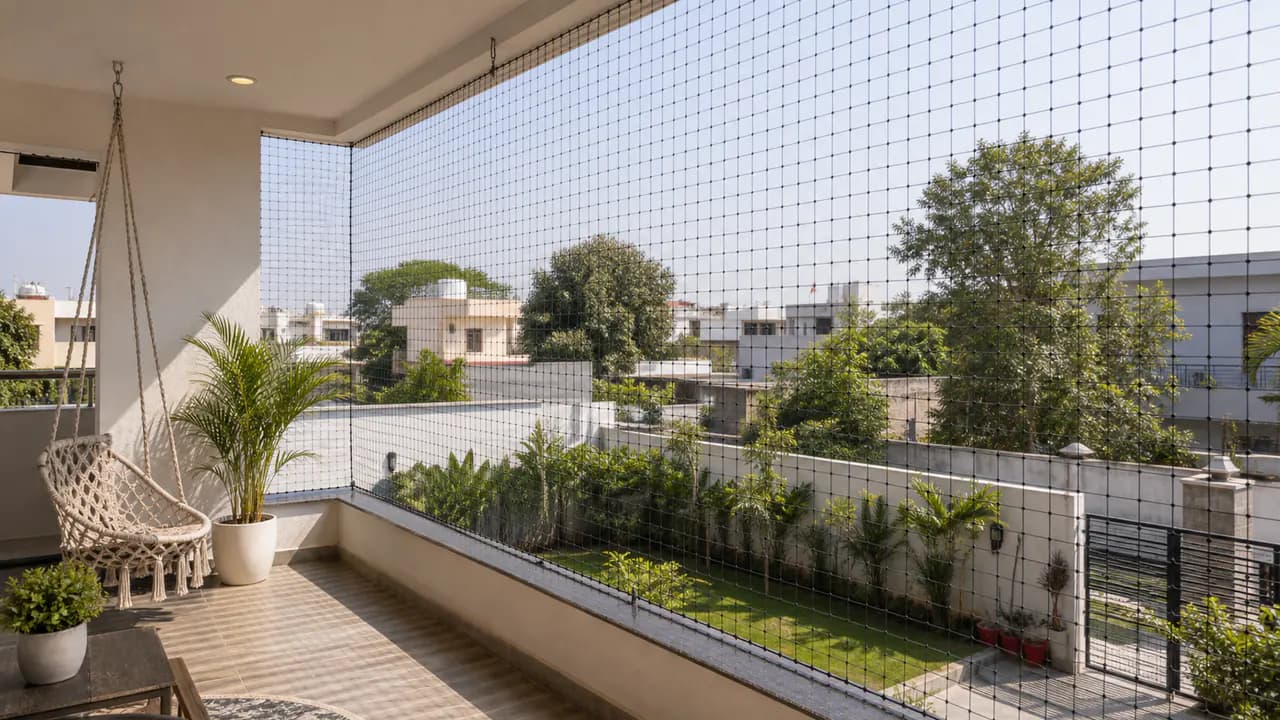
Main service page
HDPE Pigeon Nets are UV-stabilized high-density polyethylene mesh systems used for pigeon-...
Explore →Ready to compare or book
Get a clearer inspection brief, material guidance, and installation advice before you commit to bird spikes installation.
Share the opening size, photos, or site condition and we will help you judge the right next step quickly.