
Gunadala and Benz Circle enquiries
For a school, coaching or private-site enquiry, identify the gate contact, working periods and space used by people around the proposed lane.
Installation for your own practice space
Turn a training brief into a measured net enclosure, with the lane, players and surrounding space considered together.
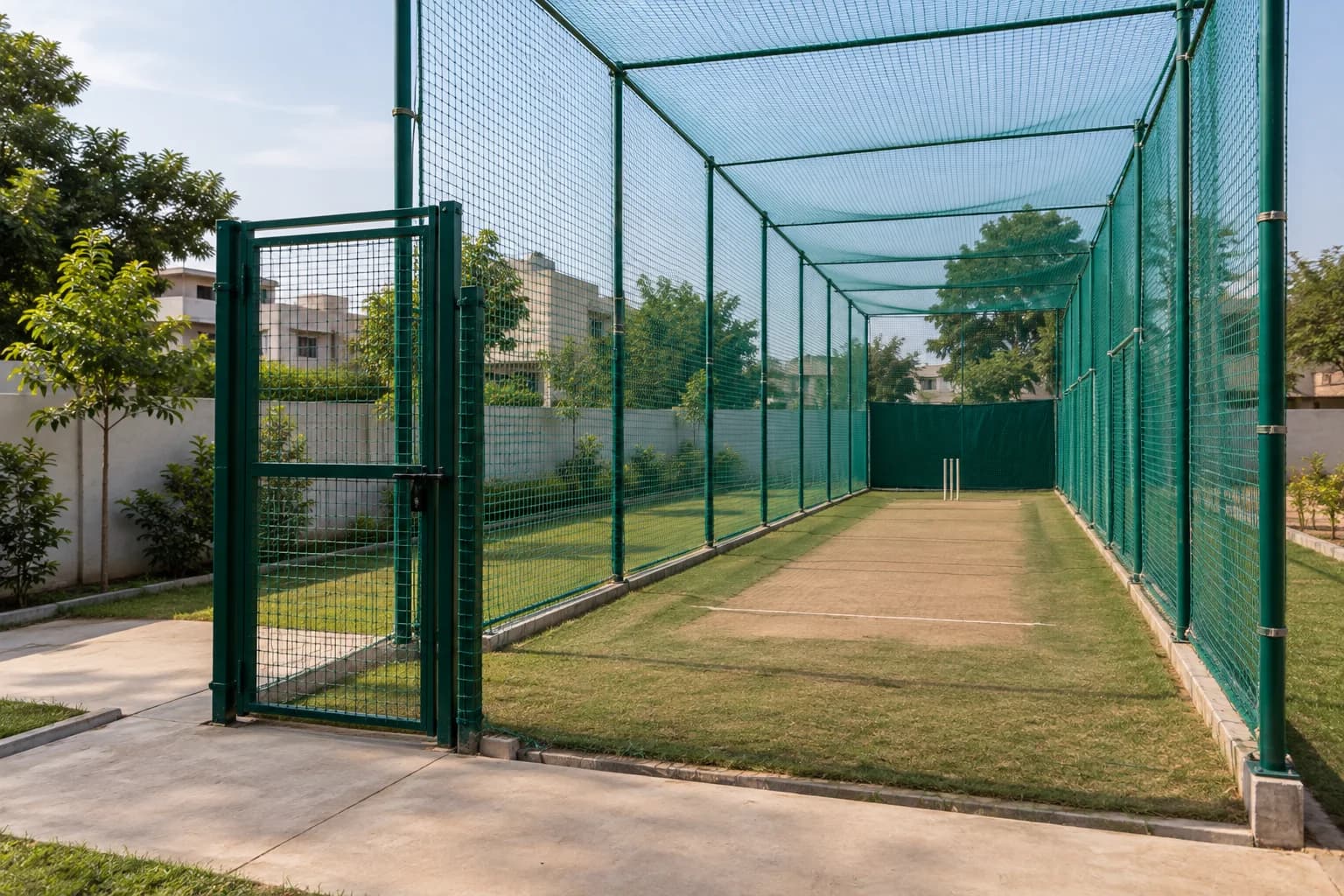
Planning a practice lane at your Vijayawada school, coaching space, home roof or community ground? EverSafe supplies and installs cricket practice netting around an agreed training layout. The starting rate is ₹14 per sq ft with installation included. We separate netting from frame, pitch and access work so you can understand the full project before booking.
Choose the right enquiry
A search for cricket nets in Vijayawada can mean a place to play or a contractor to build a lane. This service covers the net installation and repair work at the property you identify.
Explain whether the space is for throwdowns, batting against bowling, a machine, junior coaching or several lanes operating together. The brief should include the ball used and how players rotate. Those details make the proposed enclosure useful for training rather than merely filling an available rectangle.
For an academy or school, the person running sessions should review the entrance, player queue and ball-collection route. A caretaker's gate access and a coach's training plan are both relevant. For home practice, describe the normal household use that must continue around the lane.
Work outward from the pitch
Begin with the active training line and add the space around it. Net panels, poles and people should not compete for the same movement area.
Include the batter's stance, backlift and movement, the delivery approach and follow-through. A net located too close can interfere with the intended drill even when it contains the ball. Use the actual training purpose to assess the layout instead of choosing a lane only by a catalogue footprint.
Mark where players wait, where the coach observes and how someone leaves the lane. In a multi-lane facility, moving between sessions should not require crossing another lane's likely ball path. Storage and water access should also remain reachable without opening an active enclosure unexpectedly.
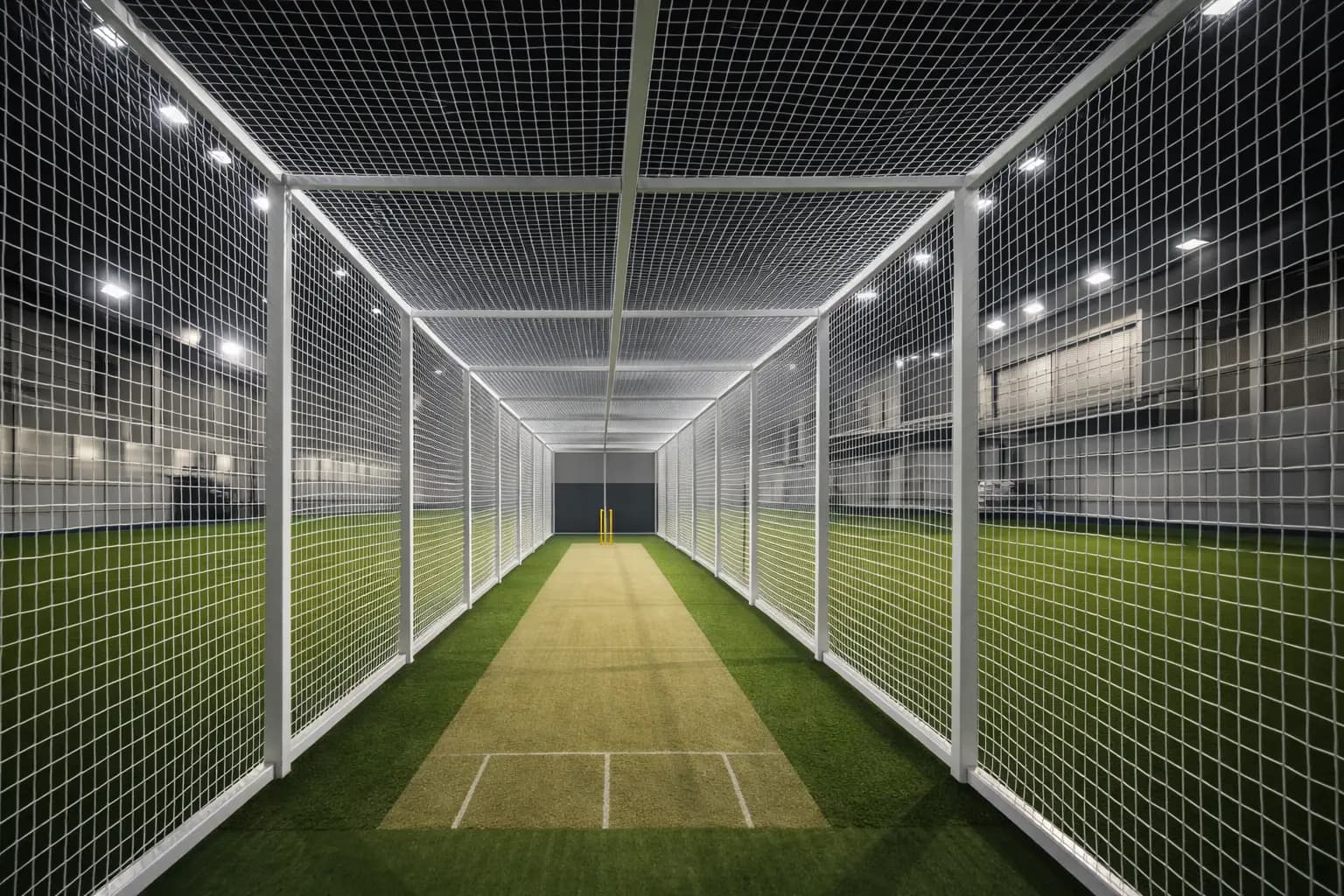
Price, product and complete scope
The guide covers the agreed standard net panels, compatible ordinary perimeter fittings and fitting labour on a suitable assessed support. The final estimate identifies every net face and the chosen product.
Work out a starting budget
Use the width and height of one net or grill face, rather than the balcony floor area. Add other faces to the final enquiry.
Installation is included in the starting scope. The selected product, complete coverage, access and any agreed additional work determine the final quote.
New poles, frames, foundations, structural or civil work, pitch, turf, drainage and lighting are separate. Confirm delivery, tax treatment, minimum billing and any visit charge in the written quotation. Repairs and refitting are priced for their own scope.
Two measurements with different meanings
A quotation should describe both the aperture between strands and the construction of those strands. The intended ball is the starting point for evaluating that combination.
List the ball types you expect to use, including occasional practice. A specification selected for a lighter training routine should not be silently reused when hard-ball sessions begin. Machine-fed practice should also be identified so repeated contact and the enclosure arrangement can be reviewed.
A thickness figure can refer to twine, while a mesh figure refers to the opening. Ask which one the seller is describing and request the chosen details in the estimate. The panel needs a suitable border and attachment arrangement as well; a central strand measurement cannot describe the entire installed system.
Specify what will be supplied
Nylon, HDPE and branded options can be discussed for a cricket installation. The useful comparison is between clearly identified products for the same coverage and use.
Ask about the twine construction, mesh stability and the supplied panel format. Heavily used areas may need a different wear plan from a quiet divider. Material selection should follow the specification and service access rather than an unsupported claim that one polymer is always the strongest.
If the proposed site receives long periods of direct sun, identify the outdoor treatment of the selected product and its care instructions. Check visible condition after prolonged exposure and contact at supports. A UV-treated description is useful product information, not a fixed service-life guarantee.
Green, black or other available finishes can affect visibility against the surroundings. Discuss how well players can see the ball and the panel, then confirm available material. Appearance should not result in a less suitable mesh being substituted for the agreed training use.
Understand the arithmetic
Sides, ends, dividers and a roof panel are separate net faces. A practice pitch may occupy a modest floor area while the combined enclosing panels cover much more.
A useful sketch identifies the length and height of each side, the end coverage and any top panel. It also shows the entrance and any panel intended for removal. This lets you check what a quote includes and compare a replacement-net offer with a new enclosure on the same basis.
For illustration, 100 sq ft of agreed standard net coverage at ₹14 per sq ft totals ₹1,400. It is not a quote for a complete cricket cage. Frame, foundation, pitch and unusual access work remain separate items, and the measured site and selected specification determine the approved total.
Follow the ball beyond the normal shot
Containment should be assessed in three dimensions. A complete-looking side elevation can conceal an open roof path, a weak corner join or a gap along the ground.
Identify nearby roofs, roads, vehicles and other play areas that a lifted ball could reach. Agree the required coverage along with the supports it needs. Do not describe the roof net as weather shelter: rain and sunlight can still pass through a mesh enclosure.
Show any slope, drain or uneven surface that interrupts the bottom of the net. The finish needs to account for ball escape and routine cleaning without creating a loose snagging edge. Changes between panels deserve attention rather than being hidden behind a nominal total width.
An opening needs a position and operating method suited to the training plan. Explain who opens it, when it is secured and how equipment reaches the lane. Keep the agreed entrance detail intact instead of leaving a convenient loose corner after installation.
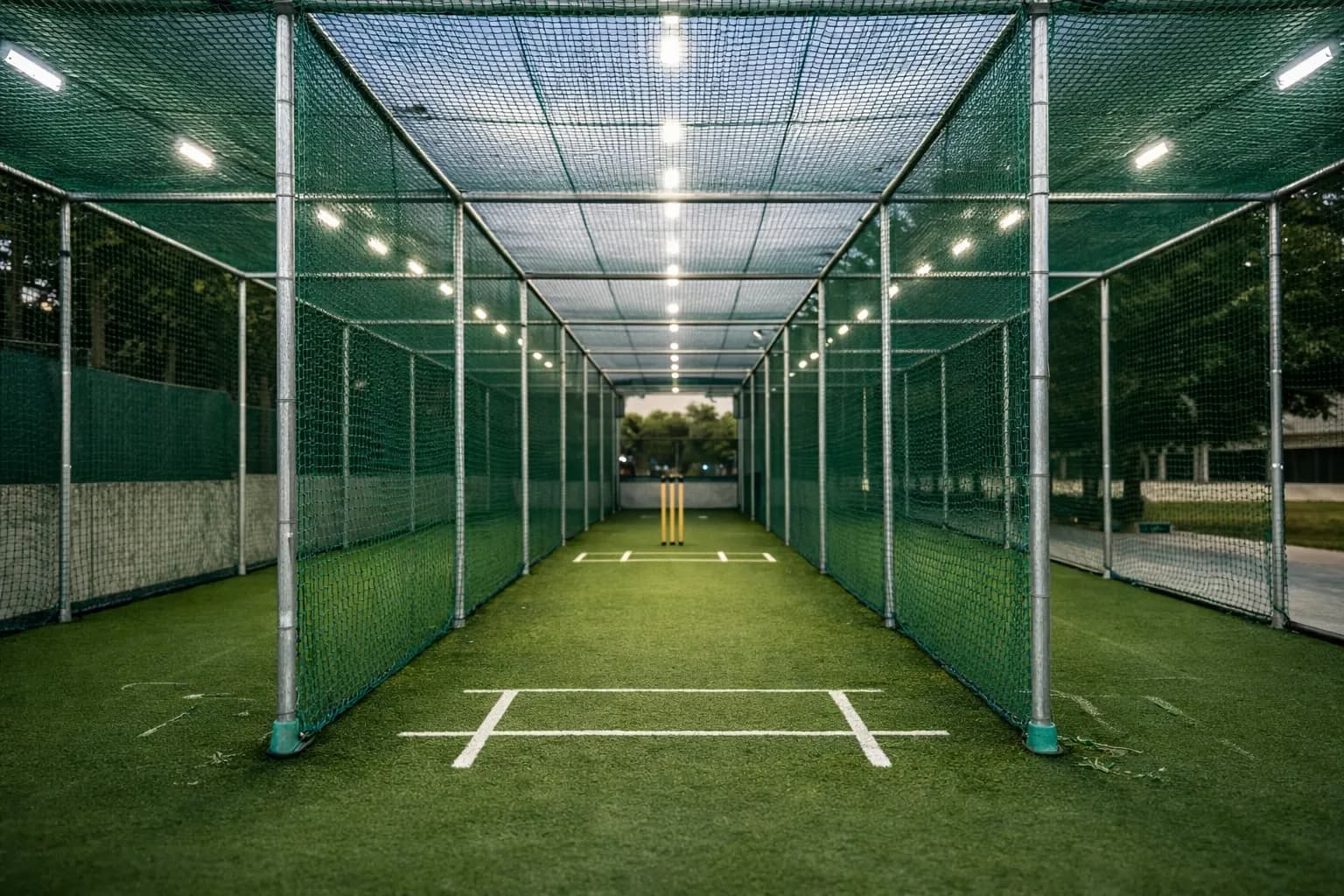
Support is a separate specification
Existing poles can sometimes be reused, but their appearance alone does not establish suitability. The support and fixing base must be reviewed before the net panels are ordered.
Photograph pole bases, joints, corners, cables and any rust or movement. Look for rubbing points where the old net has repeatedly failed. Support repairs belong in the project scope if needed; replacing mesh without resolving its contact or movement problem can reproduce the same damage.
Fabricated frames, posts, base details and foundations require appropriate design and permission. They are not implied by the starting square-foot rate. The building or facility owner should coordinate the responsible professional where structural decisions are needed, with net fitting following the approved arrangement.
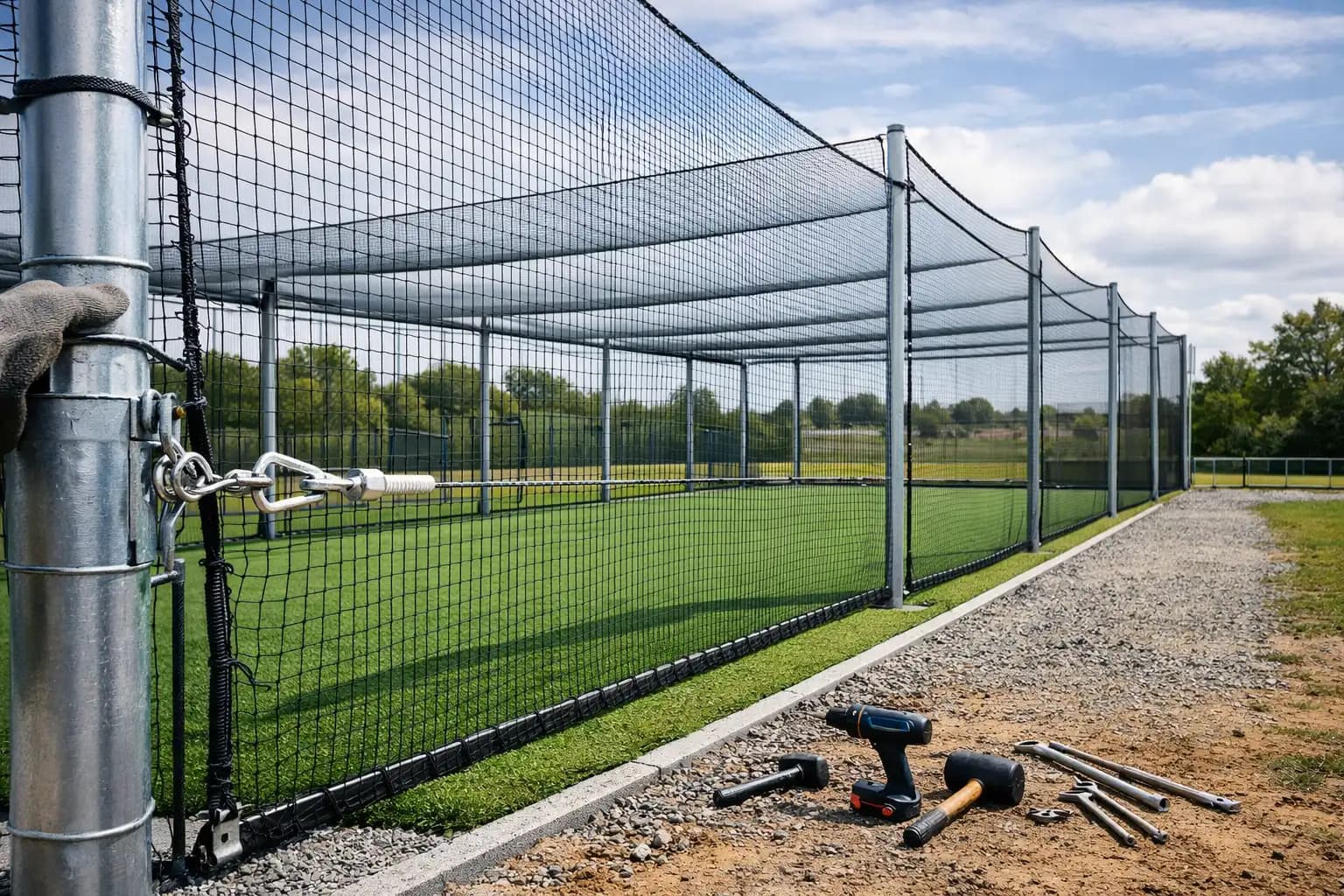
Make the location usable
For a Vijayawada enquiry, tell us who controls the space and how it is used outside practice. Practical access, exposure and existing services determine the next questions.
Include waterproofing, water tanks, solar equipment, roof access and the parapet in the site photographs. Explain where a frame could be permitted and how the household reaches equipment for maintenance. A clear patch of roof is not enough to confirm the structural or access arrangement.
Confirm approval for the activity and installation, authorised working periods and the route for materials. Where residents or pupils continue using nearby space, discuss how work and later practice are separated. Avoid a layout that relies on keeping an essential common route closed.
Net installation does not correct a slippery, uneven or waterlogged practice surface. Where the site is exposed to strong sun or seasonal rain, coordinate surface condition, drainage and any separately designed shelter with the facility owner. These are individual site questions, not assumptions about every neighbourhood.
Compare like with like
Names used in advertisements can hide quite different scopes. Choose the training purpose and ask for the components that make that scope complete.
| Requirement | Relevant work | Separate consideration |
|---|---|---|
| One batting-and-bowling lane | Measured sides, end coverage and any specified roof net. | Training movement, support and pitch provision. |
| Several coached lanes | Planned outer enclosure and separately specified dividers. | Player circulation and supervision between active lanes. |
| A full box-cricket facility | Project-wide enclosure planning coordinated with the other works. | Frame, civil base, playing surface, lighting and operating layout. |
| Balls leaving a general play area | Sports boundary netting for the actual game mix. | It does not establish a dedicated batting lane. |
| A damaged existing panel | Condition assessment and compatible panel repair or replacement. | The reason the old panel failed and the support condition. |
Agree the sequence
A written brief and clear responsibilities make the installation easier to coordinate with the property or ground manager.
Share your locality, a sketch, the intended balls and photographs from both ends of the lane. Include an existing frame and the surrounding property. Explain whether the enquiry is for a new arrangement, additional panels or a repair.
Agree the panel schedule, chosen material, mesh, support condition and entrance. Identify separately priced frame, pitch, removal and access work. Booking details follow the agreed scope, permissions and available working conditions.
Panels and edges are installed using the selected system's method on the assessed support. The review includes panel joins, lower routes, access operation and contact at poles. Unagreed changes to dimensions or supports should be resolved before the area is handed over.
Retain the panel specification and care instructions for future service. The operator should understand the opening arrangement and the parts to inspect. Responsible practice, coaching supervision and appropriate player equipment remain part of using the facility.
Routine checks keep practice organised
A net should be observed in normal use, rather than assumed to stay unchanged after fitting. Start with accessible points and arrange proper access for higher work.
Check for new openings, detached lower edges and damage near the batting end. Confirm that access panels are in their intended position. If a fault affects containment, keep that lane out of use until it is assessed.
Review the net after severe weather, contact from equipment or work to the roof, frame or adjoining structure. New rubbing can appear when a panel is moved. Do not climb the mesh or hang storage from a system intended for ball containment.
Follow the selected product's care instructions, including compatible cleaning methods. Keep its specification and photographs so a later replacement can match the intended use. A visible change in mesh or hardware is a reason for review, not an instruction to tighten every fitting yourself.
Repair the cause as well as the opening
EverSafe assesses existing cricket-net work, including installations from another provider. Repair cost depends on the fault, access and serviceability of what remains.
A compatible patch or border repair may be practical when surrounding material remains suitable. Send both a close-up and a full-panel photo. Where broken strands are widespread or the net has become brittle, repeated small patches may no longer be a useful repair.
Check whether the cause is a damaged fixing, frame movement or a rough contact edge. Reattachment should use a suitable support and compatible fittings. It should not repeat the same failed detail simply because the old holes or ties are convenient.
Before painting or roof repairs, agree how the net will be removed, identified and stored. The next fitting may require new border components or revised dimensions. Relocation to another property calls for a fresh site review; making good old fixing points is a separate work item.
Vijayawada and nearby coverage
Give the exact property or ground address and the person who can authorise access. The groups below retain local coverage without assuming the same training needs in every area.
For a school, coaching or private-site enquiry, identify the gate contact, working periods and space used by people around the proposed lane.
Share whether the installation is on a roof, existing frame or ground-level space, together with permission and material-delivery details.
Send lane dimensions, photos of the surroundings and any separately planned pitch, support or drainage work.
Make an informed choice
The agreed standard net installation starts from ₹14 per sq ft. The final quotation depends on total panel area, ball use, mesh specification, fixing conditions and access. It should list standard netting and installation separately from any new supports, pitch or civil work.
Those are separate items unless the written proposal explicitly includes them. The starting net rate does not buy a complete sports facility. Identify frame fabrication, foundations, turf or matting, base preparation, drainage, lighting and equipment individually when planning the budget.
This page is for installing or repairing a net arrangement at your own site. It is not a practice-ground hire or coaching timetable. If you are enquiring on behalf of a school, academy or ground owner, send the installation location and the work needed.
Add the measured areas of the side panels, end panel, dividers and roof net included in the design. The pitch floor is not the net area. As an illustration, 100 sq ft of agreed standard net coverage at the starting rate gives ₹1,400 before separately identified extras; this is not a price for a whole lane.
Yes. We need to understand the intended drills, available movement space, building support, waterproofing and surrounding property. A new frame may require a structural assessment. An open roof cannot be treated as suitable solely because a practice strip will fit on the floor.
Confirm the association or owner's permission for the proposed use, support locations, drilling and work access. Explain how the area is shared and who controls it during work and practice. We can then discuss the enclosure within those agreed limits rather than design around an assumed permission.
Only after checking its suitability for the changed use. The ball, hitting intensity, mesh opening, twine, perimeter and support all affect the specification. Tell us about leather-ball use or a bowling machine at the quotation stage; do not infer suitability from the colour or apparent thickness of an existing net.
Different openings, panel sizes and twine constructions can be discussed. The opening must suit the intended ball, while the complete material and edge arrangement must suit the use. Ask for mesh aperture and twine specification separately so a quoted strand diameter is not confused with the gap between strands.
Material and brand options can be reviewed for the intended installation. Request the exact supplied product, construction and any outdoor treatment in the quote. A familiar brand name does not by itself identify the mesh, panel arrangement or maintenance needs of your particular lane.
The design needs room for the batter's stance and movement, the bowler's follow-through and the intended drills. Coaches, waiting players and spectators also need positions outside likely impact paths. We assess these dimensions from the training brief instead of prescribing one universal compact-cage size.
Review overhead coverage when lifted shots can reach adjoining homes, parked vehicles, roads or another activity. Its extent and support must be assessed together. A high side net is not automatically a substitute for an overhead panel, and roof netting does not provide rain protection.
We can inspect the frame and quote replacement panels where it is suitable for reuse. Pole bases, joints, corrosion and contact edges matter as well as the net dimensions. Necessary support repairs should be identified before new panels are attached.
Dividers can be included in a planned multi-lane arrangement. The entrances, coaching positions and routes to collect balls should keep people out of another active lane. The divider specification and outer enclosure are considered separately because their exposure and role may differ.
Yes. We assess compatible patches, worn border sections and detached panels, including work installed by another provider. The surrounding mesh and support need to be serviceable. A local repair is unsuitable when widespread deterioration or an unresolved frame fault is the real cause.
Refitting is considered after checking panel condition, dimensions and the support that will remain. Discuss removal before another contractor cuts or damages the net. Agree storage, replacement fittings and any changes to the enclosure, along with separate work to make good old fixing points.
Send photos from the batting and bowling ends, an approximate length-width-height sketch, ball type, existing-frame photos and your location. Gunadala, Auto Nagar, Kanuru, Nidamanuru, Ramavarappadu and Benz Circle enquiries are included. Mention school gates, common-area permissions, delivery access and permitted work periods so the visit can be planned.
Let’s plan your installation
Send the exact locality, training plan, approximate lane dimensions and photographs of the site and supports. We will explain a suitable net scope and the installed quote.