
Apartment and utility enquiries
Show rod span, window movement, washer clearance and the desired loading height.
Overhead drying space planned around your utility
Lower the rods to load the wash, then raise them clear of the working area when the chosen system allows. Compare rod length, operating comfort and the ceiling fixing before selecting your balcony clothes-drying hanger.
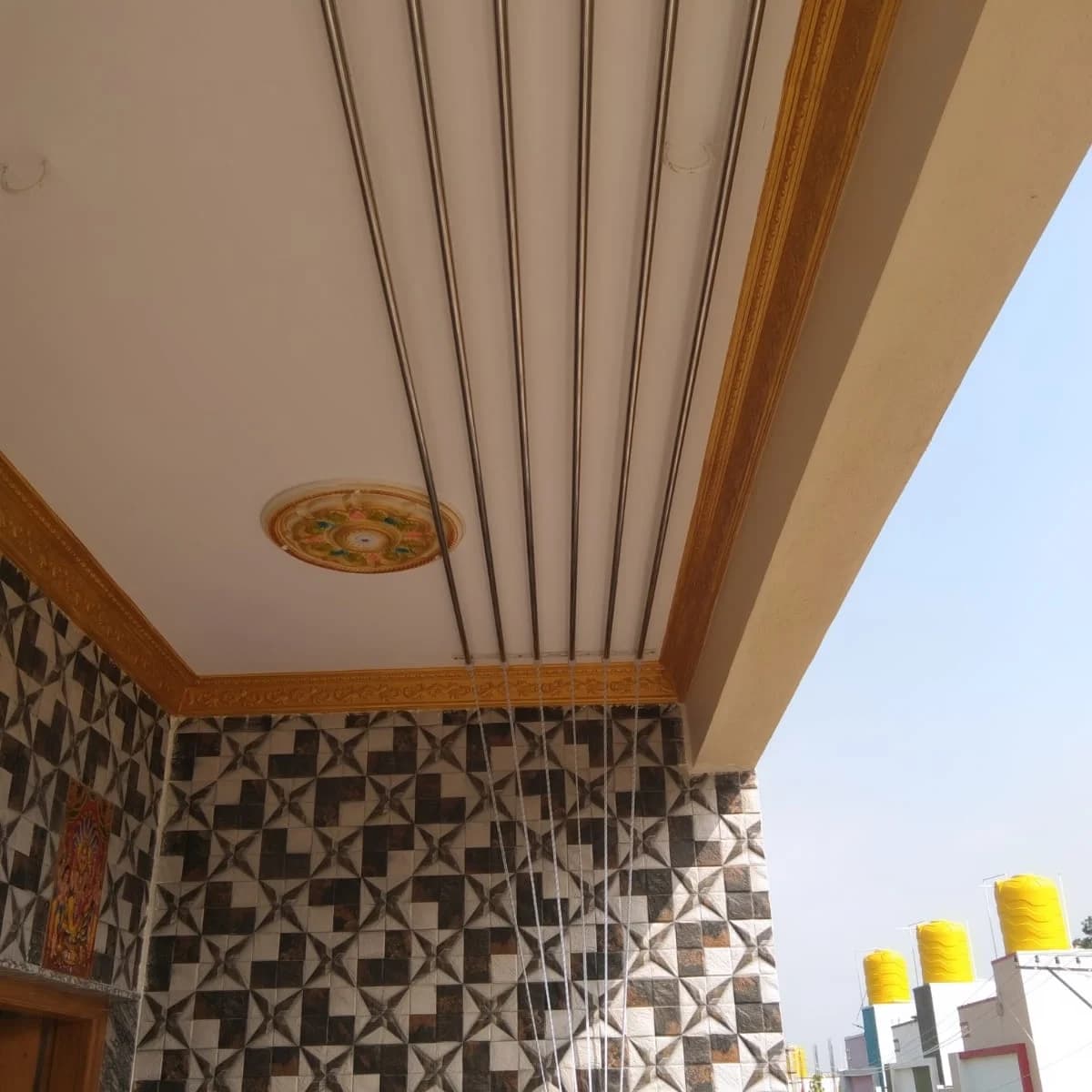
Make room for the laundry without filling the utility floor with drying racks. EverSafe installs ceiling cloth hangers in Vijayawada from ₹2,800 per system including standard fitting, with rod size, lowering reach and the mounting surface matched to your available space.
Start with the laundry
A useful hanger fits both the wash and the person loading it. Describe the daily routine before choosing a large system simply because more rods are available.
Count the kinds of items you usually dry together: uniforms, shirts, towels or bedsheets. Allow separation for air to move between garments. The right system balances usable rod length with the room available around it.
Explain who will use the hanger and the height at which they can load it comfortably. A pulley system changes how rods are reached, but it still requires appropriate handling of the laundry. Confirm the selected mechanism’s operation rather than assuming every model feels the same.
Include washing-machine loading, sink use and the path through the balcony. Raised rods and hanging clothes can occupy different spaces. A layout that works empty should also make sense with a normal permitted wash hanging from it.
Measure both positions
The ceiling length is only one dimension. Record the system’s width, travel and the space occupied by clothing when it is lowered or raised.
| Measurement | What to show | Why it matters |
|---|---|---|
| Clear rod span | Available length between walls or obstacles | Sets the practical rod length. |
| System width | Room for the selected number and spacing of rods | Avoids crowding the whole utility. |
| Lowering height | Comfortable loading position | Helps select the rope drop or mechanism. |
| Window and door swing | Movement with the system in use | Prevents collision with rods or clothes. |
| Appliance and walking clearance | Top-loader lid, sink and normal movement below | Keeps routine use of the room practical. |
Price, product and complete scope
The selected starting system and standard installation are included. Confirm the rod dimensions, operating design and ceiling arrangement in the quotation.
Work out a starting budget
Enter the number of complete drying systems you need. Rod length, model and support requirements are confirmed separately.
Installation is included in the starting scope. The selected product, complete coverage, access and any agreed additional work determine the final quote.
Ask for tax treatment, minimum billing and actual written product/workmanship terms. Repair and relocation work is quoted after checking reusable parts and the new or existing mounting location.
Mounting before capacity
Rods, laundry and the operating system transfer load through the mounting points. The ceiling finish alone does not tell the installer what can support them.
Show the ceiling, beams and any previous holes, cracking or water damage. The selected system needs an appropriate attachment to a suitable support. Existing hooks should be checked rather than reused automatically.
A false ceiling may hide the structure or services needed for a mounting decision. Agree inspection access and any required alteration before fitting. Fastening only to a decorative layer should not be assumed suitable for wet laundry.
Tell us if the flat is rented or the association controls drilling or facade work. Resolve supporting repairs and sensitive finishes in advance. The quote should name any extra mounting work rather than burying it in a general system price.
Compare complete systems
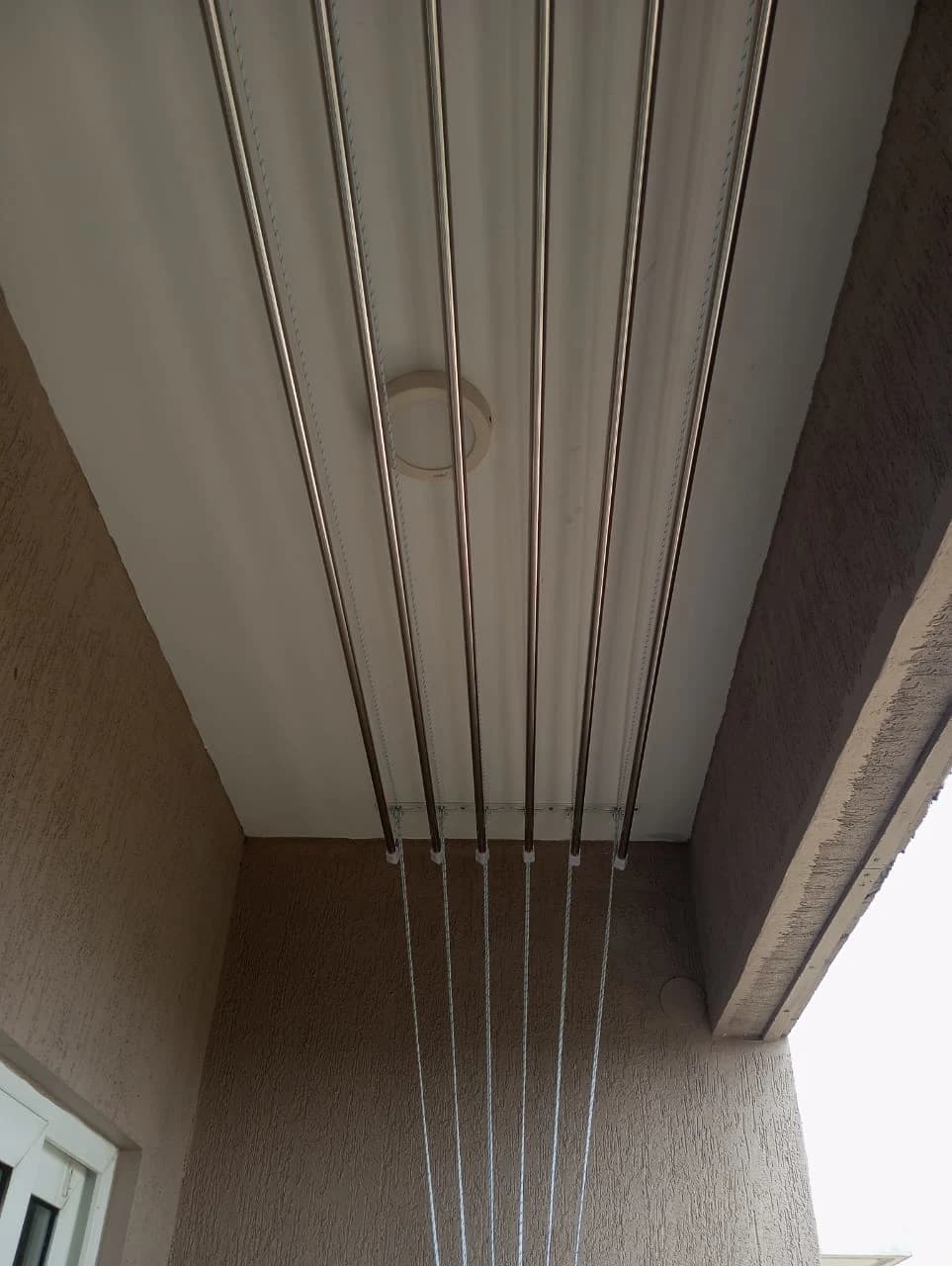
Ask for the exact model and dimensions being offered. A stainless-looking rod or a high rod count cannot describe the full drying system on its own.
Request the supplied material and finish along with the available rod length. Brackets, ropes and other hardware may use different materials. Compare those details rather than relying on an unqualified permanent rust-proof claim.
Different systems raise and lower in different ways. Confirm how the selected design works, where the controls are secured and whether the travel suits the room. A manual pulley arrangement and a powered system are different products and quotes.
Ask for the applicable wet-load limit and loading instructions for the actual model and supports. No universal kilogram figure is used for all systems. The permitted arrangement should be demonstrated without encouraging an overload test.
Wet clothing and usable capacity
A drying system should carry laundry within its stated limits and allow the garments enough room. Packing every rod tightly can reduce the practical drying area.
Towels and thick bedding can be substantially heavier when wet. Follow the model’s guidance for total load and how it is shared across rods. Do not judge allowable weight from the appearance of the ceiling brackets.
Use the rod spacing and available drop to arrange items without unnecessarily stacking fabric. A long bedsheet may require a different arrangement from shirts. The product guidance and the actual room determine what fits.
Avoid snagging cords, piling items on the brackets or hanging unrelated storage from the system. Secure the operating rope or control as designed, away from a child’s reach. If movement becomes uneven, stop and assess the cause before adding more washing.
Vijayawada household use
Vijayawada’s summer heat and seasonal rain make a practical sheltered drying position worth considering. The hanger organises the wash; the room’s airflow and weather still affect drying.
For Kanuru, Poranki or Nidamanuru, send one wide view including the washing machine, window and ceiling. Mention whether rain reaches the proposed rod position. The useful model depends on that particular utility, not an assumption about the locality.
In a Benz Circle, Patamata or Currency Nagar enquiry, show lights, fans, exhaust points and any overhead services. Their movement and maintenance clearance matter when rods are raised. The appropriate layout may use a shorter span instead of maximising rod length.
Keep the drying area ventilated according to the room’s use and allow space around garments. Raising laundry does not make it a heated drying system. If you need a powered appliance, compare that separate product and its operating requirements.
Make the right purchase
The best fit depends on mounting permission, frequency of use and how much space can remain occupied. Compare these options before committing to ceiling work.
| Option | Useful when | What to check |
|---|---|---|
| Ceiling pulley system | Daily drying benefits from overhead space | Suitable support, comfortable operation and raised/lowered clearance. |
| Fixed ceiling rods | Reach and permanent height suit the user | Safe access without climbing furniture. |
| Wall-mounted folding rack | A suitable wall and folding position are available | Projection into the room and the stated load limit. |
| Portable drying stand | Light or occasional use fits spare floor space | Stability, storage and the space it occupies. |
| Separate powered dryer | An appliance-based drying process is required | Space, ventilation and operating requirements of the actual appliance. |
A system price, not net area
The installed starting scope includes the selected system and its standard fitting. The quotation should identify the model, rod dimensions and mounting arrangement.
Confirm the rod count, length, operating design and included standard fittings. Two systems at the starting rate give an example base amount of ₹5,600. Each location still needs its own ceiling and clearance check.
A different model, longer rods, support alteration or a difficult working position can change the total. Any old-system removal or ceiling preparation should be described separately. Ask about minimum billing and tax treatment before approving the quote.
A retail kit may include only the packaged product. Compare its dimensions, included hardware and instructions with a suitable installed proposal. Standard installation being included should not be confused with every possible structural alteration being included.
Installation and use
The goal is a system the household can operate comfortably within its intended use, with the ceiling and room clearances considered first.
Send the Vijayawada area, approximate utility dimensions and a ceiling photograph. Explain the usual wash, preferred loading height and any existing drying system. Include the window and appliance positions.
Confirm the selected rods, operating mechanism and appropriate support. Agree clearances, permissions and any separate preparation or removal. The written quote should make the installed scope clear.
The selected system is mounted according to its requirements and the agreed layout. Check movement and the securing method, along with the space around fixtures and appliances. Loading instructions follow the chosen product rather than an invented general rating.
Demonstrate the intended lowering, raising and securing sequence. Provide the relevant product information and actual support terms. Explain what to do if a rope frays, a fitting moves or a rod no longer travels as expected.
Ropes, pulleys and previous systems
We assess existing ceiling hangers for compatible repair and refitting work. A new complete system is not automatically necessary when one serviceable part can be replaced.
Send the model details if known and a photograph of the affected rope or pulley. Compatible replacement parts and proper routing matter. Avoid repeatedly pulling harder when a rod sticks or the mechanism no longer holds as designed.
The mounting surface and the condition of the component determine whether reattachment or replacement is appropriate. Do not treat a bent rod or failing bracket as a cosmetic problem. Stop loading the affected system until it has been assessed.
Painting or a move can require dismantling. Check which parts remain reusable and whether the new ceiling span matches the rods. Agree removal and reinstallation in the scope so the new supports and clearances receive their own inspection.
Keep the drying area practical
Follow the selected product’s instructions and inspect the parts you operate regularly. Prompt attention to wear can prevent a small operating problem from continuing under a wet load.
Look for frayed cord, loose mountings or changes in how the rods raise and stay secured. Keep operating parts free of avoidable obstructions. Use only the cleaning or lubrication method appropriate to the model.
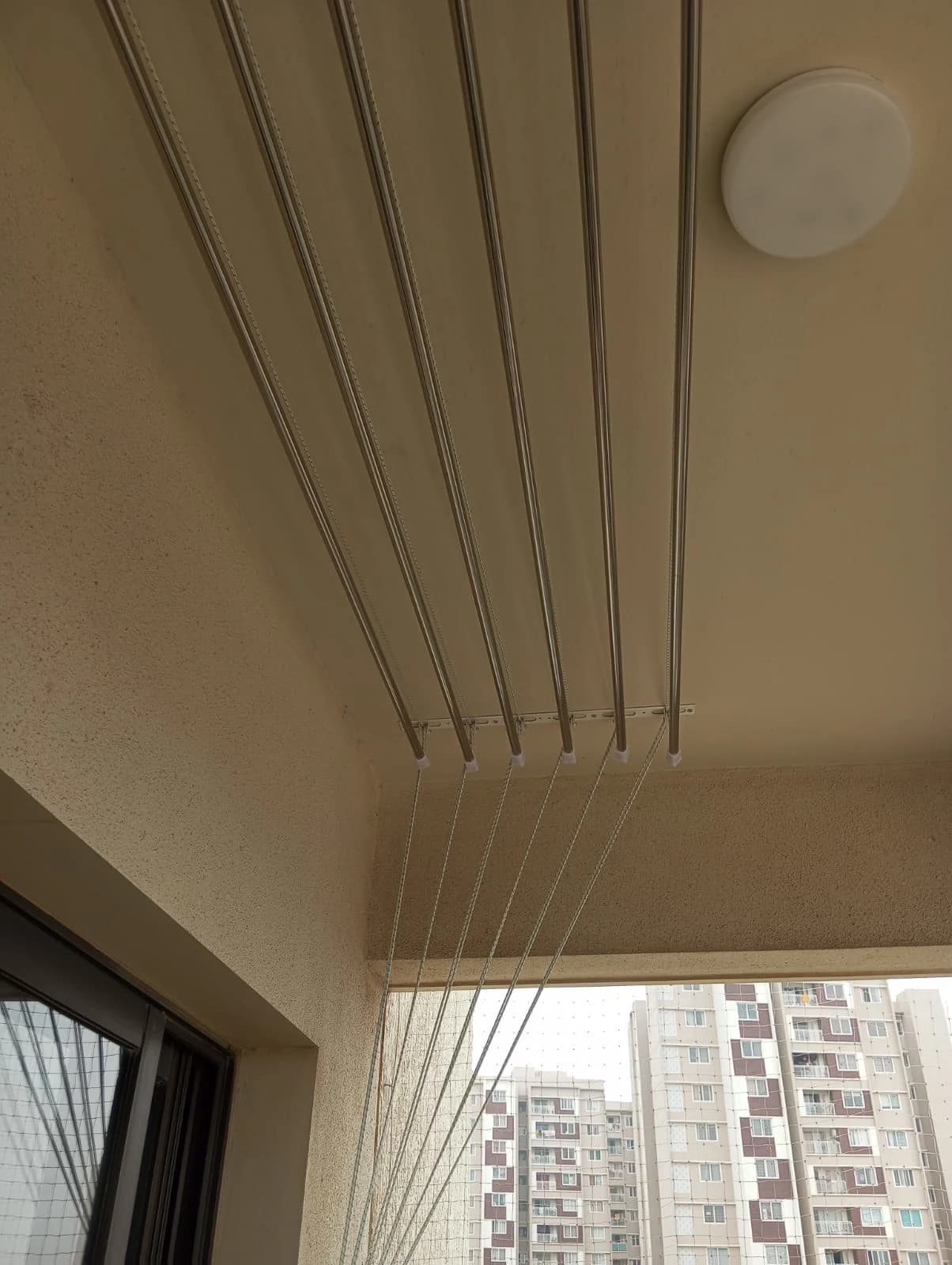
If pigeon netting or an invisible grill is also planned, show both layouts together. Each system needs its own appropriate supports. Keep laundry, rods and operating ropes from loading or rubbing against a bird net or cable enclosure.
Retain the model, supplied dimensions and contact for repair. Tell visiting painters or maintenance staff what must be protected or temporarily removed. A change to fixtures or appliances may warrant another clearance check.
Vijayawada and nearby coverage
Share your locality and a photograph of the utility ceiling with the usual laundry requirements. The system is chosen around the individual room and its supports.
Show rod span, window movement, washer clearance and the desired loading height.
Include lights, fans and the model or damaged parts of an existing system.
Make an informed choice
The starting price is ₹2,800 per system, including the selected basic system and standard installation. Rod count, length, model and mounting requirements are confirmed in the quote. Any support alteration, old-system removal or other additional work is explained separately.
The quote should identify the selected rods, supports, operating ropes or mechanism, standard fittings and installation. Confirm the actual model and dimensions rather than assuming every system contains the same number of rods. Product-specific extras should be listed before approval.
At the starting rate, two systems give an example base amount of ₹5,600 including standard installation. The amount can change if the systems use different models, longer rods or additional mounting work. Measure each proposed location before confirming the order.
Use the clear ceiling span, normal wash size and space between garments as your starting points. The rods also need room to lower without meeting a window, appliance or person’s walking route. More rods are useful only when the available width and operating clearance suit them.
A compact system may fit after measuring the clear span and lowering path. Show the washing machine, door, window and ceiling fixtures in one wide photograph. The aim is to preserve practical use of the utility, not fill every centimetre with rods.
A decorative ceiling finish should not be assumed to support a loaded drying system. The installer needs to identify suitable structural support and an appropriate product-compatible fixing arrangement. Access through or alteration to a false ceiling must be agreed separately where necessary.
Confirm the supporting material, condition and proposed fixing locations, including concealed services and sensitive finishes. Property or association permission may be required. A mounting plan should not promise that drilling causes no change to the surface.
Use the documented load limit for the selected model and its installed supports. Wet towels and bedding weigh more than they do dry, and rod spacing affects how the load is distributed. We do not assign one kilogram rating to every hanger offered.
Discuss your usual items when selecting the model. Rod length, clearance, total wet weight and the manufacturer’s use guidance determine what is appropriate. Bulky items should not be assumed suitable merely because they can be draped across the rods.
Available models can differ in rod and hardware material. Ask for the actual material specification and finish of the supplied system, including brackets and moving parts. Appearance alone does not identify a steel grade or establish that every component is permanently rust-proof.
Some designs offer individual rod movement while others lower a set together. Confirm the operating arrangement for the selected model before ordering. Ask for a demonstration of the required pull, securing method and comfortable loading height at handover.
It provides an organised place to hang clothing; it is not a heated dryer. Drying depends on airflow, garment spacing, fabric, moisture and weather. Choose a usable sheltered location and allow ventilation rather than expecting a guaranteed drying time.
It can be planned around the net if both systems have appropriate independent supports and usable clearance. Keep rods, ropes and laundry from rubbing or loading the bird net. Include the bird-net service opening when planning the lowering path.
We can assess rope replacement, pulley problems, loose fittings and refitting of suitable existing systems. Compatible parts and the condition of rods, brackets and supports determine the repair scope. Include the model details or a clear photograph when asking for a repair.
Removal and refitting can be assessed after checking the model, reusable parts and the new mounting location. A different ceiling span may need different rods or fittings. Confirm dismantling and reinstallation as separate stated tasks if both are needed.
Timing is confirmed from the model, ceiling condition, access and any preparation required. Obtain the actual product and workmanship terms for the chosen system. Keep its operating instructions and report rope wear, a loose fixing or uneven movement before continuing to load it.
Let’s plan your installation
Send your Vijayawada locality, ceiling photograph and approximate span. Mention your washing machine, window and normal laundry, or show the old system if you need a repair.