
Western apartment and utility openings
If your pet uses the utility balcony, include the washing machine, drying rods and AC service point in the photographs.
Hyderabad · pet-specific enclosure planning
Make the enquiry about your pet's habits, not just balcony dimensions. EverSafe assesses mesh, perimeter gaps and everyday access, with installed pet netting starting from ₹15 per sq ft.
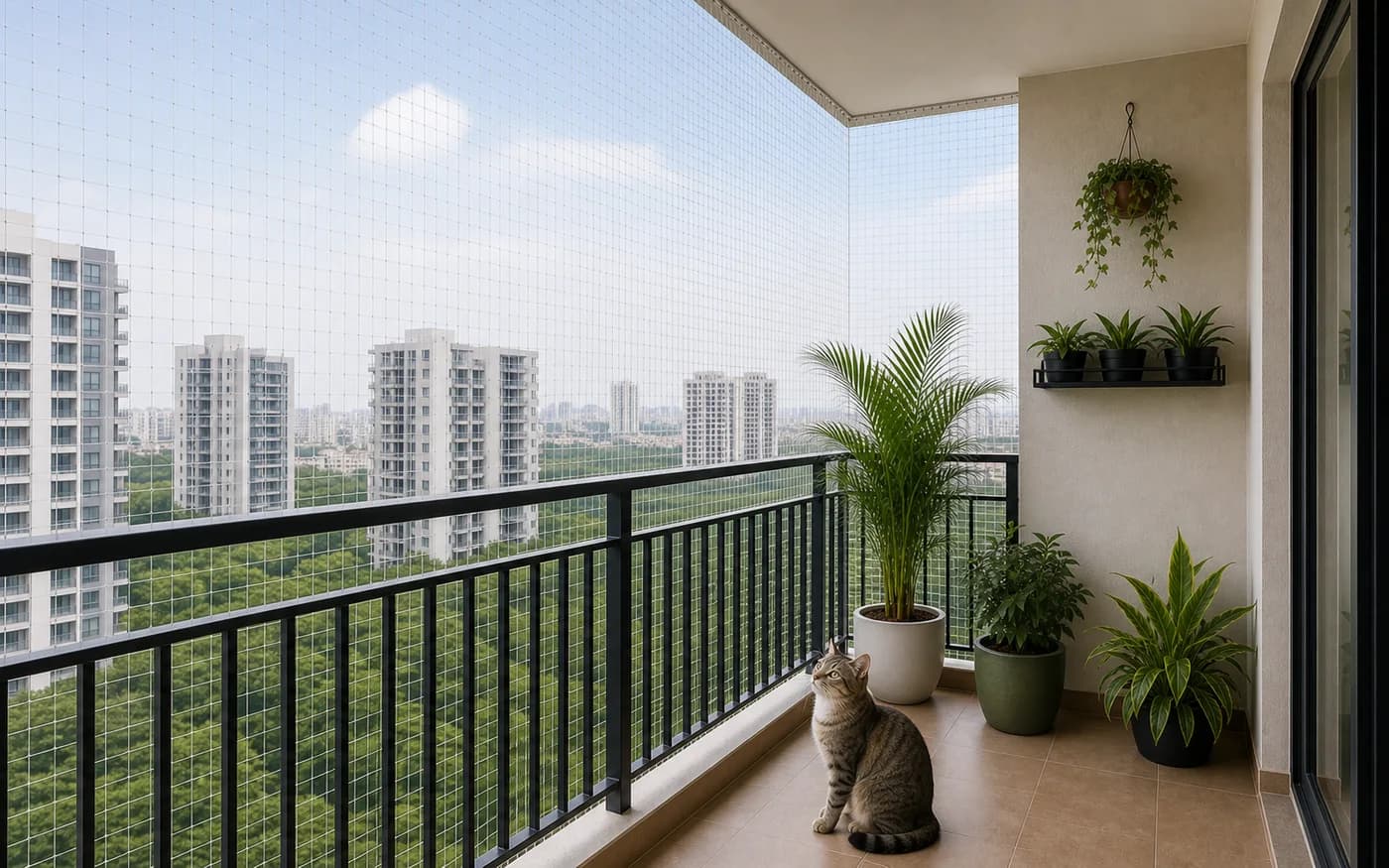
EverSafe plans pet safety nets in Hyderabad around the animal that lives in your home. Tell us whether your cat climbs, your dog pushes at the railing or a smaller pet tests gaps, and share the opening you want assessed.
Start with your animal
Describe normal behaviour without staging a jump or testing a risky edge.
Tell us about climbing, watching birds, squeezing behind furniture and reaching the top of a railing. Include the smallest cat using the space. A calm adult and a growing kitten may explore differently, so the assessment should not depend only on weight or the pet's present routine.
Explain pushing, chewing, digging at corners or excitement when another animal passes. Identify smaller pets separately rather than assume that a cat-oriented product will fit. Persistent chewing or forceful contact can change the barrier recommendation; suitability comes before selecting the least visible material.
Trace the boundary
A reachable route around the panel can defeat the main enclosure.
Show whether the balcony has a solid ceiling or an open top and where a climbing pet could reach above the proposed net line. Include any side return to a neighbouring balcony or ledge. A partial screen needs a different assessment from a complete enclosure.
Railing bases, service pipes, projecting beams and stepped walls interrupt a straight border. Photograph those junctions from inside. The finishing detail should close the intended opening without creating loose folds, protruding ends or a hidden gap behind the point where the net appears to meet the wall.
Price, product and complete scope
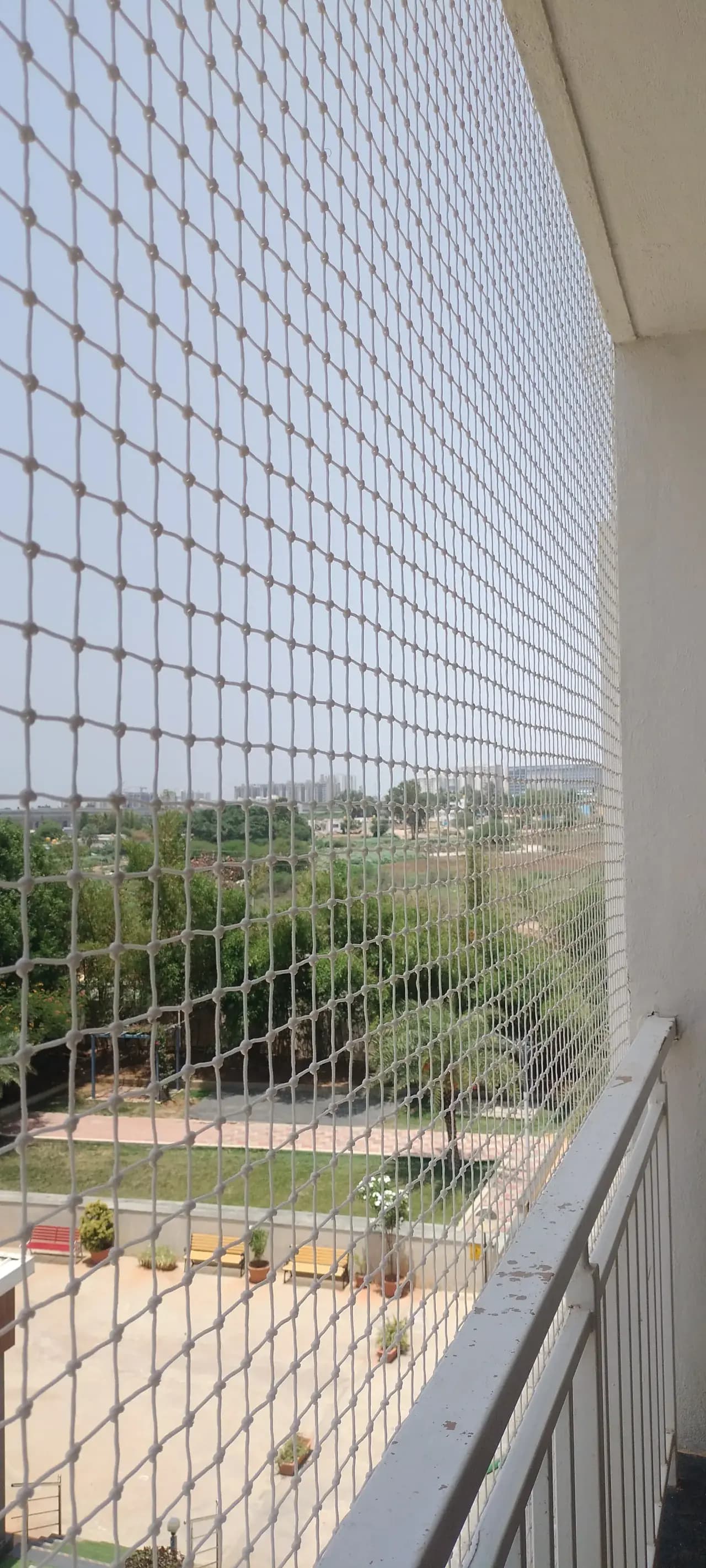
Installed pet netting starts from ₹15 per sq ft. A 100 sq ft example starts at ₹1,500; final scope follows the pet, selected specification and measured enclosure.
Work out a starting budget
Use the width and height of one net or grill face, rather than the balcony floor area. Add other faces to the final enquiry.
Installation is included in the starting scope. The selected product, complete coverage, access and any agreed additional work determine the final quote.
A rigid alternative, additional frame, repair or reattachment receives its own assessed scope. Ordinary netting is not a replacement for the balcony's structural guardrail.
Choose the specification
Compare available materials and record the selected product and fixing arrangement.
| Requirement | What to discuss | Where to be cautious |
|---|---|---|
| Small pet or kitten | Mesh opening plus the finished perimeter gaps for the smallest animal. | A larger pet's previous use does not prove suitability for a smaller newcomer. |
| Climbing or clawing cat | Complete enclosure, mesh construction and secure edges suited to the assessed behaviour. | Do not leave an open top simply because the panel above the railing looks tall. |
| Persistent chewing or pushing | Whether a purpose-designed rigid barrier or another arrangement is more appropriate. | Extra twine thickness or a strong material label alone does not settle containment. |
| Bird exclusion alongside pets | Opening size, AC routes and the complete intended coverage. | Ordinary bird netting should not automatically be sold as a pet-specific system. |
Beyond the balcony
Show the open sash, its full movement and the accessible sill.
Record which panels open and where the proposed net or screen could attach. Include cleaning access and any existing insect screen. A pet barrier should work with the operating window, not require a family member to detach it each time they need fresh air.
A tilt-open window can create a trapping gap as well as an escape route. Keep that opening inaccessible until an appropriate solution is fitted. Show any shelf or furniture that lets the pet reach it, and include the external ledge when describing the window's shape.
Keep the home usable
Retain structural guarding and review what makes the balcony edge reachable.
Identify chairs, tables, planters and storage boxes that become steps toward the railing or net. Discuss their intended positions before fitting. Creating a comfortable place for the pet away from the edge is useful, but it should not become a climbing route to an unfinished upper opening.
Show clothes-drying rods, doors and the route to the washing machine. Avoid a plan that repeatedly pushes laundry or furniture into the mesh. Pet containment also does not address every household hazard, so supervise use and keep unsuitable plants, loose cords and other accessible hazards out of reach.
Edges and supports
Show the actual wall or metalwork that will support the net.
Include wall condition, metalwork, old hooks and any restricted drilling area. A previously fitted bird net or decorative grille does not establish suitability for this pet. If the border needs repair or an additional frame, that work should be identified before the net specification is finalised.
For rented homes and managed buildings, check the proposed fixing and appearance with the relevant owner or manager. Bring those conditions to the assessment. Material colour, mesh visibility and permitted mounting points can then be compared without promising that every balcony accepts the same fitting method.
Service openings
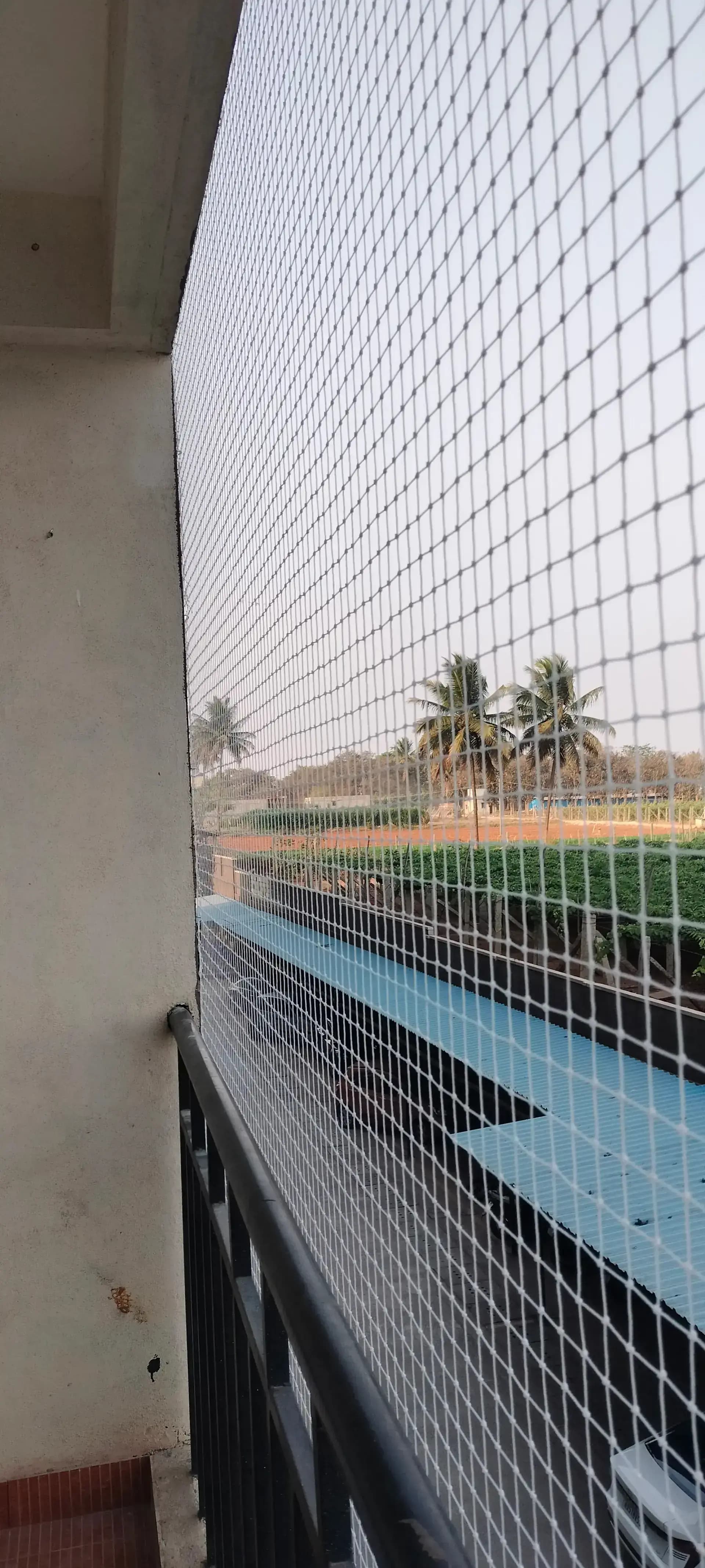
Plan maintenance access before anyone needs to cut or untie the enclosure.
Identify the work that needs access and the opening size it requires. Discuss a suitable panel or closure as part of the original layout. Keep it in a position that can be operated as intended, and explain the arrangement to everyone likely to arrange maintenance.
Use a closed internal room or another secure area while installers or service staff work. Restore the enclosure after the job and inspect the closure before allowing pets back. A panel that looks shut from the doorway may still have an unfinished lower or side edge.
Existing installations
Keep the opening inaccessible while the damage and surrounding panel are assessed.
A limited tear in otherwise sound material may suit a repair, while brittle mesh or several failing edges may need replacement. If chewing or repeated pushing caused the damage, review suitability before choosing another panel of the same material. Repair work is assessed and priced separately.
We can assess netting removed for painting, service access or renovation, including previous installations. Check whether the dimensions and fixing border have changed. Old panels should be reviewed for storage damage and fit before they are reused, with the pet kept away until the opening is restored.
After installation
Introduce the new enclosure as part of a supervised household routine.
Observe from inside while the pet explores; do not encourage climbing or leaning to prove the installation. If it persistently chews, pulls or finds a route around an edge, restrict access and request a review. A changed behaviour is useful information for choosing the next step.
Look at the bottom, corners and closures regularly and after cleaning or service work. Reassess when a smaller pet joins the home or furniture is moved closer to the edge. Keep loose hanging netting and unsecured cords away from animals rather than treating them as temporary play items.
Prepare the assessment
Describe the pet and the opening together to support a useful assessment.
State the species, approximate size and smallest pet using the space. Mention climbing, chewing, pushing or squeezing and its favourite watching position. Describe behaviour observed safely inside.
Share dimensions, floor level and photos of top, bottom and side junctions. Include windows, AC access and structural railing, then add your locality and any owner or society fitting conditions.
Hyderabad and nearby coverage
Send your home location with opening photos and any access conditions. The same pet-specific assessment applies to apartments, independent homes and accessible windows.
If your pet uses the utility balcony, include the washing machine, drying rods and AC service point in the photographs.
For a new pet or a move to another flat, show the smallest reachable gap and the complete balcony ceiling line.
If the opening has an open top, steps or a planted ledge, include those routes before choosing a net height.
Make an informed choice
Installed pet netting starts from ₹15 per sq ft for the agreed specification and fixing conditions. Returns, openings and supports affect the final scope. Repairs, reattachment and additional frames are separately assessed.
Climbing belongs in the assessment from the start. Show the cat's starting points and any open top or side return. A partial-height screen can leave a route above it; consider the complete enclosure.
Identify the smallest animal using the space. Discuss mesh openings and perimeter gaps rather than choosing by an adult cat's size. A growing kitten's changing habits also need ongoing observation.
Describe chewing and forceful pushing before material selection. A purpose-designed rigid barrier or another arrangement may be preferable. Flexible mesh should not be assumed suitable simply because its twine looks thicker.
A combined arrangement can be assessed for both needs. Describe bird entry, nesting spaces and AC routes as well as your pet. Netting chosen only for birds is not automatically a suitable pet barrier.
Yes, reachable window openings can be assessed. Send the sash open, its full travel, the sill and any existing grille. The proposed barrier needs to address pet access while preserving necessary operation.
Do not assume so. The screen, frame and attachments need to suit pet contact, not just insect exclusion. A screen may be displaced by pushing or clawing; request a pet-specific assessment.
Keep supervision and regular checks in the routine. Watch initial behaviour around the new enclosure. Restrict access if the pet persistently chews, climbs or finds an opening, and arrange a review.
Check the perimeter as well as the main panel. Pipes, railing bases, drains and stepped walls can leave reachable gaps. Photograph them from inside without letting the pet demonstrate or test an escape route.
Specify maintenance access before fitting, including a reliable closure. Keep pets indoors whenever the panel is open. Everyone using it should understand restoration, followed by a check before pets return.
Open mesh passes air and light, but appearance depends on material, colour, opening and viewing distance. Compare a sample against your view. Avoid choosing on promises of complete invisibility or unchanged airflow.
Yes, after assessment. Keep pets away from damage. Repeated chewing or pulling may call for a different barrier rather than another repair of the same material. Repair and reattachment pricing are separate.
Check proposed fixing points and appearance requirements with the owner and manager. Share restrictions before assessment. Available options depend on the opening; no-drill fitting and damage-free removal cannot be promised for every home.
Send opening photos, dimensions, floor level and access details. Include species, smallest pet's size and climbing, chewing or pushing habits. Show furniture, pipes, windows and any required service opening.
Let’s plan your installation
Send EverSafe the opening photos, pet details and locality. We can discuss a suitable net arrangement, a different barrier where needed, or repair of the existing enclosure.