
Northwestern utility balconies
If the washer occupies most of the floor, show the space available to stand while lowering and loading the rods.
Hyderabad · pulley drying systems
Lift laundry into usable overhead space and keep the floor available. EverSafe helps you choose a ceiling hanger around wet clothes, comfortable operation and suitable fixing, from ₹2,500 per installed system.
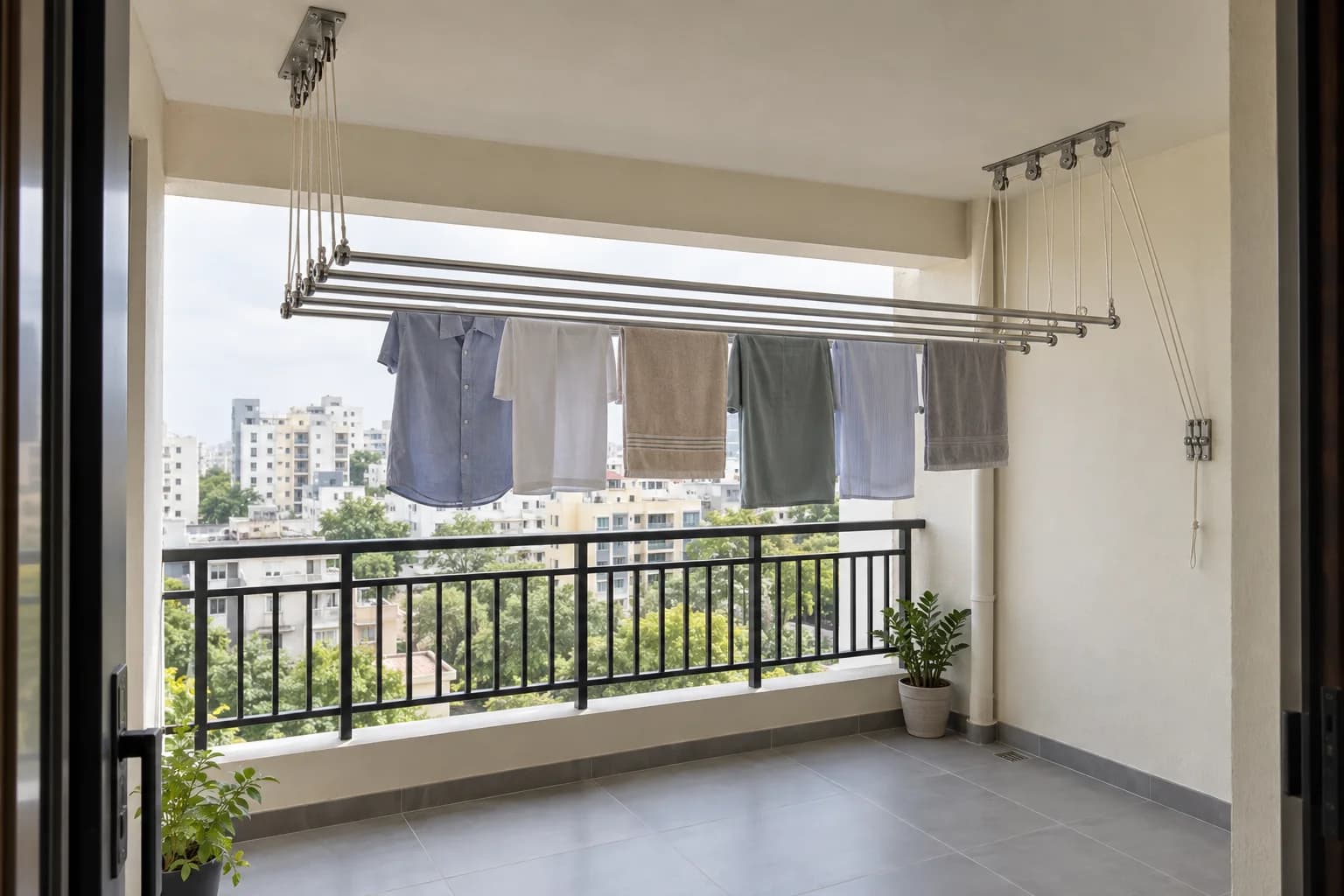
EverSafe fits balcony cloth hangers in Hyderabad for everyday laundry drying. Share your utility space and laundry routine so we can discuss rod length, lowering height, rope reach and the ceiling fixing before choosing a system.
Begin with wash day
Describe normal laundry loads and occasional bulky items before selecting the model.
Tell us how often you wash and whether sheets, towels and smaller items dry together. Loads spread through the week may need a different arrangement from several simultaneous washes. Discuss wet laundry rather than empty rod count.
Show where laundry comes out of the washer and where the user stands to load it. The rods should lower to a convenient position without forcing someone to lean over a railing or climb onto a stool. Discuss who will use the pulley and their comfortable reach.
Compare the products
Compare the actual arrangement before choosing permanent ceiling fixings.
| Option | Useful when | Check before choosing |
|---|---|---|
| Manual ceiling pulley hanger | You want to raise laundry above floor space used for movement or the washer. | Rod span, usable lowering height, pulling effort, wall control position and the selected product's load limit. |
| Independent rods or a linked rack | You need an operating arrangement suited to how individual loads are hung. | Ask which parts lower together and what happens when laundry is unevenly distributed; models differ. |
| Wall-mounted drying arrangement | The available wall and movement pattern suit a different product. | The wall support, projection when open and the space needed when loaded; compare it as a separate specification. |
| Portable floor rack | You prefer a movable option and can spare the floor area. | Its stable position, doorway clearance and storage location when folded, especially in a shared utility space. |
Price, product and complete scope
A ceiling drying hanger starts from ₹2,500 per installed system. Two systems at that starting specification would start at ₹5,000; each location still needs a suitable fixing and product choice.
Work out a starting budget
Enter the number of complete drying systems you need. Rod length, model and support requirements are confirmed separately.
Installation is included in the starting scope. The selected product, complete coverage, access and any agreed additional work determine the final quote.
Confirm the exact model and all included components before booking. No universal load capacity is implied by the price; repairs and additional structural work are scoped separately.
Span and spacing
Include the space occupied by laundry below and around the hardware.
Compare available rod spans and spacing with your balcony dimensions and laundry. Sheets may need folding or a different hanging arrangement; shirts on hangers extend farther down. More rods can add usable line length, but closely packed wet items are not the same as comfortably spaced drying capacity.
Check headroom, window swing, doors and access to the washer in both positions. Keep clearance from lights, fans and electrical equipment. Consider the longest item you normally hang so the system does not appear clear when empty but obstruct movement once a wet towel is added.
Suitable support
Identify the structural surface behind the ceiling finish before fitting.
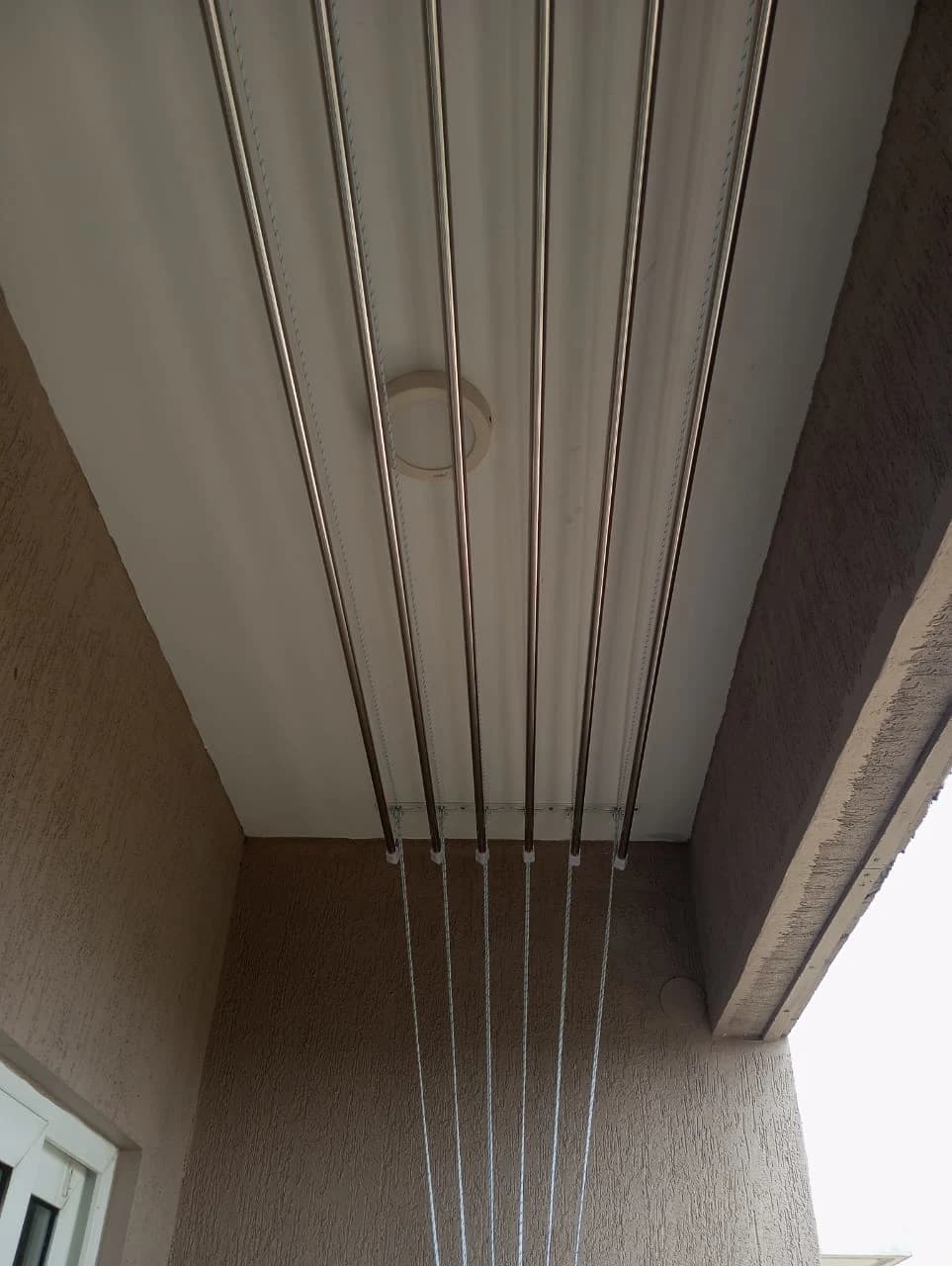
Show the proposed bracket locations, ceiling height and any known service routes. Existing cracks, damp areas or previous repair work should be raised during assessment. The fixing choice belongs with the actual surface and product; do not treat an old hook or convenient beam edge as automatically suitable.
Identify decorative boards or suspended finishes before selecting the model. A suitable structural fixing or separately planned support detail may be needed. If the owner or society restricts drilling, share that requirement early so an appropriate arrangement can be discussed before an installation appointment.
Complete system choice
Ask which parts and operating arrangement the selected model includes.
Compare rod material, span, brackets, pulleys, rope and securing hardware. Confirm care guidance and the selected system's load limit. Stainless steel rods alone do not establish the capacity of ceiling fixings or other components.
Place the rope route and securing point where the user can operate them without reaching across laundry or the washer. Avoid diagonal ropes across a doorway and keep loose cord out of the reach of children and pets. A tidy route should remain inspectable for wear.
Everyday use
Learn the operation of the model the household will actually use.
Lower the rods as instructed and distribute laundry across the intended hanging area. Account for wet towels and bedding instead of using dry-clothes weight as a guide. Avoid hanging from the rods or adding buckets, plants and other items that the drying system was not selected to carry.
The regular user should try raising, controlled lowering and securing the rope at handover. Confirm that the rods remain level as intended and that the securing mechanism holds correctly. Stop if operation becomes jerky, the rope slips or a bracket moves; pulling harder is not a maintenance method.
Prepare for fitting
Provide suitable access and clear the work area before installation.
Provide ceiling height, dimensions and management requirements. Clear movable items below the proposed position and identify fittings needing protection. Confirm that the selected rods can pass through doors, corridors and lifts.
Review the fitted model, safe operating method and care instructions with the person who will use it. Check normal door and window movement with the rods lowered and raised. Keep the quotation or product details so future rope or pulley enquiries can identify compatible replacement parts.
Existing system service
Send a full view, close photos and a description of the symptom.
Frayed cord, uneven rods, rough pulley movement or slipping need the cause checked. Compatible parts and routing matter. Replacing rope may not resolve a worn pulley; confirm which components the repair retains and replaces.
Loose brackets, damaged rods or a changed ceiling can require a wider scope than a simple part replacement. We can assess systems fitted previously, including removal and refitting enquiries. Stop using an unstable loaded hanger and arrange review; repair and reinstallation pricing are separate from the new-system starting offer.
Care and future changes
Follow the selected model's care instructions and notice changes in operation.
Look for rope wear, catching, uneven travel, surface damage and movement at fixing points. Keep rods clean using the product's care guidance and avoid applying oil or chemicals to pulleys without checking compatibility. Prevent stored items from snagging the cords or obstructing the lowering path.
New cabinetry, a different washer or another home can change the usable span and controls. Request assessment before removal. New hardware and refitting may be needed even where the existing rods can be reused.
Hyderabad and nearby coverage
Send your locality and the utility photographs together. Include ceiling access and building work-hour requirements when requesting an installation or repair visit.
If the washer occupies most of the floor, show the space available to stand while lowering and loading the rods.
If windows, nets and service openings share the ceiling line, include them in the layout and check any drilling conditions.
For a covered terrace or deep balcony, include ceiling height, rod-carrying access and the proposed wall control position.
Make an informed choice
A hanger starts from ₹2,500 per installed system, not per sq ft. Rod arrangement, hardware, ceiling and access determine the final scope. Repairs and additional support work receive an assessed quotation.
Confirm rod count and span, ceiling brackets, pulleys, rope and wall securing hardware in the quotation. Components differ between models; a six-rod illustration does not define every starting-price option.
We can assess the ceiling and space below. Include washer, doors, windows and lights. Rods must be reachable when lowered and leave sensible headroom when raised, with laundry clear of normal movement.
Start with laundry type and frequency. Compare rod span, spacing and reach with the balcony dimensions. Additional rods do not automatically improve convenience when airflow, support and operation have not been considered.
Follow the selected complete system's published limit and agreed installation conditions. Capacity cannot be inferred from rod count or stainless steel alone. Discuss heavy wet bedding and spread laundry as instructed.
Pulling effort depends on load, pulleys, rope routing and the user. At handover, practise controlled lowering, raising and securing with a suitable load rather than judging only how empty rods move.
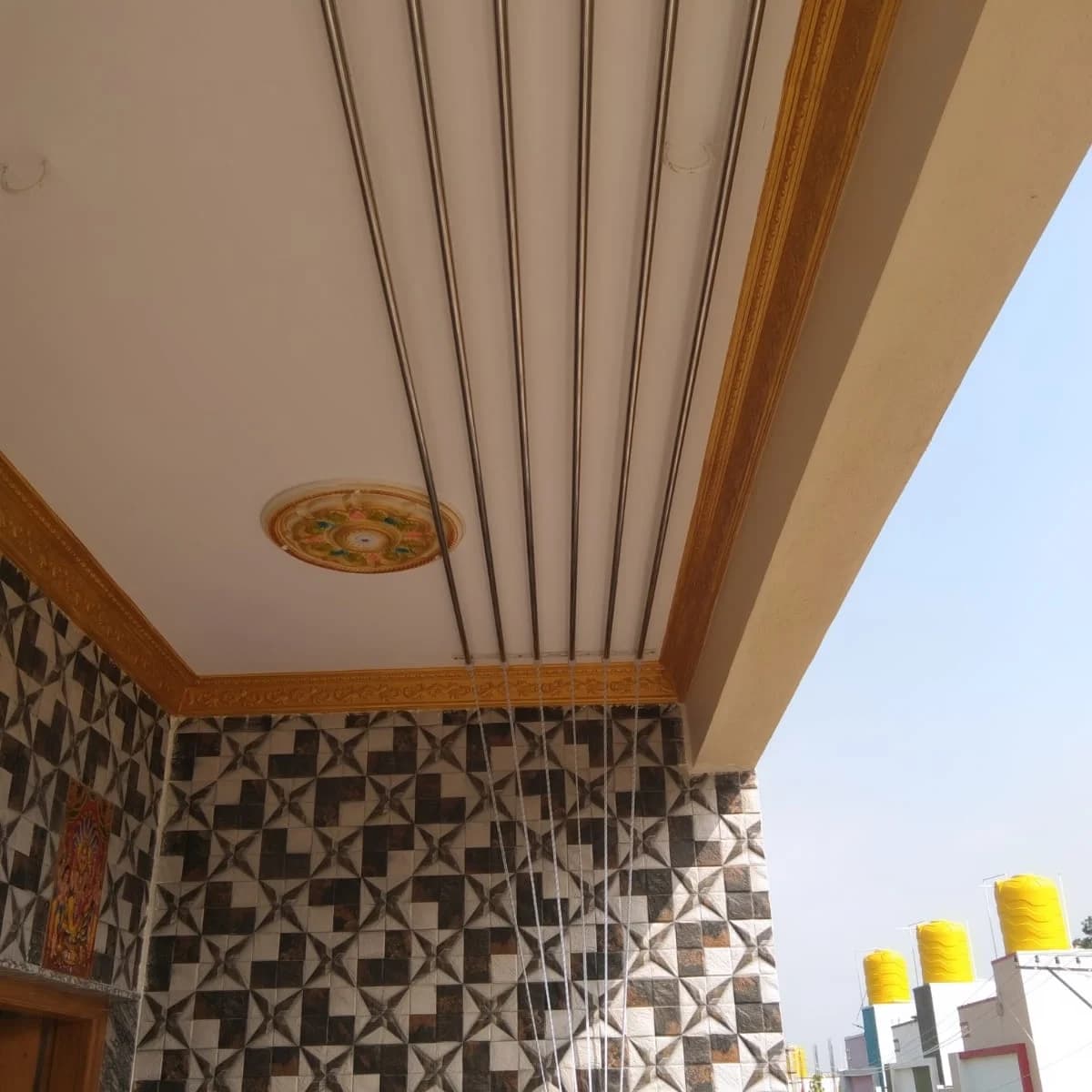
Decorative ceiling panels should not be assumed to support the loaded system. Identify the structural fixing surface and any needed support detail first. Share photographs and available ceiling drawings before choosing the position.
That depends on the product and structure. Adhesive hooks are not an equivalent to suitable mechanical support. If drilling is restricted, discuss an appropriate alternative drying arrangement rather than assume ceiling fitting is possible.
The layout can be assessed together, with separate suitable supports. Keep rods, laundry and moving ropes clear of mesh. Preserve the bird net's service opening so operating the hanger does not require detaching it.
Yes, existing ropes, pulleys, rods, brackets and securing hardware can be assessed. Send wide and close photos. Compatible parts and overall condition determine repair suitability; repair prices are scoped separately.
Stop operating the loaded hanger and keep people clear below. Unload only if safely possible without disturbing instability, then arrange assessment. Do not pull harder or use improvised knots as a repair.
A ceiling hanger provides hanging space, not heat or rainproofing. Drying still depends on weather, airflow, fabric and spacing. Choose a sheltered position and keep clothes clear of walls and electrical fittings.
Reuse depends on condition, the new ceiling and suitable rod span. Removal and refitting need assessment, and fixings may need replacement. Agree responsibility for making good the old fixing points with the owner.
Send locality, dimensions, ceiling height and photos showing windows, doors, lights and washer. For repair, include the model if known and whether the problem is slipping, lifting, tilting or a loose fixing.
Let’s plan your installation
Send EverSafe your utility photos, dimensions and locality. For repairs, show the full system and the affected rope, pulley or bracket so we can discuss the right visit.