
Narsingi, Kokapet and Manikonda
For a balcony or terrace enquiry, show the actual entry face, floor and adjoining service spaces. Confirm whether the border or proposed work touches common property and which permissions are required.
Property barrier planning
Begin with the route you have seen. Compare the complete boundary, its fixing base and a practical way to keep terrace or equipment access secure.
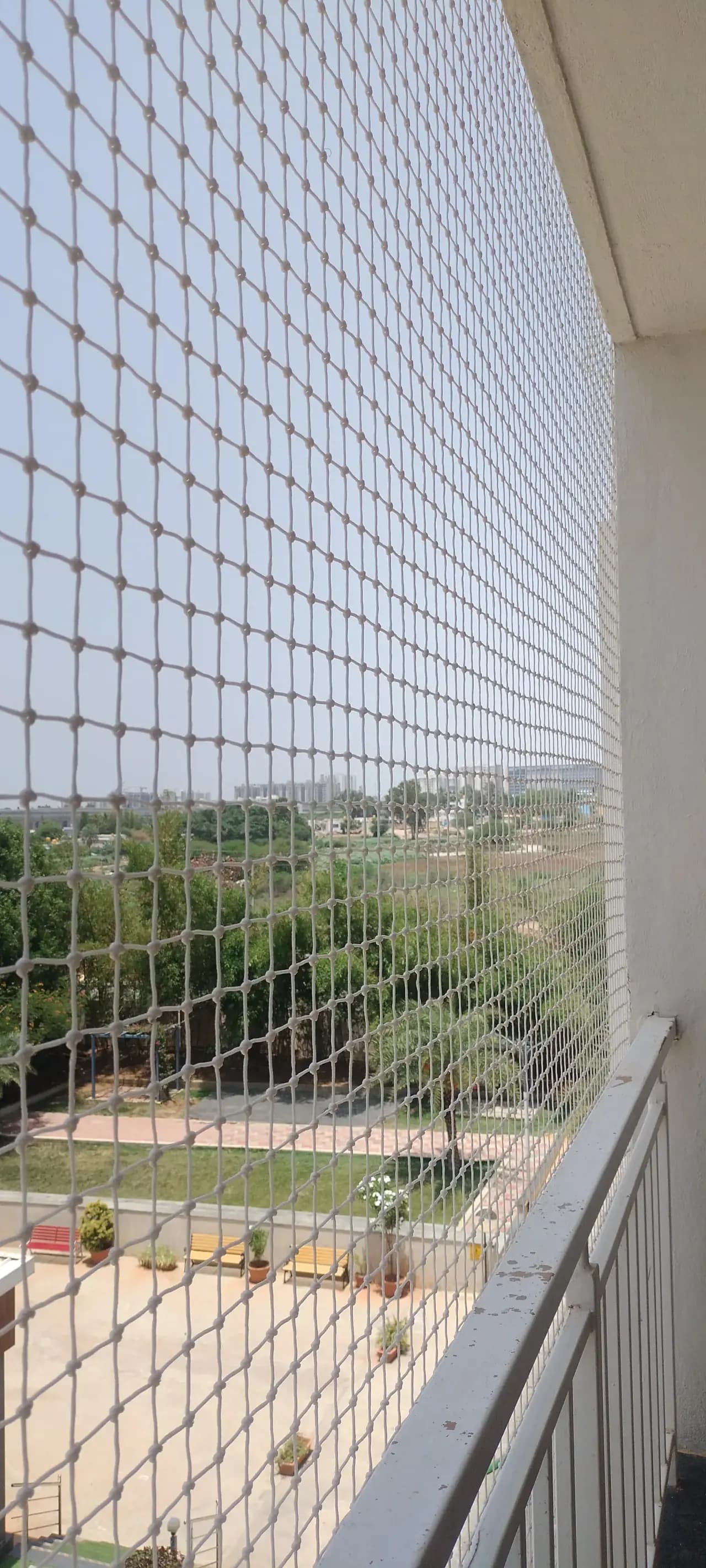
If monkeys have used a route into your Hyderabad balcony, terrace or utility area, EverSafe can assess the opening and suitable barrier options. Share the observed entry point and any damaged existing net. Installed netting starts at ₹20 per sq ft where the assessed opening and selected system are suitable; rigid barriers or extra supports need their own scope.
Before selecting a product
An animal seen on a neighbouring roof does not tell us which part of your home needs a barrier. Start with the specific opening or damaged boundary you want assessed.
From a safe indoor position, note where entry occurred and what the animal used immediately before it: a wall edge, parapet, pipe-side gap or open door. Wide photographs of that area help more than close-up photographs of the animal. Do not approach to collect evidence.
Identify the part of the property that needs to stay inaccessible and who controls adjoining structures. A small accessible window may need a local barrier; several connected terrace faces may require a broader plan. Do not assume that every nearby structure should be enclosed.
Suitability first
Monkey safety net is a service enquiry, not a single universal material specification. The assessment should explain why the proposed complete system suits the actual opening.
| Situation to assess | Option to compare | Decision to confirm |
|---|---|---|
| An opening with a sound continuous fixing border | A suitable specified net and perimeter system | Mesh, edge detail and the limitations of flexible material |
| Accessible material or repeated damage to light mesh | Framed rigid mesh or a suitable grille | Frame, panel and anchor suitability together |
| A frequently opened terrace or utility access | A properly detailed gate or service panel | Usable clear opening and secure closure |
| Birds using the opening with no monkey entry | Bird-exclusion netting or perch treatment | Select the product for the observed problem |
A generic heavy-duty description, rope thickness or product photograph is not a test result for the installed barrier. Keep the existing structural guardrail in place.
Price, product and complete scope
Suitable assessed netting installations start at ₹20 per sq ft. Select the barrier first, then compare the complete measured proposal, including any support or access detail.
Work out a starting budget
Use the width and height of one net or grill face, rather than the balcony floor area. Add other faces to the final enquiry.
Installation is included in the starting scope. The selected product, complete coverage, access and any agreed additional work determine the final quote.
A 100 sq ft starting-rate example is ₹2,000 including installation. Extra support and rigid alternatives are separately specified; confirm the full installed total, transport and taxes.
The whole opening
A broad panel can look complete while leaving access around a return or gate edge. The boundary needs to be surveyed as one continuous layout.
Measure the front, returns and upper opening from suitable access. Include pipe penetrations, steps in the wall and adjoining roof or utility recesses. Agree what the installation closes and what stays outside it, with each separate face shown in the estimate.
A fold of spare net or a loosely tied opening is not a substitute for a designed edge. Select borders and closures as part of the system. If the opening has no suitable support at a corner or top edge, assess extra support or a rigid alternative before fitting.
Supports and anchoring
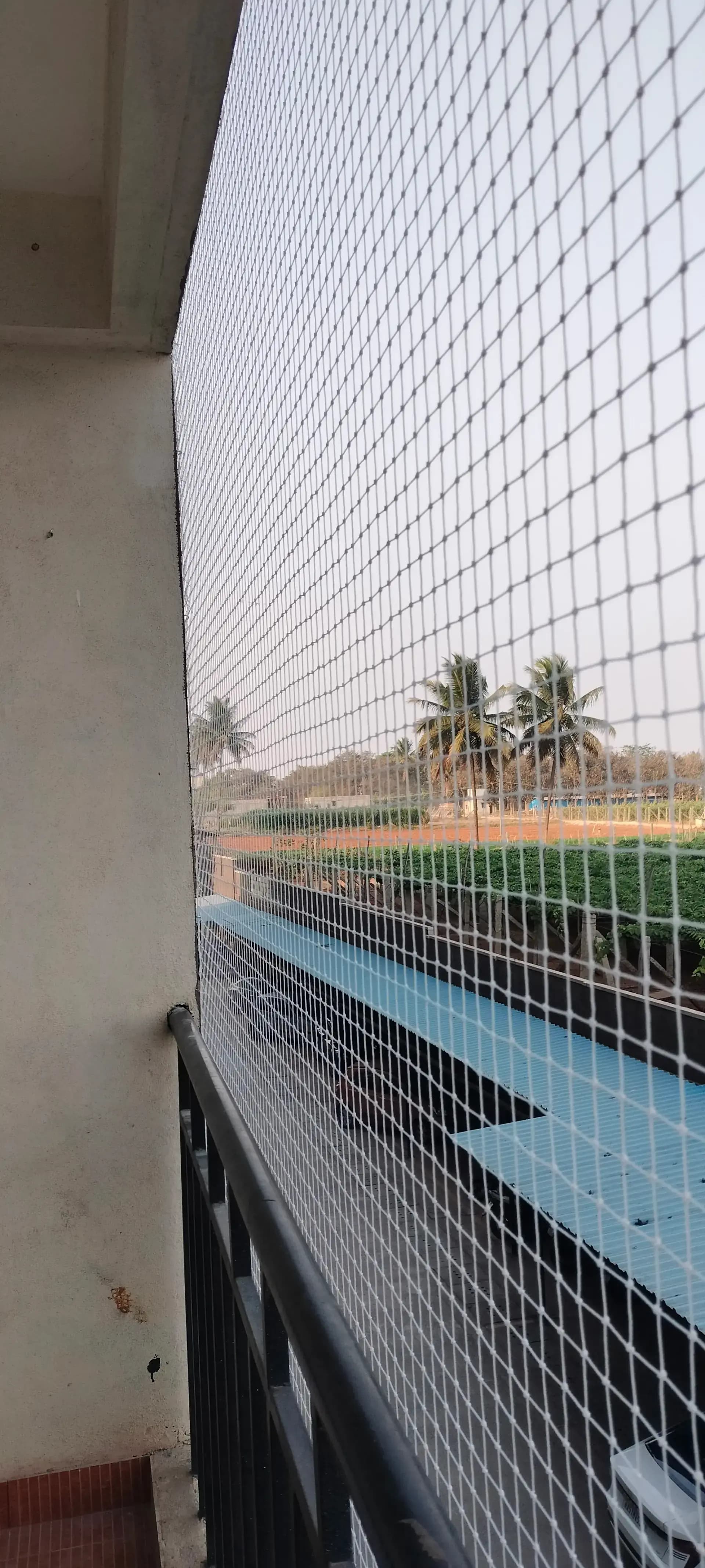
Net material and its fixing base cannot be evaluated separately. A visually substantial mesh does not compensate for an unsuitable anchor position or a deteriorated support.
Inspect the condition and type of wall, structural edge or proposed frame. Surface paint and plaster do not establish the capacity of the material behind them. Where the base or supporting structure is uncertain, obtain the appropriate assessment and identify any preparation in the quote.
Water pipes, drainage lines, AC brackets and decorative trims are not default net supports. Plan around their intended function and service access. Any added frame, drilling or finished-surface restoration should be discussed before the user approves the installation layout.
Terraces and utility spaces
List the tasks that require opening the boundary before deciding its position. A practical closure should be easy for the responsible person to operate and restore.
Show the path to tank lids, valves, pumps, solar equipment and the drying area. Measure the clearance needed for tools or replacement equipment, not just a person's shoulders. A hinged or removable section may be preferable to a continuous net across every access route.
Agree the panel size, frame where needed and closure method. Check how it behaves when opened and whether it leaves another route accessible. Record who holds any key or release and who checks that the boundary is restored after maintenance or visitors.
Reduce access opportunities
Property changes work best when the household also manages openings and accessible food. Choose practical routines that the occupants can keep using.
Keep food and waste securely stored and avoid feeding monkeys. Close accessible doors and windows when needed, including service windows and pet entrances. These are useful precautions while a property barrier is being assessed and remain relevant after installation.
If a route involves a common terrace or another owner's structure, work with the association or owner on access arrangements. Raise any tree or building alteration through the appropriate permission process. The netting survey does not authorise work on neighbouring property or vegetation.
Before work begins
The installation is intended to exclude entry into an agreed space. It must not enclose an animal or become a trapping device.
Check the area before closing it. If an animal is present, keep residents and pets away and seek appropriate local wildlife guidance. Avoid chasing or cornering it and do not attempt to move it by tightening a net around the opening.
The Telangana Forest Department provides wildlife information and official contact channels. An emergency animal situation needs the relevant authority or rescue support, not an installer improvising capture. Agree a clear, unoccupied work area before the barrier installation resumes.
An orderly installation
Once a suitable barrier is selected, the work plan should match the property's access and operating requirements. Any limitations should be visible in the proposal.
Record the measured faces, selected materials, supports, service panels and access method. Arrange owner or association permission and clear the agreed working area. Separate new installation, old-material removal and repair work in the written quote so their responsibilities remain clear.
Inspect accessible corners, borders and closures without pulling on the barrier or using an animal to test it. Demonstrate the access panel and explain normal inspection. Keep the final scope and care details for the next person arranging painting or equipment work.
Existing installations
If a previous net has opened, photograph the damage and the surrounding border. A local repair is useful only when the remaining system and the cause of failure are understood.
EverSafe can assess tears, released borders and reattachment after previous work. Local damage may allow a scoped repair when the mesh and fixing base are suitable. Repeated opening, brittle material or an unsuitable original product may justify a replacement or another barrier type.
Painting, drilling, AC replacement and changes to terrace access can alter the boundary. Ask the contractor to restore any released panel and arrange inspection before relying on it again. Material terms, workmanship and paid service visits should be clarified in writing without assuming a universal lifespan.
A measured proposal
Installed netting starts at ₹20 per sq ft where the assessed opening and selected system are suitable. The survey may identify a need for additional support or a rigid alternative.
At the starting rate, 100 sq ft gives an example of ₹2,000, including installation. A terrace can involve several vertical faces and returns, so its floor area alone is not the netted area. Measure the actual proposed boundary and show each face in the quote.
Ask for the chosen mesh, borders, fixing hardware and labour, with frames, access panels, special access and removal clearly identified. Rigid barriers need their own specification and total. Repair prices, transport and taxes should be confirmed for the actual scope before booking.
Hyderabad and nearby coverage
Share the locality and the route observed at your property. The survey is based on that opening, its supports and available access.
For a balcony or terrace enquiry, show the actual entry face, floor and adjoining service spaces. Confirm whether the border or proposed work touches common property and which permissions are required.
If your property has a sit-out, utility opening or connected terrace, provide a wide view and the maintenance route. Mention any neighbouring wall or structure involved so ownership and access can be discussed.
For a house or apartment assessment, include photographs of existing barriers and any damaged corners. Give the tank, solar or laundry access requirements before choosing a new closure.
Make an informed choice
Installed netting starts at ₹20 per sq ft where the site and selected system are suitable. A 100 sq ft starting-rate example is ₹2,000, including installation. Reinforcement, supports, several entry faces, access or a rigid-barrier alternative can change the measured quotation.
It should not be assumed suitable. A monkey-entry brief requires assessment of the observed movement, mesh, edges, fixings and access closures. Thread appearance or a heavy-duty label does not establish the performance of a completed barrier. A rigid solution may be preferable.
No universal guarantee is appropriate. Suitability depends on the complete opening, the selected barrier, maintenance and changes to surrounding access routes. The survey should identify limitations and recommend another barrier where a flexible net cannot reasonably address the requirement.
Share locality, floor, wide photos, approximate sizes and the entry route observed from indoors. Note any pulling, tearing or opened panels and show nearby structures without approaching the animal. Include tank, AC and terrace access that must remain usable.
A sighting alone does not determine a netting requirement. Describe whether animals entered an opening or damaged a boundary and which area needs protection. The assessment can then compare a local window or door barrier with a larger enclosure.
Consider it where flexible material cannot be kept out of reach, the available border is unsuitable or an access opening needs a secure framed closure. The frame, mesh, latch and anchoring all need a suitable specification. An existing grille is also assessed for gaps and condition.
A terrace plan can be assessed around the entry opening and the access required for the tank, valves, solar equipment and drying area. A gate or removable panel may be needed. Its opening size, release method and closure responsibility belong in the quotation.
A convenient pipe or bracket is not automatically a suitable support. Its intended use, condition and connection must be considered, along with equipment access. Where no suitable border exists, independent support or a different barrier may be required.
EverSafe can inspect the damage and remaining installation. A repair is considered only after assessing why the edge opened and whether the mesh and fixing base remain suitable. Repeating the same tie at a failed point may leave the underlying problem unresolved. Repair is priced separately.
Reattachment is available after assessment of the old mesh, border and new fixing surface. Brittle material, altered dimensions or an unsuitable original specification may require replacement. Arrange the assessment before painting is finished if the border or supports are changing.
Only if the selected mesh and all edge details suit the target birds as well. A monkey-entry barrier may have openings that smaller birds can pass through. Describe both requirements and compare the complete specification rather than assuming one product covers every animal.
Do not treat an animal-exclusion product as tested human fall protection. Retain the existing structural guardrail and discuss child or pet safety separately. Any additional purpose needs a suitable system and fixing specification of its own.
Keep people and pets away from the immediate area and avoid approaching, chasing or cornering the animal. Installation is paused so it cannot be enclosed behind a barrier. Seek guidance from the relevant local wildlife authority or an appropriate rescue service.
This service is for assessing and fitting property barriers. Wildlife capture, handling or relocation needs the appropriate authority or qualified service. Do not use the proposed net as a trap; fitting resumes only when the space can be closed without enclosing an animal.
Let’s plan your installation
Send the Hyderabad locality, floor, wide photographs and any existing damage. Include the terrace or equipment access you need preserved so the assessment can compare practical barrier options.