
Western practice spaces
For a terrace or indoor strip, include usable run-up, lift access and the position of nearby glass.
Hyderabad · practice lane installation
Give batting and bowling a defined space. EverSafe plans the enclosure around player movement, repeated ball impact and the people or property beyond the lane, with installed netting starting from ₹14 per sq ft.
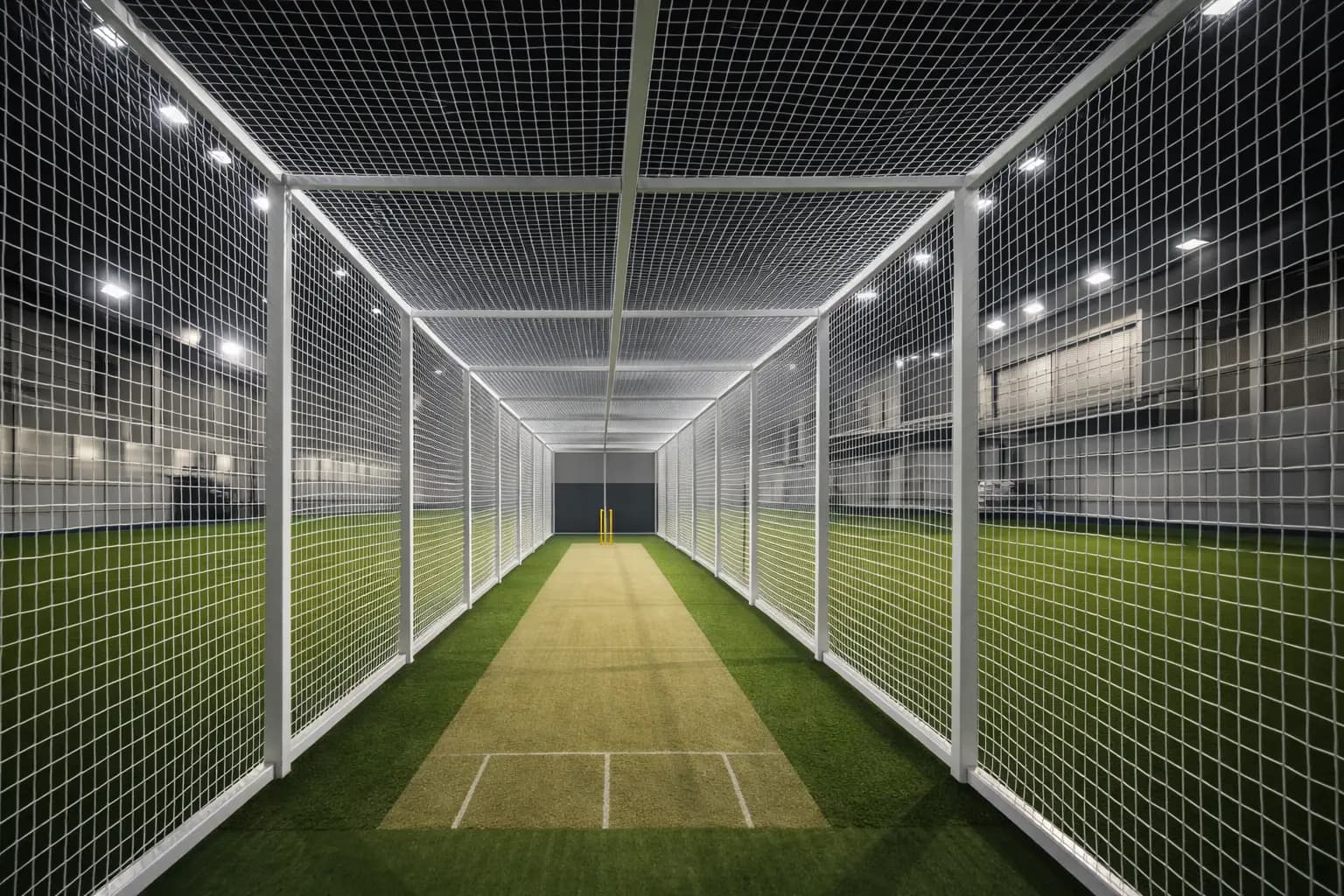
EverSafe installs cricket practice nets in Hyderabad for homes, schools, clubs and coaching spaces. Share your practice area, the ball you use and the available run-up so we can plan a lane that suits the drills.
Start with the session
Describe the training first so the proposed enclosure fits the intended activity.
Explain whether players need a full run-up, standing throws, sidearm practice or short controlled drills. Include left-handed and right-handed use, where the coach stands and where spare equipment waits. That makes it possible to discuss a workable lane rather than choose dimensions from a photograph.
EverSafe's service is net installation and assessment of existing netting. Hourly practice sessions, academy admission, coach availability and equipment hire belong with the venue or coach. A school or academy enquiry should identify its property and the exact construction or repair requirement.
Measure usable space
Measure the whole activity area, including routes outside the netted rectangle.
Mark the bowler's start, delivery area, batting position and rear collection space. Include doors, columns and any step in the floor. A compact terrace may suit restricted drills, while a dedicated coaching lane requires a different discussion about the whole training layout.
Show where the next player waits and how a coach enters without crossing active practice. Bags and loose balls need a storage or collection position. Keeping those movements out of the hitting line helps the enclosure work throughout a session, not only while it is empty.

Price, product and complete scope
Installed netting starts from ₹14 per sq ft. As a simple quantity illustration, 100 sq ft starts at ₹1,400; this is not the floor area or total price of a complete cricket lane.
Work out a starting budget
Use the width and height of one net or grill face, rather than the balcony floor area. Add other faces to the final enquiry.
Installation is included in the starting scope. The selected product, complete coverage, access and any agreed additional work determine the final quote.
Ask for poles, foundations, turf, lighting and other separately scoped work to be listed explicitly. Repairs and reattachment need their own assessed quotation.
Specify the material
Compare mesh, twine, borders and the installed arrangement together.
| Practice requirement | What to specify | What to compare |
|---|---|---|
| Tennis or other soft-ball drills | The actual ball size, expected shots and complete closure of the enclosure. | A lighter-use proposal against future plans; a later change to leather-ball use needs another assessment. |
| Repeated leather-ball practice | Mesh and twine intended for that ball, joined panels and suitable treatment at frequent impact areas. | The whole lane specification, including rear impact and supports, instead of choosing solely by visible thread thickness. |
| Outdoor or occasionally removed nets | Exposure, panel sizes, border construction and a workable storage or maintenance method. | Available material and finish options with their care requirements; obtain the selected specification in writing. |
Follow escaped balls
Check the whole perimeter from the batter's position, including the smallest gaps.
Discuss the ground-level finish, junctions between panels and returns where a side meets the rear. The design should account for ball collection without creating a standing opening. Avoid using loose weights, improvised ties or exposed ropes where players can trip over them.
Map lifted shots and frequent impacts behind the batter. Roof panels need compatible supports and clearances from lights or other services. An extra rear panel may be discussed where the intended practice requires it, but it should be specified rather than assumed to be standard.
Home and rooftop sites
Start with the building, its access and what surrounds the terrace.
Identify where a frame could be supported without obstructing tank access, drains or maintenance routes. Any structural or waterproofing work needs an agreed approach with the property manager or appropriate specialist. A thin parapet, railing or existing shade frame is not automatically an adequate net support.
Show the direction of windows, balconies, roads and parking beyond the terrace. Agree whether the space is dedicated to practice or shared with drying and maintenance. Retain sound structural edge guarding and keep play clear of it; ball-stop mesh is not a person-catching system.
The complete enclosure
Review the mesh and its supporting structure as one installation.
Send base, joint and corner photographs as well as a wide view. Loose bases, corrosion, sharp contact edges or unsuitable spans may change what can be reused. The installation proposal should identify any support work instead of silently treating all visible metalwork as ready for use.
Separate net panels and normal fitting from a new cage, foundations, gates, surface work or lighting. Record the proposed entrance and maintenance access. This lets an owner compare two offers for the same enclosure rather than compare a net-only figure with a complete facility price.

Repair or replace
Photograph the damaged area together with the surrounding mesh and attachment.
A local tear in sound mesh may suit a repair; stretched seams, brittle fabric or worn edges may justify replacing a panel. When a net rubs against a sharp surface, that contact needs attention as part of the repair discussion or a fresh patch may wear again.
We can assess nets detached for painting, roof maintenance or frame work, including previous installations. Confirm whether the original panels still fit and whether the fixing border changed. Patching, reattachment and replacement are priced for the assessed job, with no assumed repair minimum on this page.
Keep practice usable
Check after maintenance work, unusual movement or a reported escaped ball.
Look for open closures, hanging ties, torn seams and displaced bottom edges. Check that the entry and run-up are clear and that stored equipment has not pushed into the net. Pause the affected lane when damage leaves containment uncertain and arrange an assessment before it is reused.
Follow the care guidance for the selected material and support system. Avoid climbing the mesh or using it to store bats, tarpaulins and signs. Keep removed panels away from sharp objects and clearly identify them, so refitting restores the intended panel arrangement rather than a guessed sequence.
Get a usable estimate
Useful photographs and measurements help settle the questions for a site visit.
Photograph from the batting end and the run-up, then add the roof line, entrance and existing supports. Supply approximate length, width and intended height, floor level, ball type and number of lanes. Include any known restriction on drilling or installation hours.
Confirm panel quantities, the chosen net specification, support work and access arrangements. State whether turf or lighting is a separate project. For managed Hyderabad sites, have the responsible person available to agree material movement and the work zone before an installation appointment is finalised.
Hyderabad and nearby coverage
Share the property location and access details so the visit can be planned around your lane and operating schedule.
For a terrace or indoor strip, include usable run-up, lift access and the position of nearby glass.
For an open ground or shared facility, show existing poles, lane entry and where waiting players stand.
For school or home practice, include gate access, teaching hours and the boundary facing other users.
Make an informed choice
Installed netting starts from ₹14 per sq ft for the agreed specification and suitable fixings. Side, rear and roof panels determine quantity. Confirm poles, foundations, special access, turf and lighting separately.
This enquiry is for supplying, fitting or repairing netting at your property. It does not reserve a practice lane, provide coaching or book equipment. Facility managers can enquire about construction or replacement panels.
A terrace can be assessed for playing space, supports, access and lofted-ball escape. Include neighbouring openings. Retain the structural parapet or guardrail; cricket netting does not replace the building's permanent edge protection.
Send the available length, width and height, including run-up and space behind the batter. Drills, player movement and ball type determine suitability. A compact enclosure is not automatically a full-length academy lane.
Do not assume interchangeability. Identify the ball and practice intensity so mesh, twine, seams, rear coverage and supports can be selected together. Arrange reassessment before switching to a different ball or faster training.
Consider roof coverage wherever lifted balls could leave the side net and reach other property or public areas. The assessment also covers lights, roof supports and any opening needed to maintain them.
The starting net rate is not a complete-facility quotation. Ask for separate scope covering poles or frames, foundations, surface, lighting and gates, including which existing components can be retained.
A shared divider can be assessed for the drills and simultaneous use. Plan entrances, waiting players and ball collection so someone using one lane does not step into the neighbouring batter's practice.
We can assess existing supports. Send close photos of joints, bases, corrosion and fixing holes. A frame previously carrying shade or bird mesh may require a different specification for cricket-ball containment.
Request removable or retractable coverage before agreeing the layout. It needs a defined stored position, manageable operation and reliable edge restoration. A casually tied corner should not become the daily closure method.
Yes, after assessment. Local damage in sound mesh may be patchable; brittle fabric or several failed edges may require panel replacement. Patching and reattachment, including previous installations, receive a separate repair quotation.
Include those surroundings in the assessment. Net movement, side returns, overhead escape and clearance all matter. Moving the lane or changing the playing direction may be preferable to placing mesh directly against glass.
Staff should review closures, the permitted ball type, clear access and operating checks at handover. They still manage supervision and practice rules. Keep students away during installation, drilling, tension adjustment and repairs.
Send views from both ends, rough dimensions, ball type, floor level and planned drills. Include the run-up, posts, entrance and nearby windows or paths. Final quantities follow measurement and the agreed specification.
Let’s plan your installation
Send EverSafe your location, lane photographs, rough dimensions and ball type. Tell us whether this is a new enclosure, an extension or repair work so we can discuss the right scope.