
Home, school and suitable practice sites
Send the lane dimensions, ball type and frame photographs, with close views of damaged panels if repairing.
Mysore, Karnataka
Practice lanes designed around the ball path
Before choosing net thickness, decide where balls can travel and where players, coaches and visitors will stand.
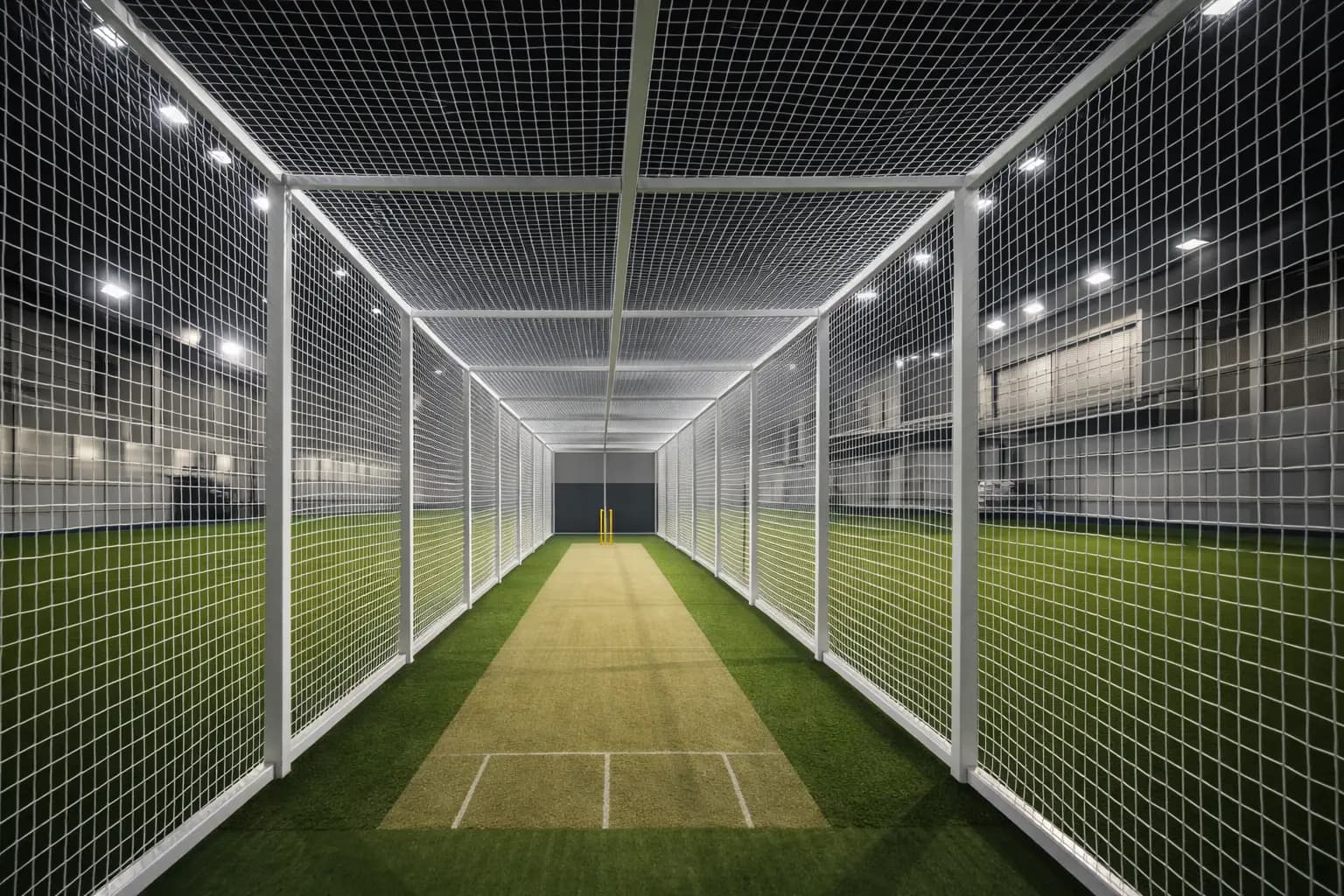
A practice lane should contain the ball while giving the batter, bowler and people nearby a considered layout. EverSafe installs cricket netting in Mysore from ₹35/sq ft including installation. We discuss ball type, lane dimensions, side and roof coverage and supporting structure. This service is for net installation and repair; a complete turf, lighting or booking facility is a separate scope.
List the users and ball type
A tennis-ball home setup and a leather-ball coaching lane do not share an automatic specification.
For a Hootagalli or Hebbal enquiry, include whether the lane serves a household, school or organised coaching session. Describe bowling machines, simultaneous lanes and spectator access. Netting is one part of the facility; protective equipment and controlled practice remain necessary.
Identify the supplied product
Mesh aperture, twine, knots and edge reinforcement affect how a net performs in use.
Compare suitable nylon or HDPE options and their intended cricket application. A household bird net should not be substituted for an impact net. Ask how the product will be hung to manage movement and rebound, rather than requesting maximum tightness along every edge.
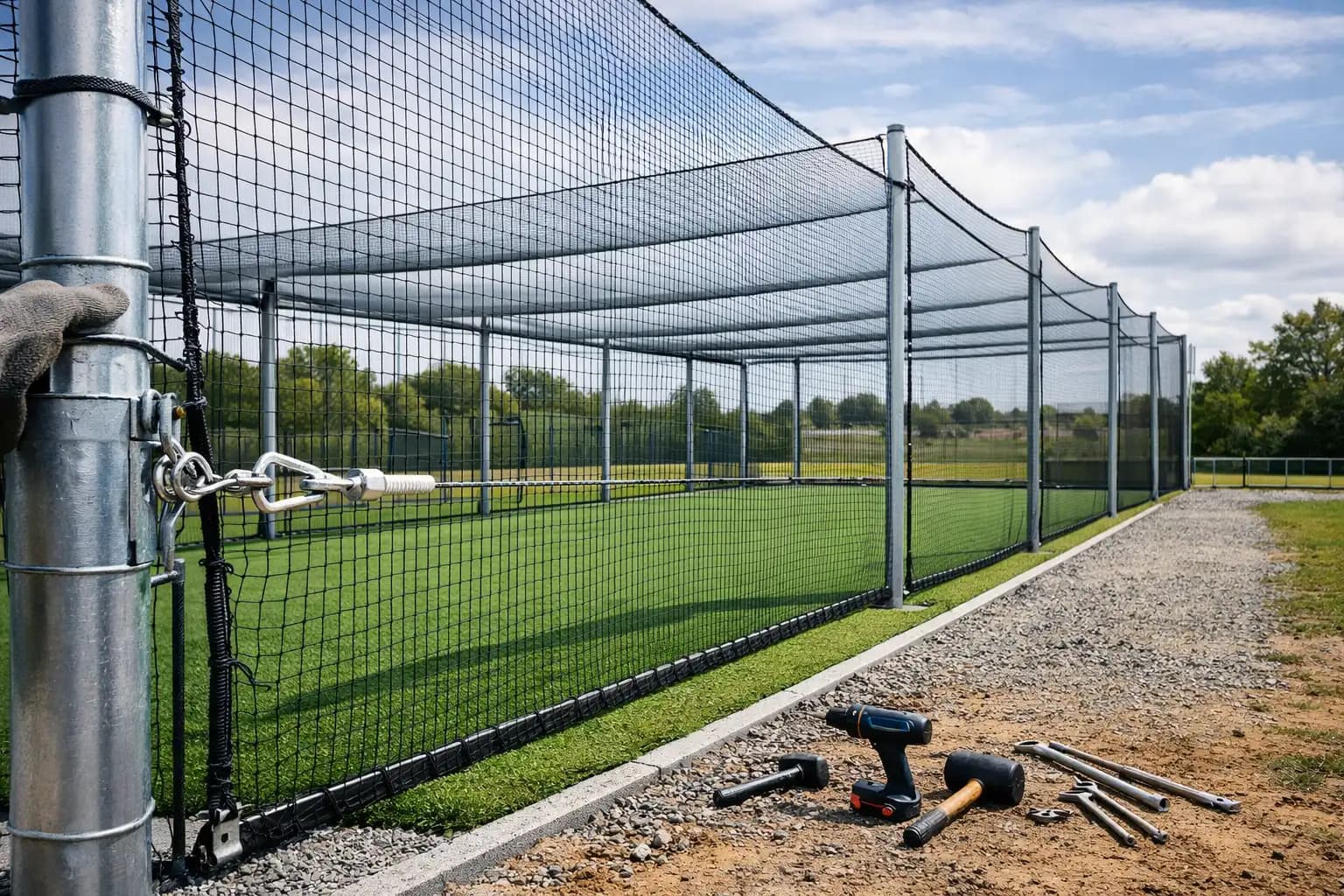
A clear starting point
From ₹35/sq ft including standard net fitting; all lane faces are measured separately.
Your space, your starting budget
Use the width and height of one net or grill face, rather than the balcony floor area. Add other faces to the final enquiry.
Installation is included in the starting scope. The selected product, complete coverage, access and any agreed additional work determine the final quote.
Turf, lighting, groundwork and structural design are not implied by a netting starting rate. Confirm the complete itemised scope.
Account for adjoining users
The batter’s position, bowler’s approach and space beside the net influence the layout.
At a Vijayanagar site, show doors, parking, windows and the area behind the bowler. Lane width, height and length follow the intended practice and a suitable facility assessment. Avoid inventing a universal dimension from the size of the available patch of ground.
Review roofs and backstops
A net can look complete while leaving an opening below, above or beside the activity.
Discuss overhead coverage, the bowler-end arrangement and gaps at the ground. Adjacent lanes need separation that does not billow into another player’s space. Any entrance should be positioned and managed so people do not step into an active ball path.
Check supports and permission
Netting cannot make an unsuitable frame or rooftop safe for cricket.
Show frame bases, anchor connections and any previous damage. A rooftop proposal in JP Nagar requires appropriate structural and activity assessment, neighbour consideration and permission before netting scope is accepted. Roof waterproofing and drainage also need to remain serviceable.
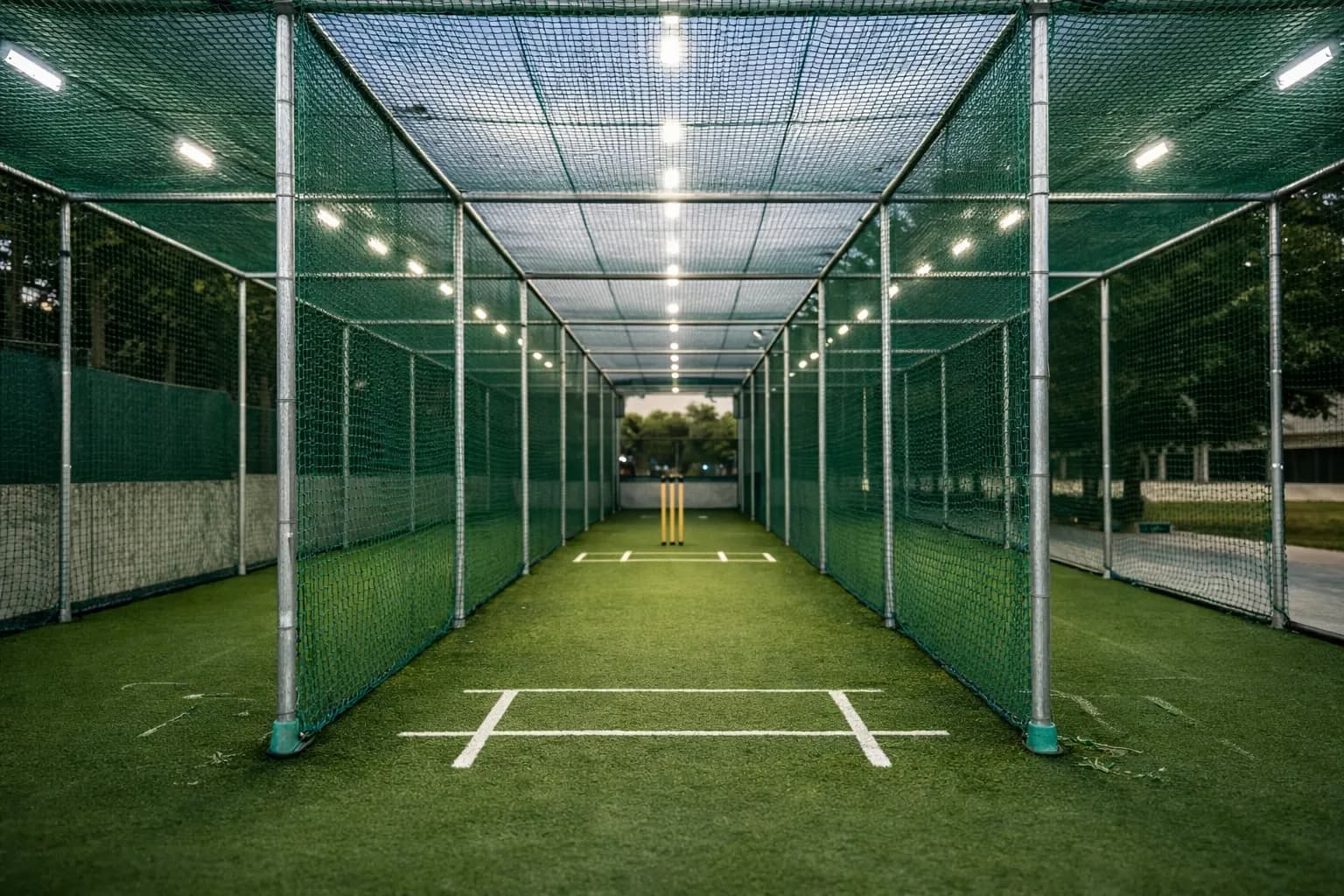
List every covered face
Standard cricket-net fitting starts at ₹35/sq ft for the agreed net scope.
A 100 sq ft panel starts at ₹3,500; lane sides, backstop and roof are separate measured faces. Posts, foundations, turf, ground levelling, lighting and machines are not implied by a net-only rate. Product changes, access, additions and taxes should be explicit.
Complete a practical handover
Installation requires a clear work area and an agreed facility arrangement.
After supports and permissions are settled, the team fits the selected panels and reviews visible joins, lower closure and access. The responsible operator should assess the complete practice area before use. Fabrication, foundations and multiple lanes affect timing; a small net repair follows a different schedule.
Inspect the high-wear areas
A gap that passes a ball defeats the containment purpose.
Check net integrity, seams and bottom edges before practice, with particular attention around the batter. We assess compatible patches, panel replacement and reattachment of previous work. Do not keep using a damaged lane because another layer of loose net has been hung behind the tear.
Keep activity needs distinct
The right scope follows the actual game rather than a generic sports-net label.
A Kuvempunagar school using the same area for different games should list each ball and activity. General sports perimeter netting may have different height and mesh requirements from a cricket lane. A terrace enclosure also needs its own roof-access and structural considerations.
Mysore and nearby coverage
Include the ball type and intended users with the locality. A rough site plan should show neighbouring activity and the entrance as well as the lane.
Send the lane dimensions, ball type and frame photographs, with close views of damaged panels if repairing.
Make an informed choice
Standard netting starts at ₹35/sq ft including fitting. The specification and all faces of the enclosure are measured for the quote.
The starting calculation is ₹3,500. A complete lane usually includes several faces, not just one panel.
We assess the intended ball and practice intensity before specifying suitable netting and the enclosure. A light household net is not an automatic substitute.
Only if the complete product and facility arrangement are suitable for both. Declare both uses at the design stage.
A netting rate does not automatically include turf, ground preparation, lighting, posts or equipment. Ask for those items separately if required.
Overhead containment is an important part of outdoor practice planning. The roof, height and extent need assessment for the intended activity.
Excessive tension can create undesirable rebound. Hanging and tension should follow the product and facility design rather than a universal tightness rule.
Only after suitable structural, activity, access and permission checks. Netting alone does not make a roof appropriate for cricket.
We inspect the surrounding mesh and impact damage. A compatible repair may be possible, but extensively worn panels may need replacement.
If a ball can escape or the net is compromised, stop using the affected setup until it is repaired and reviewed.
The entrance and waiting area should be planned away from active ball paths and managed by the responsible operator.
Yes. Send the site dimensions, ball type, number of lanes, existing supports and arrangements for access and permission.
From your first photo to the final fitting
Send the locality, approximate lane dimensions, ball type and support photographs. Mark neighbouring windows, walkways and the proposed entrance.