
Windows, signs and accessible shelves
Central city enquiries can show the whole landing depth and window movement in one photograph.
- Danavaipeta
- Prakash Nagar
- Tilak Road
- AV Appa Rao Road
Rajahmundry, Andhra Pradesh
A deterrent for the landing surface
Treat the shelf birds use, without blocking the building.
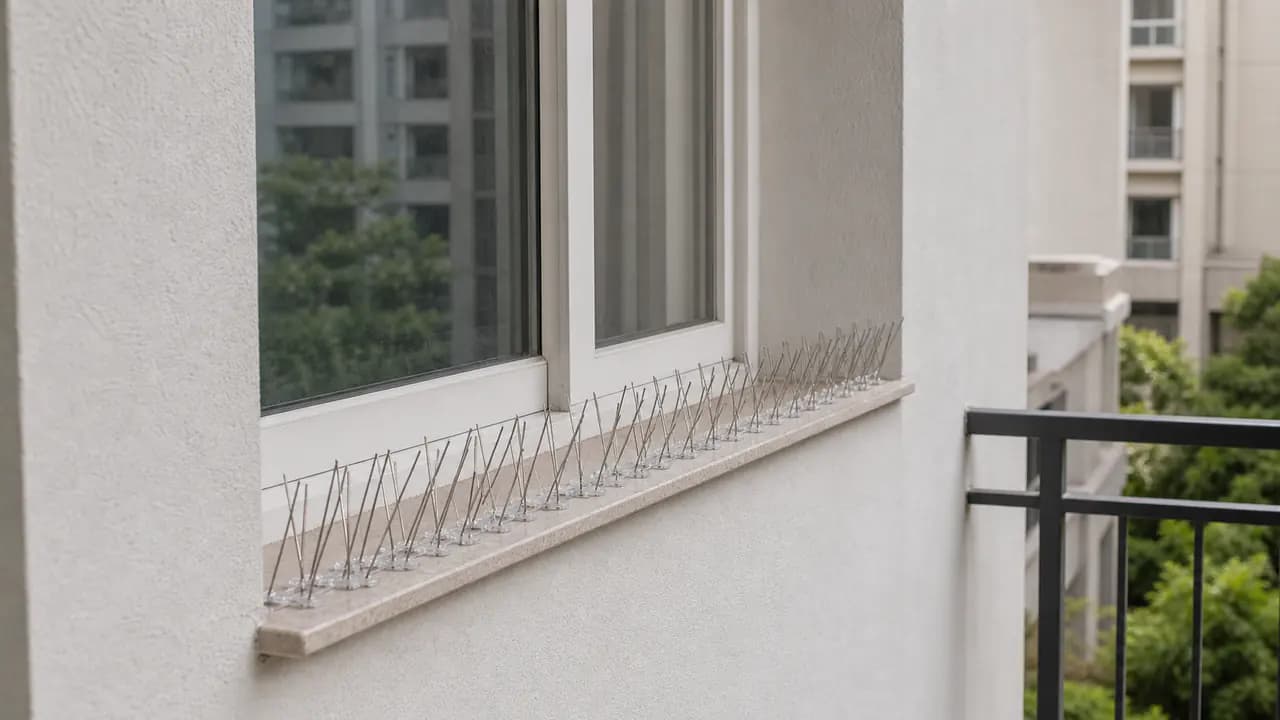
Bird spikes can deter landing on suitable narrow ledges, sign tops and selected AC shelves. EverSafe assesses Rajahmundry surfaces and installs agreed spike systems from ₹150 per running foot including installation. An open balcony may need netting instead.
Landing problem
Mark the shelf where birds actually land and any adjacent surface they can use instead. A strip fitted to the wrong edge may simply move the resting point.
Show droppings and the full landing width from safe access.
Include nearby pipes, signs or brackets that remain available.
Spike selection
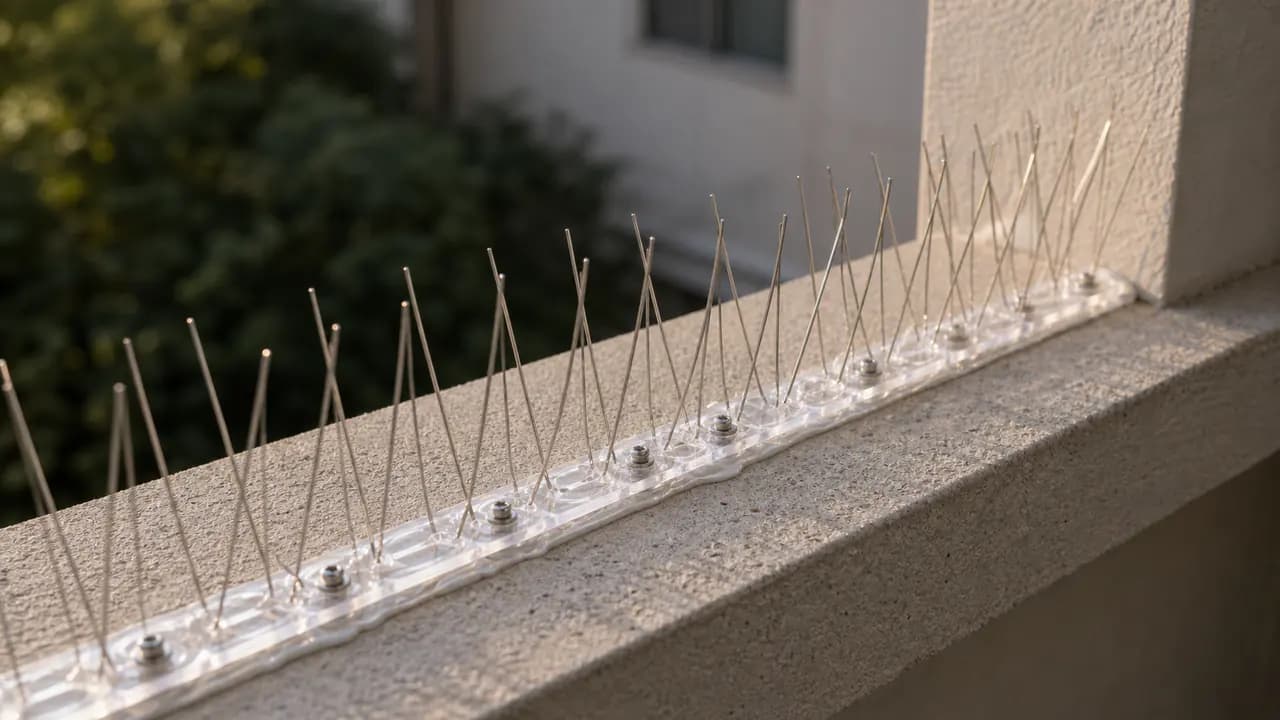
Available materials and base designs vary. Discuss the selected product’s intended bird and surface use, coverage width and fixing instructions without assuming every spike strip performs identically.
A clear starting point
Installed bird spikes start at ₹150 per running foot. A standard 10-running-foot length starts at ₹1,500; ledge depth, row requirements and safe access affect the final scope.
Your space, your starting budget
Measure the total installed strip length across all required rows. A wide ledge may need more than one row.
Installation is included in the starting scope. The selected product, complete coverage, access and any agreed additional work determine the final quote.
The written quote should explain how rows and coverage are measured. Spikes are a bird landing deterrent, not a guardrail or animal-proof enclosure.
Length and width
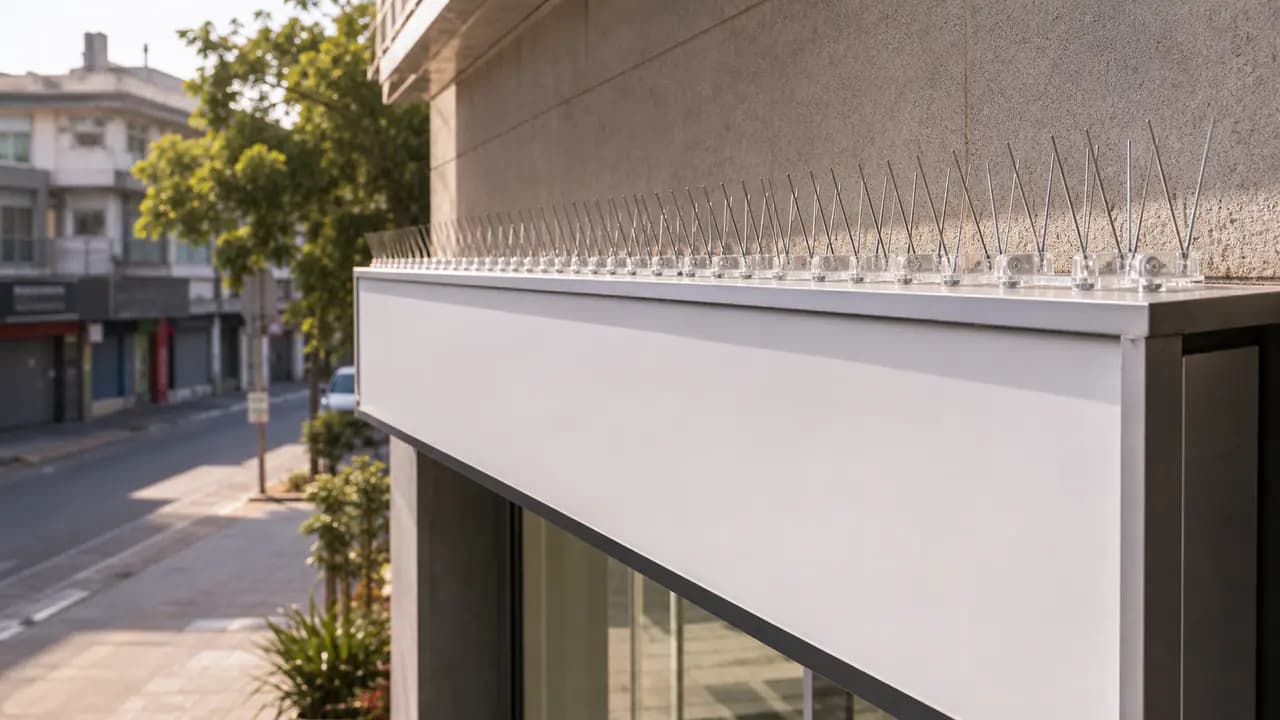
For a Tilak Road sign ledge, provide both the length and the shelf depth. A deep surface may need more coverage than one row along its outer edge.
Surface preparation
Before fixing, assess debris, surface condition and safe cleaning access. The fixing method must suit the substrate and supplied product; do not attach over material that is loose or wet.
Clearances
At an AV Appa Rao Road property, show how the window opens and where water drains. Deterrent coverage should not obstruct equipment servicing or put sharp components within normal hand contact.
Installation
Prepare the suitable base, install the selected strip by its appropriate fixing method and check the intended rows. Work should leave drainage and necessary inspection access usable.
Compare bird measures
A narrow ledge and a balcony opening call for different decisions even when the same pigeons visit them.
| Your requirement | This service | Alternative to discuss |
|---|---|---|
| Birds rest on a suitable shelf | Consider spike coverage over the landing surface | A full net may be unnecessary |
| Birds fly into the balcony | A ledge strip leaves the opening accessible | Pigeon netting may close the entry route |
| Birds use a vent or shaft | Spikes do not seal the gap | Assess species-matched bird netting |
Cleaning and inspection
Leaves or nesting material can reduce the useful coverage. Arrange safe cleaning, inspect detached bases and avoid reaching onto spikes from an unstable position or through an awkward window.
Existing installations
We assess loose strips, missing sections and reinstallation after façade work. Repairs require a suitable surface and product compatibility; damaged bases or incomplete row coverage may need a revised proposal.
Rajahmundry and nearby coverage
Tell us where the birds rest and how the ledge is reached. A Danavaipeta AC shelf and a Bommuru sign top may need different preparation even at the same length.
Central city enquiries can show the whole landing depth and window movement in one photograph.
For wider Rajahmundry coverage, include floor height and the access available for cleaning and fixing.
Make an informed choice
Bird spikes start at ₹150 per running foot for the agreed standard installation.
Width determines coverage and possible row requirements; length alone does not describe the landing surface.
No. The selected product, bird and usable shelf depth determine an appropriate arrangement.
No. They deter landing on a surface; netting may be needed to close an entry opening.
Assess service clearances, drainage, the support surface and safe access before confirming.
The suitable method depends on the product and substrate and should be specified in the quotation.
The base needs appropriate preparation; fixing over loose debris or an unsuitable surface can fail.
Normal hand contact and maintenance routes need assessment; some locations may be unsuitable.
Do not trap or disturb birds through rushed closure work; pause and seek appropriate advice.
Arrange safe removal of accumulated debris and inspect for detached bases or missing coverage.
We assess loose sections and surface condition, then quote suitable reattachment or replacement.
No universal permanent-deterrence claim is made; coverage, condition and changing bird behaviour matter.
From your first photo to the final fitting
Send length, depth, floor and available access, including adjacent landing surfaces.