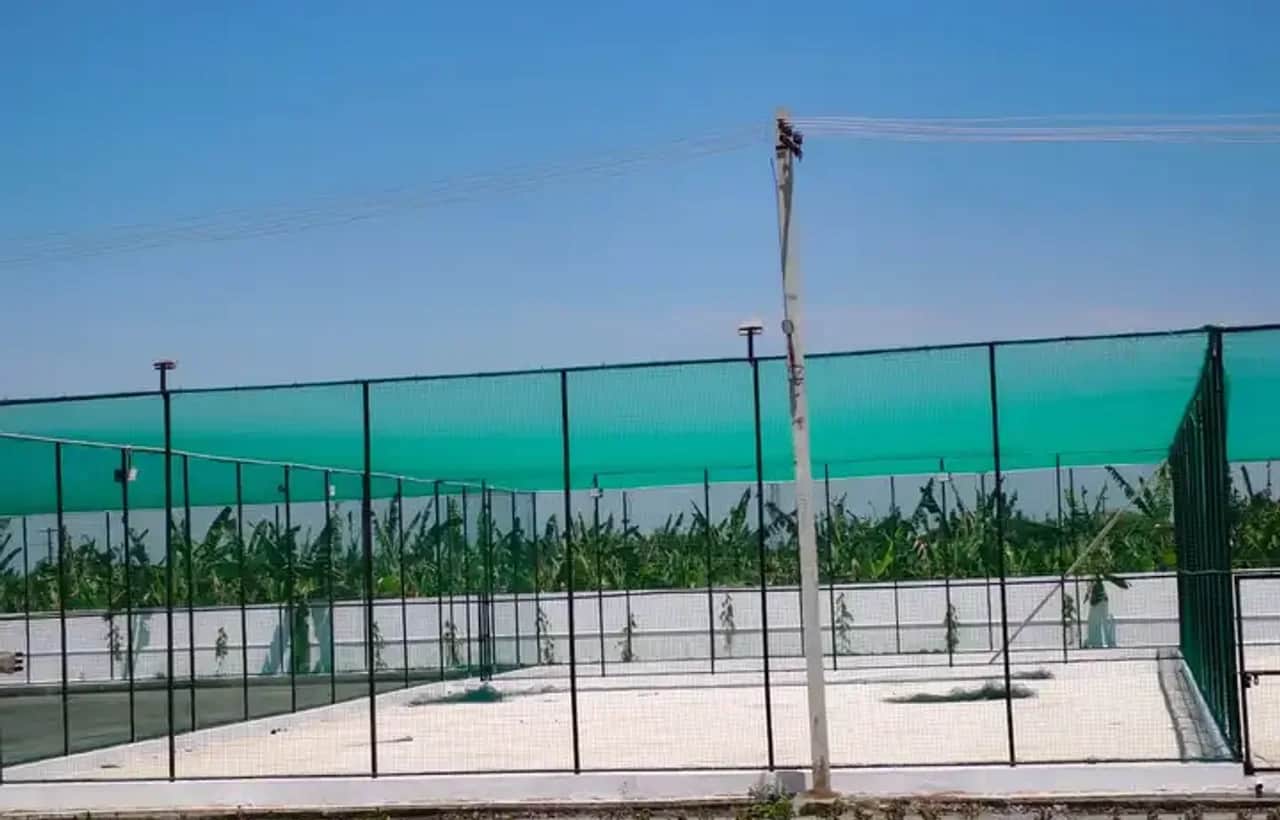
Sports nets in Tuni Rural are a technical fit before they are a material choice. The key details are ball speed, ball height, distance to people or vehicles, support points, entry access, and whether the space is used casually or for repeated practice.
The open-ground problem in Tuni Rural is behavioural as much as physical. Players hit harder because the space feels wide, younger children follow the ball farther than expected, and one long chase can break the rhythm of the whole practice session.
A missed shot can also damage what sits outside the game: a car bonnet, two-wheeler handle, house window, side wall, storage rack, or neighbour gate can take the impact first.
Long open sides, field-like practice edges, wind-facing boundaries, loose entry points, and rural approach sides where players chase balls far from the activity zone are the surfaces that decide the job. If the over-hit side is too low, balls still leave. If the divider side is weak, neighbours still complain. If the entry access is inside the impact path, the layout still feels wrong.
The local use case is larger rural-side yards, village school grounds, open family spaces, and practice patches where the ball travels farther because there are fewer walls to stop it. That tells the installer whether the space needs a tall ball-stop line, a lighter side divider, a compact enclosure, or a mixed layout with a clear entry.
Open space feels generous until every over-hit ball travels too far and practice wastes time on retrieval instead of repetition. EverSafe solves it by planning the main repeat escape line first, then adding side-return logic, support strength, rope-edge detail, and access planning.