primary locality
Yelahanka
Primary Yelahanka reference for pigeon safety net planning.
Local service page
Yelahanka presents two very different pigeon-net questions within a short drive. A New Town apartment may have a tall utility face, an AC shelf and a narrow slab return exposed to open wind; a villa toward Jakkur or the Kogilu approach may offer pigeons a long parapet connected to a window chajja. Both can leave the same droppings below, yet their workable boundaries, access methods and future cleaning needs are not interchangeable. Planning should begin with the occupied opening: trace the first landing point, side escape, shaded pocket and neighbouring perch, then record door movement, drying space, plants, drains and equipment servicing. Identify who can approve drilling or visible supports before choosing hardware. The offered mesh needs a named polymer, documented aperture, numerical twine detail, perimeter specification and relevant product evidence. Photographs are valuable for mapping these features, but direct measurement must settle the final planes and substrate. An itemised scope can then distinguish a complete humane exclusion system from a one-size-fits-all front cover priced without its returns.
Compare before deciding
This page stays focused on what usually changes around Yelahanka. If you are still comparing material, price, safety fit, or nearby visit options, the Bangalore Pigeon Safety Nets guide gives the broader picture before you call. You can also browse the Bangalore area guide when you want to check nearby local pages.
City guide
Compare Pigeon Safety Nets materials, fitting choices, price factors, and visit planning across Bangalore.
This area
Use this page when the opening, building access, or daily routine around Yelahanka is the main concern.
Nearby options
Move between the city guide and local pages when you want either a wider view or a closer match.
Nearby Planned-Family Context
these nearby locality and market references help reflect the calmer planned-layout pattern around Yelahanka, where plants, pet movement, older-family routine and settled residential comfort can make the balcony feel too familiar to question properly.
Primary Yelahanka reference for pigeon safety net planning.
Local cue for pigeon-net scheduling around Yelahanka.
Local cue for pigeon-net scheduling around Yelahanka.
Local cue for pigeon-net scheduling around Yelahanka.
Homes around Yelahanka New Town, Jakkur and the Kogilu approach see pigeons settle on utility ledges, villa parapets, open balcony returns, AC platforms and window shades. The visible mess on the floor is only the final clue. The actual plan comes from reading the upper perch, the drop line below it, and the small side point pigeons often move to once the main ledge is cleaned.
EverSafe reviews height, wind, access, the open side and the likely second ledge before choosing the net route. The path is then planned around window movement, AC servicing, clothes drying, plants, cleaning reach, and how the netting will look once the work is finished.
The same approach cannot be used on every opening — apartment towers and villa-style homes each need their own treatment. A good fit closes the resting point without turning the balcony, chajja or utility opening into a heavy-looking cage.
Service visual guide
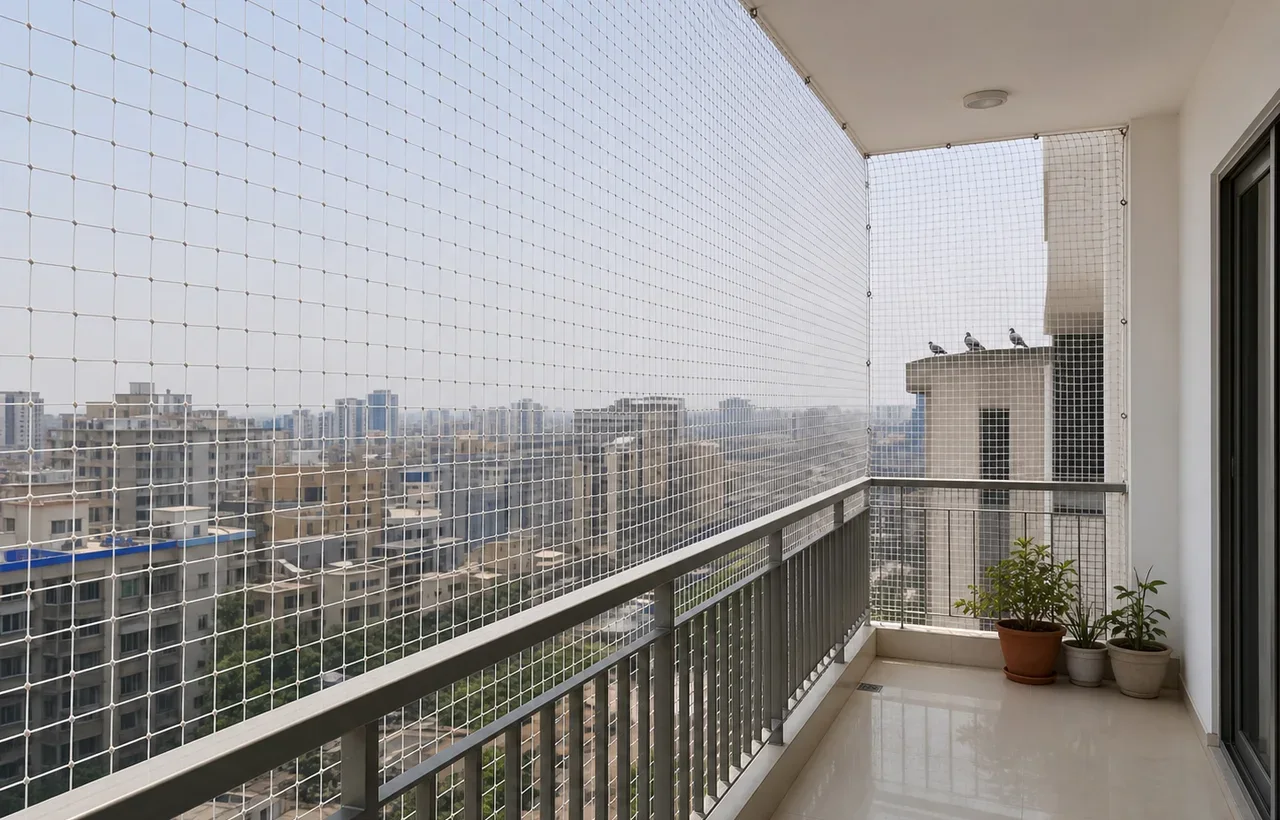
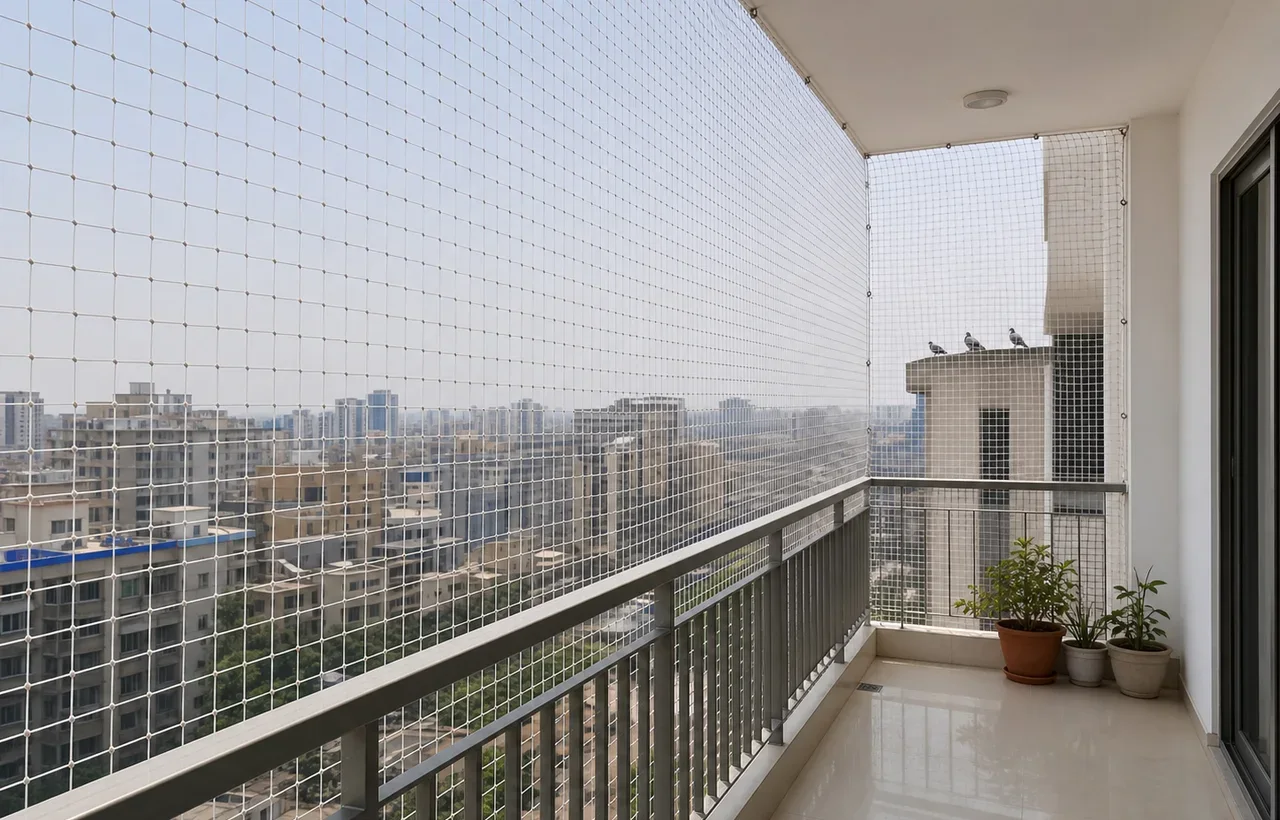
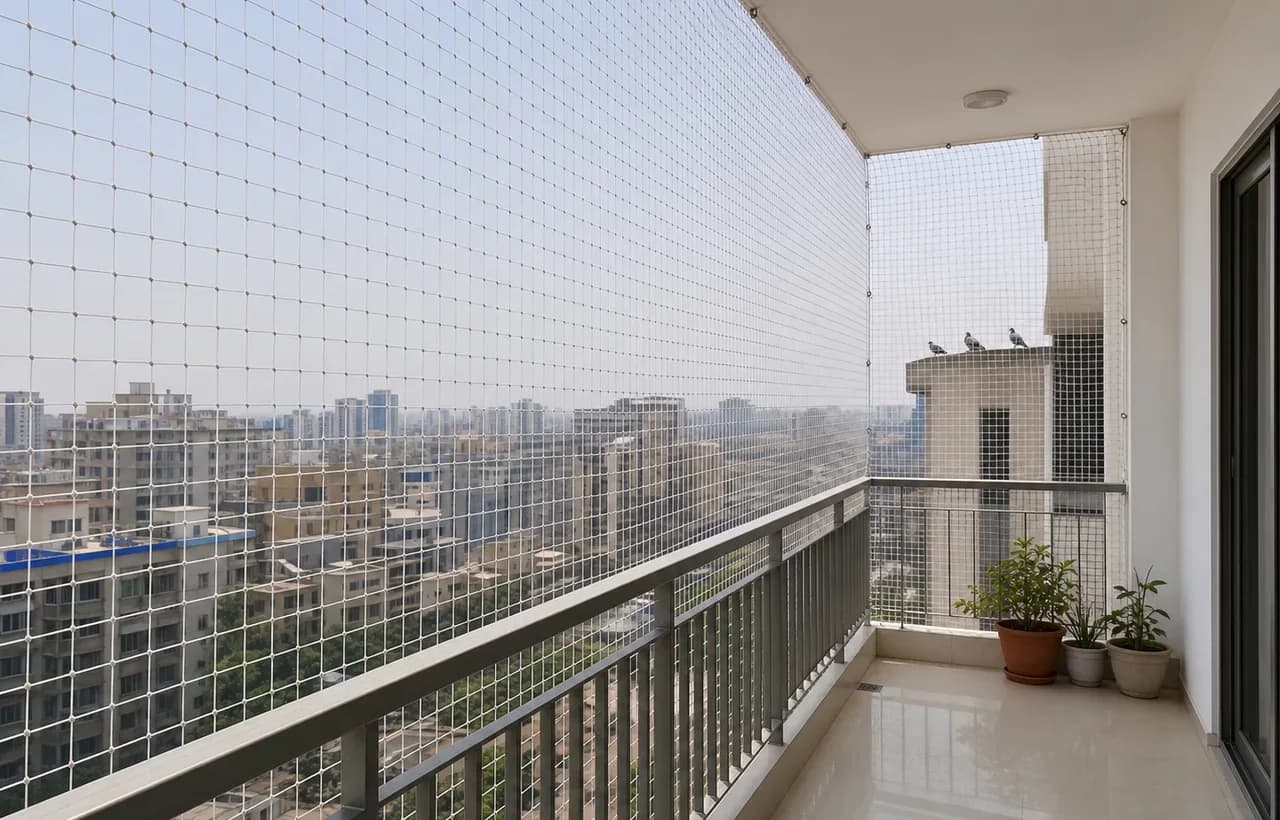
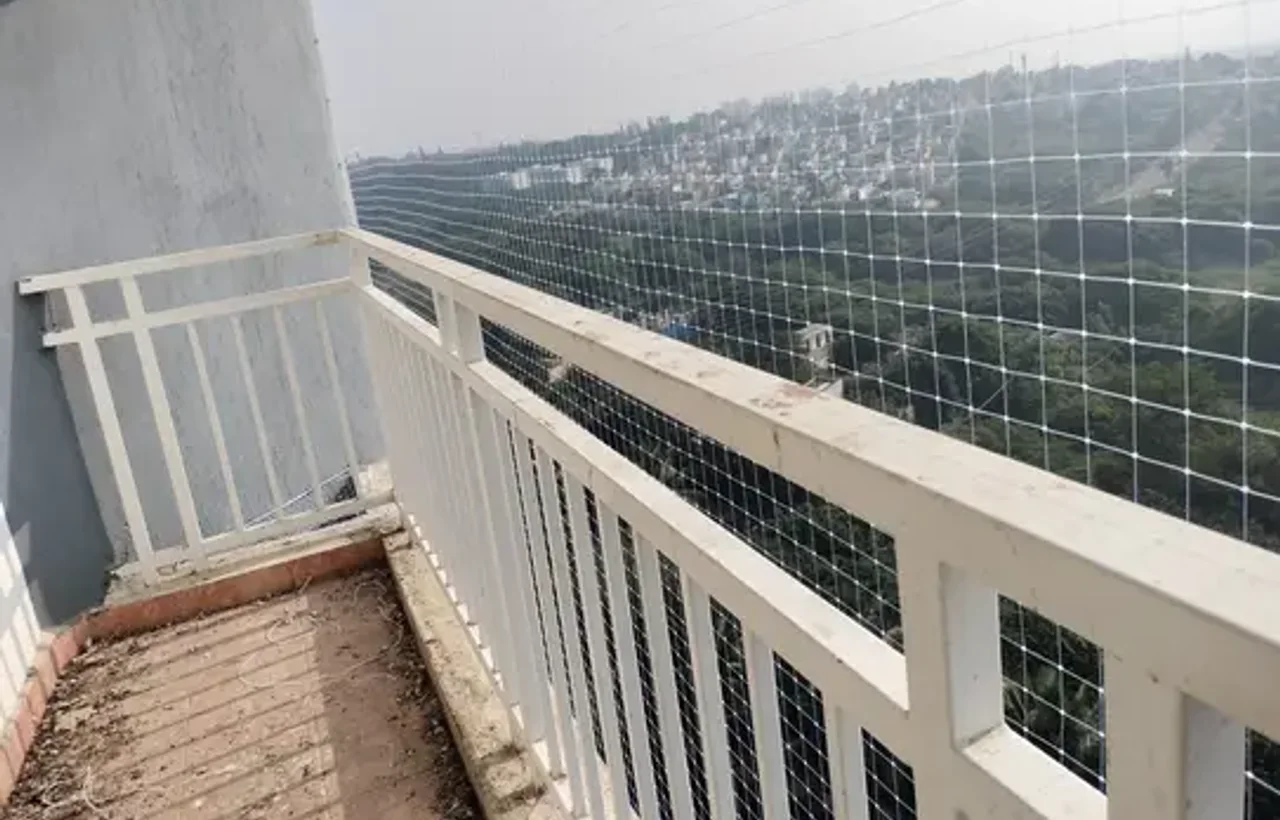
These representative images support the written guidance below; the exact opening still needs its own measurement and access check.
Representative opening view
Use this reference when sharing the opening span and return corners.
Installation planning view
The exact edge condition and anchor position are confirmed on site.
Fit and access reference
Final appearance depends on the measured opening and everyday access needs.
Local fit
Yelahanka's housing mix makes copied layouts unreliable. Tower pigeons may occupy high utility shelves beyond easy cleaning reach, while birds at villa-style homes can travel along parapets, chajjas and shaded side walls. Blocking one ledge may move them a few metres to the next connected rest. Open elevations add exposure, yet pipework, old finish, railings and decorative features may not be valid anchors. Daily window use and terrace movement can also conflict with a closure designed from an empty photograph.
Treat each property as a sequence of bird-access zones rather than as one facade type. Map the approach, perch and bypass, measure every required plane, verify the intended substrate and select compatible edge hardware. Specify the net by polymer, aperture, twine dimension and documented outdoor treatment. For apartments, include management and high-access arrangements; for villas, define parapet ownership, ladder position and terrace circulation. Service clearances are drawn in, active nests are handled humanely, and all accepted quantities flow into the final estimate.
Useful evidence should remain understandable after a tenant changes or a different contractor services the property. Keep the dated route sketch, substrate photographs, product schedule, permission record, itemised price, authorised variations and corner-by-corner handover images. A responsible provider explains what is known, what needs direct verification and what the warranty excludes. It does not convert Yelahanka's locality, an advertised UV label or a heavy sample into a fixed lifespan promise. Clear responsibility for later AC, painting and waterproofing work is equally important.
Area fit
EverSafe checks the front opening, upper ledge, side return, AC pocket and utility route together in Yelahanka. If even one small resting point is left open, pigeons simply shift to it and the cleaning problem carries on.
Nearby landmarks
High utility ledges and open balcony returns confirmed across Yelahanka towers.
Villa parapet and AC platform closure near Jakkur and the Kogilu approach.
AC shelves, side-wall pockets and window chajjas around Yelahanka New Town, Jakkur and Kogilu.
Balcony spots where droppings reach plants, laundry, door tracks, seating or the walking path.
Decision Pattern
Same ledge again
In Yelahanka, the first step is to find the actual sitting point above the mess and the side ledge pigeons may shift to.
Choosing netting
Around Yelahanka, pigeon safety nets make sense when the concern is repeat sitting, droppings, feathers, smell and nesting attempts.
Before scheduling
In Yelahanka, sharing photos of the full opening, the upper ledge, the AC side, any side gap and the dirtiest patch lets the route be explained early.
Helpful photos
4
Wide, close, upper-corner and side-gap photos make the first recommendation much clearer.
Common confirms
5-8
The balcony front, upper slab, AC shelf, chajja, pipe route, side return and window ledge are the points usually reviewed before a estimate.
Main goal
No repeat perch
The work should stop pigeons from sitting comfortably on the old active point.
Building mix: high-rise apartments, villa communities, open balcony returns and utility ledges
Outdoor conditions: Open north-Bangalore wind can carry droppings from one active ledge right across a larger balcony floor.
Common layout cue: Yelahanka homes need route planning that shifts between towers, villas and open residential layouts.
A high-rise utility balcony where pigeons settle on the AC platform.
A villa parapet where birds rest through the quiet afternoon hours.
A Yelahanka utility pocket where pipes, AC drain lines and a shaded return give pigeons a calm place to sit.
EverSafe works on pigeon-prone balconies, chajjas, AC shelves and utility ledges across Bangalore areas much like Yelahanka.
The team is used to sites where the visible stain is below, but the real perch sits higher up or around the side.
Each plan is shaped around bird behaviour, the fixing surface, access, wind exposure and daily home use.
The best fix depends on whether the real issue is birds sitting, a fall-safety worry, or one exposed ledge. In Yelahanka, EverSafe keeps pigeon netting focused on breaking bird habits, without confusing it with other balcony safety work.
Works well for: Repeat pigeon sitting on high utility ledges, villa parapets and open balcony returns.
It removes the bird's resting comfort while keeping the balcony, window or utility opening breathable.
Works well for: Homes mainly worried about children, pets, toys or objects near an open edge.
It is built for fall protection first, so it belongs where movement near the balcony edge is the bigger concern.
Works well for: Tiny, isolated ledges where a full net route is not needed.
They can help on a single strip, but they do not protect a wider balcony, utility opening or side-return route.
We start with the high utility ledges, parapets and open balcony returns — the stains, feathers, upper ledges and the likely landing direction.
Door swing, window movement, AC servicing, clothes drying, cleaning reach and plant corners are all reviewed before any fixing.
The net is tensioned around the active ledge, the side return, the chajja, the bracket and any pipe-side gaps that need closing.
The final check looks for loose centre sections, missed side points, and whether the opening still feels open and usable.
In Yelahanka, the work should start at the high utility ledges, villa parapets and open balcony returns, because that is where pigeons decide whether the opening still feels safe.
The second ledge matters. If it stays open, the same birds move only a little and keep the balcony dirty.
The final route should hold its tension without blocking window use, AC access, drying space or routine cleaning.
EverSafe reads ledge marks and feather trails around Yelahanka before fixing the mesh path.
The team confirms the upper slab, side return, AC pocket, window shade and floor drop line together.
The fit is judged by one test: whether pigeons can still sit comfortably on the old active point.
Trying to clean a high utility ledge that sits outside safe reach.
A large open balcony getting marked right across the floor after a windy day.
Fresh droppings landing on the same cleaned spot before the week is out.
Covering only the front while leaving the high utility ledge, parapet or open balcony return exposed.
Ignoring the side return that pigeons move to once the first ledge is blocked.
Using loose netting on windy, road-facing or high-rise openings.
In Yelahanka, fixing into old plaster, narrow chajja edges or weak frames without checking the hold first.
Starting from ₹15 per sq ft, including installation. The final estimate follows the measured scope and selected product. Confirm any upgrades, removal, repairs, special access or additional supports separately.
Coverage size for the Yelahanka balcony, window, AC or utility area
Number of ledges, side returns, chajjas, brackets and pipe pockets
Floor height, access difficulty, ladder safety and working space
Condition of the wall, slab, frame or old plaster for fixing
Finish expected on visible, well-finished, high-rise or road-facing openings
Yelahanka New Town, Yelahanka
Problem: Pigeons used a utility ledge outside a tower flat, leaving droppings where the resident could not clean safely.
Solution: EverSafe planned the net route around the ledge, the AC side and the slab return, with tower access worked out in advance.
Result: The utility ledge stopped collecting fresh mess and the balcony became far easier to keep clean.
In a New Town tower, follow the evidence upward. Droppings on a utility floor may come from an AC shelf, upper slab notch or pipe-side cavity outside the resident's direct view. Take one wide interior image and separate angled photographs of each return, keeping the railing, ceiling and service lines in frame. Mark feathers, nesting strands and repeated stains, but include apparently clean ledges that connect to them. Number every plane that would need closure. This vertical reading prevents a central sheet of mesh from leaving a route above or behind the outdoor unit. It also helps distinguish an apartment opening from any adjacent common facade that requires separate authorisation.
At a villa or low-rise home, read the route horizontally. A pigeon may walk from a long parapet to a chajja, shaded corner and terrace beam without crossing the opening a resident first intended to net. Observe the landing direction from inside or at ground level without climbing onto an exposed edge. Sketch changes in wall height, gates, pergola elements, roof drainage and neighbouring projections. Decide which surfaces belong to the property and which remain outside the commission. Around Jakkur and Kogilu, this linear map can reveal that a small dirty window is only one station along a broader perch. The proposed boundary should address the declared zone without implying control over adjoining structures.
Measure while the home is recognisably occupied. Open windows and doors through their full travel, show the drying rack, locate drains and identify the path used for watering plants or reaching outdoor equipment. In a villa, include terrace walking space and any gate that must remain usable; in a tower, record the utility door, service shelf and management restrictions. The drawing should mark intentional access features rather than leaving a fold to be untied later. It must also show where flexible mesh stays clear of sharp metal, hot outlets and moving components. These notes keep pigeon exclusion compatible with routine use instead of treating the residents' movements as obstacles discovered after fitting.
Translate the drawing into separately priced planes and edges. Record direct dimensions, perimeter length, material identity, aperture, twine detail, cord, connectors, anchors and any rigid support. List preparation, high access, ladder staging, old-net removal, disposal and tax rather than assuming they sit within a square-foot figure. Pictures may support a provisional range, but the final schedule should explain changes found onsite. If hidden weak plaster or an unapproved exterior point alters the route, use a written variation before work continues. A comparable Yelahanka estimate lets owners see whether one offer covers an entire protected volume while another covers only the visibly simple face.
Ask the supplier to state whether the mesh is HDPE, nylon or another polymer and retain the available maker or vendor reference. If outdoor UV stabilisation is claimed, preserve the supporting document and its stated conditions; exposure differs between a shaded villa wall and an open tower elevation, so the claim should not become a universal life promise. View a labelled sample against daylight, masonry and the utility interior to understand appearance. Transparent, white, black and low-visibility descriptions do not establish composition or performance. A traceable note lets future maintenance identify what was actually installed instead of matching an unidentified old panel by visual similarity alone.
The specification also needs nominal aperture, numerical strand or twine size, fabrication method, edge cord, connectors and fixing category. Choose aperture for the target bird route and reassess when smaller species also enter. Consider abrasion wherever the net passes a parapet corner, metal projection or service line. Consistent border construction and appropriate anchors matter as much as the centre mesh because an open join defeats the protected plane. Ask how separate faces connect and how tension will be checked. Product comparison becomes useful when every component is described; relying on one thickness claim or a hand-pulled sample leaves the weakest perimeter detail unexamined.
A tower visit may require association registration, lift scheduling, protected indoor movement and an agreed method for reaching remote upper points. Confirm all of these before material arrives. Name the person who clears the balcony and keeps children or animals outside the work zone. Residents should not lean over railings, hold ladders in exposed positions or help retrieve exterior tools. Any rope or facade-side method needs competent workers, appropriate equipment, oversight and a distinct scope. When a surface is controlled by the association, written resident consent alone may be insufficient. Scheduling only after these questions are settled reduces last-minute pressure to use an unsafe or unauthorised shortcut.
Villa access may appear simpler, yet terraces introduce their own controls. Inspect ladder footing, stair width, overhead cables, fragile roofing, tanks, solar equipment and circulation used by other occupants. Do not anchor to pipes, rail caps, waterproofing details or decorative frames without verified structural suitability and permission. Concrete, masonry and assessed metal each need compatible fixings and edge distances. Photograph old repairs, cracks and hollow finish before drilling. If preparation belongs to a civil or waterproofing contractor, identify that handoff and finish it first. The safest route is the one supported by known surfaces and a stable working position, not merely the shortest reach from a terrace edge.
A continuous net can close an open balcony, utility face or defined terrace zone. Spikes address certain narrow landing strips but leave the airspace open and may send birds toward another parapet. Invisible grills are spaced, tensioned metal cables designed for a different safety objective; mosquito screens use fine apertures within frames. Rigid mesh may be practical for a small vent or service opening. Yelahanka residents should compare these by geometry, target species, fixing surface, visual effect and maintenance access. Where two systems share an opening, their edges and responsibilities must be designed together without assuming one can substitute for the other's declared purpose.
Humane planning requires an inspection just before closure. Check AC recesses, parapet shadows, beam shelves and connected cavities for a pigeon, eggs or dependent chicks. If a nest is active, isolate that portion of work and obtain appropriate local guidance rather than moving occupants or sealing them inside. After the situation is responsibly resolved, clear permitted debris, examine the adjoining route again and then install an edge that prevents return without slack traps. Record the date and outcome of the check. This simple hold point protects birds and residents while ensuring that the finished Yelahanka enclosure begins with an empty, observable protected volume.
Early photographs are valuable for recognising property type, likely access and hidden returns, but they flatten depth and cannot confirm substrate. Use them to prepare questions and a provisional range, then measure widths, heights, offsets and perimeter directly. Give each tower face or villa segment a reference on the sketch. Match those references to mesh quantity, cord, fittings, anchors, support pieces and labour. State how overlaps, irregular shapes, wastage and minimum work are calculated. If one provider excludes a parapet turn or upper pocket, its lower total is not equivalent. Reconciliation makes the final amount traceable to the boundary accepted by the customer.
A full estimate should also name tasks that are not net installation. Possible examples include plaster repair, welding, waterproofing, paint touch-up, electrical or AC relocation, deep cleaning, nest-related handling, access deposits, parking, old material removal and disposal. Assign each task to a party and place it in the sequence. Include payment timing, estimated working window subject to access, and a written process for variations. Do not promise instant work before the property grants approval. This structure serves a New Town tenant seeking an owner's decision and a villa household coordinating several trades, because neither must infer exclusions from an attractive rate alone.
Build the handover record before tools and cleared household items obscure the work. Photograph the full net, each return, parapet transition, cord join, connector and anchor at close range, then repeat wide views after normal use resumes. Save the product schedule, route drawing, permissions, estimate, invoice, care method and warranty with those images. Inspect after monsoon weather, exterior painting, waterproofing, AC servicing or changes to terrace equipment. Look from a stable internal or terrace position for cuts, slack, abrasion, pulled fittings and substrate movement. Never hang laundry, planters or cables on the mesh, and follow only the documented gentle cleaning approach.
When a defect is found, mark its segment on the original sketch and capture the surrounding edge, not just the damaged strand. A service review should establish material identity, condition of adjacent mesh, border, fixings and substrate, plus any third-party alteration. A single compatible repair may be reasonable where the system remains known and stable. Several patches, general brittleness, moved anchors, altered parapet geometry or unidentified product may make sectional or complete replacement clearer. Read warranty terms for duration, covered components or workmanship, exclusions, reporting evidence, travel, labour, access and replacement parts. Maintenance records turn that decision into a supported comparison rather than guesswork.
Share a full elevation, both side angles, the active ledge, upper slab or parapet, AC and pipe area, plus the normal position of doors and racks. Add your Yelahanka pocket, property type, floor or terrace access, approval contact and preferred survey period so direct measurement can be planned around the real layout.
Plan your installation
Share photographs of the full opening, approximate measurements and your location in Yelahanka, Bangalore. Explain how you use the space so the installer can discuss a suitable layout and a clear scope.
Pigeon netting in Yelahanka should begin with the ledge the birds already trust.
EverSafe checks Yelahanka homes for ledge marks, fixing strength, side gaps and cleaning access before fitting.
For visit planning: Pigeon safety net support across Yelahanka, Pigeon nets near Yelahanka New Town, Pigeon nets around Jakkur, Yelahanka, Pigeon nets near the Kogilu approach, Yelahanka.
These are the practical questions households usually ask before choosing pigeon safety nets in Yelahanka, Bangalore.
Expect measured area and perimeter, specified mesh, aperture, twine size, border, connectors, anchors and fitting labour. The document should disclose preparation, tower or terrace access, removal, disposal, minimum billing, tax and exclusions. ₹15 per sq ft is only an indicative planning range until the selected opening is inspected and measured.
Ask for polymer identity, nominal aperture, numerical twine dimension, fabrication, perimeter cord and available UV documentation. The aperture must suit the birds using the opening, while the full system needs compatible connectors, anchors and sound substrate. Appearance terms such as transparent do not by themselves identify material, strength or expected outdoor performance.
Apartment work may need resident, owner and association consent covering drilling, visible supports, vendor entry, timing and lift use. A villa owner should still confirm terrace access, shared surfaces and ladder placement. Exterior methods require competent personnel and suitable equipment. Resolve weak masonry, waterproofing or facade restrictions before the installation date.
Netting encloses a defined volume, whereas spikes may suit only an assessed narrow perch and can redirect birds. Neither should be used to trap an occupied nest. If eggs, dependent chicks or a live bird are present, pause the affected area, seek appropriate humane guidance and proceed only after all connected pockets are responsibly clear.
While comparing a pigeon net service nearby, share whether the property is a tower or villa, your Yelahanka pocket, floor or terrace access, wide opening photographs, side returns and active perch. Mention ownership, association conditions and planned building work. EverSafe can then check local survey availability and arrive prepared for direct measurement.
Repair may suit isolated damage when the original mesh, border and anchors are identifiable and the surrounding system remains stable. Replacement deserves consideration for broad ageing, recurring cuts, multiple patches, moved fixings or changed geometry. The warranty should state its term, covered product or workmanship, exclusions, claim evidence and responsibility for travel, labour, access equipment and parts.
Around Yelahanka, bird problems are often only one part of the decision. People also compare child safety, balcony-edge coverage and how to keep the front usable without making it feel closed in.
Useful when the issue is broader bird control across openings, shafts or utility-facing areas, not just one balcony front.
Open local pageUseful when the issue around Yelahanka is more about this specific service need than the original page you started from.
Open local pageUsually compared when the family wants a cleaner fixed front and is weighing appearance, openness and enclosure together.
Open local pageUseful when the first concern is children leaning on railings, dragging chairs near the front or reaching open corners and side gaps.
Open local page