primary locality coverage
Koramangala 1st–8th Blocks
Captures block-level residential, office and mixed-use pigeon-net intent without implying identical layouts in every block.
Local service page
Koramangala pigeon activity behaves less like one balcony problem and more like a small network. A bird can pause on a café sign band, move across an AC bank, test an office window projection and finally shelter beside a residential utility return. The chain may cross visible and hidden elevations, especially around mixed-use streets, ST Bed Layout, Jakkasandra and the Sony World Junction side. Closing only the dirtiest face can leave another station active. EverSafe maps these linked perches before defining what belongs to the client's property and permission. The fitted route must respect facade appearance, customer or resident access, equipment maintenance and working hours without enclosing a bird. A well-finished transparent label is not enough: the proposal should state material identity, aperture, strand size, border construction, anchors and measured planes. From National Games Village homes to Industrial Layout service areas, good pigeon netting is a coordinated exclusion project with a documented boundary, not an improvised screen stretched over whichever ledge is easiest to reach.
Compare before deciding
This page stays focused on what usually changes around Koramangala. If you are still comparing material, price, safety fit, or nearby visit options, the Bangalore Pigeon Safety Nets guide gives the broader picture before you call. You can also browse the Bangalore area guide when you want to check nearby local pages.
City guide
Compare Pigeon Safety Nets materials, fitting choices, price factors, and visit planning across Bangalore.
This area
Use this page when the opening, building access, or daily routine around Koramangala is the main concern.
Nearby options
Move between the city guide and local pages when you want either a wider view or a closer match.
Nearby Mixed-Use Context
these nearby locality and market references help reflect the mixed-use upper-floor pattern around Koramangala, where work-call breaks, rental-family overlap, road-facing pauses and constant short balcony use can make the edge disappear into routine.
Captures block-level residential, office and mixed-use pigeon-net intent without implying identical layouts in every block.
Useful for apartments, offices and AC-bank enquiries close to the Inner Ring Road and Sony World Junction side.
Adds precise context for apartment-balcony, window and utility-opening requests.
Supports nearby residential and rental-property searches where users identify with both Jakkasandra and Koramangala.
Provides a more specific local cue for balconies, windows and independent-home openings.
Fits office, storefront, sign-ledge and rear-service bird-control requirements.
Helps route enquiries from buildings described by residents as being between Koramangala and Ejipura.
A practical address cue for ST Bed, 4th Block and Inner Ring Road-side visit planning.
Pigeons do not distinguish between a residential balcony and a commercial frontage. They follow convenient routes—parapet tops, sign bands, window projections, outdoor AC units, cable trays, rear service shafts and sheltered terrace edges. The correct pigeon protection net closes that connected route instead of treating each stain as a separate problem.
In a home, the priorities may be drying clothes, opening windows, caring for plants and keeping the view visually light. An office may need work outside business hours, access to several AC units and a finish that does not distract from the frontage. A food or retail property can also have a customer-facing zone and a less visible rear utility zone that need different detailing.
EverSafe first separates customer-facing openings from service-side openings, and private areas from common or exterior areas. That distinction helps decide where transparent pigeon netting is worthwhile, where a standard outdoor mesh is more practical, and whether an owner, association or facility manager must approve anchors or facade work.
Local enquiries commonly come from Koramangala's 1st to 8th Blocks, ST Bed Layout, National Games Village, Jakkasandra, Jakkasandra Extension, the Industrial Layout and the Ejipura edge. Exact scheduling and scope still depend on the address, access and permission available.
Service visual guide
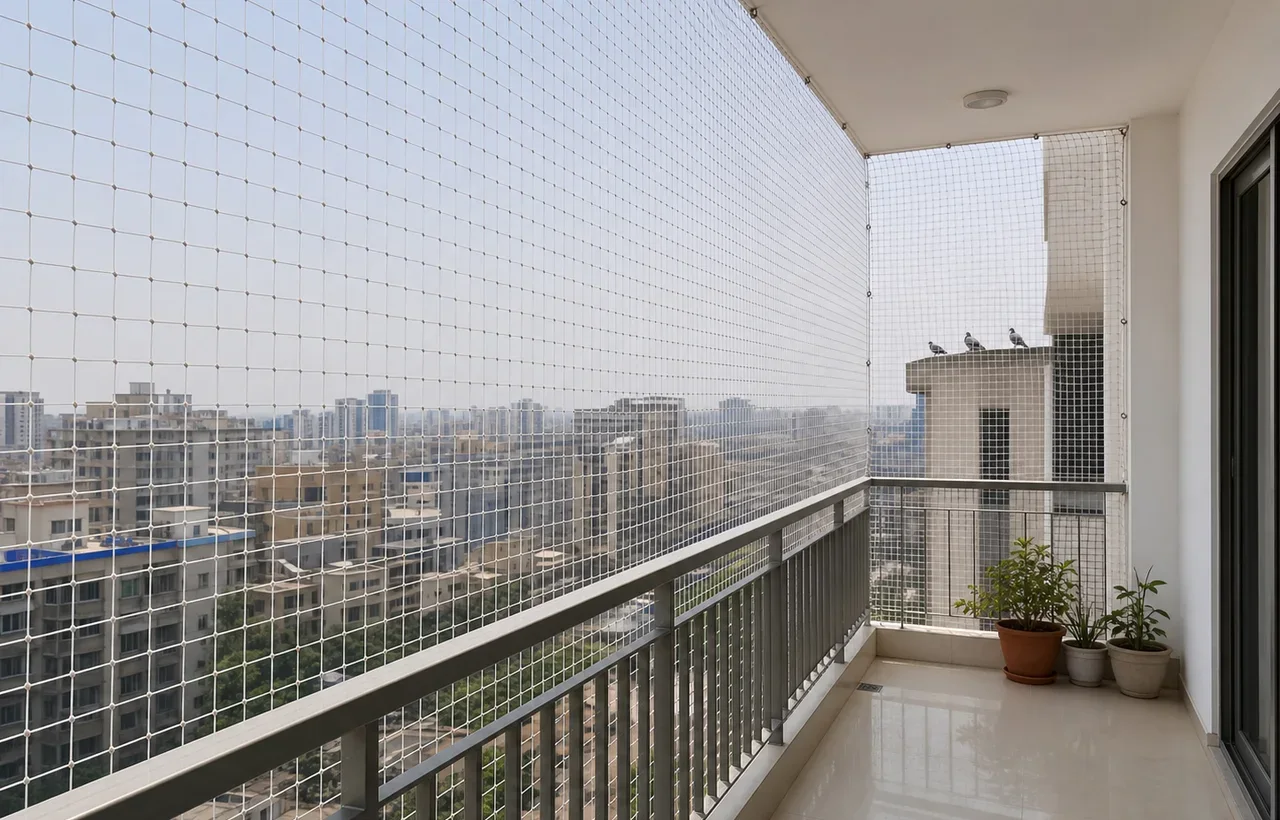
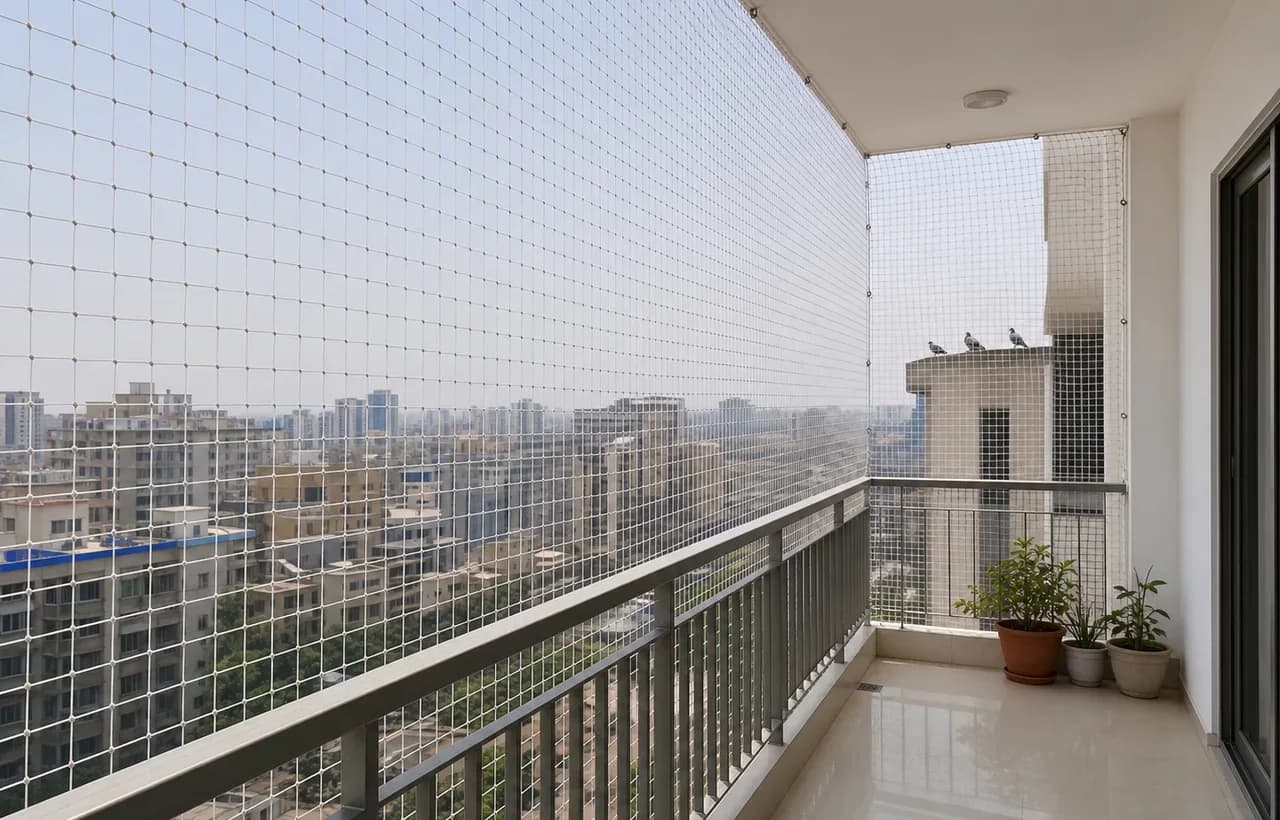
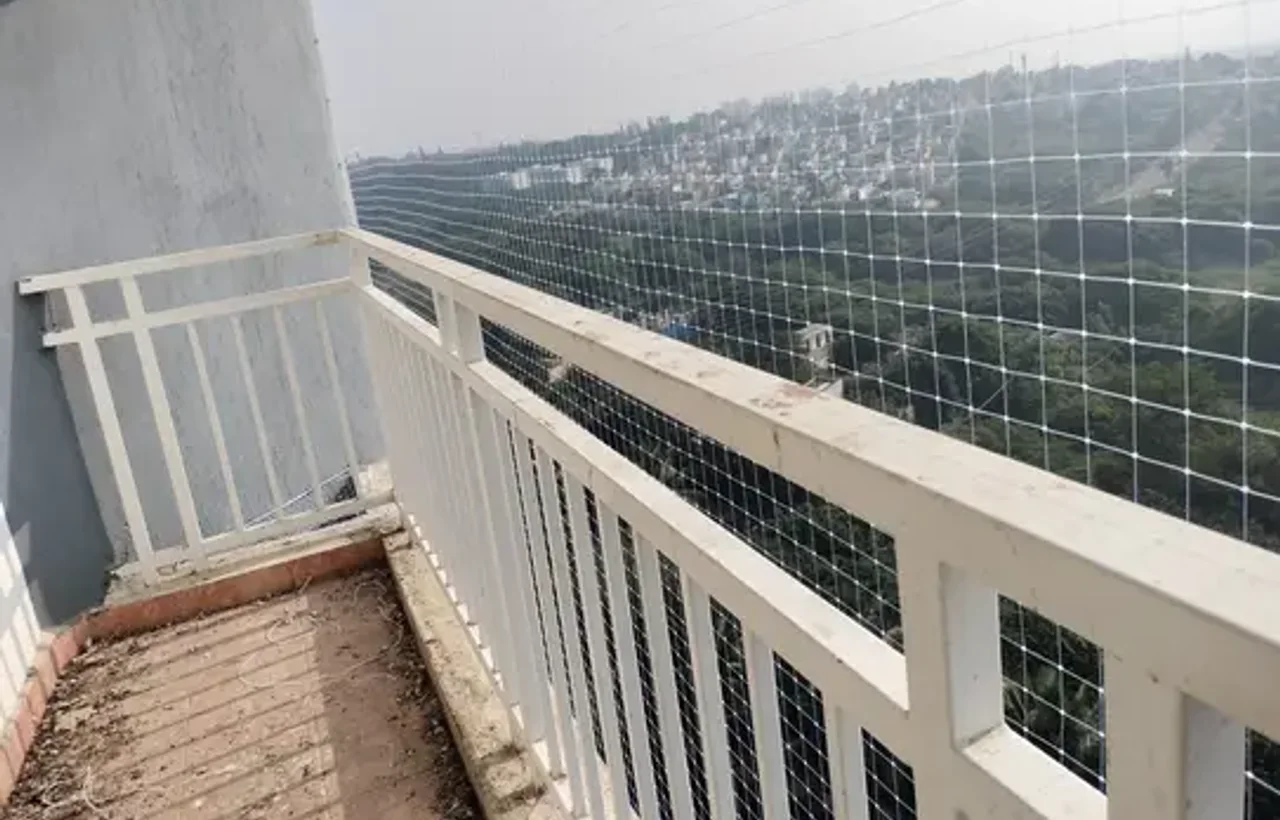
These representative images support the written guidance below; the exact opening still needs its own measurement and access check.
Representative opening view
Use this reference when sharing the opening span and return corners.
Installation planning view
The exact edge condition and anchor position are confirmed on site.
Fit and access reference
Final appearance depends on the measured opening and everyday access needs.
Local fit
Koramangala properties often combine apartments, independent homes, shops, converted offices and food businesses within one visual frontage. Pigeons exploit the connections between awnings, cable trays, window caps, outdoor units and upper balcony slabs. A tenant may control the inner opening but not the sign band that starts the route. Cleaning one sill or fitting one rectangle can simply transfer activity to the next projection. Equipment density, customer movement and different property authorities make incomplete planning especially disruptive.
The solution begins by separating the perch network into owned, authorised and adjacent surfaces. Each included opening receives a measured perimeter, an assessed fixing base and a service plan for windows, AC units or signage. Mesh appearance is selected with the elevation in mind, while aperture and construction still serve bird exclusion. Work is sequenced around residents or business hours, and every recess is checked clear before closure. A labelled drawing and handover images show exactly where the protected boundary begins and ends.
Koramangala clients can evaluate a provider by the specificity of the document, not by a claim of universal well-finished mesh. A reliable estimate names the polymer or product evidence, opening size, strand measurement, border, connectors, anchor route, net quantity, labour and logistical exclusions. It also identifies whose facade consent is assumed and how future equipment access works. EverSafe keeps provisional estimates distinct from verified measurements and records variations, allowing a resident, facilities lead or commercial tenant to reconcile the installed work against the accepted scope.
Area fit
A search for a pigeon net Koramangala service should lead to a provider who asks for the exact block, building use and access—not merely a Bangalore-wide rate. EverSafe accepts enquiries from the following Koramangala and adjoining pockets, subject to the current schedule.
Nearby landmarks
Koramangala 1st–8th Block balcony, window and AC-ledge enquiries
ST Bed Layout and Sony World Junction-side apartment or office openings
National Games Village and Jakkasandra residential balcony protection
Jakkasandra Extension and Ejipura-edge utility or window bird netting
Koramangala Industrial Layout office, shop and service-side assessments
Mixed home-and-business properties needing coordinated work timing
Local Perspective
Indicative standard rate
From ₹15/sq ft
Installation included. Final pricing follows measurement, product choice and the agreed scope.
Essential survey split
Public / service side
Separates visual-finish priorities from equipment, cleaning and staff-access needs.
Best first estimate image
One full-opening photo
Include the top, both sides, bottom, nearby perch and all AC or sign equipment in the frame.
Building mix: Mixed-use streets with apartments, independent homes, converted offices, shops, cafés and service areas create both visible facade work and hidden utility work.
Outdoor conditions: Dust can settle on horizontal strands and sheltered ledges, while wind-driven rain can expose loose corners. Material choice, edge tension and inspection access matter more than a claim that the mesh needs no maintenance.
Common layout cue: Koramangala assessments should show the full opening plus connected AC shelves, sign bands, window projections, service ducts and side returns. A close-up of droppings alone does not reveal the route or total area.
A 4th Block apartment balcony with an AC shelf above a glass door
An ST Bed Layout office window beside several outdoor AC units
A 5th Block storefront with pigeons moving between an awning and sign band
A National Games Village utility balcony used for laundry and plant care
A Jakkasandra rental where the tenant needs the owner's fixing approval
An Industrial Layout workplace needing service-side fitting outside customer hours
Scope-first quoting separates mesh area, custom sections, removal, difficult access and optional work.
Recommendations begin with the bird route and opening function rather than one universal product name.
Material advice asks for composition, mesh opening, outdoor suitability and traceable brand detail where a brand is quoted.
The plan records who controls the opening: resident, owner, association, business operator or facility manager.
Safety language distinguishes pigeon exclusion from rated human or pet containment.
No local case study, performance percentage, review total or planned result is presented without evidence.
A road-facing balcony or office facade needs the perimeter discussed from both inside and outside, because anchors, edge lines and mesh visibility may affect the building elevation.
A cluster of outdoor AC units needs a planned service route; simply stretching net across the equipment can turn routine maintenance into an avoidable repair job.
Sign bands, awnings and cable trays can act as stepping-stone perches even when the main window is screened, so adjacent ledges belong in the same assessment.
Rear utility areas may prioritise robust detailing and cleaning access, while customer-facing windows may justify a finer-looking mesh and more controlled perimeter line.
In rented premises, the person paying for the net may not be the person authorised to approve facade drilling. That decision should be resolved before the installation visit.
The estimate can be checked against a written scope: openings included, measurements, material, perimeter, access plan and exclusions.
Photos are used to identify obvious geometry and access questions, while final dimensions and fixing suitability remain subject to on-site confirmation.
Transparent, white, green and dark mesh are described by material and opening—not treated as quality grades based on colour alone.
Commercial work can be separated into public-facing, staff-only and equipment-service zones so each has an appropriate finish and work window.
Review and rating schema remain disabled until verifiable evidence exists for this exact service page.
A small gap beside a sign or AC bracket can keep the whole pigeon route active after the main face is covered.
Unexpected facade objections can stop a commercial or rented-property job after material and labour have already been arranged.
An unplanned cut for AC servicing can reopen the route and weaken an otherwise usable net.
The cheapest per-square-foot figure may not be the lowest completed price once access, minimum work, frames and removal are added.
Exclusion must pause when a bird or active nest may be trapped by the final closure.
closing the balcony face but leaving the upper sign band or side return reachable
choosing a headline square-foot rate without asking about the minimum completed-job charge
describing fine transparent mesh as completely invisible in every light and background
covering AC units, drain points, shutters or signage without an agreed maintenance route
drilling a rented or common exterior before owner or building approval is clear
assuming an online roll includes the correct anchors, perimeter cable and safe fitting
Resident protecting a balcony
The resident wants pigeons out without losing the clothesline, plants, view, window movement or AC service access. The proposal should show how the complete perimeter works around those everyday uses.
Tenant seeking a reversible decision
A tenant usually needs clarity on drilling, common facade rules, responsibility for removal and the owner's preferred finish. Photos and a proposed fixing line make that discussion more concrete.
Office or retail operator
The operator may need discrete customer-facing mesh, a different solution at the rear utility, and installation timed around staff, deliveries, signage and public access.
Facility or property manager
A manager needs itemised openings, access responsibilities, permitted work hours and a maintenance route for AC teams, painters or sign contractors. A site-wide lump sum should still explain what it contains.
Price-comparison shopper
The customer wants a cost per square foot, but the useful comparison also includes minimum billing, material, mesh opening, perimeter hardware, access, removal, taxes and after-service terms.
The best pigeon-control method depends on whether birds are entering a volume, landing on one strip or passing through a small framed gap. Koramangala properties often need more than one method because the public facade, balcony and rear service area do different jobs.
Works well for: Balconies, utility openings and service-side areas where practical exclusion and value lead the decision
A correctly sized mesh closes an open volume, including its top and side returns. Ask for the material, mesh opening, edge system and installed total rather than relying on the word nylon.
Works well for: Road-facing homes, office windows and customer-visible openings where a lighter visual effect is preferred
Fine clear mesh can be less prominent at normal viewing distance, but it remains visible in reflections, close views, dust or a contrasting background. Transparent is more accurate than invisible.
Works well for: Small framed vents, exhaust-side gaps or compact service openings needing a fixed panel
A rigid panel can hold its shape in a small frame, though it normally looks heavier and is not the same solution as flexible netting across a broad balcony.
Works well for: A narrow sign top, parapet or ledge used only as a landing strip
Spikes can deter landing on the treated strip but do not seal an open balcony, duct or utility volume. Adjacent AC brackets and returns must still be assessed.
Works well for: A small, simple opening fully reachable from a safe interior position
Buying pigeon nets for balconies online may lower the material price, but measurement, anchors, perimeter tension and safe access remain the customer's responsibility. Never lean outside to install a low-cost kit.
Works well for: Surface hygiene after an occasional visit, not an established entry route
Cleaning removes existing mess but does not close the perch. Gels and visual repellents may also require maintenance and should not substitute for physical exclusion where pigeons repeatedly enter.
Confirm whether the opening belongs to a home, rental, office, shop, hospitality property or common facade, and identify who can approve the fixing method and work window.
Trace the first landing strip, sheltered perch and entry gap across sign bands, AC units, window projections, pipes, parapets, ducts and returns.
Separate customer- or street-visible areas from rear utilities and staff-only spaces so appearance, durability and access can be prioritised appropriately.
Measure each front, side, top or framed section and note irregular shapes. The billable area and the linear perimeter are different inputs, so both can affect the total.
Review masonry, metal frames, grills and slab edges alongside windows, drains, signs, exhausts and equipment doors that must continue to function.
Match mesh composition, opening, colour and perimeter method to the bird species, exposure and visual requirement. Record any requested brand as a product to be verified.
State ladder or external-access assumptions, business-hour restrictions, furniture or sign movement, old-net removal and any area outside the estimate before work begins.
Do not make the final closure until the enclosed zone is clear. If a bird, egg or chick may be present, stop and choose an appropriate humane next step.
Show the resident or manager the completed edge, any approved access section, cleaning limits and the points to inspect after AC service, signage work, painting or severe weather.
Starting from ₹15 per sq ft, including installation. The final estimate follows the measured scope and selected product. Confirm any upgrades, removal, repairs, special access or additional supports separately.
measured square footage across every front, side and top plane
minimum billing for a small window, vent or single ledge section
mesh composition, opening, colour and outdoor specification
standard mesh versus transparent, framed or custom-shaped sections
perimeter length, anchor surface and extra support requirements
safe working access, floor level and obstacles below the opening
number of separate windows, AC units, signs or utility compartments
removal and disposal of old brittle net, loose wire or failed hooks
A useful Koramangala assessment starts wider than the complaint photograph. On a road-facing property, show the balcony or window within the full elevation, including awnings, sign frames, cable trays, cornices and outdoor units above or beside it. At the rear, include ducts, service stairs, exhaust routes and shared shafts. Mark the point where droppings land, then identify feathers or nesting material that indicate the sheltered stop. This reveals whether one measured opening can interrupt the route or whether pigeons would retain a convenient ledge immediately outside it. The scope must describe that limitation instead of implying control over projections owned by another tenant or the building.
Koramangala 1st through 8th Blocks do not present one building pattern. National Games Village and ST Bed Layout apartments can require association procedures, while Industrial Layout offices and shop conversions add facilities or landlord approval. Jakkasandra edges may mix quieter residential balconies with commercial movement nearby. Divide the project by elevation and authority: private balcony, common facade, equipment zone and adjoining perch. Each segment then receives an appropriate access and permission decision. This structure helps owners prioritise the active route, prevents duplicated area in multi-vendor estimates and makes it clear when a neighbouring sign or common ledge needs separate coordination before the requested net can deliver meaningful exclusion.
A residence may value low visual contrast and uninterrupted balcony use; an office might prioritise window cleaning, while a café frontage must also consider customer hours and sign maintenance. Ask providers to price the same measured faces but document differing access components independently. The schedule should show material, border, fasteners, labour, equipment, removal, preparation and tax, plus any deposit or after-hours requirement. If a broad AC bank requires several service panels, their closures and responsibilities belong in the description. Without that detail, a cheaper total may simply exclude the operational work that allows the net to remain intact after the next maintenance visit.
Remote images can establish context, not substrate integrity. Final quantities follow direct measurement after movable displays, pots or storage no longer conceal returns. Where a facade is due for painting, sign replacement or waterproofing, sequence those tasks before the final anchor plan if they disturb the same surface. Agree on written approval for hidden conditions uncovered during preparation. At handover, facilities staff or the resident should match every plane to the estimate, operate authorised closures and receive photographs. This record turns the installation into a managed property component rather than an anonymous screen that a future contractor cuts because nobody knows its designed access route.
On a customer-facing Koramangala elevation, requests often centre on an invisible or transparent finish. No flexible pigeon net vanishes completely, and visual subtlety does not replace technical identification. Obtain the proposed polymer, supplier evidence for UV suitability, nominal aperture and numerical strand or twine dimension. Record the perimeter cord, connectors and anchor types as well. View a representative sample against the real background during daylight if appearance is important. White can echo a light wall yet reveal grime; darker colours may align with frames but contrast with sky. These are design observations rather than reliable measures of installed performance.
The opening size must address pigeons while permitting the ventilation, sightline and cleaning method required at that window or balcony. Equipment banks introduce abrasion risks, so clearance from sharp casing, cable trays and moving service parts matters. A heavier strand cannot compensate for unsupported corners, and fine mesh cannot make cladding a sound anchor. Ask how the provider handles mixed concrete, masonry and approved metal around the same facade. Reject precise durability promises detached from orientation and use: afternoon sun, shaded moisture, exhaust deposits, cleaning chemicals and maintenance traffic vary sharply between a street-front office and a protected residential courtyard.
Rows of outdoor units create appealing pigeon shelves and recurring access demands. The survey should identify which panels, valves and fans technicians approach, how units are removed and whether workers can remain safely inside the protected line. Mesh placed across the bank without this information will probably be released or cut. Options can include routing behind a service corridor, dividing the perimeter into labelled zones or fitting secure operable sections where the geometry supports them. The responsible facilities person must know who may open each closure and how it is checked afterward. Include this arrangement in drawings and pricing instead of treating it as free improvisation.
Signboards, awnings and window-cleaning routes deserve the same discipline. They should carry no mesh load unless specifically assessed, and their contractors need notice of nearby borders. Schedule sign changes before final fitting where possible. In occupied homes, retain door, drain, plant and laundry function without tying objects to the net. In businesses, keep urgent and ordinary circulation unobstructed. Photograph service junctions at handover and place instructions in the maintenance file. When equipment or branding changes, compare the new geometry with that record before work begins. A planned review costs less disruption than repeatedly repairing strands severed for predictable access.
Commercial activity can make the visible facade busy while a rear duct or AC corner remains quiet enough for nesting. Inspect every included cavity immediately before closure. If a pigeon, eggs or dependent young are present, isolate that segment from the installation schedule and do not chase, relocate or seal the occupants. Seek appropriate rescue guidance and resume only after the pocket is responsibly clear. Document the postponed boundary so another crew does not unknowingly close it. Humane exclusion means removing re-entry after occupancy has ended; it is distinct from cleanup, chemical treatment and unsupported promises that a product will permanently change bird behaviour elsewhere.
Compare netting, spikes and rigid wire by geometry. Netting can enclose a broad three-dimensional opening; spikes may discourage landing on a narrow ledge where their base can be fixed and cleaned; wire mesh can close a compact vent. Optical gels, sound devices or reflective objects should not be presented as certain substitutes for closing an established shelter. Food handling and waste management may reduce attraction around some premises but cannot close an upper route. The Koramangala proposal should identify which connected perches remain beyond the client's control. That honesty lets the manager coordinate adjacent owners rather than blaming the installed boundary for activity on an excluded sign or cornice.
A commercial tenant may fund the work while the landlord owns the facade and an association manages external access. Obtain the appropriate written approval for drilling, colour, edge position, vendor entry and work hours. Confirm whether ladders, lifts, rope access or other equipment are permitted and who controls the pavement or service lane below. For apartments, include resident notice, lift planning and pet or child separation. Do not shift anchors to an unverified decorative frame merely because the approved structural band is less convenient. A revised method needs revised scope and price before work continues, especially where several businesses share the same elevation.
Site preparation should protect customers, staff, vehicles and interiors from the work zone without claiming control beyond the contractor's actual plan. Clear furniture and movable displays so hidden substrate can be checked. Photograph previous holes, cracked plaster or corroded metal before new hardware is considered. If repair by another trade is necessary, define the sequence and remeasure afterward. At completion, the authorised representative should inspect from safe positions, receive closure instructions and sign off variations. Store the permission and access documents with the mesh specification. This gives later facilities teams context when facade cleaning, electrical work or tenant fit-outs approach the protected perimeter.
Koramangala occupancy and branding can change faster than a residential balcony layout. Inspect netting during every tenancy handover and after sign work, facade cleaning, AC maintenance, storms or interior alterations near the opening. Look for cut strands, rubbed areas, loose edge cord, connector movement, anchor cracks and closures left unsecured. Suspend access through any questionable section until it is evaluated. A small isolated fault may accept matched repair if its product and surrounding condition are known. Multiple undocumented cuts, broad loss of tension or a redesigned equipment bank can make replacement of the affected plane a clearer operational choice.
Warranty documents need practical detail: covered parts or workmanship, term, exclusions, notification method and charges for labour, materials, travel and special access. Ask how third-party contractors, chemicals, exhaust deposits, birds, pets and substrate defects are treated. Warranty status does not establish present condition and should never justify leaving a compromised opening in service. Retain invoices, approvals, specifications, labelled elevation images and every repair note. This file lets a new tenant understand which plane belongs to whom and gives a technician evidence for compatible materials. It also distinguishes installation defects from changes created by later branding, equipment or property work.
Send separate wide images of the street facade, balcony or window, AC cluster and rear utility side. Mark the premises type, block, floor, business hours and person authorised to approve drilling. EverSafe can distinguish the connected bird route from neighbouring surfaces and arrange a measured review of the workable boundary.
Plan your installation
Share photographs of the full opening, approximate measurements and your location in Koramangala, Bangalore. Explain how you use the space so the installer can discuss a suitable layout and a clear scope.
Koramangala pigeon netting should protect the complete bird route while respecting the finish and operating needs of a mixed-use property.
EverSafe separates visible facade work from rear-service work before recommending the mesh and edge treatment.
For visit planning: Koramangala 1st Block balcony pigeon net, Koramangala 3rd Block transparent bird mesh, Koramangala 4th Block office-window pigeon control, Koramangala 5th Block shop sign-ledge bird protection.
These are the practical questions households usually ask before choosing pigeon safety nets in Koramangala, Bangalore.
Measured work may begin within an indicative ₹15 per sq ft starting rate. Ask for separate faces, mesh, border, anchors, labour, panels and access arrangements. The estimate should also state the position of old-net removal, sign or AC coordination, surface repair, tax, deposits and after-hours work so residential and commercial offers describe equivalent scope.
Compare identified polymer, UV documentation, nominal aperture, numerical strand size, edge cord, connectors and anchor proposal—not the word transparent alone. Review a representative sample against the facade, then consider dust, exhaust, cleaning and equipment clearance. Appearance matters in Koramangala, but the perimeter still needs compatible structural fixing and complete returns.
The occupant, landlord, association and facilities manager can control different decisions. Confirm who approves drilling, mesh appearance, sign proximity, timing and exterior equipment. Give those conditions to the provider before final measurement. If the authorised route changes, revise the written method instead of moving fixings onto cladding, awnings or cable trays for convenience.
Do not close that recess around a pigeon, eggs or dependent young. Pause the segment, prevent casual disturbance and obtain appropriate bird-rescue guidance. Once the area is responsibly clear, inspect adjoining shelves before fitting. Netting can then exclude the larger equipment opening, while spikes or rigid mesh may be assessed separately for suitable narrow geometries.
Someone searching for pigeon netting nearby should send the block, property type, floor, street and rear-elevation photographs, AC or sign details and the approving contact. Add business hours or association restrictions. EverSafe can coordinate a local measurement around the connected perch route and the premises' operating needs.
Replacement may be preferable when several cuts, broad slack, moved anchors, unknown products or altered equipment make a local repair difficult to verify. Isolated documented damage may accept compatible restoration. Check the warranty for reporting, exclusions and access costs, retain photographs, and stop relying on any opening whose perimeter condition remains uncertain.
Around Koramangala, bird problems are often only one part of the decision. People also compare child safety, balcony-edge coverage and how to keep the front usable without making it feel closed in.
Useful when birds are only landing on narrow ledges, AC tops, beams, pipes or sign edges rather than entering a larger opening.
Open local pageUseful when the issue is broader bird control across openings, shafts or utility-facing areas, not just one balcony front.
Open local pageUseful when the issue around Koramangala is more about this specific service need than the original page you started from.
Open local pageUseful when drying clothes is what keeps daily movement happening close to the balcony edge in the first place.
Open local page