Other ways people ask
Around JP Nagar, people do not always use one exact phrase. These are the fuller ways the request usually shows up when the household is comparing fit, finish, and installation details.
Local service page
A stain beside the sliding track does not reveal where a pigeon began its visit. Across JP Nagar's numbered phases, a bird may first settle on an older chajja, cross an AC bracket and then disappear into a quiet utility return. Newer towers around Puttenahalli and RBI Layout present different geometry: glass rails, narrow service ledges and pipe gaps that are easy to miss in a front photograph. EverSafe therefore starts with the route, not the mess. Wide images of the slab, both side walls, window projections and equipment help define a humane exclusion boundary before measurement. The plan must also keep doors, drainage, laundry use and future AC service workable. Whether the enquiry comes from Sarakki, Bannerghatta Road side or JP Nagar 7th Phase, the useful outcome is a documented perimeter fitted to sound surfaces, with material, aperture, strand detail, access and inclusions stated clearly rather than hidden behind one one-size-fits-all bird-net label.

Compare before deciding
This page stays focused on what usually changes around JP Nagar. If you are still comparing material, price, safety fit, or nearby visit options, the Bangalore Pigeon Safety Nets guide gives the broader picture before you call. You can also browse the Bangalore area guide when you want to check nearby local pages.
City guide
Compare Pigeon Safety Nets materials, fitting choices, price factors, and visit planning across Bangalore.
This area
Use this page when the opening, building access, or daily routine around JP Nagar is the main concern.
Nearby options
Move between the city guide and local pages when you want either a wider view or a closer match.
Area fit
JP Nagar is not one uniform layout. The fitting approach changes between older chajja-style homes, newer apartment balconies, open utility shafts and high-floor units. EverSafe plans visits across the phases and connected residential pockets based on site access and opening type.
Nearby landmarks
JP Nagar 1st to 6th Phase balcony, window and chajja netting
JP Nagar 7th to 9th Phase apartment and high-floor balcony netting
Puttenahalli and RBI Layout utility, AC-ledge and side-return closure
Sarakki and Bannerghatta Road-side bird netting for homes and apartments
Photo-based first assessment for nearby JP Nagar enquiries
Local wording
People looking for pigeon safety nets around JP Nagar, Bangalore rarely describe it the exact same way every time. The wording usually shifts with the home, the routine, and the first problem that starts feeling noticeable.
JP Nagar homes need more than a front-face net when pigeons use an upper beam, AC bracket or side return.
The JP Nagar estimate is based on measured area, access, material and fixing condition.
This usually shows up around
Around JP Nagar, people do not always use one exact phrase. These are the fuller ways the request usually shows up when the household is comparing fit, finish, and installation details.
Balcony, window, utility, duct-side, AC-ledge and building-opening netting
Standard UV-stabilised and clearer-looking net options explained before fitting
Full-perimeter measurement covering upper beams, side returns and pipe gaps
Practical access retained for windows, clothes drying, drains and AC servicing
This guidance works best when it answers the practical concerns people carry into the call, not just the first words they use.
JP Nagar pigeon-entry diagnosis
Material and aperture evidence
Measured price and inclusion clarity
Installation, permission and access planning
Across JP Nagar's apartment balconies, independent homes and compact utility spaces, the visible mess is usually below the real perch. Pigeons may first land on a slab edge, railing top, window shade or outdoor-unit bracket and then move through an open side return. Closing only the front face can leave that familiar route untouched.
A proper site check follows the full perimeter: upper beam, both side walls, railing line, pipe gaps, AC ledge and any opening beside a sliding window or service duct. It also identifies anything the family still needs to reach, including clothes-drying rods, plants, windows, drains and the AC outdoor unit.
EverSafe can fit standard UV-stabilised pigeon netting or a clearer-looking net where the view matters. The recommendation depends on the opening, sun and rain exposure, mesh specification, fixing surface and required access—not simply on whichever option has the lowest rate per square foot.
Local enquiries are supported across JP Nagar 1st to 9th Phases and nearby pockets such as Puttenahalli, RBI Layout, Sarakki and the Bannerghatta Road side. Photos can help with an initial assessment, while the final price is based on actual measurement and safe access.
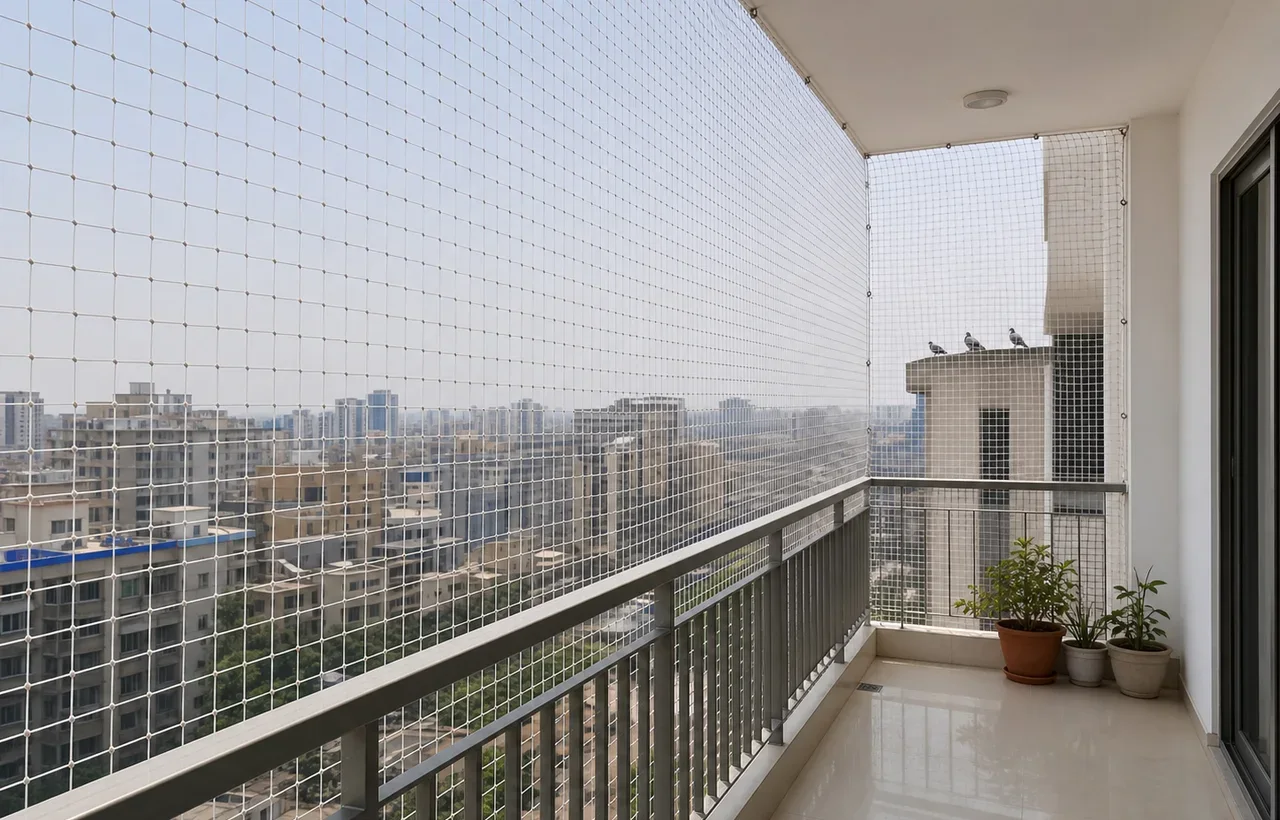
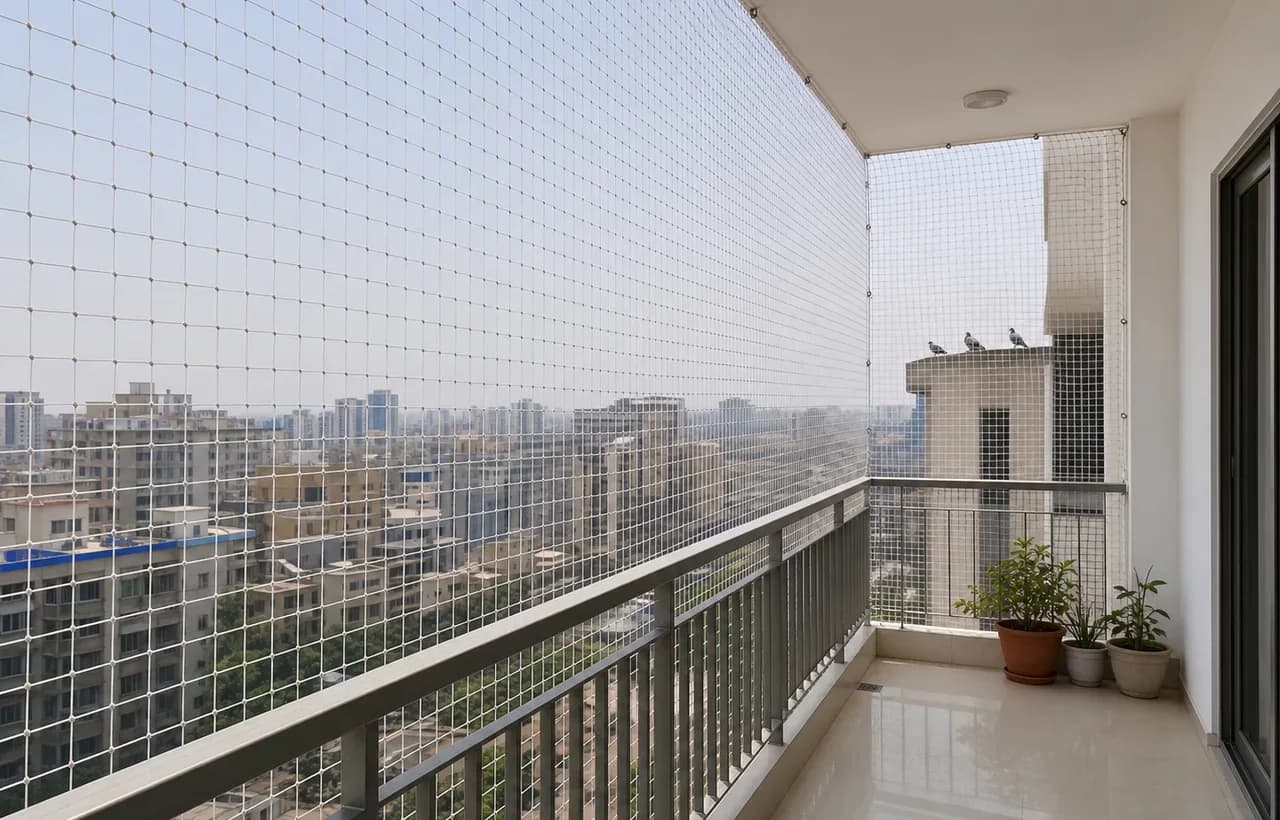
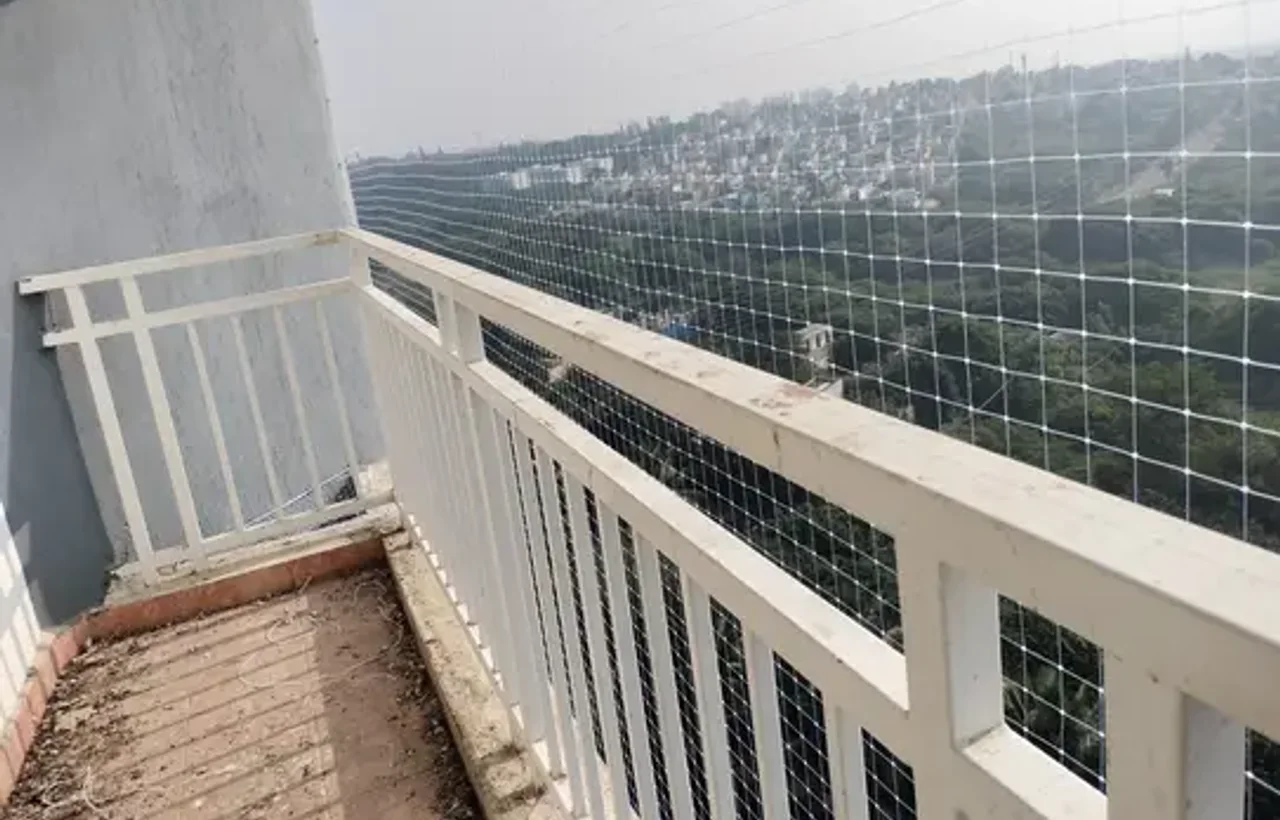
Service visual guide
These representative images support the written guidance below; the exact opening still needs its own measurement and access check.

Representative opening view
Use this reference when sharing the opening span and return corners.

Installation planning view
The exact edge condition and anchor position are confirmed on site.

Fit and access reference
Final appearance depends on the measured opening and everyday access needs.
Local fit
JP Nagar combines independent houses, converted floors and apartment towers, so repeat pigeon activity rarely has one universal shape. Older sunshades and grill tops create sheltered perches, while modern utility balconies offer AC shelves, drain pipes and slim returns. Cleaning the tile removes the evidence but leaves the approach route available. A front-only net can also redirect birds toward a neighbouring chajja or an uncovered service corner, especially when the actual landing line sits above ordinary eye level.
The practical solution is a measured exclusion line that closes every connected entry without trapping a bird inside. The survey links the balcony face with chajjas, side pockets, window shades and equipment gaps, then chooses a compatible mesh, perimeter cord and anchor method for the inspected surfaces. Operable sections are planned only where servicing genuinely requires them. Even tension, finished corners and a photographed handover make the installation easier to inspect after painting, waterproofing or appliance work.
A credible JP Nagar proposal should identify the measured faces, material family, nominal aperture, strand or twine dimension, edge construction, fixings, labour and exclusions. It should separate provisional photo guidance from the final site scope and explain any minimum charge or difficult-access item. EverSafe also records permission assumptions and service openings before fitting. That evidence gives an owner, tenant or association something concrete to compare, maintain and pass to a later technician instead of relying on an unverified strength claim.
Nearby Family-Spillover Context
these nearby locality and market references help reflect the family-apartment and home pattern around JP Nagar, where drying lines, sit-out routine, pet movement and balcony-as-extra-room use can make the edge feel too internal to review properly.
Defines the main locality covered by this pigeon-safety-net area page.
Useful for nearby apartment, balcony and utility-opening enquiries.
Supports precise local context for southern JP Nagar enquiries.
Supports enquiries around the northern and Kanakapura Road side of JP Nagar.
Provides a clear approach reference for apartment enquiries east of JP Nagar.
Home Pattern
JP Nagar 1st to 6th Phase contains many established houses and lower apartment blocks where a projecting sunshade can remain outside the obvious balcony plane. The droppings may land on a sill or plant row even though the dependable perch is the chajja above. Survey photographs should include roofward edges, grill tops, neighbouring returns and the space behind pots. Masonry repairs, tiled bands and old drill points also deserve inspection before new anchors are proposed. Treating these homes like a plain tower rectangle can leave the side approach open or place hardware into a finish that was never intended to carry the perimeter load.
Around 7th to 9th Phase, Puttenahalli and RBI Layout, taller apartments more often combine glass, concrete, metal rails and narrow utility recesses. A bird may approach through the open front yet settle beside an outdoor unit where the resident cannot see it from the room. Management rules can control drilling hours, vendor entry and facade access. The measured plan should therefore separate the main balcony, utility opening and any AC recess while showing how each will remain serviceable. A single square-foot total is meaningful only after those faces and access assumptions are named, because height and hidden returns can change the fitting work substantially.
Begin with a wide view from inside the room and another image looking back toward the doorway, then photograph the upper slab, both corners, rail line and floor edge. Add close views of feathers, nesting material or droppings, but do not let those close-ups replace context. For a utility balcony, show pipes, drain outlets, gas lines, washing-machine connections and the complete AC unit. Mark which shutters, drying racks and doors must continue moving. This set helps distinguish the active landing route from a dirty surface below it and reduces the chance that the first estimate omits a side plane or service requirement.
The accepted scope should translate those observations into measured faces, border lengths, anchor zones and planned closures. It needs to state whether old mesh is removed, who clears loose debris, how inaccessible exterior work is handled and whether taxes or association charges sit outside the amount. If waterproofing, plaster repair or painting will affect the fixing base, complete or sequence that work before final measurement. At handover, trace every quoted boundary and photograph the corners before furniture returns. That record helps the household identify later disturbance from an AC technician, painter or tenant alteration without guessing what the original installer completed.
Terms such as HDPE bird net, nylon pigeon mesh, transparent net and invisible bird net are used loosely in local enquiries. They do not by themselves disclose polymer, UV treatment, nominal opening or strand size. Ask the provider to identify the offered material and give a numerical aperture plus strand or twine dimension where available. The sample should correspond with the supplied roll or product evidence. Transparent material can reduce visual contrast, while white, green or black may relate differently to walls and planting, yet colour is not proof of capacity. Exposure, border construction and workmanship remain part of the installed system.
Aperture should prevent the target bird from passing through while still supporting the household's view, airflow and cleaning routine. An unusually fine mesh can collect more visible dust on a road-facing JP Nagar balcony, whereas an opening chosen without the bird-control purpose may be ineffective at a return. Strand thickness also needs context: heavier-looking twine cannot compensate for loose edges or weak plaster. Review how the perimeter cord joins corners and what connectors meet concrete, masonry or approved metal. Product statements should avoid fixed life promises because orientation, sun, rain, abrasion, pets and later building work differ from one phase and elevation to another.
An outdoor unit is both a common sheltered perch and equipment that will need maintenance. Stretching mesh across it without a service plan invites a later technician to cut, untie or leave the boundary partly open. During measurement, identify the panel that must be reached, the direction components are removed and whether safe work happens from inside. A labelled operable section may be appropriate when it has a secure closure and a responsible user; another layout may work better with a perimeter routed behind the service zone. The estimate should name this choice instead of leaving access to an improvised future decision.
Balcony function extends beyond equipment. Sliding doors, windows, drains, clotheslines and plant care should remain practical without loading the net. Drying racks, hanging pots, pet leads and decoration need their own supports. Where an older JP Nagar home has a deep chajja outside the living boundary, the team should explain whether it is enclosed, made inaccessible as a perch or treated by another compatible method. A neat front face is not complete if a usable side pocket remains. At handover, residents should operate every approved opening and see how it locks before the ordinary balcony arrangement is restored.
Before any perimeter closes, inspect ledges, AC pockets and hidden returns for birds, eggs or dependent young. If an active nest is found, do not tension mesh around it or force an immediate closure merely to preserve an appointment. Pause that part of the work, keep residents from disturbing the nest and obtain appropriate bird-rescue or wildlife guidance for the specific situation. The installer can document the intended boundary and return after the area is responsibly clear. This approach separates humane exclusion from removal and prevents a pigeon from being sealed inside a utility recess that looked empty in a distant photograph.
Once the opening is clear, remove only material that falls within the agreed preparation scope and check for a second sheltered pocket before closing. Food bowls, open grain and standing water should be managed so the completed balcony does not keep attracting visits to its outer edge. Spikes may suit a narrow, accessible ledge in some designs, while flexible netting better closes a three-dimensional opening; neither should be presented as universally strong. The JP Nagar choice depends on geometry, approved substrate, cleaning access and bird route. The written plan should say which surfaces remain outside the protected boundary and why.
Tenants should confirm owner consent for drilling, and apartment residents should check association rules for facade appearance, vendor registration, work hours, service lifts and external equipment. A provider cannot infer permission from a similar tower nearby. Share these conditions during estimate so the method and access cost reflect what the building will actually allow. Glass, cladding, waterproofed edges, pipes and decorative features must not become convenient anchor points without a verified fixing design. If the approved route changes after management review, update the measured scope rather than compressing the original plan into fewer reachable points.
Independent houses need access planning too. A high chajja or stairwell void may require equipment, a cleared terrace path or coordination with another occupant. The lowest unit rate can become misleading when safe reach, preparation and return geometry are excluded. Ask who supplies access, who moves furniture, what happens if hollow plaster is uncovered and how variations receive approval. Keep written consent, photographs and the final marked boundary with the invoice. Those documents help a landlord understand permanent changes, help an association identify the approved elevation and give a future repairer a reliable account of the surfaces behind the edge cord.
Inspect the JP Nagar installation carefully and periodically after exterior painting, waterproofing, storms, AC work or furniture movement. Look for cuts, abrasion, slack, displaced connectors, cracked anchor surrounds and openings at the side or lower edge. Clean by a mild method without leaning on the mesh or attaching loads. If condition is uncertain, prevent use of the affected balcony route until it is assessed. A small documented defect may accept a compatible repair when the surrounding net, border and fixings remain known and sound. Several old patches or unidentified material make that decision less straightforward.
Warranty language should identify covered material or workmanship, duration, exclusions, reporting steps and responsibility for travel, labour, access and replacement parts. It cannot substitute for routine inspection or make a damaged boundary suitable for continued use. Keep the original specification, measured sketch, invoice and handover images together with service notes. Replacement may be clearer when deterioration is broad, anchors have moved, geometry changed or earlier repairs obscured the system. A measured reassessment should explain whether one section or the complete opening is affected, allowing the owner to compare a supported repair with a fresh documented perimeter.
Indicative local price
₹18–₹30/sq ft
A budgeting range for many standard Bangalore installations; measurement and access decide the final estimate.
Most important fit check
Full perimeter
Top beam, both side returns, lower edge, pipes and AC-side gaps need review.
Right first enquiry
Wide photos + size
Include the complete opening, floor level, JP Nagar phase and the pigeon's preferred ledge.
Building mix: JP Nagar includes older independent homes with chajjas, multi-phase residential streets, modern apartment balconies and compact utility openings.
Outdoor conditions: Sun, seasonal rain, wind and road dust can affect exposed netting and fixings, so material suitability and anchor condition matter more than colour alone.
Common layout cue: A useful estimate photo shows the full opening, upper slab, both side walls, railing, floor line, pipes and AC unit. Close-ups alone may hide the route pigeons use.
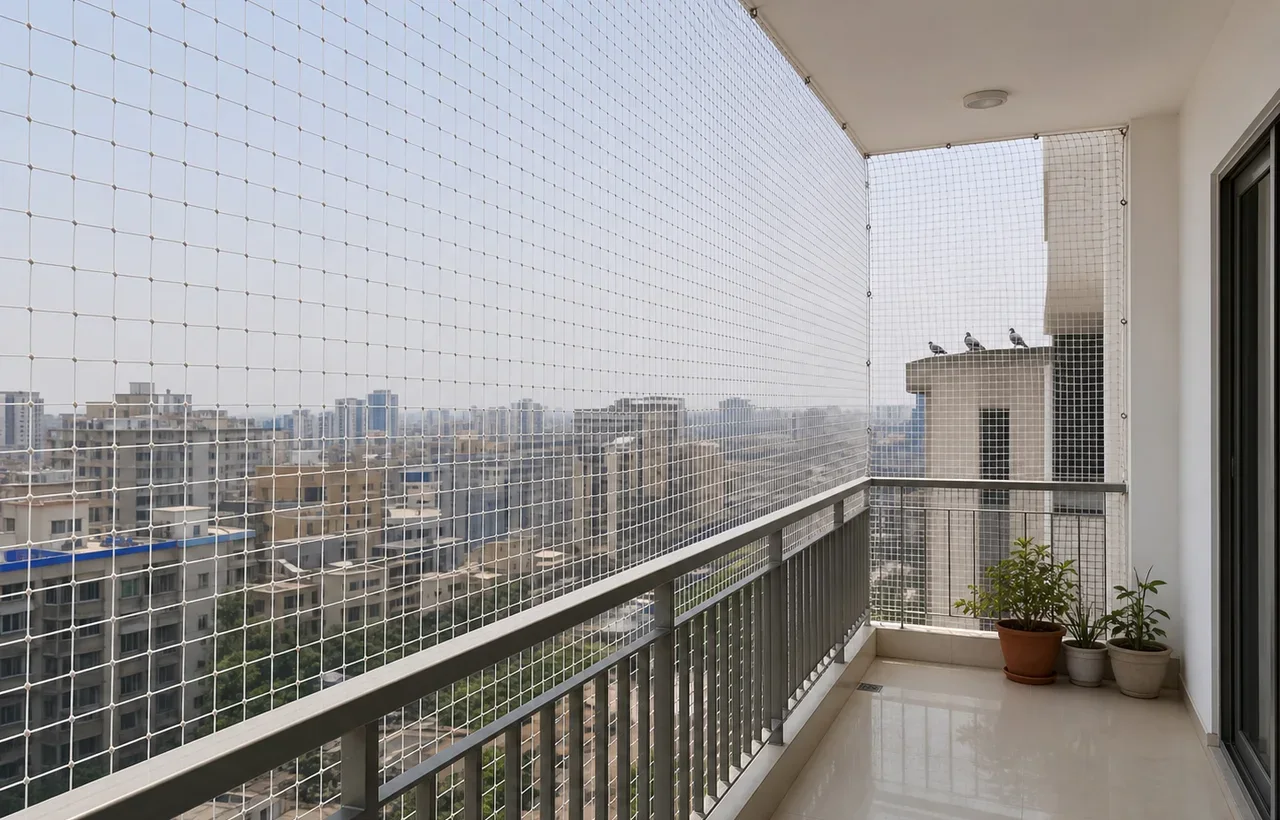
apartment balcony where pigeons sit above the AC outdoor unit
utility balcony with pipe-side gaps and a clothes-drying rack
window sunshade that drops mess onto the sill and wall
high-floor balcony with an open side return beside a glass railing
older independent home with chajjas and multiple small ledges
apartment duct or shaft opening used for nesting
Measurement-first estimate covering material, area, fixing surface and access
Clear distinction between bird-control netting and fall-protection products
No unsupported brand, lifespan, warranty or review claims
Visible-content FAQs based on real pre-purchase and after-installation questions
Local service coverage described by actual JP Nagar phases and connected pockets
Older homes with projecting chajjas may need the top and side returns closed separately from the balcony face.
High-floor apartments around JP Nagar need safe-access planning; the lowest per-square-foot estimate is not useful if access equipment or weak fixing surfaces have been ignored.
Utility balconies with pipes, drains and outdoor AC units may need a planned service opening rather than a permanently sealed face.
Road-facing balconies collect dust as well as droppings, so a well-tensioned, accessible installation is easier to inspect and maintain.
The estimate is tied to measured net area, material and access rather than an unexplained lump sum.
The perimeter check includes the top beam, both returns, pipe gaps, railing line and nearby ledges.
Material grade, mesh appearance, colour, hardware and any warranty should be recorded in the estimate.
The handover confirms that windows, doors, drains, clothes-drying space and AC service points still work.
Review and aggregate-rating markup remains disabled until matching, verifiable evidence is available.
Repeated droppings can turn a useful clothes-drying or sitting area into a space the family avoids.
A small open corner may allow pigeons to return even after the main balcony face has been covered.
Poor tension and weak anchors can create sagging, visible gaps and avoidable repair work.
covering the balcony front but leaving an upper or side return open
accepting the word nylon without asking for the actual material specification
choosing net only by colour or price while ignoring UV exposure and mesh quality
fixing into loose plaster, weak edges or unsuitable surfaces without checking support
leaving slack sections where birds can perch or push against the mesh
blocking a window, drain, clothes rod or AC service point needed later
Recurring balcony mess
The priority is to find the used perch above the mess and close every connected return without trapping birds inside.
Price comparison
Use the local per-square-foot range as a budget guide, then compare the measured area, material, hardware, access and minimum charge in each written estimate.
Clear-view requirement
Compare a standard HDPE bird net with a transparent or less-visible monofilament option, including how each looks in daylight and against the building exterior.
Ready to arrange installation
Share the phase, full-opening photos, approximate width and height, floor level and the pigeon's sitting point for a faster first assessment.
Pigeon net, transparent mesh, wire mesh and bird spikes solve different layouts. The right choice depends on whether birds enter an opening, sit on one narrow ledge or use several connected surfaces.
Works well for: most balconies, windows, utility openings and apartment duct faces
It provides a light physical barrier across a larger opening and is available in practical dark or coloured finishes. Verify the actual specification and hardware rather than relying only on the word nylon.
Works well for: balconies where the outward view and indoor appearance are priorities
A fine clear line can look less noticeable from normal viewing distance, although no net is literally invisible. Material, UV suitability, tension and fixing quality still need to be compared.
Works well for: small permanent vents, rigid frames or openings needing a fixed metal barrier
Mesh is more rigid than netting but can look heavier, cost more and be harder to remove for service access. It is not automatically the right choice for a wide balcony span.
Works well for: one narrow railing, signboard, parapet or ledge with no open entry route
Spikes discourage landing on the treated strip. If pigeons can move to an AC bracket or enter the balcony from the side, netting or a combined plan may work better.
Works well for: small, safely reachable openings with sound fixing points
Buying raw pigeon net online may reduce material cost, but measurement, edge finishing, anchor spacing and safe high-floor access remain the owner's responsibility.
Send wide photos, the JP Nagar phase, approximate dimensions, floor level and a clear view of the ledge or corner the pigeons use.
The top beam, side returns, pipes, AC platform, window movement, wall condition and safe working position are checked before quoting.
Pigeons must be outside the enclosure, and any active nest or chick needs an appropriate humane plan before the opening is sealed.
The estimate identifies the material or grade, colour or clear finish, measured area, perimeter method, required hardware and any service opening.
The net is aligned across the opening, tensioned evenly and checked at corners, pipes, brackets and lower edges where small gaps are easily missed.
Window movement, drain access, clothes drying and AC servicing are tested, followed by guidance on cleaning and periodic visual inspection.
Starting from Indicative JP Nagar pigeon-net rates begin around ₹12 and can reach ₹40 per sq.ft. The measured total changes with mesh specification, perimeter length, chajja returns, anchor substrate, floor access, old-net removal and any service panel. Small openings may carry minimum labour despite modest area. A useful estimate lists quantity, hardware, fitting, preparation and exclusions separately so competing totals cover the same route.
actual net area measured across the opening, not only floor size
standard HDPE, transparent monofilament or other specified net grade
mesh thickness, UV suitability, colour and stated warranty terms
balcony, window, AC ledge, duct, shaft or building-opening layout
floor height, safe installer access and any required access equipment
weak plaster, damaged edges or the need for additional support framing
number of corners, pipes, side returns and service-access sections
minimum visit or small-job charge and whether hardware is included
Send one wide photograph of the full opening, then add the stained ledge, upper corners, AC side and any pipe return. Include the JP Nagar phase, floor and whether painting or servicing is planned. EverSafe can organise the survey around the real perch sequence and prepare a measured, readable scope.
These are the practical questions households usually ask before choosing pigeon safety nets in JP Nagar, Bangalore.
Indicative rates run from ₹12–₹40 per sq.ft after measurement. The estimate should identify net area, mesh specification, perimeter cord, anchors, fitting labour and any minimum charge. Confirm whether old-net removal, surface preparation, exterior-access equipment, service panels, tax and debris handling are included or excluded before comparing totals.
Ask for the actual material, nominal aperture and a numerical strand or twine dimension rather than accepting only transparent, nylon or HDPE as a specification. The choice should match pigeon exclusion, exposure, visibility and cleaning. Sound perimeter construction and compatible anchors matter alongside mesh thickness, because a heavy sample cannot correct weak fixing surfaces.
Tenants should obtain owner consent, while apartment residents should confirm drilling, facade, vendor and working-hour rules with management. High chajjas or tower exteriors may need approved access arrangements. Share those requirements before measurement so the written method and price do not depend on equipment or fixing points that the property will not permit.
The opening must be checked before closure. If birds, eggs or dependent young occupy a nest, that section should pause rather than being sealed. Avoid disturbing or entrapping them and seek appropriate bird-rescue guidance for the actual situation. Installation can proceed after the space is responsibly clear and every connected pocket is rechecked.
When comparing a pigeon net installer nearby, send the JP Nagar phase, floor, full-opening photographs, stained perch, upper corners and AC or pipe side. Mention ownership, association rules and upcoming building work. EverSafe can use that context to arrange a survey and prepare a route-specific measured proposal.
An isolated cut may support compatible repair when material, border and anchors remain identified and sound. Broad slack, several patches, moved fixings, unknown mesh or changed geometry can favour measured replacement. Review warranty wording for covered items, exclusions, reporting and access charges, but restrict balcony use whenever the affected boundary is doubtful.
Around JP Nagar, bird problems are often only one part of the decision. People also compare child safety, balcony-edge coverage and how to keep the front usable without making it feel closed in.
Useful when birds are only landing on narrow ledges, AC tops, beams, pipes or sign edges rather than entering a larger opening.
Open local pageUseful when the issue is broader bird control across openings, shafts or utility-facing areas, not just one balcony front.
Open local pageUseful when the issue around JP Nagar is more about this specific service need than the original page you started from.
Open local pageUseful when drying clothes is what keeps daily movement happening close to the balcony edge in the first place.
Open local page