Other ways people ask
Around Hennur, people do not always use one exact phrase. These are the fuller ways the request usually shows up when the household is comparing fit, finish, and installation details.
Local service page
A mark beside a Hennur balcony door often tells only the last part of the story. The pigeon may be resting on an upper beam, crossing an AC bracket and entering through a side return before anything reaches the tile below. This pattern appears in apartment balconies toward HBR Layout and Kalyan Nagar as well as villa sit-outs along the Hennur Road corridor. A useful survey follows the evidence upward, maps every connected edge and records how residents use the opening for laundry, plants, seating or equipment access. It then separates the visible front from chajjas, pipe pockets, pergola gaps and shaded ledges that birds may test after fitting. Material identity, aperture, numerical thickness, border components, approved fixing surfaces and access conditions belong in the same proposal. The result should be a measured pigeon-exclusion boundary that preserves doors, drains, light and ordinary movement while giving the household a clear basis for price, permission, maintenance and later repair decisions.

Compare before deciding
This page stays focused on what usually changes around Hennur. If you are still comparing material, price, safety fit, or nearby visit options, the Bangalore Pigeon Safety Nets guide gives the broader picture before you call. You can also browse the Bangalore area guide when you want to check nearby local pages.
City guide
Compare Pigeon Safety Nets materials, fitting choices, price factors, and visit planning across Bangalore.
This area
Use this page when the opening, building access, or daily routine around Hennur is the main concern.
Nearby options
Move between the city guide and local pages when you want either a wider view or a closer match.
Area fit
EverSafe takes pigeon net enquiries across Hennur and the nearby pockets towards Kalyan Nagar, HBR Layout and Thanisandra, wherever a balcony, window, AC ledge or utility corner has turned into a daily cleaning job.
Nearby landmarks
Balcony and ledge pigeon net work across Hennur
AC platform and utility-side bird control towards Kalyan Nagar
Window shade and side-return closure around HBR Layout
Apartment and villa pigeon net planning towards Thanisandra
Local wording
People looking for pigeon safety nets around Hennur, Bangalore rarely describe it the exact same way every time. The wording usually shifts with the home, the routine, and the first problem that starts feeling noticeable.
In Hennur, start with where the bird sits, not the mess on the floor.
EverSafe checks Hennur balconies for the ledge return, the AC-side access and the wall condition before fixing anything.
This usually shows up around
Around Hennur, people do not always use one exact phrase. These are the fuller ways the request usually shows up when the household is comparing fit, finish, and installation details.
Clear mesh cut to fit Hennur balconies, windows, sit-outs and utility openings
Stops the birds settling again, without dimming your light or blocking the air
Sorts out droppings, smell, feathers, nesting and stained ledges
Fitted around AC units, pipe corners, upper beams and side returns
This guidance works best when it answers the practical concerns people carry into the call, not just the first words they use.
Hennur pigeon-entry diagnosis
Material and aperture evidence
Measured price and inclusion clarity
Installation, permission and access planning
The birds pick the obvious perches first. Balcony beams, the top of the AC unit, a roof-edge ledge, the window shade. You usually notice once the droppings reach the plant pots, the chairs you sit on in the evening, the clothes on the rack, or the floor right by the balcony door.
A net only works in Hennur if it covers the whole spot the bird uses, not just the front. That means the upper beam, the side return, the AC ledge, the pipe corner and the window shade all get checked together. Cover the easy face and leave a gap, and the pigeon just shifts over to it.
Hennur is a mix. Some homes are apartment balconies, others are villa sit-outs, some face the road. EverSafe fits each one to suit instead of running the same line everywhere. The job is to cut the droppings, the smell, the feathers and the nesting, while your light, your air, the window, the drying space and your cleaning reach all stay the way they were.
Across Hennur and over towards Kalyan Nagar, HBR Layout and Thanisandra, the line is kept tight and tidy, so the net does its job without making the place look shut in.
Service visual guide
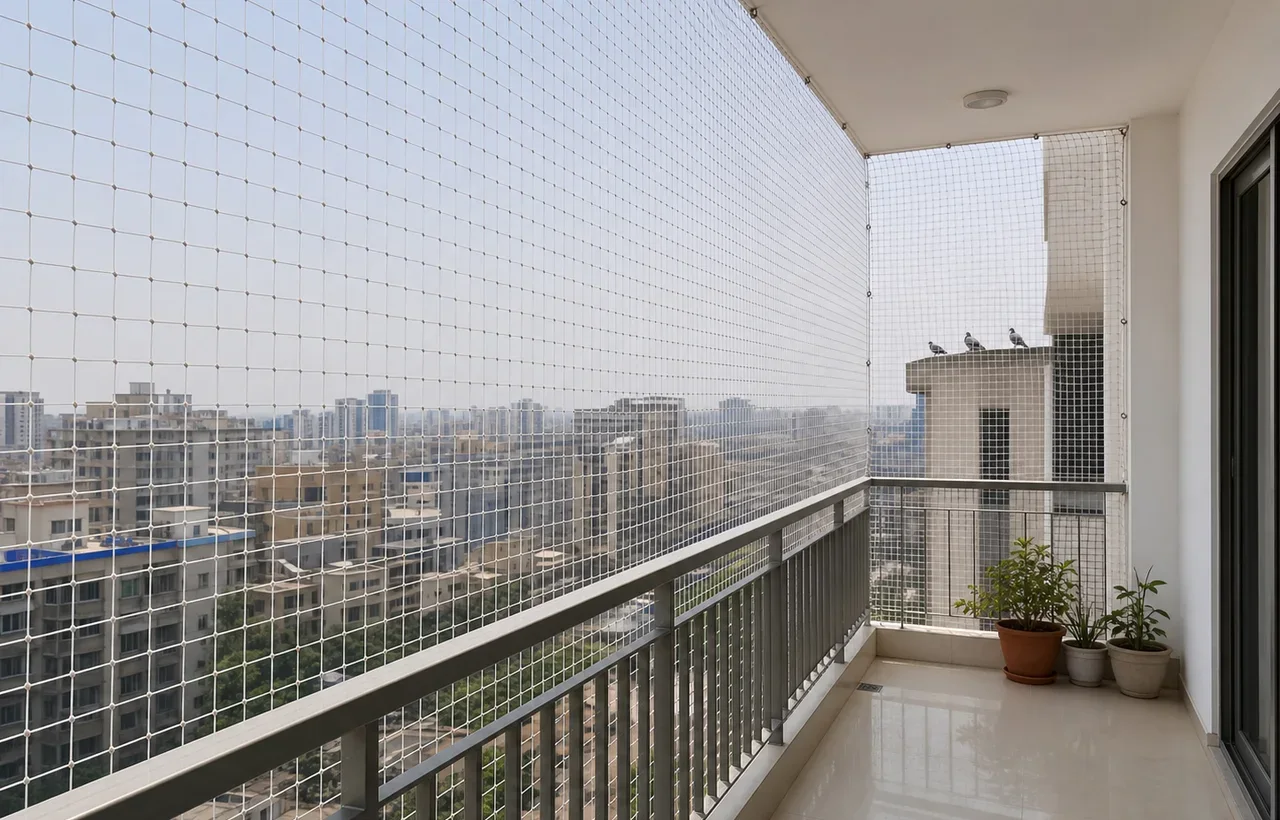
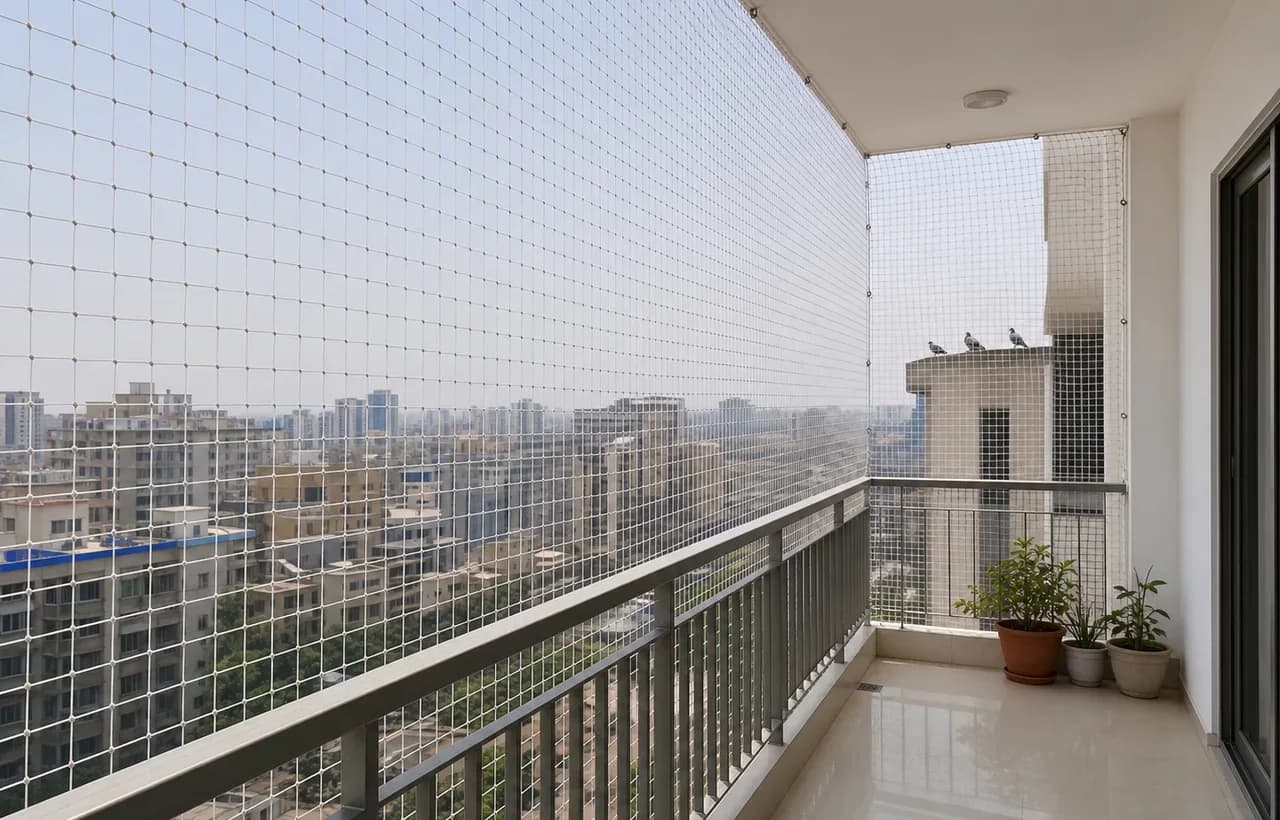
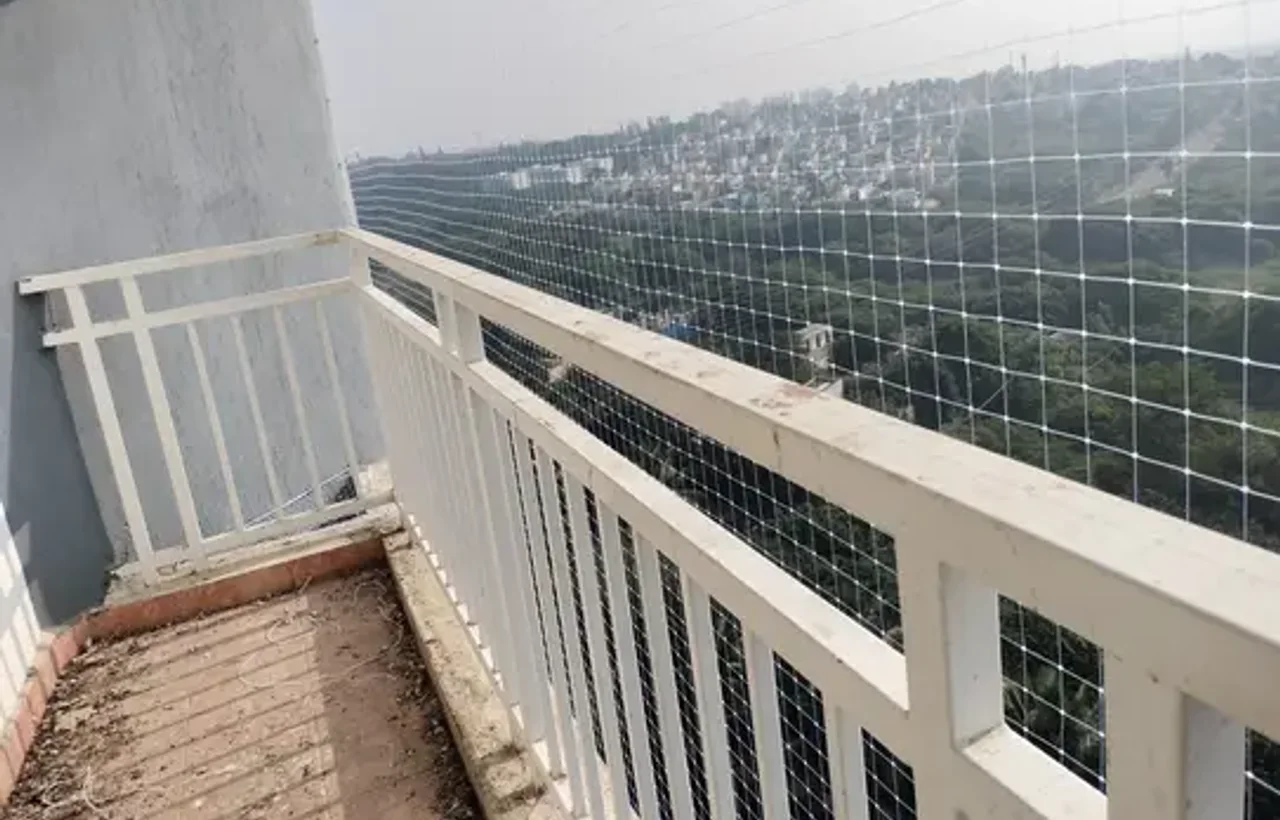
These representative images support the written guidance below; the exact opening still needs its own measurement and access check.

Representative opening view
Use this reference when sharing the opening span and return corners.

Installation planning view
The exact edge condition and anchor position are confirmed on site.

Fit and access reference
Final appearance depends on the measured opening and everyday access needs.
Local fit
Hennur's mixed building stock creates misleadingly different views of the same bird habit. A villa owner may notice a tiled sit-out, while an apartment resident sees a narrow balcony face, yet both can have a protected-looking centre with an open beam or AC-side pocket. Birds return to the quiet perch, not the place that is easiest to photograph. Furniture, planters and drying racks can also hide the drop line or prevent a technician from seeing the full substrate before quoting.
The practical response is to make a perch sequence rather than draw one rectangle. Number the top edge, both returns, lower closure, AC recess, window shade and any pergola or utility connection. Match those codes to photographs, dimensions, household clearances and verified structural surfaces. The selected mesh and border can then close the complete route while retaining service access. A site-specific drawing also shows an owner or association exactly what will be drilled, left open or handled by another trade.
Credibility comes from a Hennur work file that remains understandable after furniture returns or a tenant changes. It should include dated survey images, material and component descriptions, an anchor schedule, written permissions, estimate assumptions and clean handover views. Claims about strength or weather exposure need supporting product information rather than a sales adjective. When concealed damage changes the plan, the provider should identify the affected location, explain alternatives and obtain approval before changing the fixing route or invoice.
Nearby Premium-Family Context
these nearby locality and local cues help reflect the premium-family apartment and villa pattern around Hennur, where landscaped calm, child movement, pets and community comfort can create false confidence around the balcony edge.
Primary Hennur reference for pigeon net enquiries.
Helps place Hennur pigeon-net enquiries around Kalyan Nagar.
Helps place Hennur pigeon-net enquiries around HBR Layout.
Helps place Hennur pigeon-net enquiries around Thanisandra.
Home Pattern
Hennur, Bangalore
Problem: A villa sit-out near HBR Layout had pigeons perched on a side ledge right above an outdoor chair, so the seat needed wiping before anyone could use it.
Solution: Clear mesh closed off the side ledge and the front opening, and the sit-out didn't end up feeling heavy or boxed in.
Result: The chair corner stayed clean, and the family went back to using the sit-out in the evenings.
Start below the mess, but do not stop there. Note whether stains collect beside a door track, on a planter shelf, under an AC unit or along the outer wall, then inspect the beam and projections above from a secure interior position. Feathers in a dry corner and polished dust on one ledge can reveal a route that is inactive during the visit. Around Hennur Road and HBR Layout, balconies may also share lines with window shades or service pockets outside the first camera angle. Photograph each clue with enough context to show its relationship to the front, top and side boundaries before deciding where netting begins.
Household routine changes which edges must remain accessible. A villa sit-out may hold chairs and hanging plants, while an apartment balcony carries a ceiling rack, outdoor unit and sliding window in a narrow depth. Record what moves during cleaning, watering and laundry use, and identify the technician path to every serviceable component. Pigeon mesh should not depend on furniture for support or leave an edge rubbing against a rack. If a pergola or deep chajja remains outside the planned volume, mark it openly. This use map keeps the completed Hennur boundary workable instead of trading bird exclusion for a balcony that residents soon need to alter.
Give every face and pocket a short code, then place dimensions, proposed mesh, edge treatment and fixing base beside that code. The estimate should follow the same order so the household can see whether the top, lower line, two returns and AC recess are all included. Border length matters even on a modest opening, and a villa projection can require support that a slab-to-slab apartment face does not. List removal, patch preparation, difficult access, equipment, tax and minimum billing separately. If an obscured surface becomes unsuitable after clearing, the revised work card should show the new point and commercial effect before installation continues.
Authority also needs its own column. A homeowner may approve a private sit-out but not a shared elevation; a tenant may require owner consent; an apartment association may control drilling colour, worker registration, lift use and exterior appearance. Record those decisions with the marked photograph rather than relying on a call summary. The installer selects a safe method and remains responsible for workmanship, while civil, metal, glazing or waterproofing preparation stays with the named party. Hennur work should pause if the only convenient fixing lies on a pipe, loose finish, glass panel or unverified decorative rail, because visual neatness cannot substitute for an approved structural route.
Transparent appearance can suit a room-facing balcony, yet it does not identify the product. Ask whether the offered mesh is HDPE, nylon or another polymer, and record its supplier reference, fabrication, nominal aperture and numerical strand or twine thickness. Available documentation for UV stabilisation should be attached without turning exposure data into a fixed service prediction. Keep a labelled sample where practical and compare it at the bright front and shaded return. Hennur homes can have markedly different sun, rain and plant contact on adjoining faces. A material passport lets the resident verify delivery and gives a future technician a reliable reference for condition assessment.
Specify the perimeter with the mesh. Border cord, connecting method, anchor category and any independent frame determine how the opening behaves at corners where pigeons probe. Aperture should relate to the birds present and any separate household safety brief; thickness should not be presented as a complete strength assessment. Sharp pergola edges, rough masonry and service brackets may require isolation or a revised route to prevent abrasion. Hold the proposed line clear of doors, drains and equipment panels. A Hennur system is therefore a documented assembly fitted to one mapped volume, not loose net sold only by square footage or described through an informal label such as invisible.
Before tools enter, agree on the internal path, item-moving responsibilities and an isolated work zone. Chairs, plant stands, laundry fittings and pet accessories should be cleared without blocking the exit. Protect floors and door tracks, identify drilling-debris controls and keep children and animals away until handover. For upper beams or exterior returns, the provider should describe the competent access method and any required equipment after inspection. A family member should never lean out, steady an improvised ladder or hold mesh beyond the rail. Villa side access and apartment high-floor access are different scopes, even when photographs make their openings look similar.
Create a substrate register before selecting anchors. Sound concrete, suitable masonry and assessed structural metal require different hardware and spacing; cladding, glass, waterproofing details, pipes, cable routes and old decorative grills are not automatic alternatives. Photograph repaired areas and former holes, then assign any civil preparation before final fixing. A sit-out pergola may need an evaluated support rather than ties around a painted member. In managed buildings, preserve facade-service routes and any required access panel. This register makes the Hennur installation explainable: each attachment has a known base and purpose, and any departure from the survey drawing becomes a recorded decision rather than a hidden adjustment.
Use netting when a defined balcony, utility opening or sit-out volume can be closed around all returns. Bird spikes may suit an authorised narrow landing ledge, but they do not block an open side pocket and can redirect pigeons to a nearby beam. Invisible grills are tensioned cable systems with different terminals and spacing; they are not a fine bird barrier by default. Window insect screen serves another aperture and frame. Map the approach and resting behaviour before combining any products. Interfaces must remain inspectable, independently supported and free of the small gaps that appear when two unrelated systems are simply tied together.
An occupied recess changes the schedule. Inspect shaded chajjas, AC shelves, planters and pergola pockets for an active nest, eggs, dependent young or a trapped bird immediately before closure. Pause that section and seek appropriate local rescue guidance instead of sealing the space or shifting animals casually. Once responsibly clear, remove abandoned debris with suitable precautions and recheck the entire route before fitting. The finished mesh should be taut enough to avoid loose pockets and complete enough to prevent re-entry. Record the inspection date and postponed area. Humane exclusion in Hennur begins with timing and observation, not with a rushed claim that every bird problem can be closed on arrival.
Two quotations can show the same square-foot rate while covering different work. Supply the coded opening sketch and ask each provider to state net area, perimeter, returns and recesses separately. Require product identity, aperture, thickness, cord, connectors, anchors, support components and labour against those quantities. Clarify whether overlaps, cutting allowance and minimum work are included. A compact balcony with many turns may carry more border work than a wide simple face. The useful comparison is the completed protected volume, not a unit rate that leaves one bidder pricing only the visible centre while another includes the AC pocket and upper return.
Write exclusions in practical language. Surface repair, welding, waterproofing, painting, electrical relocation, glass work, nest handling, deep cleaning, exterior equipment, parking, removal, disposal and tax should each be assigned or omitted explicitly. State payment stages and how an unexpected weak surface becomes a priced variation. If a villa requires access from adjoining property, record that permission before appointment. If an apartment needs a deposit or lift planning, identify the responsible person. This commercial clarity helps Hennur residents compare like with like and gives the installer a stable scope without pretending that one photograph can settle every quantity or access condition.
At completion, photograph the empty protected opening from the room, each corner, all border joins, attachment zones and service interfaces. Restore normal balcony items and take a second set showing the clearance residents must retain. Store both sets with the material passport, approved drawing, invoice, care instructions and warranty wording. Clean only from a secure position using the documented gentle method; do not hang laundry, planters or decorations from the net. Revisit the same camera angles after painting, waterproofing, AC work or a furniture impact. Comparable images make gradual slack, abrasion or connector movement easier to identify before somebody improvises a tie.
When a defect appears, keep people away from the affected boundary and open a dated service note. Mark the exact code, likely cause and visible extent, then have a technician examine adjacent mesh, border, fittings, anchors and substrate. One isolated cut in known material may permit a compatible repair, whereas widespread brittleness, repeated patches, unknown mesh or moving supports may favour sectional replacement. Warranty terms should say what material or workmanship is covered, how evidence is submitted and which impacts or later trades are excluded. This Hennur history supports a reasoned decision without relying only on installation age or a verbal recollection.
Common bird route
Ledge to side gap
It's the first thing checked when planning a pigeon net in Hennur.
Right first photo
Wide opening view
Get the top beam, the side walls, the floor, the railing, and the AC unit if there is one.
Main success factor
Closed return edge
Nearly every repeat problem traces back to one small edge left open.
Building mix: north-east corridor homes, a mix of apartment balconies, villa sit-outs, AC ledges and roof-edge shades
Outdoor conditions: Dust off Hennur Road, shaded ledges, dry balcony corners and the seasonal rain all make droppings stick harder while the perch stays open, so the fixing is chosen to suit that.
Common layout cue: The usual things to check in Hennur are the balcony front, the side return, the AC platform, the window shade, the pipe pocket and the upper beam. Photos go a long way in judging the height, the access and the fixing surface before a visit.
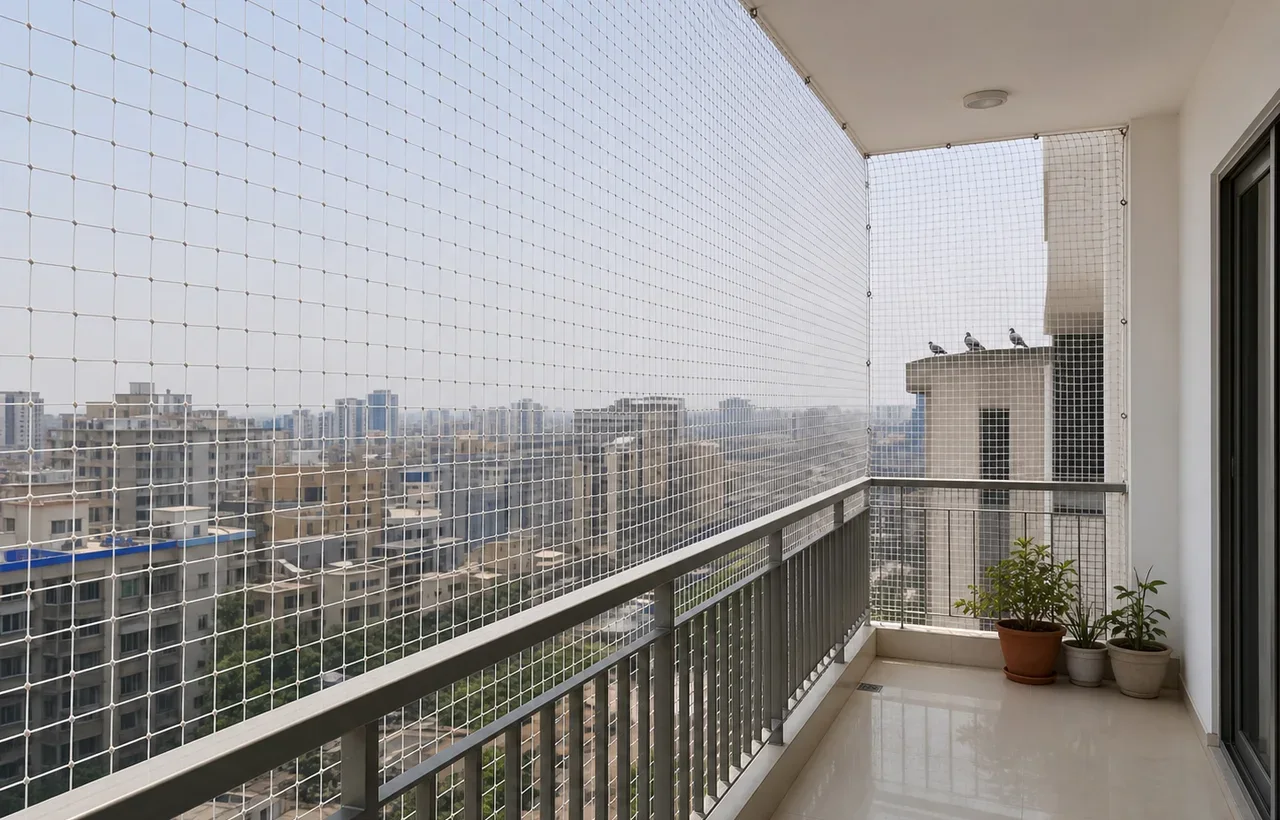
A Hennur balcony where the pigeons sit on top of the AC outdoor unit.
A Hennur window shade with stains running down onto the sill and the wall.
A Hennur villa sit-out where a side ledge sits right over the outdoor chairs.
A road-facing Hennur balcony where bird mess and street dust build up together.
EverSafe has worked on pigeon-prone balconies, AC shelves, chajjas and utility corners across Bangalore areas much like Hennur.
Around Hennur, the plan is built around how the birds move, not around one fixed net style sold for every opening.
Comfortable with apartments, older homes, villa sit-outs, road-facing properties and tight utility spaces.
Review stars stay off the page until there is verified, page-specific feedback for this service and area.
In Hennur the bird's favourite ledge has to go first. Pigeons keep coming back to the spot they know before they'll bother trying anywhere new.
Homes along this corridor, apartment balconies and villa sit-outs both, need the side returns checked properly. A front-only cover tends to leave the very gap the birds use.
On a sit-out or a visible balcony, a clean fixing line keeps the place looking looked-after once the work is done.
EverSafe reads the bird marks around Hennur before deciding where the mesh runs.
The upper ledge, the drop line and the points you can actually reach to clean are all looked at together.
Around Hennur, you get guidance on photos, rough size, access and fixing surface before a visit is set up.
Having to check a balcony chair before you sit in it.
Droppings drying in plain sight on the sit-out, right where guests can see them.
Wiping a ledge clean and finding it dirty again a couple of days later.
Netting the balcony front and leaving the side return wide open.
Missing the AC bracket or pipe pocket sitting above the dirty patch.
Running the mesh loose so it sags near the upper beam.
Drilling into soft plaster or an old ledge edge without checking it'll hold.
Sealing up AC, window or utility access the family still needs.
The same patch, over and over
If the same ledge, railing or AC side is dirty again soon after you clean it, that's the cue to look for the perch above it rather than scrub harder.
When the look matters
On a sit-out or a balcony you can see from the living room or the street, a tidy mesh line keeps the place looking right while it does its job.
It depends on what's actually wrong. Are the birds just sitting there, is it a safety worry, or is it one small ledge? EverSafe gives it straight in Hennur, so you don't pay for the wrong thing.
Works well for: Apartment balconies, villa sit-outs and AC ledges around Hennur that need clean, proper cover.
It shuts the sitting and entry route and still keeps the opening lighter than any heavy, solid blocking.
Works well for: One narrow ledge with no side gap nearby.
Fine on a small surface, but they fall short once the birds move to an AC bracket, a pipe edge or a window shade.
Works well for: A one-off mess that isn't likely to repeat.
It cleans the surface, but it does nothing to stop the birds coming back to a ledge they already trust.
First we work out where the birds land, going by the stains, the feathers and the way they come in, whether that's the top beam, a side ledge, the AC platform or a window shade.
Wall condition, railing type, slab edge, grill line and the access to the AC unit all get a look before the net line is settled.
The fit is planned so drying clothes, the plants, opening the window and servicing the AC still work fine afterwards.
Side returns, lower corners, pipe-side pockets and the ends of the upper ledge are tied off so the birds can't just move to the next edge.
Starting from Use ₹12 to ₹40 per sq. ft. as an indicative Hennur planning band after the protected faces are measured. Final cost can move with material grade, aperture, perimeter length, deep sit-out returns, AC pockets, independent support, access equipment and old-net removal. Ask the estimate to separate mesh, fittings, labour, preparation, minimum billing, tax, disposal and work assigned to others.
How much of the Hennur balcony, window or sit-out needs covering
The floor height, the ladder access and when the work can be done
How tricky the AC ledge, pipes, side wall or beam are to work around
The state of the wall, railing, grill or slab the net fixes to
How tidy the finish needs to be on a visible or front-facing opening
Send a wide room-to-balcony photograph, both upper corners, the floor mark, side returns and close views of AC brackets, pipes, chajjas, old hooks or pergola edges. Add the Hennur pocket, building type, floor, ownership, household use and permission notes so a measured visit can be planned around the opening that birds actually use.
These are the practical questions households usually ask before choosing pigeon safety nets in Hennur, Bangalore.
The estimate should identify measured faces, perimeter, mesh polymer, aperture, thickness, cord, connectors, anchors and labour. It should also include or exclude preparation, independent support, access equipment, old-net removal, disposal, minimum billing and tax. Treat ₹12 to ₹40 per sq. ft. as indicative until the full sit-out or balcony route is measured.
Choose from evidence rather than colour. Compare HDPE, nylon or another polymer by supplier reference, available UV documentation, nominal aperture, numerical thickness, fabrication and border components. Bird size, exposure and the mapped opening affect the decision. Retain a labelled sample because a transparent look does not confirm the product installed at shaded returns or upper edges.
Share building type, floor, ownership and the proposed drilling route. Apartments may require association approval, registration, working hours and lift arrangements; villas may need side-access consent or clearing. The provider should select a competent method for upper pockets and avoid glass, pipes, cladding, loose finish or decorative rails unless they are specifically assessed and approved.
Netting is appropriate when the complete balcony or sit-out volume can be enclosed. Spikes may deter landing on a suitable narrow ledge but cannot close an open return. If an active nest, eggs or dependent young are present, postpone that section and seek appropriate rescue guidance before exclusion rather than trapping birds behind either treatment.
If you were searching for a pigeon-net installer nearby, send your Hennur pocket, building type, floor and wide opening photographs with close views of the stain, upper beam, AC bracket and returns. Add owner or association requirements and normal balcony use. These details help schedule a visit around the actual route instead of a one-size-fits-all front-face estimate.
A technician may repair one isolated defect when the original material and surrounding mesh, border, anchors and substrate remain sound. Broad ageing, several old patches, unknown product, recurring slack or moving fixings can support sectional or complete replacement. Review written warranty coverage and exclusions, document the damage and restrict access until the entire affected edge is assessed.
Around Hennur, bird problems are often only one part of the decision. People also compare child safety, balcony-edge coverage and how to keep the front usable without making it feel closed in.
Useful when birds are only landing on narrow ledges, AC tops, beams, pipes or sign edges rather than entering a larger opening.
Open local pageUseful when the issue is broader bird control across openings, shafts or utility-facing areas, not just one balcony front.
Open local pageUseful when the issue around Hennur is more about this specific service need than the original page you started from.
Open local pageUseful when drying clothes is what keeps daily movement happening close to the balcony edge in the first place.
Open local page