Other ways people ask
Around Hebbal, people do not always use one exact phrase. These are the fuller ways the request usually shows up when the household is comparing fit, finish, and installation details.
Local service page
A clean floor can mislead a Hebbal resident because the working pigeon route often sits several metres above it. In towers around the flyover, the Manyata side and the Sahakar Nagar approach, birds may rest on an upper beam, step behind an outdoor unit and soil glass tracks or plants below without entering the centre of the balcony. A useful pigeon-net plan traces that complete journey before discussing mesh area. It records the front plane, both returns, slab line, railing geometry, pipe pockets and every ledge that remains reachable from outside. The survey must also protect window travel, laundry use, drainage and AC servicing. For a higher floor, association permission and a credible access method belong in the scope before installation day. Material should be described by polymer, aperture, numerical twine detail, border and supporting product evidence. Once direct measurements reconcile the photographs, an itemised proposal can price the actual protected volume rather than a convenient rectangle or an unsupported promise about invisibility or lifespan.

Compare before deciding
This page stays focused on what usually changes around Hebbal. If you are still comparing material, price, safety fit, or nearby visit options, the Bangalore Pigeon Safety Nets guide gives the broader picture before you call. You can also browse the Bangalore area guide when you want to check nearby local pages.
City guide
Compare Pigeon Safety Nets materials, fitting choices, price factors, and visit planning across Bangalore.
This area
Use this page when the opening, building access, or daily routine around Hebbal is the main concern.
Nearby options
Move between the city guide and local pages when you want either a wider view or a closer match.
Area fit
EverSafe takes pigeon net enquiries across Hebbal, the Hebbal Flyover stretch, the Manyata side, the Sahakar Nagar approach and the nearby north-Bangalore pockets, wherever balconies, windows, AC ledges and utility corners need a cleaner routine.
Nearby landmarks
Hebbal balcony and ledge pigeon net support
AC platform and utility-side bird control near the Hebbal Flyover
Window shade and side-return closure around the Manyata side
Apartment and home pigeon net planning near the Sahakar Nagar approach
Local wording
People looking for pigeon safety nets around Hebbal, Bangalore rarely describe it the exact same way every time. The wording usually shifts with the home, the routine, and the first problem that starts feeling noticeable.
Hebbal homes look for pigeon nets when the same ledge keeps getting dirty even after repeated cleaning.
EverSafe reviews Hebbal balconies for the ledge return, AC-side access and wall condition before any fixing.
This usually shows up around
Around Hebbal, people do not always use one exact phrase. These are the fuller ways the request usually shows up when the household is comparing fit, finish, and installation details.
Clear mesh suited to Hebbal balcony, window and utility openings
Helps with droppings, smell, feathers, nesting material and repeat sitting points
Measured around AC units, pipe corners, upper beams and side returns
Planned to keep light, air and everyday access comfortable
This guidance works best when it answers the practical concerns people carry into the call, not just the first words they use.
Hebbal pigeon-entry diagnosis
Material and aperture evidence
Measured price and inclusion clarity
Installation, permission and access planning
Open height, the breeze off Hebbal Lake and the wide spacing between towers all make these balconies easy resting points. With many flats near Manyata occupied by people who are out through the day, pigeons settle undisturbed on upper ledges and outdoor-unit platforms, leaving droppings on glass tracks, plants, tiles and railing tops.
A solid Hebbal pigeon net plan reviews the upper beam, the side return, the AC ledge, the pipe corner, the window shade and the front opening as one route. Covering only the easiest face usually leaves the exact ledge the birds already trust.
EverSafe handles Hebbal pigeon nets with proper access planning and high-floor awareness, closing the gaps around AC ledges and side returns carefully. The aim is to cut droppings, smell, feathers and nesting debris while keeping light, airflow, maintenance access and everyday use comfortable.
Across Hebbal, the Hebbal Flyover stretch, the Manyata side and the Sahakar Nagar approach, EverSafe keeps the line measured and clean, so the net protects the opening without making the home look closed in.
Service visual guide
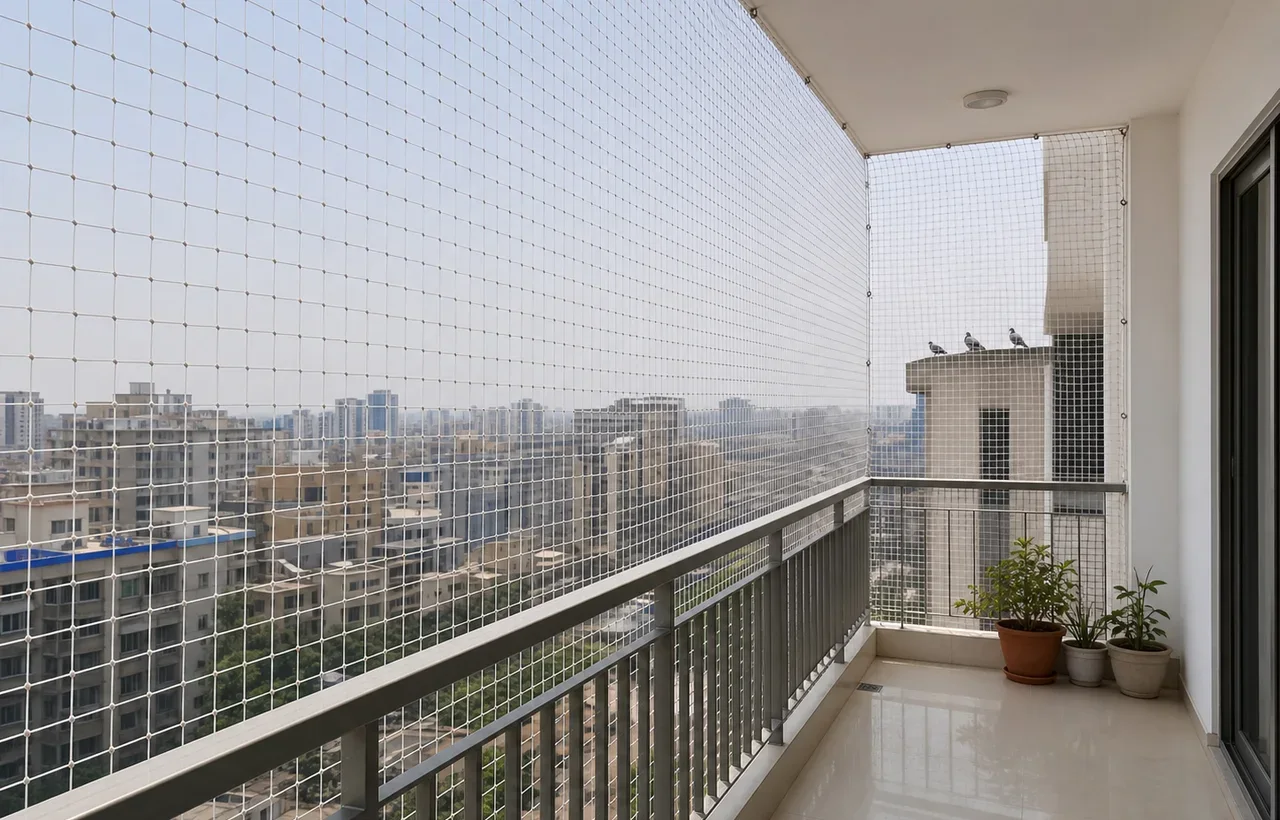
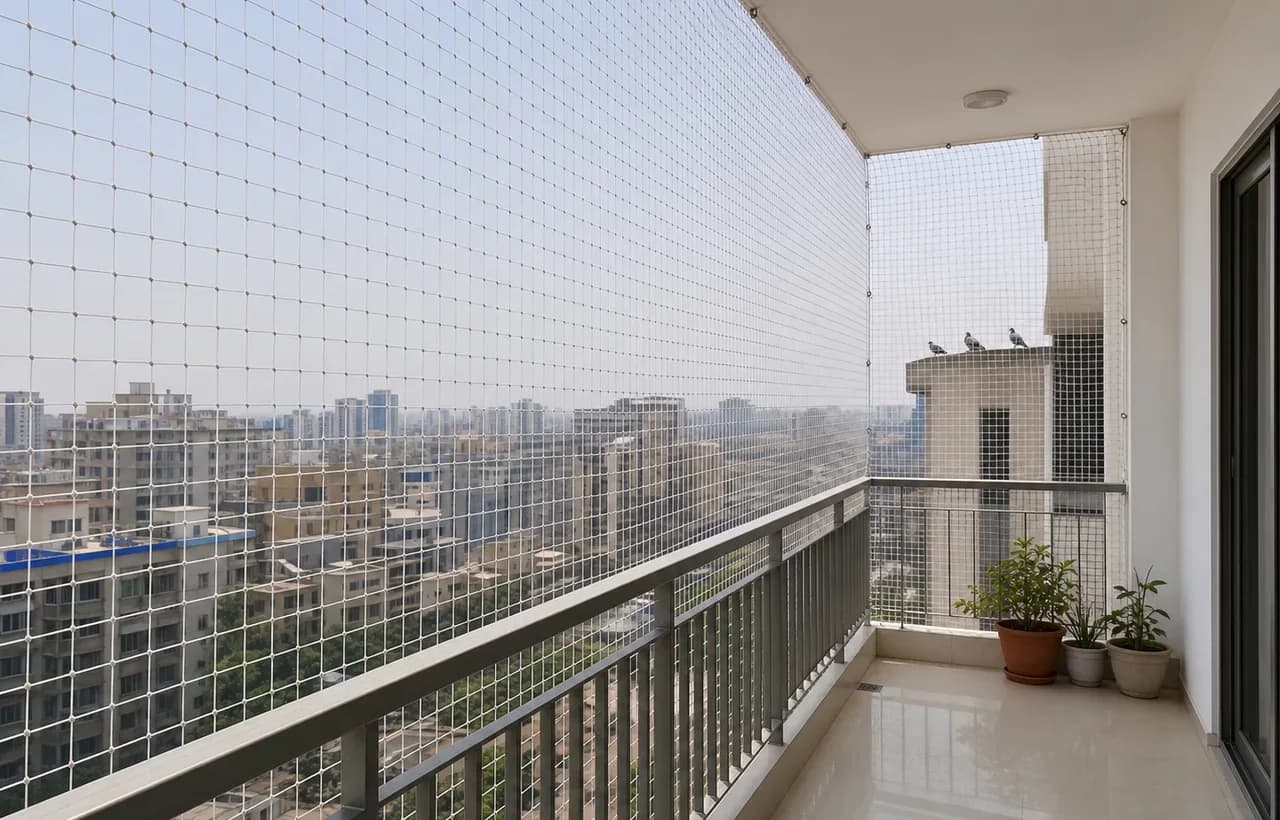
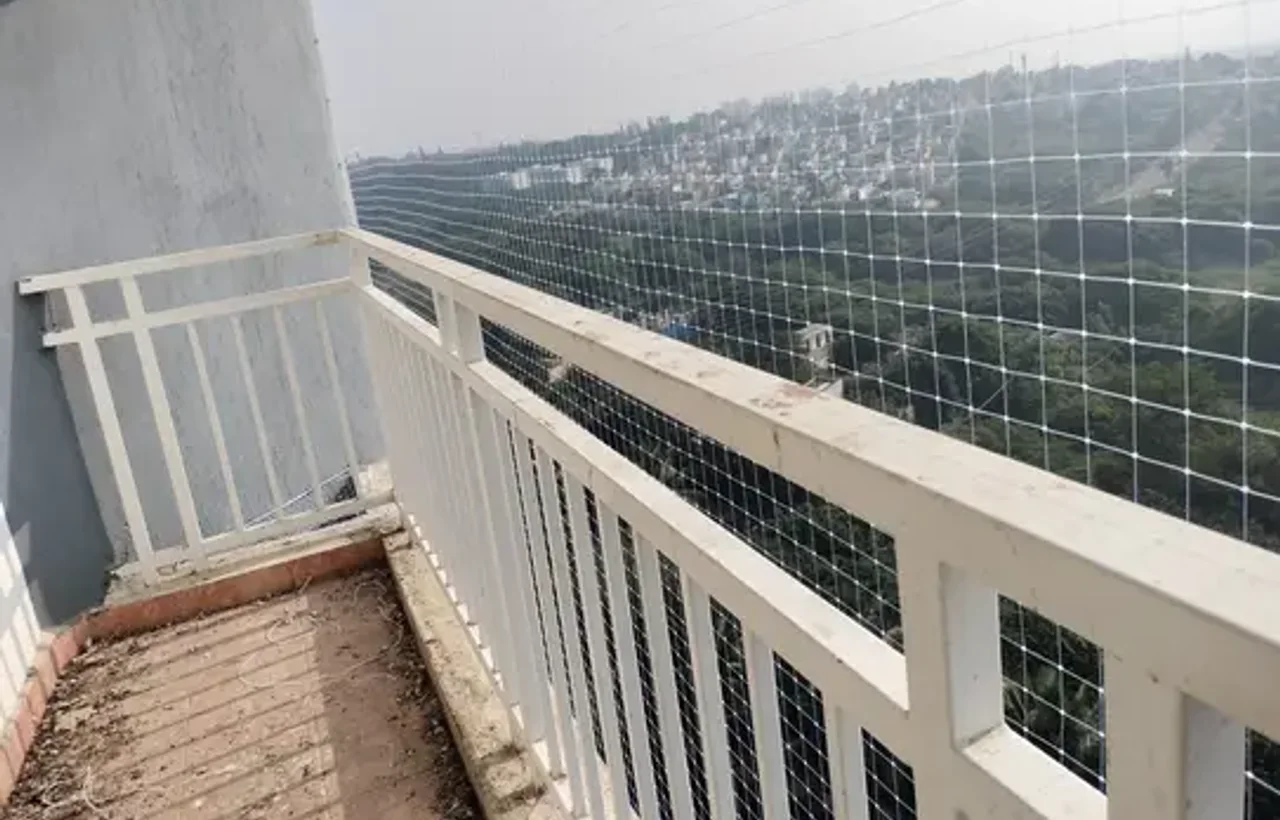
These representative images support the written guidance below; the exact opening still needs its own measurement and access check.

Representative opening view
Use this reference when sharing the opening span and return corners.

Installation planning view
The exact edge condition and anchor position are confirmed on site.

Fit and access reference
Final appearance depends on the measured opening and everyday access needs.
Local fit
Hebbal's open tower spacing and wind-facing elevations create linked resting points that a room-facing photograph may not show. Pigeons can move from a top beam to an AC bracket, narrow side return or railing end while droppings appear somewhere else below. A front-only panel may therefore leave the established perch untouched. Glass, cladding, pipes and weathered finish also tempt unsuitable fixing shortcuts, while occupied balconies still need safe passage for cleaning, plants, laundry and equipment technicians.
The solution starts with a face-coded opening sketch and a perch map, followed by direct checks of concrete, masonry or assessed structural metal available for anchors. The selected pigeon net is then recorded by material identity, aperture, twine dimension, perimeter construction and fittings. Its route closes upper and side bypasses without borrowing service pipes or decorative glass as supports. Permissions, worker access and household clearances are documented, and final measurements are linked to a estimate before the approved boundary is fitted.
A dependable Hebbal proposal is one another resident, association manager or later technician can understand. It should preserve dated photographs, measured planes, product references, fixing locations, access assumptions, exclusions and authorised changes. Handover views should show corners and service interfaces before furniture returns. Claims about UV treatment, load, service life or warranty need written context rather than confident shorthand. When a substrate or exterior route is uncertain, pausing for verification is stronger evidence of responsible work than improvising at height.
Nearby View-Facing Context
these nearby locality, market and employment-linked references help show the premium tower pattern around Hebbal, where open views, upper-floor wind, glass fronts and skyline-facing pauses can make balcony edges feel more finished than safe.
Primary Hebbal reference for pigeon net enquiries.
Helps place Hebbal pigeon-net enquiries around the Hebbal Flyover.
Helps place Hebbal pigeon-net enquiries around the Manyata side.
Helps place Hebbal pigeon-net enquiries around the Sahakar Nagar approach.
Home Pattern
Hebbal, Bangalore
Problem: A higher-floor flat near the Manyata side had pigeons sitting on an upper beam above a plant line, dirtying the leaves and tiles within days of each cleaning.
Solution: EverSafe closed the upper beam and the side return, keeping the tension and anchors well clear of the usable balcony floor.
Result: The plant line stayed clean and the balcony kept its open, airy feel.
Begin safely inside the balcony and connect each mark below with a possible surface above. A dark line on a glass track may originate at the slab lip, while feathers beside a planter can point to an upper beam or the rear of an outdoor unit. Photograph the full elevation, then take angled views that reveal depth around both sides. Towers near Hebbal Flyover and the Manyata approach often expose corners that appear closed from the living room but remain open along the facade. Number the main face, top, bottom, returns and service pockets. This visual record keeps the survey focused on the bird's established route rather than the easiest rectangle to measure.
Household use creates a second route through the same space. Record the travel of sliding doors and windows, the position of drying racks, the drain, plant care and the clearance an AC technician needs. Movable furniture cannot serve as a support, and a service pipe should not become an anchor merely because it crosses the edge. Note which items will be cleared for measurement and which must remain functional afterward. On corner or double-height balconies, include the remote upper cavity even when it looks clean. The final Hebbal boundary must interrupt pigeon movement while keeping ordinary access visible, deliberate and simple to inspect from a secure interior position.
Give every plane and irregular return a code, then place width, height, perimeter and proposed fixing points beside that code. The material schedule should identify mesh, border cord, connectors, anchor categories and any independent support rather than hiding them within one rate. Attach photographs of cracks, old holes, cladding joints and waterproofed surfaces that may change preparation. Direct measurement should confirm or correct quantities first estimated from pictures. If a concealed condition appears after clearing the balcony, the installer should explain the affected code, alternatives, responsibility and price change before proceeding. This method lets a Hebbal owner compare proposals built around the same protected volume and the same access assumptions.
Approval needs its own checklist. Confirm whether the resident, owner, association or facility team controls drilling, exterior appearance, work hours, vendor entry, lift use and common-area staging. A Manyata-side tower may require registration, while an older building near the Sahakar Nagar approach may present a different access route and substrate. Permission from building staff does not replace the installer's responsibility for competent personnel, suitable equipment and safe methods. If the approved fixing sketch cannot be followed, work should pause for a revised decision. Recording that boundary prevents an attractive internal finish from depending on an unauthorised facade point or an improvised reach beyond the balcony.
Low visibility is a viewing preference, not a technical identity. Ask the estimate to name HDPE, nylon or another offered polymer and to cite the supplier or manufacturer reference available for that product. Any statement about ultraviolet stabilisation should point to documentation and its conditions, without implying one fixed service-life result for every elevation. Keep a labelled sample or a traceable product note with the order. Compare it against bright frontage and the shaded AC return, because the same mesh can appear different across the opening. This record helps a future technician distinguish the installed material from a similar-looking roll chosen only by colour or a sales description.
Record nominal aperture and numerical strand or twine thickness separately, along with fabrication style, perimeter cord, connectors and anchor type. Aperture should suit the birds being excluded; a route used by smaller birds may need a different assessment from a pigeon-only opening. The edge deserves equal scrutiny because corners, pipe transitions and loose returns are where birds test the enclosure. Ask how abrasive metal edges will be cleared and how two planes will join without a slack pocket. A strong-looking sample cannot compensate for weak plaster or an incomplete side. The relevant system is mesh, border, hardware, verified substrate and consistent tension acting together.
Access planning begins at the property entrance, not at the outer ledge. Record vendor approval, working hours, parking or unloading, lift protection, indoor floor covering and a stable staging area for tools and rolled mesh. Agree who moves racks and plants, who isolates children or pets and how drilling debris will be contained. Technicians should describe how each upper point can be reached from a controlled position; residents should never lean outward or steady equipment. If exterior or rope access is proposed, competent personnel, appropriate systems, supervision and commercial responsibility must be settled in advance rather than added informally during a Hebbal appointment.
Create a substrate register for proposed anchors. Concrete, masonry and assessed structural steel require different fixings and edge clearances; glass panels, decorative cladding, unverified railing parts, cables, drains and refrigerant pipes are not substitute structure. Photograph cracks, hollow finish, previous patches and waterproofed joints before choosing a route. Where the intended point is unsuitable, alternatives may include authorised repair, relocated anchors or an independently supported line, each with responsibility stated. The plan must also preserve drainage and future facade maintenance. This discipline is especially important where a polished tower exterior conceals several assemblies that cannot be judged safely from an interior photograph alone.
Netting is appropriate when a defined balcony, utility face or recess can be enclosed as one continuous volume. Bird spikes may suit a verified narrow landing strip, but they do not close a broad opening and can redirect pigeons toward an AC bracket or neighbouring ledge. Invisible grills are tensioned metal cables designed around a different safety purpose; fine insect screens use another aperture and framing system. Compare products by target route, substrate, visibility, maintenance and household use. Combined systems require independent supports and clear interfaces. Calling every transparent barrier equivalent obscures the different jobs performed by pigeon mesh, fall-protection cables, insect screens and perch deterrents.
Before any closure, inspect upper shelves, outdoor-unit pockets and shaded returns for birds, eggs or dependent young. An active nest requires a humane pause and appropriate local wildlife guidance; no schedule justifies trapping an animal behind mesh. When the space is responsibly clear, remove abandoned material only where permitted and recheck connected cavities immediately before fitting. The design should prevent re-entry without loose folds that could create entanglement risk. Date the inspection and note who completed it. This sequence turns humane exclusion into a verifiable work step, rather than a vague assurance added after the protected perimeter has already been tensioned.
A rate becomes meaningful only when bidders price the same geometry. Issue the coded drawing showing front, top, bottom, sides, beam pockets and AC returns, then ask each provider to state measured area and perimeter. Beside those figures, list polymer, aperture, thickness, cord, connectors, anchors, frame parts and fitting labour. Clarify how irregular shapes, overlaps, wastage and minimum work are handled. A lower total may simply omit a difficult return, access equipment or removal. Photographs can support an early estimate, but the accepted amount should follow direct measurement and reconciliation of every plane that will actually deny the pigeons their established route.
Inclusions and exclusions should be equally specific. Identify surface repair, waterproofing, welding, electrical relocation, exterior cleaning, nest handling, access deposits, parking, old-net removal, debris disposal and tax. Name who completes each outside task and when it must be finished. State payment stages and the method for approving a concealed-condition variation. Avoid promising completion time before permission, substrate and access are verified. This structure helps a tenant obtain owner consent, an owner compare offers and an association review visible work. It also gives the installer a defensible delivery checklist instead of asking everyone to interpret one headline square-foot figure differently after the job starts.
At handover, photograph the clean full opening, every corner, border join, fixing and service interface before normal items return. Take a second set after the rack, plants and equipment resume their marked positions. Store these images with the accepted specification, permissions, measured sketch, invoice, care notes and written warranty. Inspect from a safe internal location after strong weather, facade cleaning, painting or AC work, looking for abrasion, slack, cuts, displaced connectors and changes around anchors. Use the documented mild cleaning method and never hang objects from the mesh. Repeating consistent camera angles makes gradual change easier to recognise than casual inspection from a different position.
If damage appears, restrict use of the affected edge and record the date, exact location, photographs and likely event. A technician should identify the original product and examine adjacent mesh, cord, hardware, substrate and tension before recommending action. One isolated cut may accept a compatible documented repair when surrounding components remain known and sound. Broad ageing, repeated patches, moved fixings, unknown material or altered geometry can support sectional or complete replacement. Warranty terms should distinguish product and workmanship coverage, duration, exclusions, claim evidence, travel, labour, access equipment and parts. A written condition assessment is more useful than assuming age alone decides the outcome.
Common bird route
Ledge to side gap
This is what gets measured first in Hebbal pigeon net planning.
Right first photo
Wide opening view
Include the top beam, side walls, floor, railing and the outdoor unit if there is one.
Main success factor
Closed return edge
Most repeat problems trace back to one small edge being left open.
Building mix: north-Bangalore high-rise apartments with open exposure, glass railings, AC ledges and upper beams
Outdoor conditions: In Hebbal, Bangalore dust, shaded ledges, dry balcony corners and seasonal rain make droppings stick harder while the sitting point stays open, so the fixing choice follows that local wear pattern.
Common layout cue: The points usually reviewed in Hebbal are the balcony front, side return, AC platform, window shade, pipe pocket and upper beam. Photos help judge height, access and fixing surface before planning the visit.
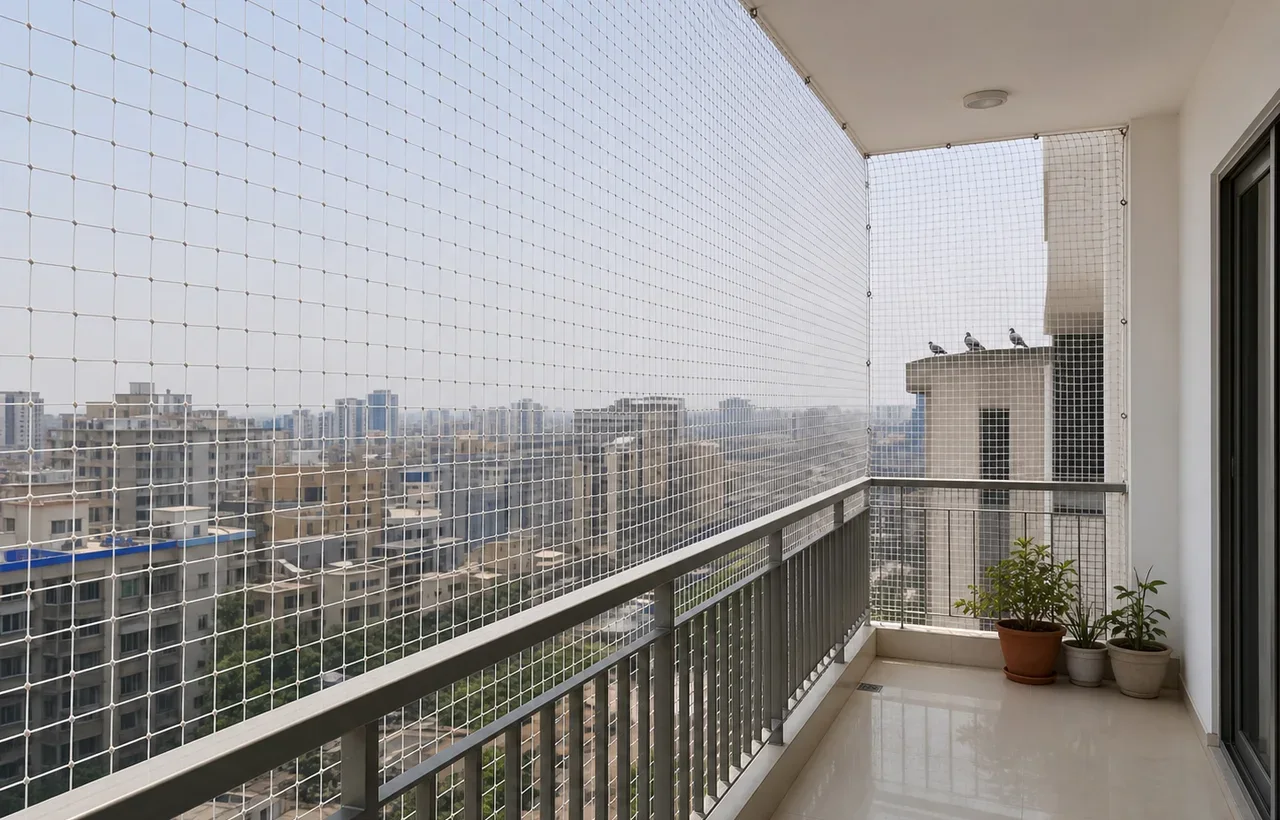
A Hebbal balcony where pigeons sit just above the AC outdoor unit.
A Hebbal window shade with stains dropping onto the sill and wall below.
A Hebbal utility corner with a pipe-side route the birds use during quiet hours.
A road-facing or open-side Hebbal balcony where droppings and flyover dust collect together.
Experienced with pigeon-prone balcony and ledge layouts across north-Bangalore areas like Hebbal.
In Hebbal, the plan is built around bird movement rather than one fixed net style for every opening.
Comfortable with apartments, older homes, road-facing properties, AC ledges and compact utility spaces.
Review markup stays off until verified, page-specific feedback exists for this service and area.
In Hebbal, the bird's preferred sitting point has to be closed first, because pigeons keep returning to one familiar edge before they ever test a new spot.
North-Bangalore high-rises with open exposure, glass railings, AC ledges and upper beams need a proper side-return review, not just front-face coverage.
A correct Hebbal fit keeps the opening easy to use while stopping birds from sitting above clotheslines, plant stands, outdoor units and door tracks.
EverSafe measures AC ledges, pipe-side gaps, railing tops, window shades and upper beams before finalising the Hebbal pigeon net plan.
The fitting focuses on the actual bird route, not just the most visible stain.
Hebbal residents get guidance on photos, approximate size, access and fixing surfaces before the visit is arranged.
A high balcony should feel calm — not like a place where everyone scans the floor before stepping out.
Fresh droppings near clothes, chairs or glass tracks can make a clean Hebbal balcony feel unusable within minutes.
Once pigeons start nesting, the smell and debris become far harder to manage than simple daily stains.
Covering only the balcony front while leaving the side return open.
Ignoring the AC bracket or pipe pocket above the dirty floor patch.
Using loose mesh that sags near the upper beam.
Fixing into weak plaster or older ledge edges without checking the hold.
Blocking the AC, window or utility access the family still needs.
Hebbal home with recurring droppings
A Hebbal homeowner usually looks for pigeon nets when the same ledge, railing or AC side gets dirty again soon after every cleaning.
Hebbal property that must still look neat
A clean mesh line matters in Hebbal when the balcony, window or frontage is visible from inside the home or from the street.
In Hebbal, the better option depends on where the birds sit, how visible the opening is, and whether the real issue is droppings, nesting, smell or repeated ledge use.
Works well for: High-rise apartments where height, glass tracks, AC ledges and open exposure all matter.
It closes the sitting and entry route while keeping the opening lighter than heavy physical blocking.
Works well for: A single narrow ledge with no nearby return gap.
They can help on limited surfaces but tend to fail once birds shift to an AC bracket, pipe edge or window shade.
Works well for: A rare, one-time mess.
Cleaning improves the surface, but it does not stop repeat sitting once pigeons already trust the ledge.
We confirm whether pigeons first use the top beam, the side ledge, the AC platform, the pipe route or the window shade.
Wall condition, railing type, slab edge, grill line and outdoor-unit access are checked before deciding the final net line.
The fit is planned so clothes drying, plants, window opening and AC maintenance all stay usable after installation.
Side returns, lower corners, pipe-side pockets and the upper-ledge ends are confirmed so birds can't just move to the next edge.
Starting from Use ₹12 to ₹40 per sq. ft. only as an indicative Hebbal planning band. The final amount depends on measured planes, perimeter length, mesh specification, deep AC returns, floor access, approved supports and removal work. Ask the estimate to separate material, connectors, anchors, labour, access equipment, preparation, disposal, minimum visit terms, tax and exclusions.
Balcony or window size and total mesh area
Floor height, ladder access and the work timing
Complexity around AC ledges, pipes, side walls or beams
Condition of the wall, railing, grill or slab fixing surface
Balcony span, access permission and outdoor-unit placement
Send a wide photograph from inside, angled views of both returns, the upper beam, railing, outdoor unit and darkest stain. Include your Hebbal pocket, floor, approximate dimensions, association rules and any planned AC or facade work. Those details support a suitable survey window and a measurement-based proposal for the complete opening.
These are the practical questions households usually ask before choosing pigeon safety nets in Hebbal, Bangalore.
The estimate should show measured area and perimeter, mesh identity, aperture, twine dimension, border cord, connectors, anchors and installation labour. It should separately state access equipment, surface preparation, old-net removal, disposal, minimum billing, tax and exclusions. Treat ₹12 to ₹40 per sq. ft. as indicative until the complete opening is measured.
Choose from a documented specification, not colour alone. Ask whether the mesh is HDPE, nylon or another polymer, then record nominal aperture, numerical twine thickness, fabrication, border and available UV evidence. The opening should exclude the birds using that route, while the fixings and substrate must support the complete perimeter.
Confirm owner or association consent for drilling, visible supports, vendor timing, lift use and common-area staging before planning. The installer should also verify safe reach to every upper return. Exterior or rope access requires competent personnel, suitable equipment and a separately agreed scope; residents should not lean out or assist from an exposed position.
Netting suits a complete opening; spikes may suit an assessed narrow perch but cannot close a balcony or utility face. If eggs, dependent young or a live bird occupy the route, pause that portion and seek appropriate humane guidance. Installation should resume only after the space is responsibly clear and connected pockets are rechecked.
When reviewing a pigeon net installer nearby, send your Hebbal pocket, floor, full-opening view, both returns, upper beam, AC side and active stain. Mention association rules, access restrictions and planned facade or appliance work. Those details help EverSafe confirm survey availability and prepare for direct measurement rather than guessing from one close photograph.
A compatible repair may suit one isolated cut when the original mesh, border, anchors and surrounding tension remain documented and sound. Widespread slack, repeated patches, moved fixings, unknown material or changed geometry may favour replacement. Check whether the written warranty covers product or workmanship, its term, exclusions, evidence process, travel, labour, access and parts.
Around Hebbal, bird problems are often only one part of the decision. People also compare child safety, balcony-edge coverage and how to keep the front usable without making it feel closed in.
Useful when birds are only landing on narrow ledges, AC tops, beams, pipes or sign edges rather than entering a larger opening.
Open local pageUseful when the issue is broader bird control across openings, shafts or utility-facing areas, not just one balcony front.
Open local pageUseful when the issue around Hebbal is more about this specific service need than the original page you started from.
Open local pageUseful when drying clothes is what keeps daily movement happening close to the balcony edge in the first place.
Open local page