North residential clusterChikkagubbi core
Chikkagubbi gated-housing belt
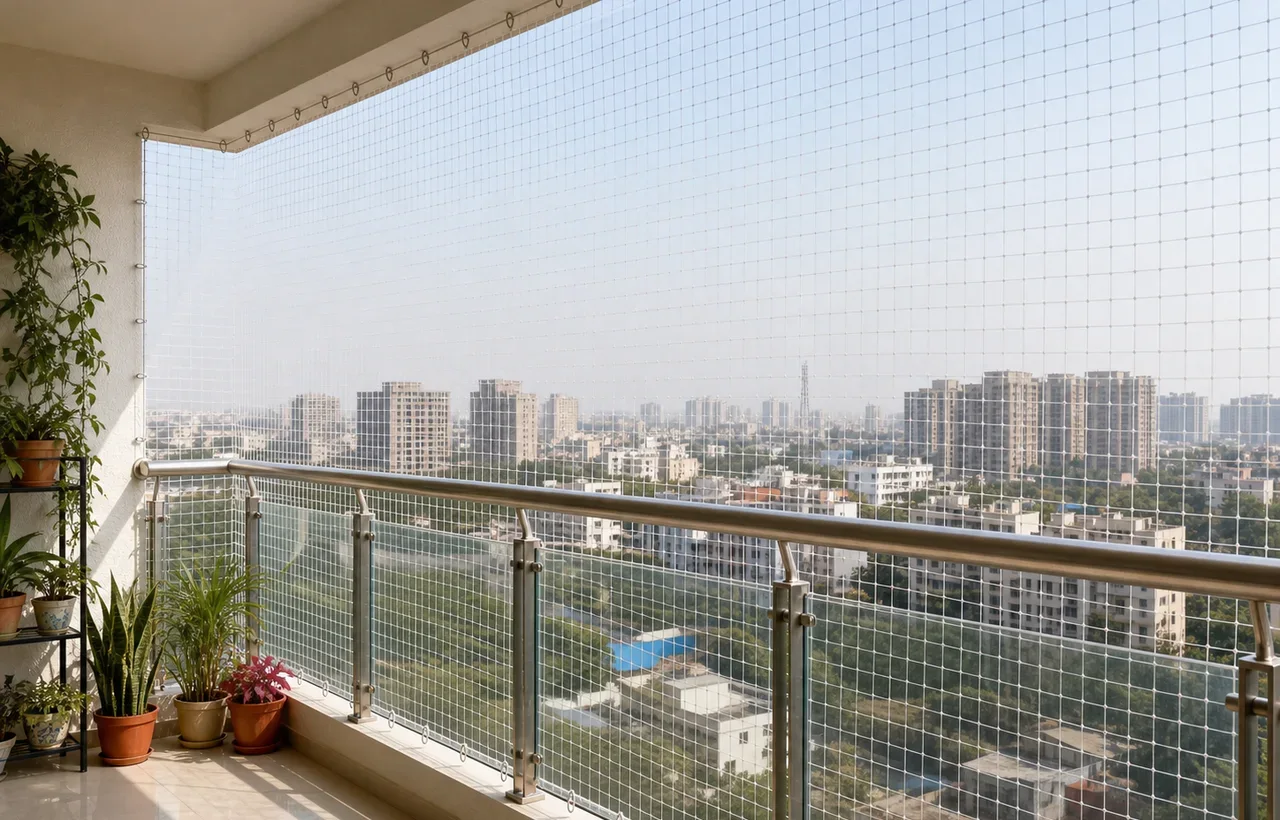
Represents the gated-community and family-lifestyle pattern that shapes balcony use here.
Local service page
Chikkagubbi's gated apartments and villa-style communities support a slower balcony routine than denser city corridors. Weekends bring children, pets, plants and longer sit-out use to the front, while quieter green edges make the opening feel gentle. A dog may rest beside the railing, a cat may track birds through a corner, and a child may move a small chair closer to the view. The surroundings feel buffered, but the physical gap remains the same. Balcony safety nets here should be planned around repeated pet contact and family leisure rather than installed as a one-size-fits-all tower accessory. The survey needs to note the mesh plane, side returns, balcony furniture, plant shelves and the surfaces available for anchoring. A restrained fit can retain openness and the lighter residential character while making exploratory movement easier to manage. By stating the intended child or pet use in writing, Chikkagubbi households can compare materials, fixings and prices against a real brief instead of a broad promise.
Compare before deciding
This page stays focused on what usually changes around Chikkagubbi. If you are still comparing material, price, safety fit, or nearby visit options, the Bangalore Balcony Safety Nets guide gives the broader picture before you call. You can also browse the Bangalore area guide when you want to check nearby local pages.
City guide
Compare Balcony Safety Nets materials, fitting choices, price factors, and visit planning across Bangalore.
This area
Use this page when the opening, building access, or daily routine around Chikkagubbi is the main concern.
Nearby options
Move between the city guide and local pages when you want either a wider view or a closer match.
Nearby Gated-Family Context
these nearby locality and local cues help reflect the gated family-lifestyle pattern around Chikkagubbi, where pets, plants, children and quieter premium routine can make the balcony feel softer and safer than it really is.
Represents the gated-community and family-lifestyle pattern that shapes balcony use here.
Shows how pets, plants and quieter routine can normalize the balcony edge.
The balcony here becomes part of a slower project lifestyle through pets, children, plants and easier family pause time.
People searching for balcony safety nets in Chikkagubbi, Bangalore want a safer edge for children or pets without spoiling a well-finished family-home feel.
Service visual guide
These representative images support the written guidance below; the exact opening still needs its own measurement and access check.
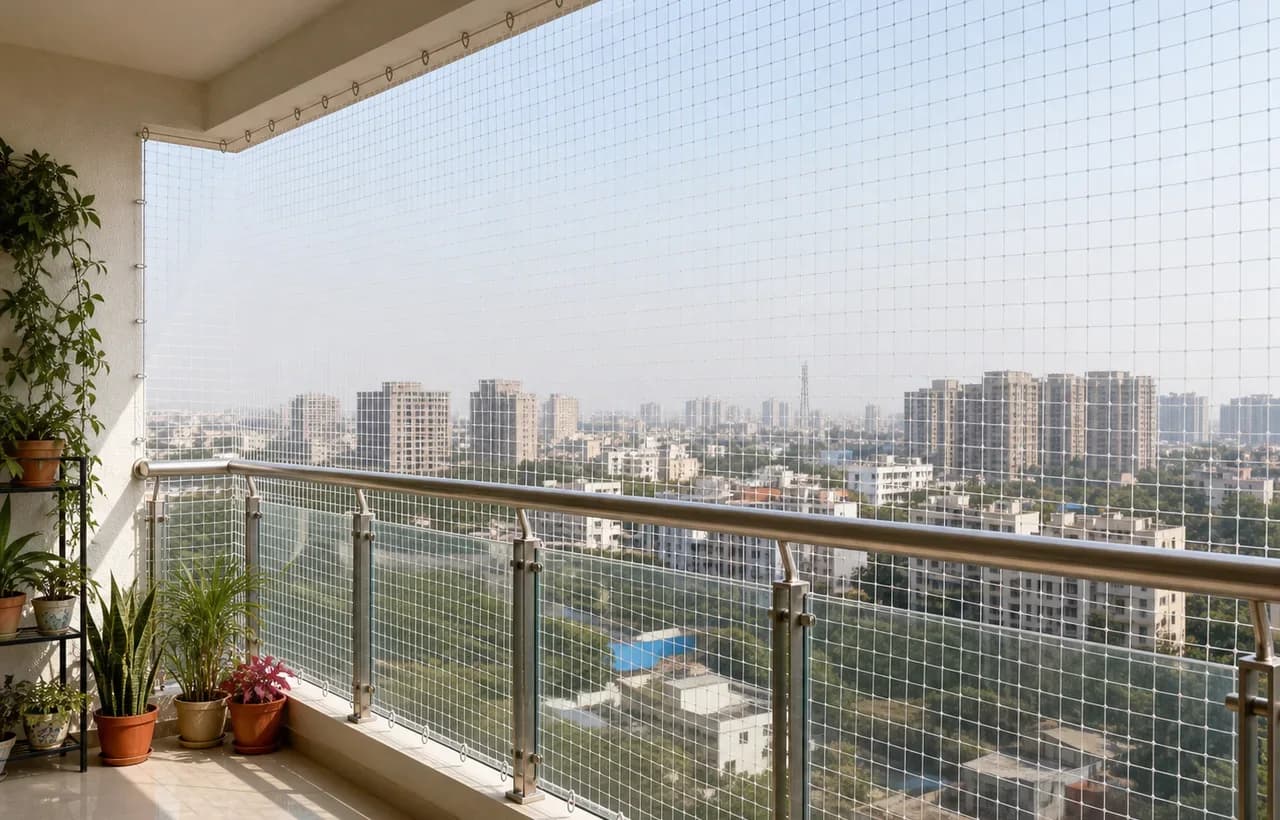
Representative opening view
Use this reference when sharing the opening span and return corners.
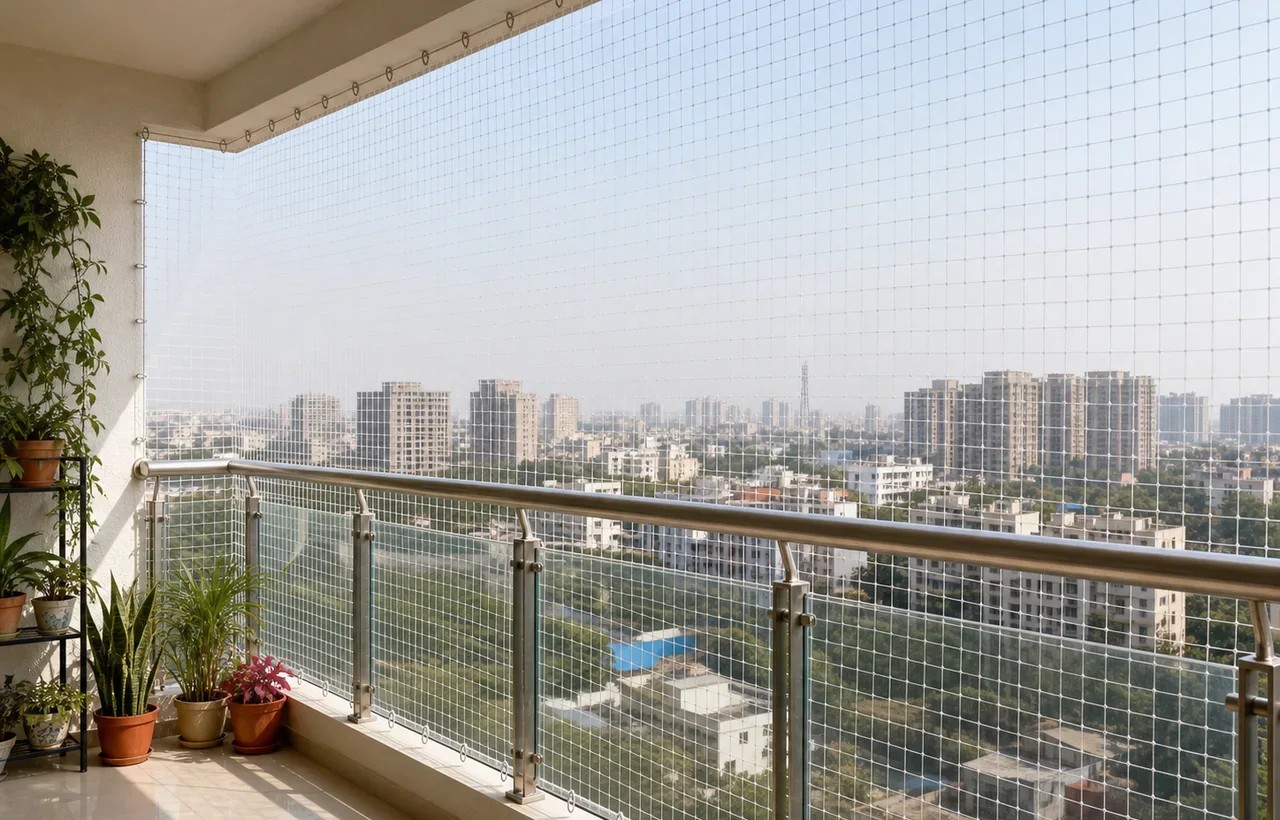
Installation planning view
The exact edge condition and anchor position are confirmed on site.
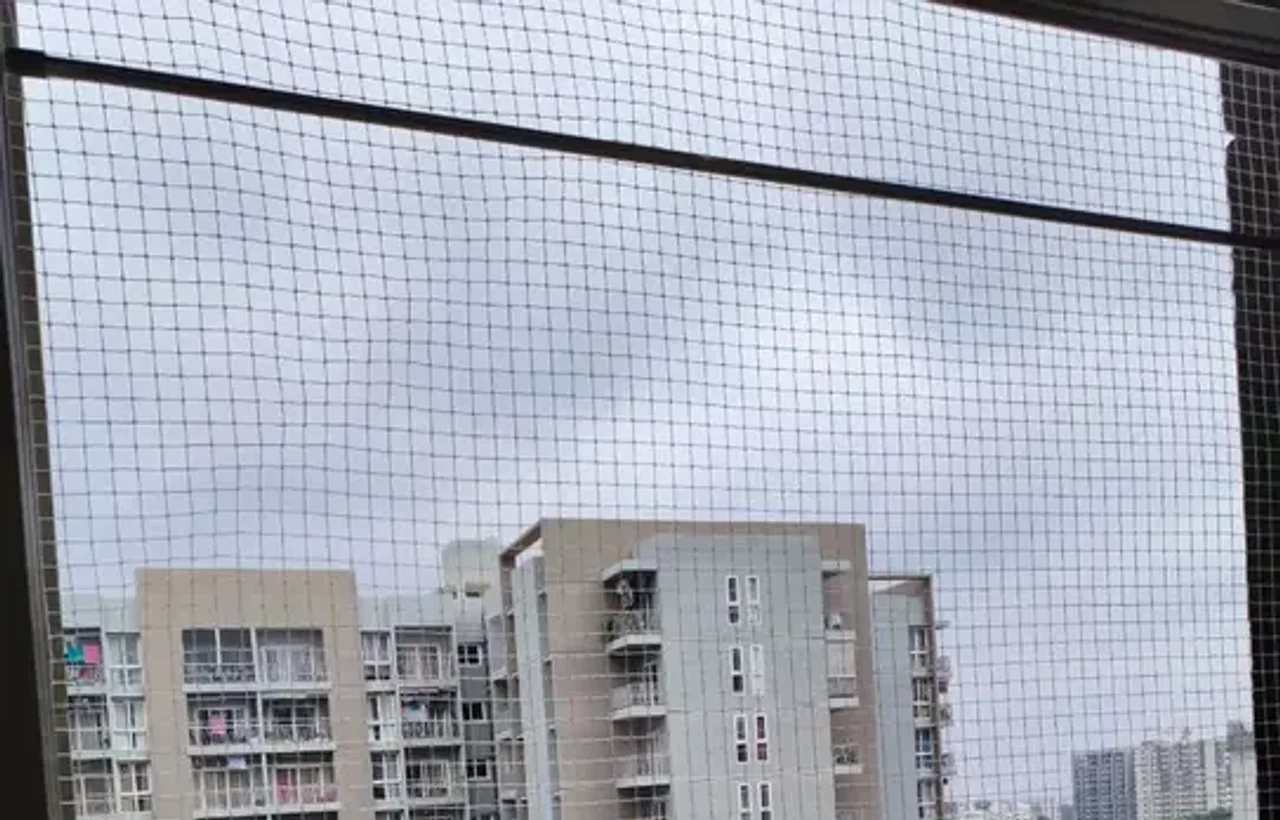
Fit and access reference
Final appearance depends on the measured opening and everyday access needs.
Local fit
In Chikkagubbi, gated-community calm, pets, children and slower family routine can make the balcony feel too gentle to question directly.
A carefully fitted balcony safety net helps make that active family front safer for children, pets and everyday use without spoiling a lighter well-finished-home feel.
Chikkagubbi works best when the guidance sounds gated, greener and family-lifestyle specific. The real trigger here is buffered community calm replacing direct edge review.
Area fit
The more believable Chikkagubbi page explains that a balcony can feel safer than it is because the whole community feels quieter, greener and more insulated from city pressure.
Nearby landmarks
Useful for gated apartments and villas across Chikkagubbi
Relevant where children, pets and plants keep the balcony active
Keeps the edge safer without spoiling a softer well-finished-home feel
Especially useful where gated calm has replaced direct review
Booking Detail
Starting from ₹20 per sq ft, including installation. The final estimate follows the measured scope and selected product. Confirm any upgrades, removal, repairs, special access or additional supports separately.
balcony width, side returns and utility-span coverage
floor height, wind exposure and outer-facade access
glass, railing or parapet condition
tower or gated-community fitting rules
whether the balcony is used for children, pets, sit-out or drying
In Chikkagubbi, the front becomes pet space, plant space or child pause space before anyone treats it as a live edge decision.
A quieter well-finished front still needs a usable read of height, side gaps and active-use pattern.
The fit should support how the household really uses the front instead of assuming community calm solves the edge.
The goal is a safer balcony that still feels light and natural inside a Chikkagubbi home.
Best fit
Gated-family balconies
Demand is best where a quieter well-finished front is already active for children, pets or plant routine.
Main pressure
Buffered-calm overtrust
The balcony feels safer because the whole setting feels gated, green and more insulated from city pressure.
estimate driver
Opening + lifestyle use
Opening condition, side exposure and how pets or family routine use the front shape the estimate most strongly.
Chikkagubbi customers want a safer edge that still feels open, well-finished and easy to live with. The guidance works when it respects gated comfort without mistaking it for protection.
Works well for: Gated-family balconies needing lighter everyday safety
They suit Chikkagubbi best when the goal is safer child or pet use without making a well-finished family front feel heavier.
Works well for: Homes ready for a stronger architectural finish
They fit when the customer wants a more permanent structural solution and is comfortable with a stronger visual change.
Works well for: Bird-entry and ledge hygiene pressure
They solve bird issues well, but the main balcony decision here is safer family use on a quieter well-finished front.
A stronger angle is buffered well-finished calm lowering caution.
Pets, children and plant routine matter strongly here.
Chikkagubbi carries strong gated-community and family-lifestyle signal
Balconies here stay active as pet and family pause space
customers want safer use without losing a softer well-finished-home feel
Fit
They make sense when a gated-family balcony is already active for children, pets or plant routine and needs a safer edge without heavy visual change.
Compare
The decision sits between preserving a softer well-finished family front and finally treating the balcony like a current safety decision.
plan
Photos of the opening, edge type and whether children or pets use the front make the estimate clearer quickly.
Its balcony pressure comes from buffered community calm and softer daily routine.
They are balancing safer family use against the need to keep the balcony open, well-finished and easy to live with.
That is why the guidance should feel specific and residential rather than thin service line.
That gives the guidance a truer local tone.
Pet-friendly planning begins with behaviour. Cats may climb or test small openings, while dogs may lean, paw or repeatedly press one lower section. Species labels alone do not decide mesh or aperture, so owners should describe size, habits and where the animal rests. Families should also identify chairs, pet platforms and plant stands that increase reach for children. The survey must close the complete perimeter, including quiet side corners behind greenery and low spaces near parapets. In Chikkagubbi, these details matter because the balcony is not only crossed briefly; it can be occupied for longer stretches when attention naturally shifts between conversation, gardening and play.
Ask the provider to document mesh type, aperture, border and compatible anchors rather than offering only a colour sample. The surface behind paint or exterior finish should be checked, and the fixing route should avoid unsupported attachments to pipes, screens or loose cladding. Lower edges and corners deserve consistent tension, but the net should not be pulled as a substitute for adequate anchor planning. If a pet persistently chews mesh, discuss whether a net is appropriate and what complementary management is needed. Even a well-fitted barrier does not remove the need to move climbable furniture and supervise young children or animals with risky behaviour.
A net often suits customers who want flexible child or pet protection without adding a strong architectural line to a green-facing balcony. Invisible grills offer a rigid alternative with a different finish, approval route and price. Bird netting may limit entry but should not be assumed to meet pet or child requirements unless mesh, anchors and perimeter design have been selected for those uses. When comparing Chikkagubbi quotations, check measured area, every return, the stated material, access work and any secured panel. A slightly higher complete estimate may be better value than a front-only price that leaves a pet-sized route beside a planter corner.
When a resident asks for a pet balcony-net service nearby in Chikkagubbi, useful first information includes pet behaviour, balcony photos and community access rules. Confirm facade and drilling permission before setting the fitting date. Once installed, examine lower borders from the animal's level as well as the overall plane from inside. Keep branches trimmed away, discourage chewing and do not clip leads, toys or planters to the net. Review it after exterior work or furniture changes and whenever a strand, anchor or corner shows movement. A timely professional check is safer than a household tie or patch that hides the underlying problem.
Chikkagubbi households may hear balcony net, pigeon mesh, insect screen, privacy screen, and invisible grill used in the same sales conversation. Their construction and intent differ. Invisible grills use tensioned metal cables; pigeon mesh addresses bird entry; mosquito screens require very fine framed closure; and privacy mesh reduces sightlines while changing wind exposure. Flexible safety netting can form a child or pet boundary when the specified product and full perimeter suit that purpose. Begin with who approaches the opening and how, then compare only relevant systems. The calm landscape outside does not make one covering capable of every task.
Weekend use can create overlapping needs, yet additions should occupy designed planes. A mosquito screen at the room door can reduce insects indoors but cannot protect a child already outside. Bird mesh across a high opening may leave the lower corner explored by a cat. Privacy cloth fastened to netting can impose different loads, and climbing plants should not use it as support. A cable system may suit one architectural preference, while flexible mesh may retain another household’s softer outlook. Review geometry, substrate, pet behaviour, cleaning, and community consent before combining anything, then document the separate role of each installed component.
A Chikkagubbi balcony often becomes more active when the weekday commute pauses. Children carry chairs or toys outside, pets remain near the railing, and plant care expands into an afternoon task. Show these normal arrangements during measurement rather than presenting a cleared ceremonial sit-out. Mark low gaps, side returns, furniture, plant shelves, drains, and adjoining openings. Note whether an animal paws, climbs, or simply watches, and whether visitors bring younger children into the space. This behaviour-led record explains where repeated contact occurs and prevents the relaxed setting from concealing a route that becomes relevant only during longer family use.
Villa-style units may connect a balcony to stairs, a terrace, or a deeper external ledge, while apartment fronts may be governed by repeated facade lines. Each opening should be named and assigned a purpose before the boundary is designed. The chosen plane should preserve plant access, door movement, and ventilation without leaving a quiet return untreated. Caregivers need to know that the net is one layer and that furniture still belongs away from the edge. Annotated photographs can carry this guidance through household changes, especially when a balcony looks unchanged but begins serving a new pet, visiting relatives, or children at a different stage.
The Chikkagubbi specification should state the actual offered material, whether HDPE or nylon, alongside supplier-documented UV grade, nominal aperture, and strand or twine thickness. It should identify the finished border, connectors, and anchor types for the inspected surfaces. An unlabeled piece stretched by hand shows neither product identity nor installed suitability. Sun, shade, moisture, pet contact, and maintenance differ between villa and apartment balconies, so no exact lifespan or performance promise should be drawn from the polymer family. Written, traceable facts allow residents to compare offers and later confirm that the delivered roll or fabricated panel matches the accepted description.
Aperture choice may reflect a small animal’s movement, child contact, outlook, and ease of cleaning. It should still be evaluated with tension, anchor spacing, substrate condition, and closure around posts or lower corners. A stated strand dimension is more useful than describing one sample as heavy, while a fine mesh does not correct incomplete side coverage. Ask whether special transitions use another product and label them if they do. Retain technical sheets, packaging identification, and close handover photographs. A future repair then has evidence for compatible material and border work instead of relying on colour after years of dust, sun, and plant contact.
For Chikkagubbi, a measured estimate should name the main face, side returns, parapet or rail gaps, columns, and any adjoining terrace section within scope. It should list mesh, border construction, anchors, labour, and a secure operable panel when requested. Community entry, tall access, furniture clearing, surface repair, tax, and debris handling should be clearly included or excluded. Villa-style openings can involve substantial detailing beyond the visible rectangle, while planted corners may hide short but important edges. A face-by-face schedule lets the household compare equivalent coverage and recognise when a lower amount simply leaves an awkward transition for later.
Ask how area is calculated around recesses and how a newly exposed substrate problem will change the offer. Preliminary images are useful, but final dimensions should follow direct inspection of the stable fixing surfaces. Association rules and owner approvals belong with the accepted scope before scheduling. At handover, trace every listed border, operate any closure, and record a variation beside its original line. Photograph the clear perimeter before plants and furniture return. This creates a practical baseline for a property that may be used differently on weekends and prevents a distant, tidy appearance from standing in for verification of each corner.
A dog resting against one lower section or a cat testing a corner creates a more useful inspection signal than an arbitrary glance from the doorway. Look closely for abrasion, cuts, stretched areas, loose connectors, anchor movement, and gaps exposed when pots are shifted. Keep toys, laundry, lights, and climbing plants off the mesh. Cleaning should be gentle and consistent with the documented polymer. Furniture changes also deserve review because a new bench or play object can reduce effective height without touching the installation. Move pressure points first, then ask for assessment of any affected component.
Painting, AC routing, waterproofing, and terrace improvements can release borders or introduce sharp services. Restrict ordinary use during such work and inspect the entire perimeter afterwards, including areas another contractor claims to have restored. Where a defect is isolated and the original mesh, edge, and substrate remain known and sound, a matched professional repair may be feasible. Widespread change, several patches, unidentified mesh, or modified geometry may make full-section replacement more appropriate after measurement. Save dated photographs, specifications, and repair notes so a later resident understands which marks reflect routine pet contact and which followed a building intervention.
Share balcony photos, edge type and whether the main concern is children, pets or plant-heavy daily use. That makes the Chikkagubbi estimate clearer from the first reply.
Plan your installation
Share photographs of the full opening, approximate measurements and your location in Chikkagubbi, Bangalore. Explain how you use the space so the installer can discuss a suitable layout and a clear scope.
gated-family calm
A gated-family balcony can still hide a live edge.
For visit planning: Chikkagubbi gated balconies, green family fronts, well-finished lifestyle homes.
These are the practical questions households usually ask before choosing balcony safety nets in Chikkagubbi, Bangalore.
It may be possible, but the provider must assess both needs together. Child reach, pet size, climbing, chewing and lower-corner pressure can change the required aperture and perimeter treatment. State every user during the survey and retain supervision; a one-size-fits-all pet-friendly or child-safe label is not enough to define the installed system.
Indicative prices are ₹20 per sq ft The final estimate reflects measured area, mesh and edge details, number of corners, anchor substrate, access and any secured panel. Villa-style fronts or several returns may take more work than a single apartment opening, even at a similar headline area.
Ask for a specification based on the pet's size and behaviour, including mesh type, aperture and finished border. Anchors must suit the inspected structural surface and maintain closed lower corners. If the animal chews or climbs persistently, discuss those limits honestly instead of relying on a material claim alone.
Bird exclusion focuses on entry routes, while a pet installation must consider pushing, climbing, chewing and contact at the lower perimeter. Products can look similar but differ in intended use and fit. Compare the complete specification and anchor plan; do not infer pet suitability merely because a mesh covers the opening.
Ask the association about drilling locations, facade appearance, worker access and permitted hours, and obtain owner consent for a rented property. Send those conditions with photographs to the provider. The estimate and work method should follow the approved surfaces rather than being changed informally after the team arrives.
Observe it regularly, especially where the animal rests or paws, and make a fuller perimeter check periodically. Look for abrasion, bite damage, slack and shifting anchors. Keep plants and furniture from pressing into it. Any damage or changed pet behaviour should prompt restriction of access and a competent review.
Around Chikkagubbi, a balcony question often overlaps with child movement, bird nuisance, drying-clothes use or the wish to keep the front lighter than a grill-heavy solution.
Useful when the first concern is children leaning on railings, dragging chairs near the front or reaching open corners and side gaps.
Open local pageUseful when droppings, nesting and repeated bird entry are the problem that keeps pulling attention back to the same balcony.
Open local pageUsually compared when the family wants a cleaner fixed front and is weighing appearance, openness and enclosure together.
Open local pageUseful when drying clothes is what keeps daily movement happening close to the balcony edge in the first place.
Open local page