Family housing clusterBagalakunte core
Bagalakunte residential belt
Represents the apartment-family pattern where usable home use shapes balcony decisions.
Local service page
A pale outline beneath a moved drying stand can explain more about a Bagalakunte balcony than a cleared photograph. Homes near busy road and industrial-residential stretches may collect dust around planters, rails and seldom-reached corners, while the same opening supports laundry, plants, children, pets or bird control. Balcony safety nets in Bagalakunte therefore need a lived-use survey. It should trace the front face, floor gap, overhead line, side returns and any link to a terrace or utility area, then identify which objects move and which surfaces can actually receive fittings. The household must name the intended protection instead of treating every mesh as interchangeable. Product identity, UV evidence, aperture, numerical thickness, border and hardware belong in the proposal. Consent and worker access should be settled before drilling. Once measured geometry, preparation and exclusions are itemised, residents can choose a practical boundary that remains inspectable even when dust and everyday objects return.
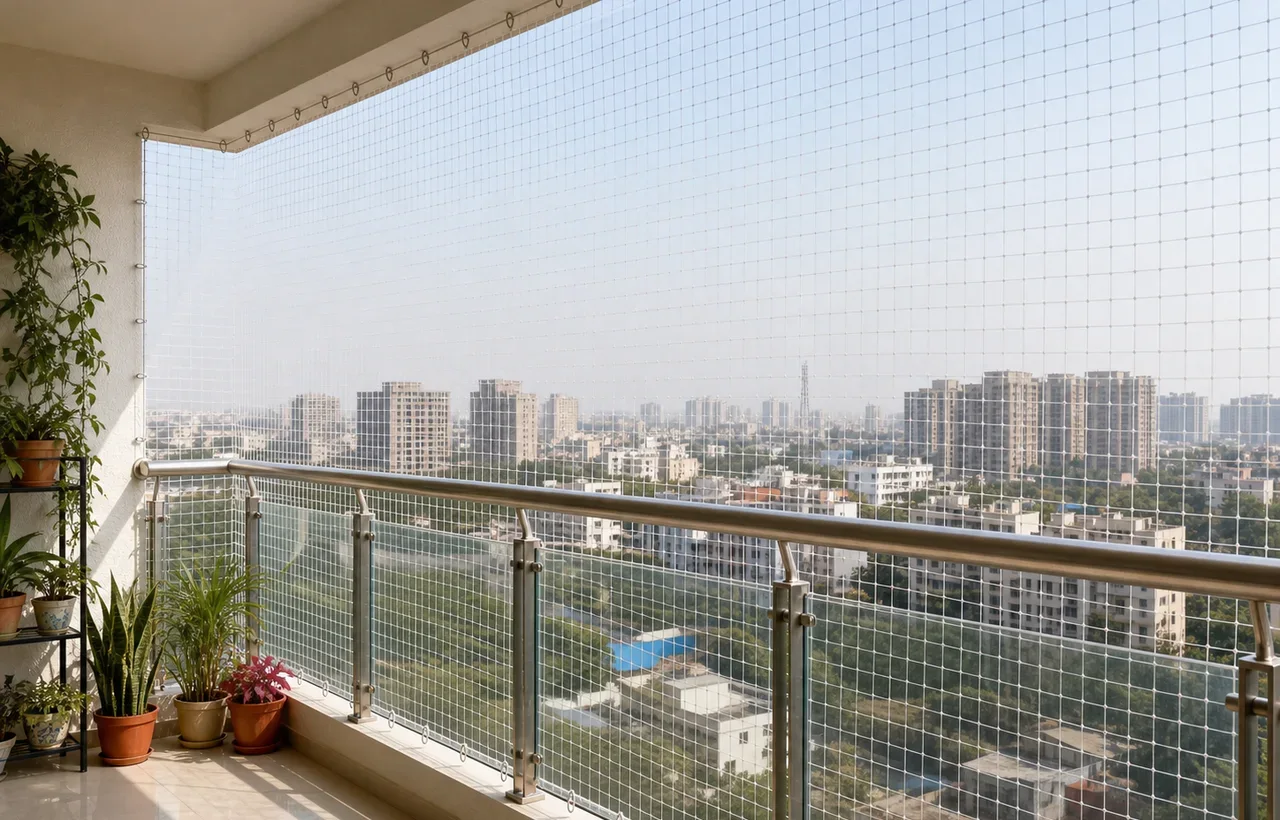
Compare before deciding
This page stays focused on what usually changes around Bagalakunte. If you are still comparing material, price, safety fit, or nearby visit options, the Bangalore Balcony Safety Nets guide gives the broader picture before you call. You can also browse the Bangalore area guide when you want to check nearby local pages.
City guide
Compare Balcony Safety Nets materials, fitting choices, price factors, and visit planning across Bangalore.
This area
Use this page when the opening, building access, or daily routine around Bagalakunte is the main concern.
Nearby options
Move between the city guide and local pages when you want either a wider view or a closer match.
Nearby Useful-Front Context
these nearby locality and local cues help show the family-apartment pattern around Bagalakunte, where drying use, storage corners and ordinary movement can make the balcony feel too useful to question freshly.
Represents the apartment-family pattern where usable home use shapes balcony decisions.
Shows how drying, storage and ordinary movement can make the balcony feel too useful to question properly.
Bagalakunte needs grounded apartment-family writing. The guidance should stay real and residential, not polished beyond the area.
The main pressure is usefulness. A balcony that keeps solving small household needs stops being reviewed properly as an edge.
People want a safer front that still stays easy to use for daily washing, storing and family movement.
Service visual guide
These representative images support the written guidance below; the exact opening still needs its own measurement and access check.
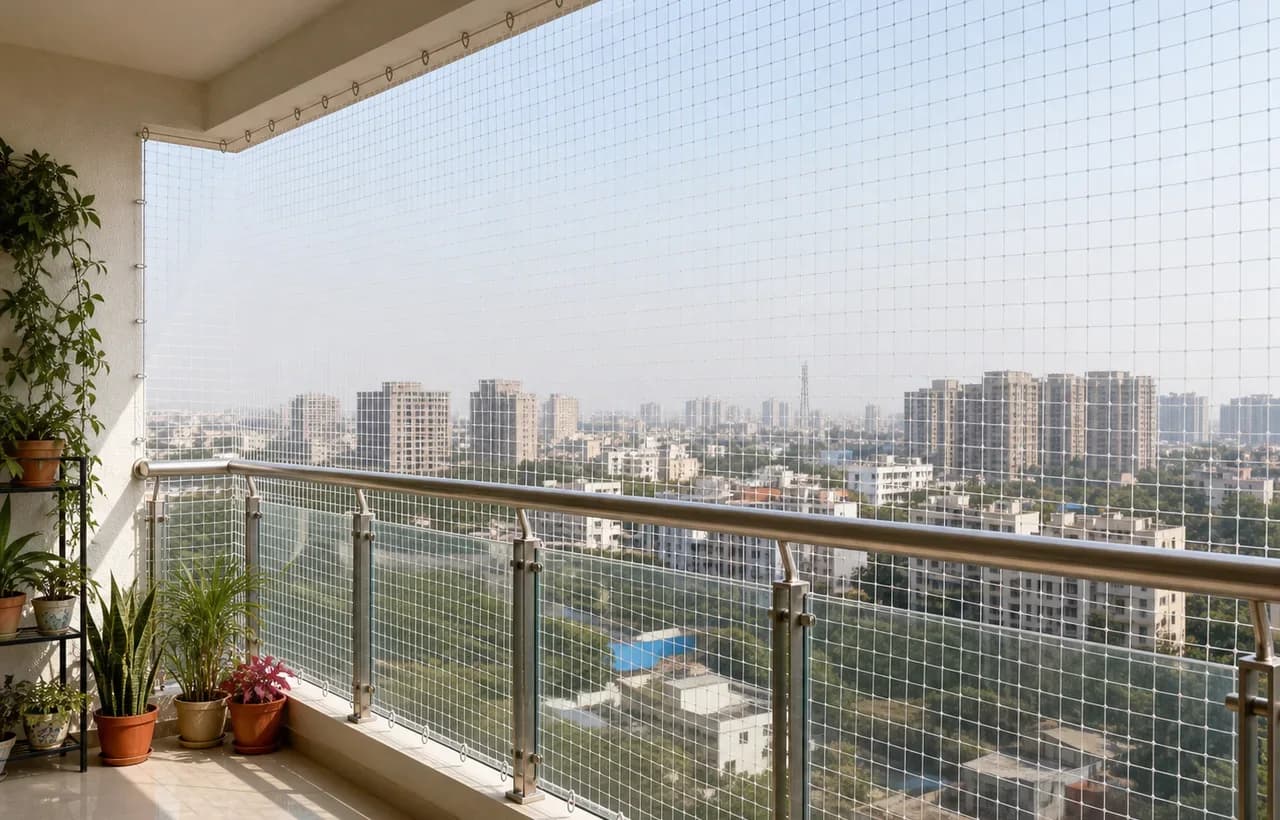
Representative opening view
Use this reference when sharing the opening span and return corners.
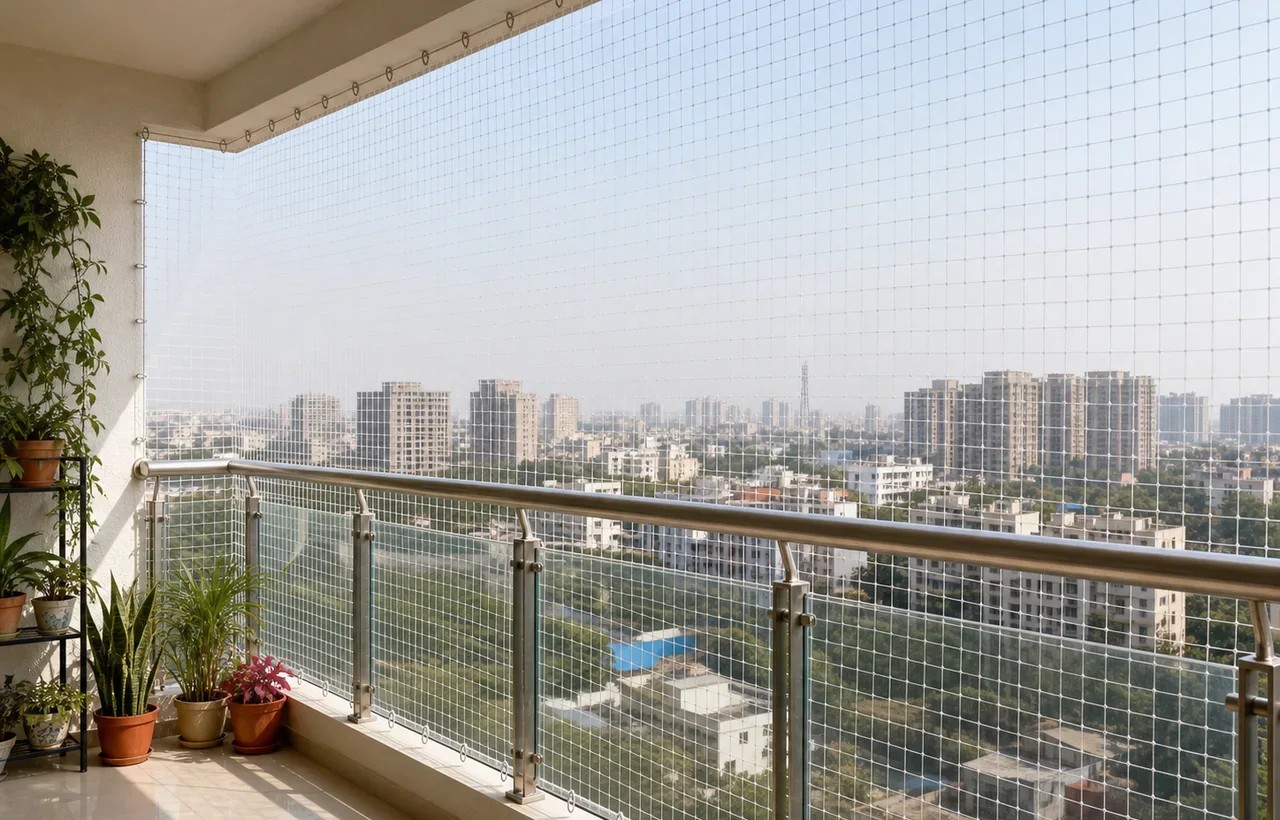
Installation planning view
The exact edge condition and anchor position are confirmed on site.
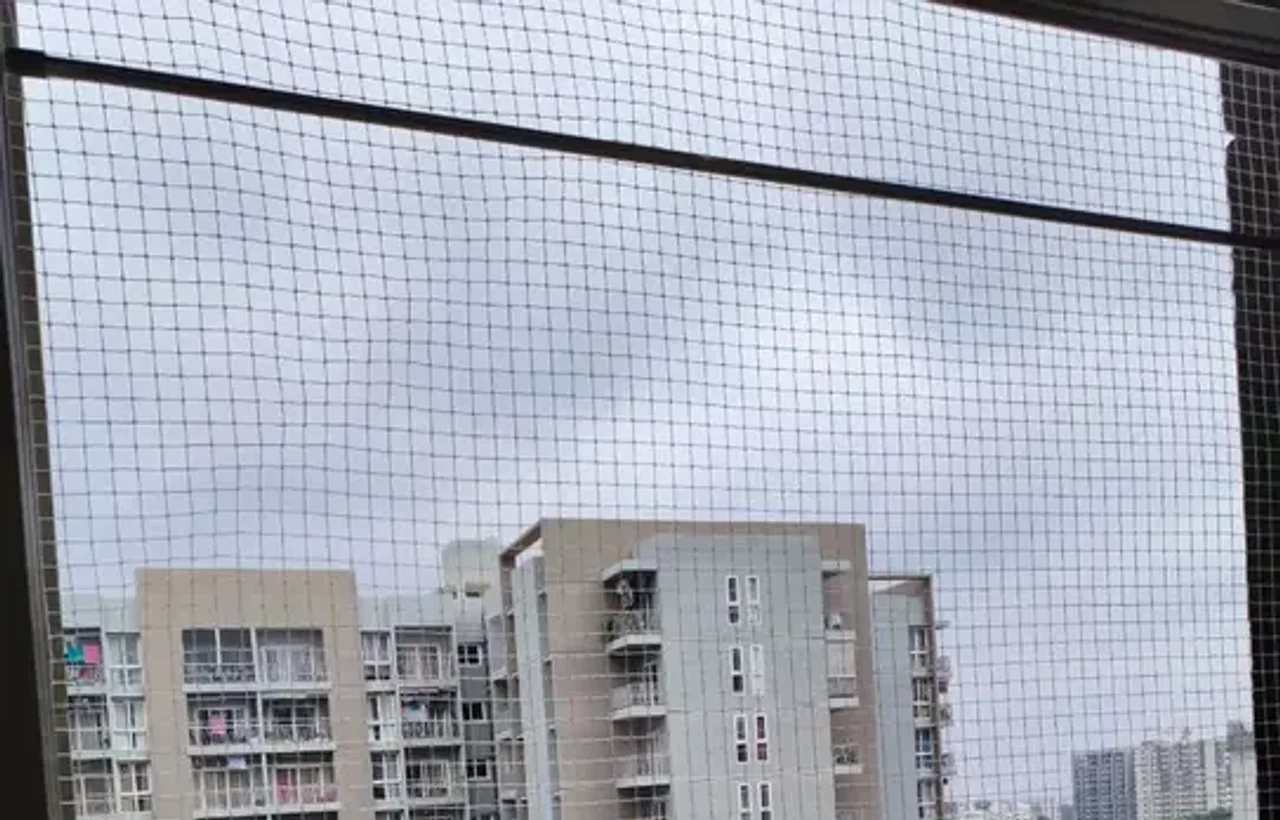
Fit and access reference
Final appearance depends on the measured opening and everyday access needs.
Local fit
In Bagalakunte, the balcony feels too useful to question freshly, so the exposed edge fades into ordinary household routine.
A clean balcony safety net helps make that useful front safer while keeping the balcony easy to use every day.
Bagalakunte works best when the guidance sounds workable, apartment-led and residential instead of trying to over-elevate a working front.
Area fit
The stronger Bagalakunte page explains that usefulness is exactly what makes the balcony edge easier to overlook here.
Nearby landmarks
Useful for family apartments and real residential fronts across Bagalakunte
Relevant where drying use, storage corners and ordinary movement keep the balcony active
Keeps the edge safer without reducing the balcony's everyday usefulness
Booking Detail
Starting from ₹20 per sq ft, including installation. The final estimate follows the measured scope and selected product. Confirm any upgrades, removal, repairs, special access or additional supports separately.
balcony width, side returns and utility-span coverage
floor height, wind exposure and outer-facade access
glass, railing or parapet condition
tower or gated-community fitting rules
whether the balcony is used for children, pets, sit-out or drying
In Bagalakunte, the front has to be understood through the small jobs it keeps doing every day.
We look at where drying, storage and family movement bring activity close to the edge even though the front feels ordinary.
The goal is a safer Bagalakunte balcony that still stays easy to use in ordinary family routine.
Best fit
day-to-day apartment fronts
Demand is most useful where the balcony is already part of ordinary household utility.
Main pressure
Ordinary-use routine
The edge gets overlooked because usefulness makes the front feel too normal to question freshly.
estimate driver
Opening + utility pattern
Opening type and how much drying or storage routine the front carries shape the estimate most.
Bagalakunte customers want a safer edge that still feels workable and easy to keep using every day.
Works well for: Useful apartment balconies needing a lighter safety layer
They suit Bagalakunte when the family wants the front safer without making a real balcony feel blocked or too formal.
Works well for: Homes ready for a firmer fixed line
They make more sense when the customer wants a stronger permanent finish and is comfortable with a bigger visible change.
Works well for: Bird-entry issues
They help when pigeon control is the issue, but they do not replace the main family-safety decision on the balcony edge.
The main angle is usefulness making the edge easy to under-read.
Keep the guidance grounded because the locality signal is working apartment-family use.
Balconies stay active through drying, storage and family movement
real apartment use makes the edge easier to overlook
customers want a safer front without losing ordinary usability
Fit
They fit best when the balcony stays active as a useful apartment corner and the family wants safer everyday use without a heavier system.
Compare
The comparison is between a lighter safety layer that preserves easy daily use and a stronger option that changes the front more visibly.
estimate
Opening size, side gaps, railing type and how much storage or drying routine the balcony carries shape the estimate most.
The balcony issue comes from daily utility routine, not from a dramatic lifestyle setup.
They are deciding how to make a useful front safer without making ordinary apartment life less easy.
It stays close to working apartment behaviour instead of pretending the area carries a bigger or more well-finished balcony story.
Begin the Bagalakunte survey with everything in its ordinary position. Mark where a drying stand opens, where pots migrate for sunlight, where a chair improves a child's reach and where a pet pauses beside the rail. Dust shadows can reveal a rack-side recess or narrow return that disappears after cleaning. Measure the front plane, lower gaps, both sides and the line above each movable object, then repeat the view once the edge is cleared. This two-state record separates temporary clutter from permanent geometry and prevents a visually neat central panel from leaving an accessible route beside storage, drainage or a utility connection.
Give every proposed fixing point its own substrate note. Concrete, masonry and structural metal need different hardware and edge-distance decisions; render, tile, pipes, cable trays and corroded grill members should not be treated as convenient substitutes. Record cracks, patched waterproofing, paint build-up and inaccessible corners before choosing a route. If existing support is uncertain, place restoration, relocation or an independent frame on the drawing rather than resolving it during drilling. The survey should also preserve door travel, drain cleaning, plant watering and adult maintenance. Bagalakunte families then receive a boundary based on verified structure, not on the apparent strength of a dusty familiar rail.
Use ₹20 per sq ft only as an early guide for the verified net area. Convert the survey into separate face tickets for the main opening, each side return, the lower closure and any terrace-linked portion. Every ticket should show dimensions, chosen mesh, perimeter cord, fittings and installation labour, while a second column identifies wall preparation, old-net removal, access equipment or a minimum visit charge. This structure lets a Bagalakunte resident see whether a low total omitted a difficult corner or merely selected a different documented product. Tax, disposal and payment stages should appear explicitly instead of being absorbed into an unexplained rate.
Compare proposals by placing their face tickets against the same annotated drawing. Check whether measured area follows the actual boundary, whether overlaps and border runs are defined and whether the provider priced all reachable routes described by the household. List painting, welding, waterproofing, electrical relocation, facade work and unrelated bird-waste cleaning as included, excluded or assigned to another trade. Add a written variation process for defects uncovered after movable items leave the edge. A useful Bagalakunte estimate also identifies who supplies access, protects floors, removes debris and restores balcony use. Commercial clarity comes from accountable work units rather than a rounded figure copied from one photograph.
A description such as strong, clear or heavy duty does not identify a safety-net product. Ask the Bagalakunte provider to create a material passport naming HDPE, nylon or another polymer, the manufacturer or supplier reference and the delivered roll or batch where available. Any claim about UV stabilisation should point to written product evidence and its stated conditions, not become a prediction that every exposed balcony will age identically. Record colour only after this technical identity. Road dust may change appearance without proving loss of strength, while sunlight, abrasion, chemicals and repeated loading can alter performance before a casual visual comparison notices anything unusual.
The same passport should state aperture, numerical strand or twine thickness, knot or fabrication style, perimeter cord and every connector or anchor category. Hold a labelled sample against a bright front bay and a shaded, dust-retaining return so residents can discuss view, airflow and inspectability without confusing those qualities with protection. Check whether small paws, a child's fingers or a target bird path changes the acceptable opening size. Border construction and fixing intervals must be specified with the mesh because a familiar square pattern says nothing about the completed edge. Keep the accepted sample and schedule with the Bagalakunte invoice for later identification.
Start with a user-and-route table. A child-protection row maps climb aids, reachable lower gaps and places where hands can press; a pet row adds body size, temperament, shelves and preferred observation points. A pigeon-control row instead follows landing, nesting and entry routes, including service ledges. These purposes can overlap physically, but one must not be inferred from another. The Bagalakunte drawing should label which face answers each declared job and where a side or terrace connection continues the boundary. If one product is proposed for several purposes, the provider should explain how aperture, border, anchors and complete coverage satisfy every listed route.
Keep mosquito mesh, privacy screens and invisible grills as separate systems in the comparison. Fine insect mesh normally depends on a framed closure; privacy material changes view and wind behaviour; cables form a rigidly spaced boundary rather than a flexible net. None automatically closes the child, pet or bird paths recorded in the survey. Where two systems share an opening, draw their independent supports, cleaning access and inspection lines so one does not conceal wear in the other. This function chart helps a Bagalakunte household searching for a multipurpose solution choose compatible layers without accepting a product label as proof of complete balcony protection.
Plan the work route from the building entrance to the last upper corner before technicians arrive. Note worker timing, lift or stair use, parking or loading arrangements and the place where tools and mesh can be staged without blocking residents. Inside the home, label temporary positions for plants, racks and furniture, protect the floor and keep children and animals away from the work zone. Drilling dust should be captured and cleared before objects return. If any point cannot be reached safely from within, specify the competent exterior-access method, equipment and supervision separately. Household members should never be used as improvised support during Bagalakunte fitting.
Turn approvals into an authority sheet rather than a casual message trail. Identify the owner, resident, association or building representative who may approve drilling, exterior appearance, work hours and use of common areas. Attach the final anchor drawing and record any conditions beside the responsible name. The provider remains accountable for installation method and worker safety; the household confirms access and declared use; another trade owns any assigned metal, masonry or waterproofing repair. A change to route or visible finish pauses work until the correct person records acceptance. This Bagalakunte authority sheet protects the installation from conflicting instructions delivered midway through an occupied-home visit.
Build a measurement folio rather than relying on one total. Give each face a code, sketch its width and height, note irregular edges and pair the sketch with a cleared photograph taken from a marked position. Add close views of proposed anchors, repaired surfaces, pipes and old-metal interfaces. A second image set should show the rack, plants and furniture restored, making it possible to confirm that every lived-use route remains covered. The Bagalakunte provider and customer can then initial the same boundary before material is cut. This folio also gives later technicians an intelligible baseline when dust or rearrangement makes original junctions difficult to recognise.
Close the folio with a scope reconciliation. Link every face code to its material, border, hardware, support preparation, labour and cleanup, then mark items supplied by the customer, building or another contractor. State how rounding, wastage and minimum charges are handled and whether tax, access equipment, removal and disposal are included. Write the procedure for newly exposed damage: photograph it, price the alternatives and obtain approval before altering the agreed route. At handover, tick installed faces against quoted ones rather than accepting a general completion statement. The resulting Bagalakunte record supports both payment and future service without turning an estimate into an implied promise about unknown substrate.
At handover, photograph the complete clean opening, every corner, border join, anchor and interface before household objects return. File those images with the material passport, authority sheet, measured folio, invoice, care instructions and written warranty. Then capture the restored arrangement and mark clearances around racks, pots, chairs and pet furniture. Dust gathering along a cord can make movement easier to notice, but dirt alone neither proves failure nor confirms strength. Clean gently from inside using the documented method, without blades, heat, aggressive chemicals or loads on the net. Repeat the same Bagalakunte viewpoints after cleaning so gradual sag, rubbing or fitting movement stays comparable.
Open an incident record after painting, grill repair, waterproofing, plant rearrangement, facade work or impact near the boundary. Restrict relevant balcony access while a technician compares the affected face with handover evidence. A local repair may be considered only when the original product is identifiable and surrounding mesh, border, anchors and substrate remain serviceable; broad ageing, repeated patches or changed support can require replacement. Warranty records should name the covered product or workmanship, expiry, reporting contact, required evidence and exclusions, without delaying control of visible damage. Dated decisions give the Bagalakunte household a service history that separates accidental change, maintenance and a valid coverage request.
Share balcony photos, edge type and whether the main concern is children, pets, drying use or keeping a workable balcony easy to use. That makes the Bagalakunte estimate clearer from the first reply.
Plan your installation
Share photographs of the full opening, approximate measurements and your location in Bagalakunte, Bangalore. Explain how you use the space so the installer can discuss a suitable layout and a clear scope.
ordinary-use routine
A useful balcony can still need a clearer safety line.
For visit planning: Bagalakunte family balconies, north-west apartment fronts, utility-side routine.
These are the practical questions households usually ask before choosing balcony safety nets in Bagalakunte, Bangalore.
It should record the opening in occupied and cleared states, including the front, lower gap, overhead line, side returns, terrace or utility links and movable climb aids. Proposed substrates, drainage, doors and maintenance access also need labels. The protection brief must name children, pets or birds before mesh and anchors are selected.
Use ₹20 per sq ft as a preliminary range for verified mesh area. The measured estimate should separately identify returns, border, fittings, labour, surface preparation, access, removal, minimum charges and tax. Compare providers on the same coded faces and documented product rather than on a rounded rate from an uncleared balcony photograph.
Request polymer identity such as HDPE or nylon, supplier or roll reference where available, written UV evidence, aperture, numerical strand thickness, fabrication, perimeter cord, connectors and anchor category. Keep a labelled sample with the accepted schedule. Colour or the word invisible cannot substitute for a specification tied to the installed boundary.
No. Bird control follows landing and entry paths, while family protection maps reach, climbing, body size, pressure points and every accessible return. Similar-looking mesh may have different aperture, border and fixing arrangements. Ask the provider to label each intended user on the drawing and explain how the selected complete edge answers that particular route.
When reviewing installers nearby, send occupied and cleared photographs, rough dimensions, floor or access details and the child, pet or bird concern. Include owner or association rules, preferred work timing and any repaired surfaces. Ask the provider to confirm survey availability and return a coded measurement folio rather than pricing only the visible central face.
Keep objects and loads clear, clean from inside by the documented method and repeat the handover camera views periodically and after nearby work. If mesh, border or a fitting changes, restrict relevant access and obtain a technical assessment. Record whether the outcome is compatible repair, replacement or a warranty request, with photographs and dates.
Around Bagalakunte, a balcony question often overlaps with child movement, bird nuisance, drying-clothes use or the wish to keep the front lighter than a grill-heavy solution.
Useful when the first concern is children leaning on railings, dragging chairs near the front or reaching open corners and side gaps.
Open local pageUseful when droppings, nesting and repeated bird entry are the problem that keeps pulling attention back to the same balcony.
Open local pageUsually compared when the family wants a cleaner fixed front and is weighing appearance, openness and enclosure together.
Open local pageUseful when drying clothes is what keeps daily movement happening close to the balcony edge in the first place.
Open local page