local reach
Brookefield reach
Useful for planning children safety net visits near AECS Layout.
Local service page
In AECS Layout, the risky point is ordinary: work-from-home calls, balcony plants, evening play, and children moving between rooms. The balcony or window feels familiar until a child tests it in seconds. EverSafe plans these installations for glass-railing balconies, utility ducts, bedroom windows, and balcony side returns around Brookefield reach, Kundalahalli side, and ITPL approach, with child-safe mesh, careful anchor spacing, and a finish that still lets the home breathe.
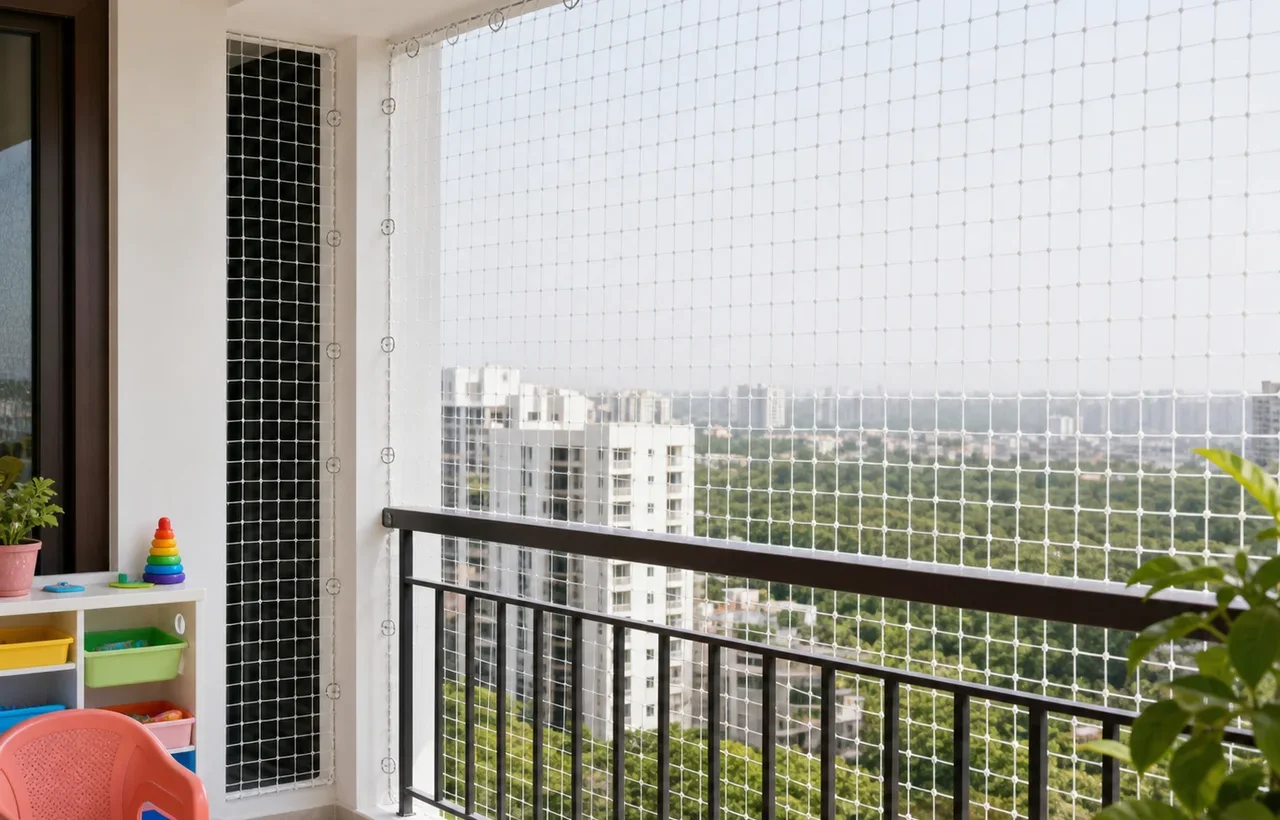
Compare before deciding
This page stays focused on what usually changes around AECS Layout. If you are still comparing material, price, safety fit, or nearby visit options, the Bangalore Children Safety Nets guide gives the broader picture before you call. You can also browse the Bangalore area guide when you want to check nearby local pages.
City guide
Compare Children Safety Nets materials, fitting choices, price factors, and visit planning across Bangalore.
This area
Use this page when the opening, building access, or daily routine around AECS Layout is the main concern.
Nearby options
Move between the city guide and local pages when you want either a wider view or a closer match.
Nearby Family-Block Context
these nearby locality and market references help show the repeated apartment-block pattern around AECS Layout, where school-van checks, plant corners, drying routine and familiar family use can make balcony edges feel too ordinary to review properly.
Useful for planning children safety net visits near AECS Layout.
Helps describe the balcony and window conditions around AECS Layout.
Relevant for site access and surrounding family-home layouts near AECS Layout.
The main service fit is shaped for children, balcony use, and daily home movement.
AECS Layout needs child safety planning that reads real family movement. The worry is not only an open balcony. It is the moment when a child presses both hands on a clear balcony panel because the outside view feels close, and the adult nearby is carrying clothes, answering a bell, taking a call, or turning away for a few seconds.
Homes around Brookefield reach, Kundalahalli side, and ITPL approach can look very different, but the safety question stays close to the floor: what can a child climb, hold, push, or squeeze through? Apartment blocks, glass-front balconies, and neat family flats near the eastern tech corridor need a plan that includes glass-railing balconies, utility ducts, bedroom windows, and balcony side returns, because one unprotected side return can undo an otherwise strong-looking front face.
EverSafe treats children safety nets differently from pigeon nets or appearance-led grills. For a child, the lower rail, reachable sill, side-wall corner, and tension under hand pressure matter more than how the opening looks in a single photo. The installer has to read the child-reach path before choosing hook positions.
AECS Layout work also needs restraint. A heavy or careless fit can make a home feel boxed in, while a loose fit can invite pulling, sagging, or a gap at the exact point parents wanted to control. The better finish is firm, straight, clean at the corners, and simple to live with every day.
The better result is a balcony, window, or terrace edge that stays part of normal family life. Children can still see light and air; adults can still dry clothes or clean the space; and the family no longer depends only on repeated warnings near the same edge.
Service visual guide
These representative images support the written guidance below; the exact opening still needs its own measurement and access check.
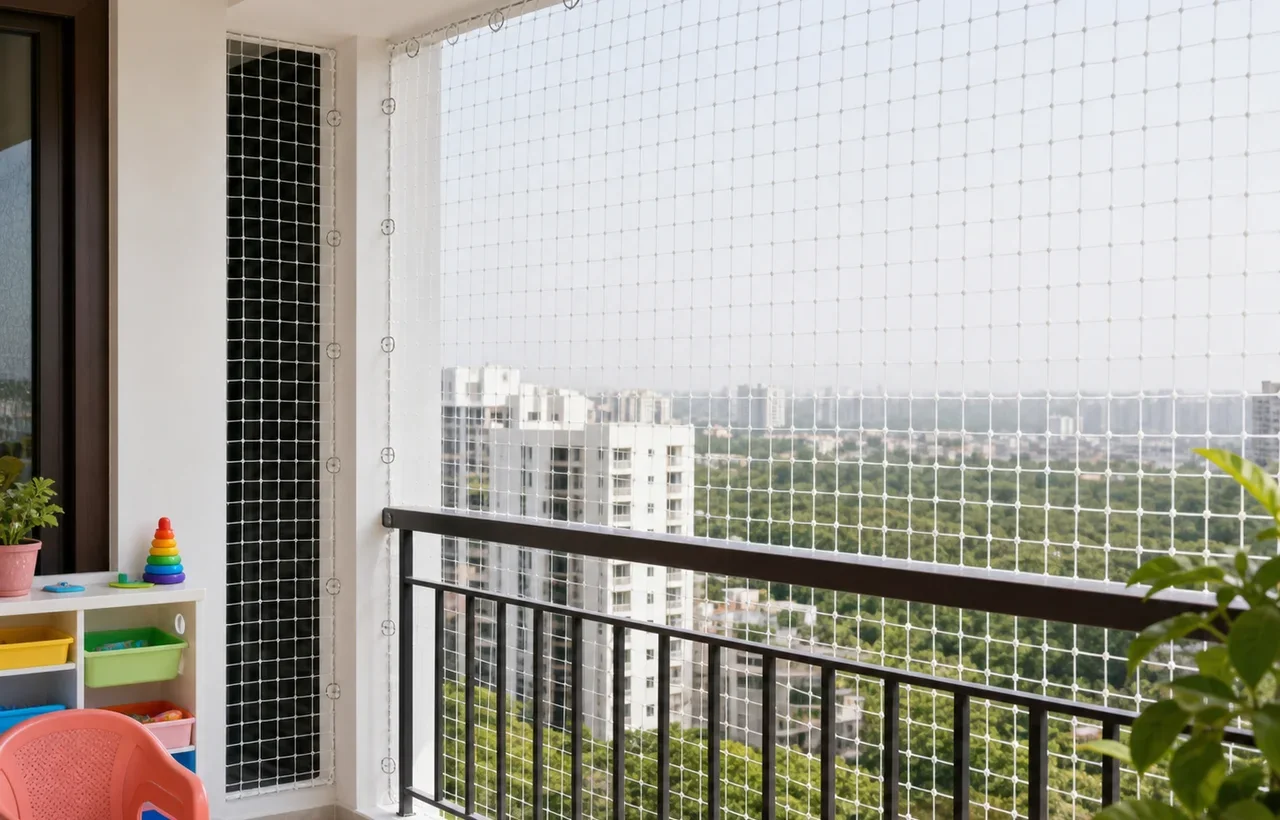
Representative opening view
Use this reference when sharing the opening span and return corners.
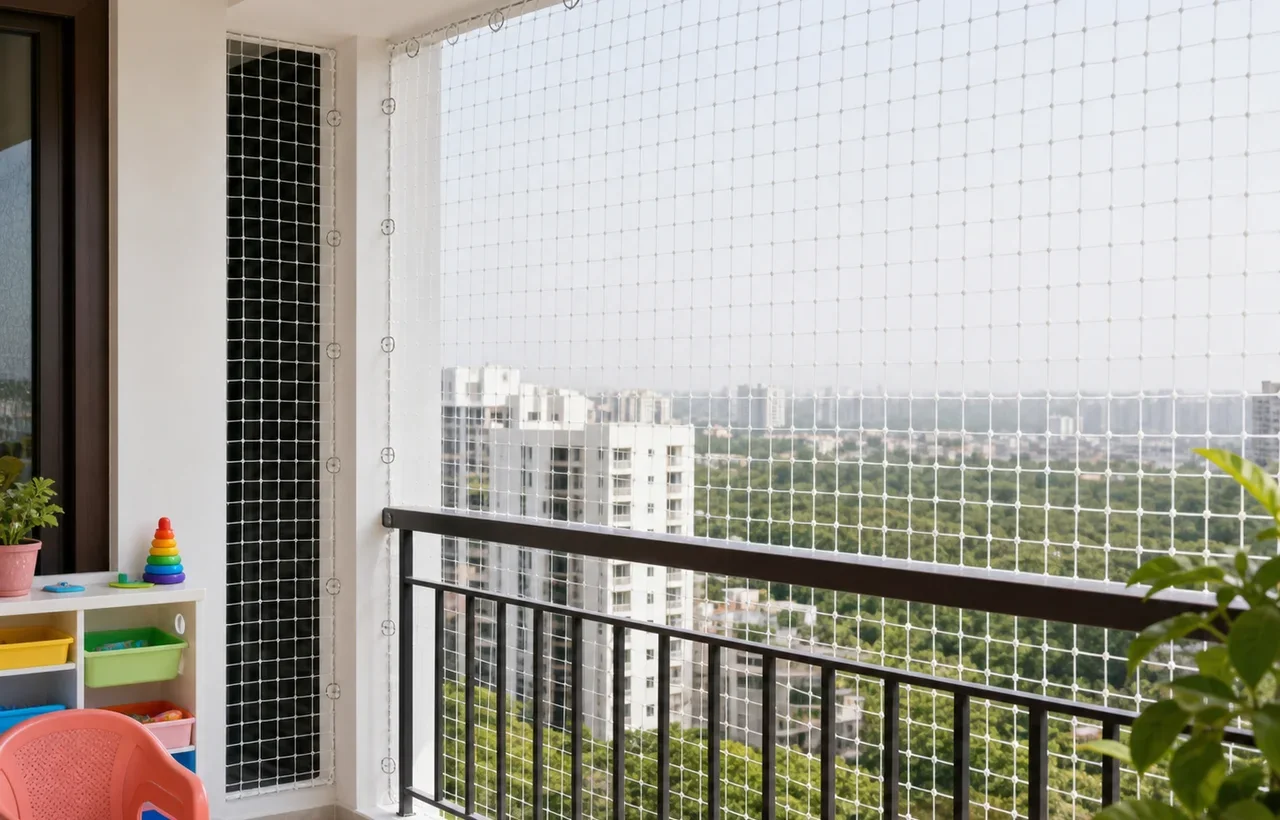
Installation planning view
The exact edge condition and anchor position are confirmed on site.
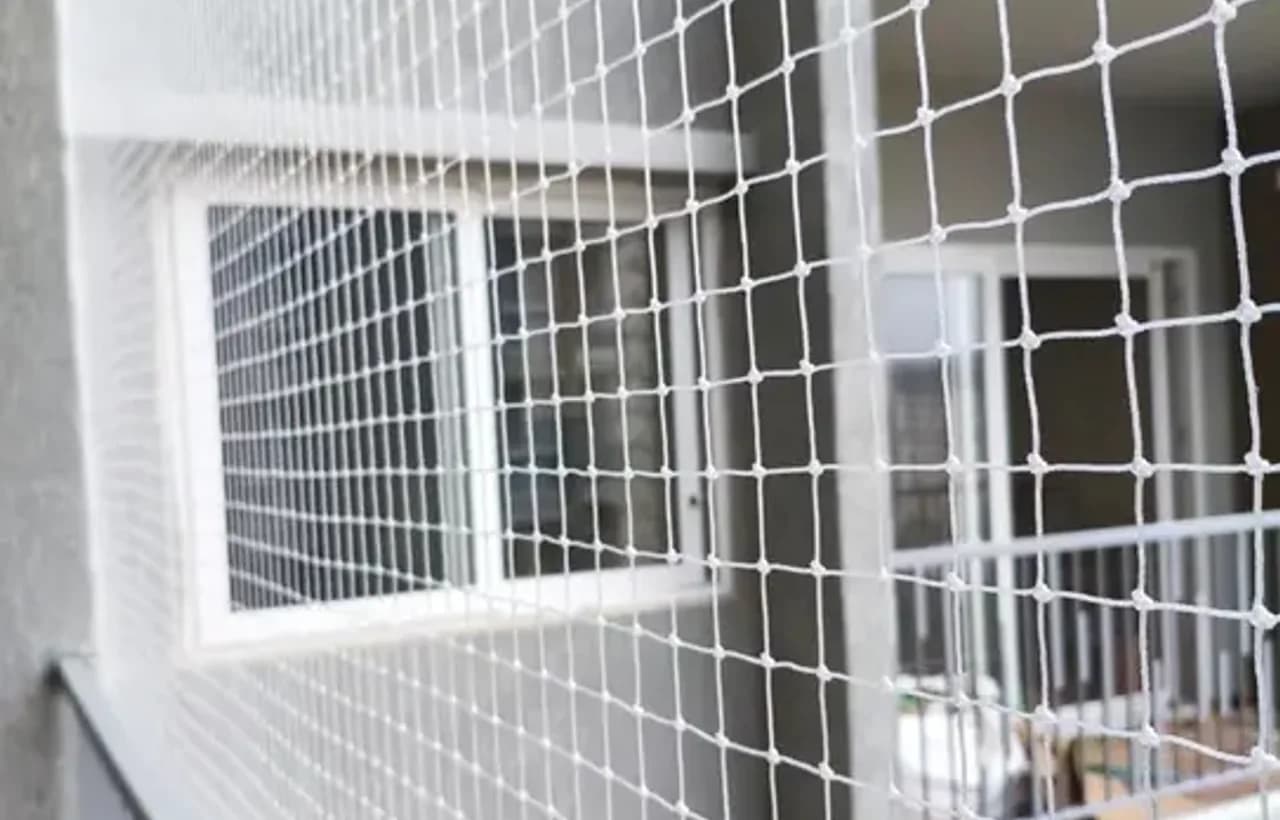
Fit and access reference
Final appearance depends on the measured opening and everyday access needs.
Local fit
AECS Layout homes around Brookefield reach, Kundalahalli side, and ITPL approach have openings that adults stop noticing because they are part of daily life. A chair near the balcony, a low window sill, an old grill gap, a utility side return, or a terrace door can become risky once a child starts climbing or leaning without warning.
EverSafe plans children safety nets in AECS Layout by mapping the child-reach zone first: lower rail spaces, climb points, side returns, hand-pressure points, door movement, cleaning access, and the surface that can hold anchors safely. The final route is chosen for the way the family actually uses the opening.
The work is clearest when the net feels calm, firm, and intentional from inside the home. For AECS Layout, that means neat tension, closed corners, no easy pull loops, and a finish that protects the edge without making the balcony or window feel harsh.
Area fit
EverSafe reviews the reachable path before the measurement: where children stand, what furniture sits nearby, how the door opens, and which side gap becomes visible only when someone bends or leans.
Nearby landmarks
Brookefield reach balcony and window measures where children can climb using chairs, stools, or storage boxes.
Kundalahalli side lower rail, side return, and utility opening closure for family-use homes.
ITPL approach terrace, stair, and bedroom-window points that need firm child-safe mesh.
AECS Layout daily-use openings where drying, plants, toys, and open doors change the safety picture.
Decision Pattern
Reachable edge
This is the right page when the concern is a child touching, leaning, climbing, or reaching through glass-railing balconies, utility ducts, bedroom windows, and balcony side returns. The first check should be furniture position, lower rail spaces, and side returns.
Window and stair
Low bedroom windows, stair-side openings, and terrace exits can need the same attention when children pass them during normal home routines.
Clean finish
Choose this route when the family wants protection without making the balcony feel closed, dark, or roughly patched.
Primary check
Lower reach zone
For AECS Layout, the first safety read is what a child can touch or climb from floor level.
Common openings
Balcony + window
Most family enquiries include at least one balcony and one secondary window, stair, or utility point.
Finish goal
Firm and light
The net should feel secure under normal contact without making the home dark or boxed in.
Typical opening: Neat balcony fronts with finish-sensitive corners
Building mix: Apartment communities, glass-front balconies, and family flats
Outdoor conditions: Higher apartment exposure can show slack quickly, so tension and corner discipline matter.
Common layout cue: AECS Layout fits need a clean line that works with glass, rail, and side-wall geometry.
A child taps the balcony panel during an online meeting while the parent is still on mute.
A balcony in AECS Layout where drying clothes, plants, and child movement share the same narrow strip.
A bedroom window near Kundalahalli side where airflow is needed but the sill is reachable.
A terrace-linked opening near ITPL approach where children follow adults outside during evening use.
EverSafe is experienced with Bangalore child-safety layouts where balcony height alone does not solve the real family worry.
AECS Layout recommendations are based on reach height, climb points, side returns, fixing surface, and the way the home is used.
Near AECS Layout, the goal is controlled daily confidence: a protected edge that still feels like part of the home.
well-finished finish versus heavy-looking protection should decide the safety layer. A family balcony, a low window, and a terrace edge do not need the same fixing route even when the concern is the same child.
Works well for: Lower rail gaps, old grill windows, terrace exits, and child-height balcony edges.
It can be tightened around the real touch points instead of only covering the visible front.
Works well for: Homes with one isolated window and no balcony or terrace concern.
It may help one point, but it will not answer balcony furniture, side returns, or open terrace movement.
Works well for: A quick stopgap when a child has just started testing a spot.
It is unreliable because the same objects can become climb points later.
The installer reviews when the balcony or window is used, who passes it, and what objects stay nearby. The details are matched to the family routine and opening shape in AECS Layout.
A balcony, low window, terrace exit, and utility space are judged separately before one combined plan is made. The details are matched to the family routine and opening shape in AECS Layout.
Child-height gaps, side pockets, and reach-through points are handled before the upper line is completed. The details are matched to the family routine and opening shape in AECS Layout.
The net is kept tight and clean so it feels dependable without making the space look rough. The details are matched to the family routine and opening shape in AECS Layout.
Cleaning reach, clothesline use, plants, door swing, and future service access are reviewed at the end. The details are matched to the family routine and opening shape in AECS Layout.
AECS Layout fitting should start with the child-reach path, because a child presses both hands on a clear balcony panel because the outside view feels close is more important than a flat front measurement.
The lower line matters in AECS Layout; children touch, press, lean, and pull at reachable height before adults notice the upper edge.
Side returns around glass-railing balconies should be measured because a small corner gap can become the favourite viewing point.
Photos from Brookefield reach homes should show the full opening, floor level, nearby furniture, door swing, and any low sill before the visit.
Finish confidence matters as much as the safety concern.
EverSafe handles AECS Layout openings by reviewing child movement, not just the visible size of the balcony.
The fit is set around neat balcony fronts with finish-sensitive corners, so the final estimate matches real access and fixing conditions.
Corner closure, lower-gap control, and hand-pressure tension are treated as core safety details for AECS Layout.
The finished line is kept clean enough for family homes that still need air, light, and daily balcony use.
A child presses both hands on a clear balcony panel because the outside view feels close.
A toy rolling to the balcony edge and the child bending before anyone reacts.
A chair, bucket, planter, or storage box becoming a sudden climb point.
A low window or stair opening looking ordinary until a child starts using it for support.
Treating a child-safety fit like a pigeon-net job instead of reading reach and climb behaviour.
Leaving a low sill, grill gap, or stair landing out of the measurement because it looks secondary.
Making the net visually heavy, which tempts families to loosen or shift it later.
Fixing into weak edges without reviewing whether the anchor will hold regular touch and tension.
Starting from ₹24 per sq ft, including installation. The final estimate follows the measured scope and selected product. Confirm any upgrades, removal, repairs, special access or additional supports separately.
Opening size across neat balcony fronts with finish-sensitive corners
Floor height, ladder access, and installer safety requirements
Wall, slab, grill, or frame strength for anchoring
Side return, lower rail, and corner closure complexity
Whether the work covers balcony, window, terrace, stair, or utility openings together
Brookefield reach, AECS Layout
Problem: The balcony looked clean, but the side return and lower child-reach zone made the parents uneasy.
Solution: The installation followed the balcony line with balanced hook spacing and a soft visual finish.
Result: The home kept its clean apartment look while adding a stronger child-safety layer around the reachable edge.
Child safety concerns begin with a small scene, not a dramatic warning. A child taps the balcony panel during an online meeting while the parent is still on mute. The family may laugh it off once, then notice the same movement repeating the next day.
That repeat behaviour is the real signal. Children learn the balcony, window, or terrace route quickly, especially when work-from-home calls, balcony plants, evening play, and children moving between rooms. A measured net plan gives the family a physical layer instead of relying only on reminders.
Many homes ask first about the full balcony height, but the lower line is where a child interacts with the opening. Small hands pull, feet push, toys roll, and a stool can change the reach height in seconds.
In AECS Layout, EverSafe reads that lower zone along with the wall return and floor level, the net must not leave an inviting pocket at the side, a loose middle section, or a gap that opens when touched.
A balcony may pass a quick visual check when it is empty. Once a chair, bucket, planter, shoe rack, or drying stand comes close, the same opening behaves differently for a child.
AECS Layout homes around Brookefield reach, Kundalahalli side, and ITPL approach use balcony space for more than standing. The better fit protects the edge while admitting that real homes have things in them, and those things move.
A rough net can create new problems: loose loops, uneven corners, hard-to-clean edges, or a finish that the family starts avoiding. If the balcony becomes unpleasant to use, people may tie, shift, or open parts of the safety layer later.
A cleaner fit is easier to trust. Straight tension, proportionate hook spacing, closed side returns, and accessible cleaning points help the AECS Layout home keep using the opening normally.
The same child may use each opening differently. A balcony invites leaning, a window invites reaching, a terrace invites running, and a stair landing becomes risky because people pass it without thinking.
That is why EverSafe does not treat every AECS Layout opening as one flat square-foot job. The site check separates the daily use of each opening before combining the final fitting plan.
For families comparing options, children safety nets sit between soft protection and everyday usability. Balcony safety nets help broader fall-risk planning, while invisible grills may suit view-sensitive homes that want a different finish.
If the concern is specifically a child reaches, climbing, leaning, or pushing through a gap in AECS Layout, this service guidance should stay focused on that family moment first. Other services can support the decision, but child movement decides the first inspection route.
Send clear photos of the full opening, lower rail, nearby furniture, side corners, and floor level. EverSafe can then suggest whether your AECS Layout home needs balcony, window, terrace, or combined child safety net fitting.
Plan your installation
Share photographs of the full opening, approximate measurements and your location in AECS Layout, Bangalore. Explain how you use the space so the installer can discuss a suitable layout and a clear scope.
AECS Layout families notice the risk when a child starts using balcony furniture as a step.
EverSafe keeps AECS Layout child safety net work focused on lower gaps, side returns, and daily family use.
For visit planning: AECS Layout balcony child safety net, AECS Layout window child safety mesh, Brookefield reach kids balcony net, Kundalahalli side family balcony protection.
These are the practical questions households usually ask before choosing children safety nets in AECS Layout, Bangalore.
Yes. EverSafe installs children safety nets in AECS Layout, Bangalore. The site check focuses on reachable balcony edges, windows, low rails and climbable corners, with child reach height, lower rail gaps, side returns and fixing strength reviewed before the estimate is confirmed.
Price depends on opening size, floor height, lower-gap closure, side corners and anchor surface. Photos can give a first idea, but the final estimate is confirmed after measurement and access check.
Send the full opening, lower railing, nearby furniture, side corners and any low window or terrace edge. A wider photo showing height or outside access helps the team judge fixing and safety needs before visiting.
Choose children safety nets when a child can lean, climb, push through a gap or reach a low sill. The check focuses on child-height movement, not only the total balcony size.
Small single-opening work is often completed in one visit after measurement. Multiple openings, high access, terrace work or custom supports may need a separate schedule.
A good child-safety fit should feel firm at hand height and still allow normal light, airflow, cleaning and balcony use.
Around AECS Layout, families comparing child-focused protection usually also look at the balcony edge itself, terrace use and whether a lighter or more fixed barrier makes more sense.
Useful when the issue around AECS Layout is more about this specific service need than the original page you started from.
Open local pageUsually compared when the family wants a cleaner fixed front and is weighing appearance, openness and enclosure together.
Open local pageHelpful when the same home also uses the terrace actively for children, pets, clothes drying or repeated upper-floor movement.
Open local pageUseful when droppings, nesting and repeated bird entry are the problem that keeps pulling attention back to the same balcony.
Open local page